Lābha Pañcamī: Day of Auspicious Beginnings

LĀBHA PAÑCAMĪ लाभ पञ्चमी
November 14th

As the waxing moon graces the fifth (Pañcamī) lunar day in the month of Kārttik (October/November), we observe Lābha Pañcamī—an auspicious observance in the lunar calendar.

Marking the conclusion of Dīpāvalī observances, this day focuses on the material and spiritual gains achievable through the right use of our actions (dhárma), encouraging introspection around our financial practices and how they align with our values and life purpose.

The confluence of Lābha ("gain") and Pañcamī ("fifth") on this day in Vedic Astrology is considered especially propitious for harmonizing one's actions with cosmic rhythms to cultivate abundance, making it a traditionally auspicious occasion for renewing business activities and beginning meaningful projects.

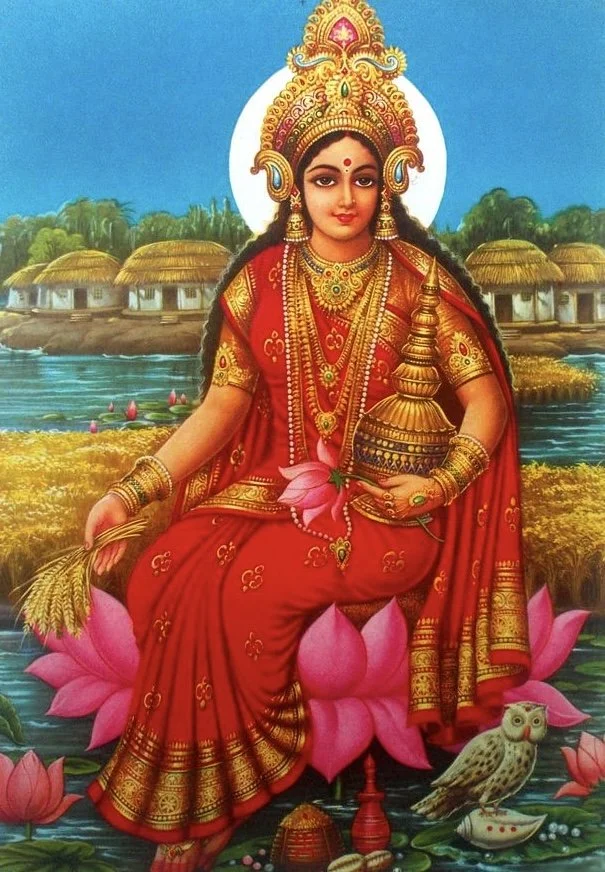
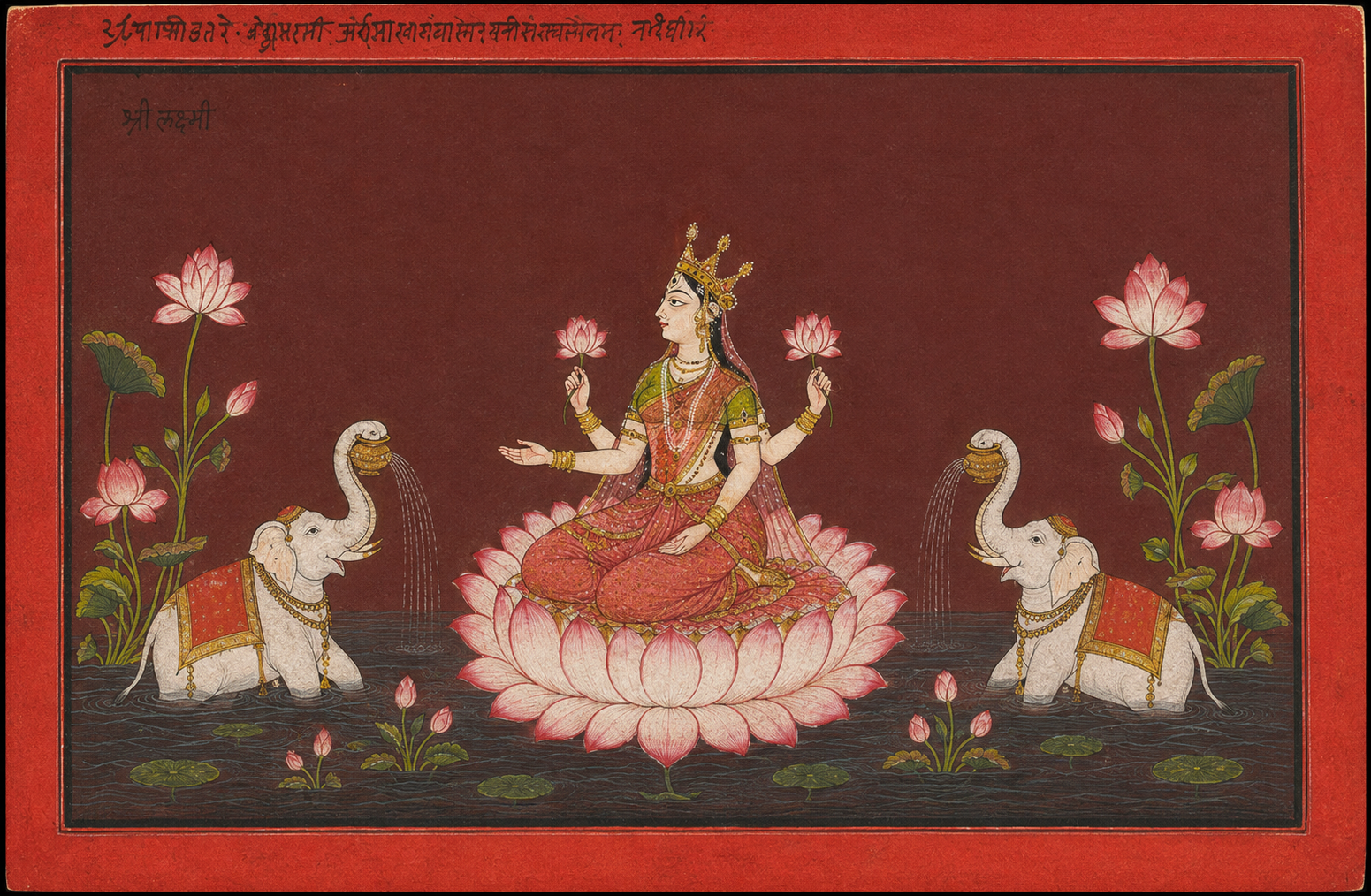
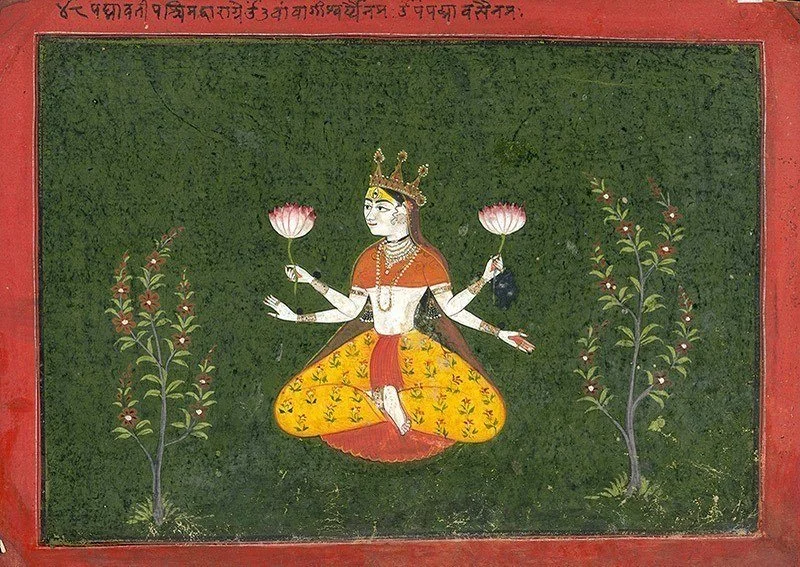
Many observe this day by performing rituals or pūjā dedicated to Goddess Lakṣmī (she who bestows prosperity of an eight-fold nature) and Lord Gaṇeśa (remover of obstacles), invoking their grace for abundance in both material and spiritual realms.
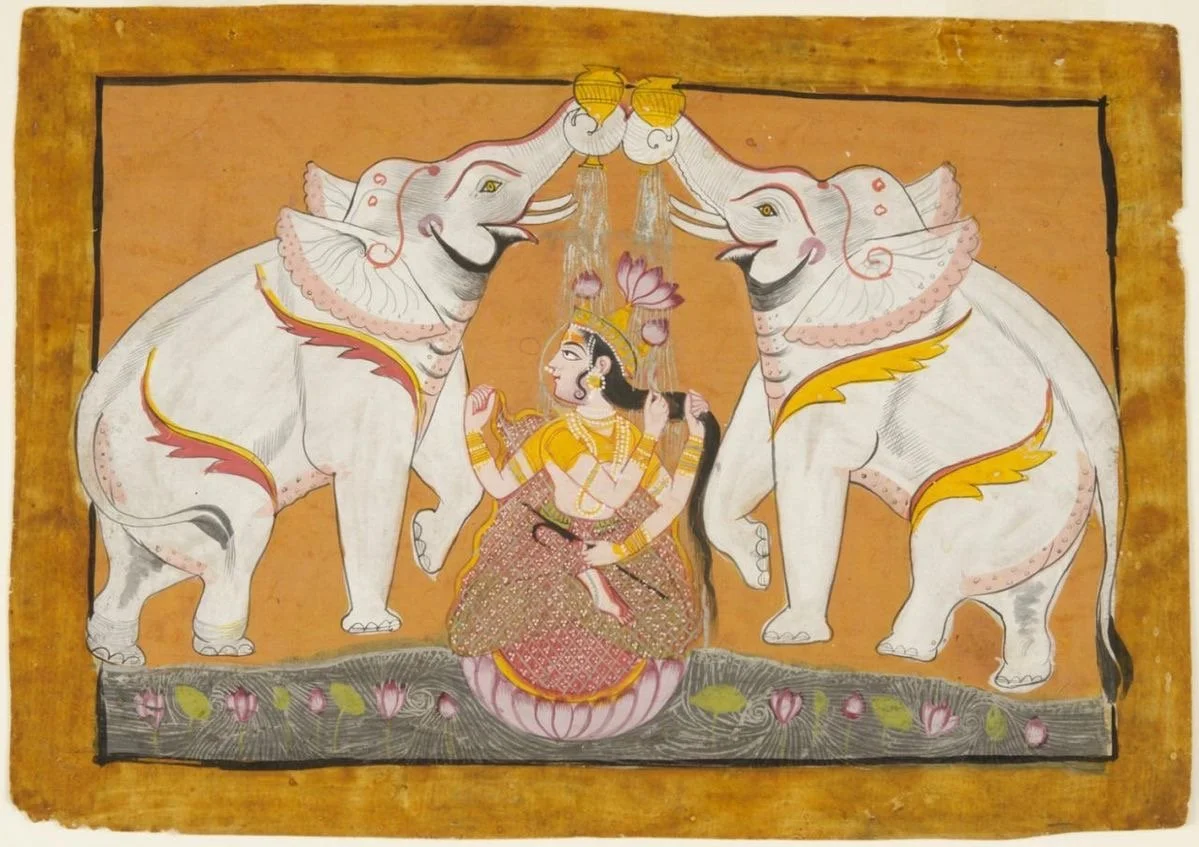
Ultimately, Lābha Pañcamī serves as a profound reminder to maintain balance between material pursuits and spiritual growth. It emphasizes that true prosperity stems from living in alignment with nature and fulfilling one's dhárma, inviting us to reflect on our relationship with wealth and its role in our broader spiritual journey.

How will you align your endeavors with this auspicious tithi?

Mercury (Svātī Libra) and Venus (Citrā Virgo) have also stationed direct — take more time to integrate and digest all that has moved through these last few weeks. There is more to be revealed

All my Relations, Tulsi 

ॐ श्रीं महा लक्ष्म्यै नमः 

11.13 7:12AM - 11.14 9:54AM PST | 11.13 20:42 - 11.14 23:34 IST
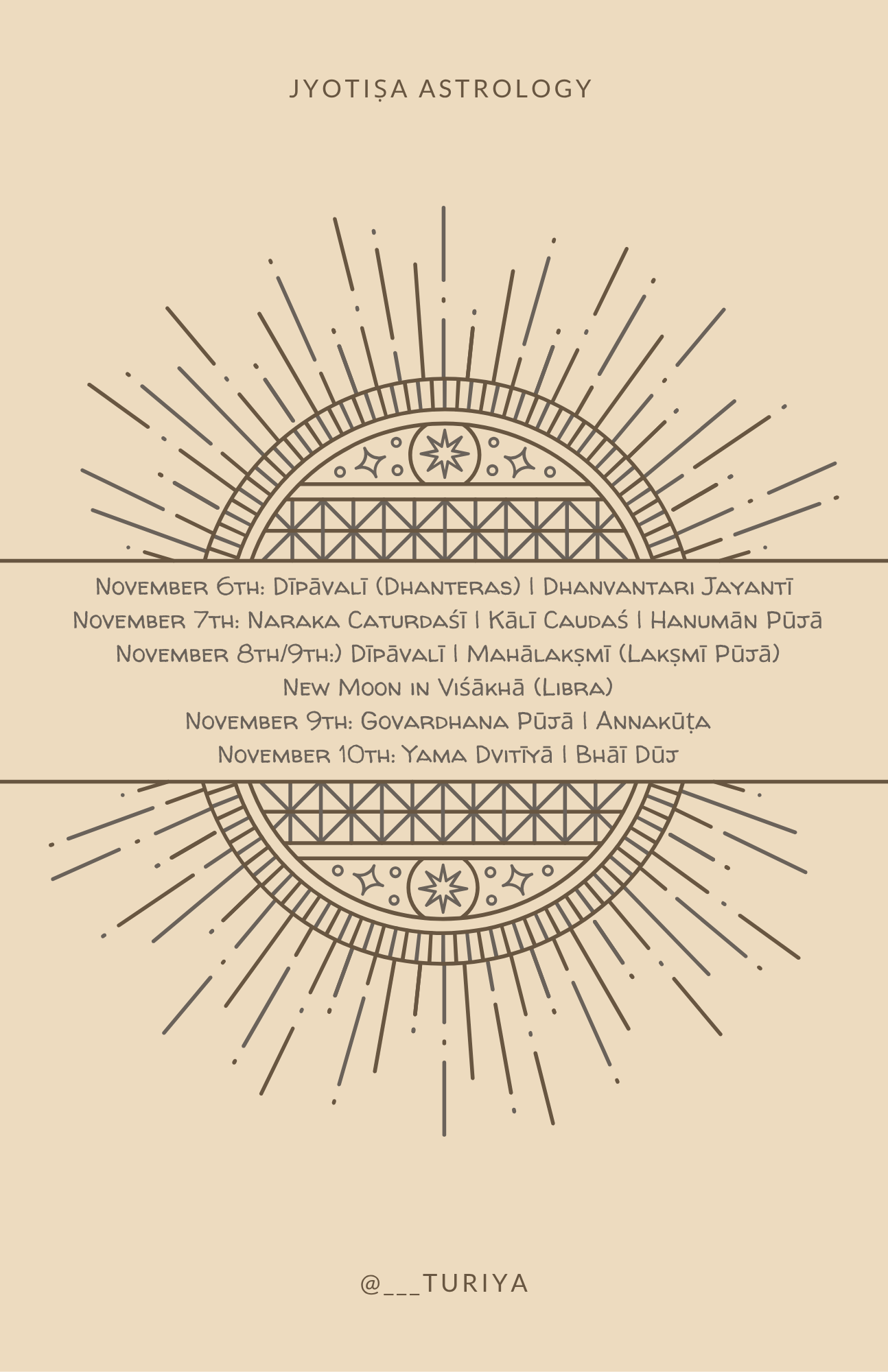
Dīpāvalī: The Five Days of Light

DĪPĀVALI दीपावलि: FESTIVAL OF LIGHTS

11.06-11.10

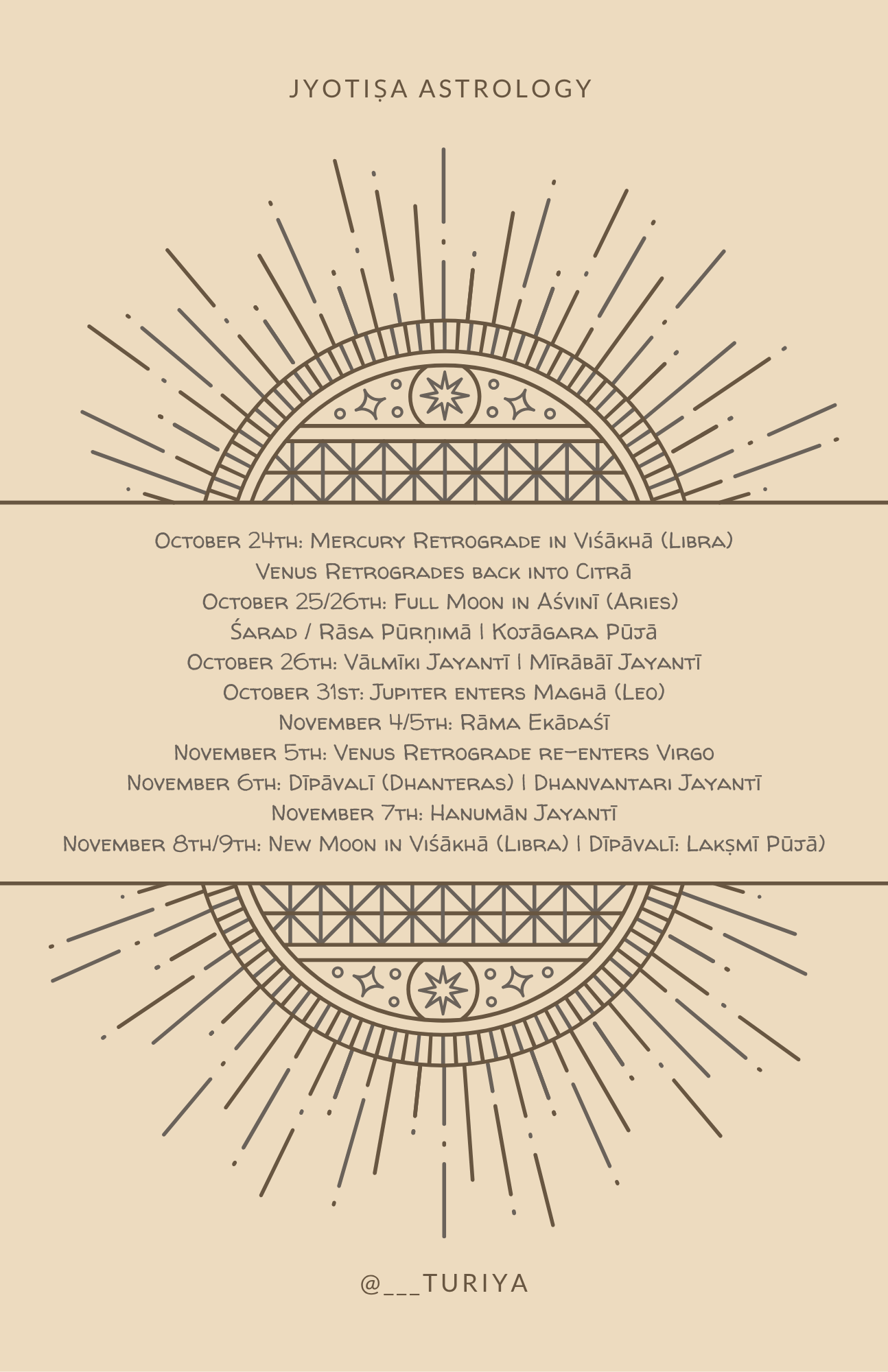
November 6th: Dīpāvalī (Dhanteras) | Dhanvantari Jayantī
November 7th: Naraka Caturdaśī | Kālī Caudaś | Hanumān Pūjā
November 8th/9th: New Moon in Viśākhā (Libra) | Dīpāvalī | Mahālakṣmī (Lakṣmī Pūjā)
November 9th: Govardhana Pūjā | Annakūṭa
November 10th: Yama Dvitīyā | Bhāī Dūj

Today marks the beginning of Dīpāvalī, the revered Festival of Lights. Celebrated in the Vedic lunar month of Kārttik (October/November), it unfolds over five days, beginning with Dhanteras and reaching its central observance on the Amāvāsyā tithi (new moon), the most significant night of the festival.

On this occasion, we celebrate the victory of light over darkness. This year the new moon falls in Viśākhā (Tulā), where the Sun is nīca and its light is at its faintest of the year, held in the sign of Śukra, the planet of Lakṣmī. The Ṛṣis placed the festival of lamps precisely where outer light is weakest, so that we might kindle it within.

Five Days as a Path of Ascent (Earth to Ether)

The five days of Dīpāvalī reveal a profound correspondence between the human constitution and the cosmic order. Through the five mahābhūtas, the festival traces the refinement of the embodied self, each day revealing a dimension of the relationship between the individual and the universal. What begins with the honoring of the body and the elements culminates in the recognition of their underlying unity. Each day holds its own teaching and a corresponding offering for the home and the heart.

Day 1 ✧ Dhanteras | Dhanvantari Jayantī | Friday 11.06

Pṛthvī (Earth). The body, the herbs, the vessel of amṛta.

Dhana-trayodaśī opens the festival with the birth of Dhanvantari.

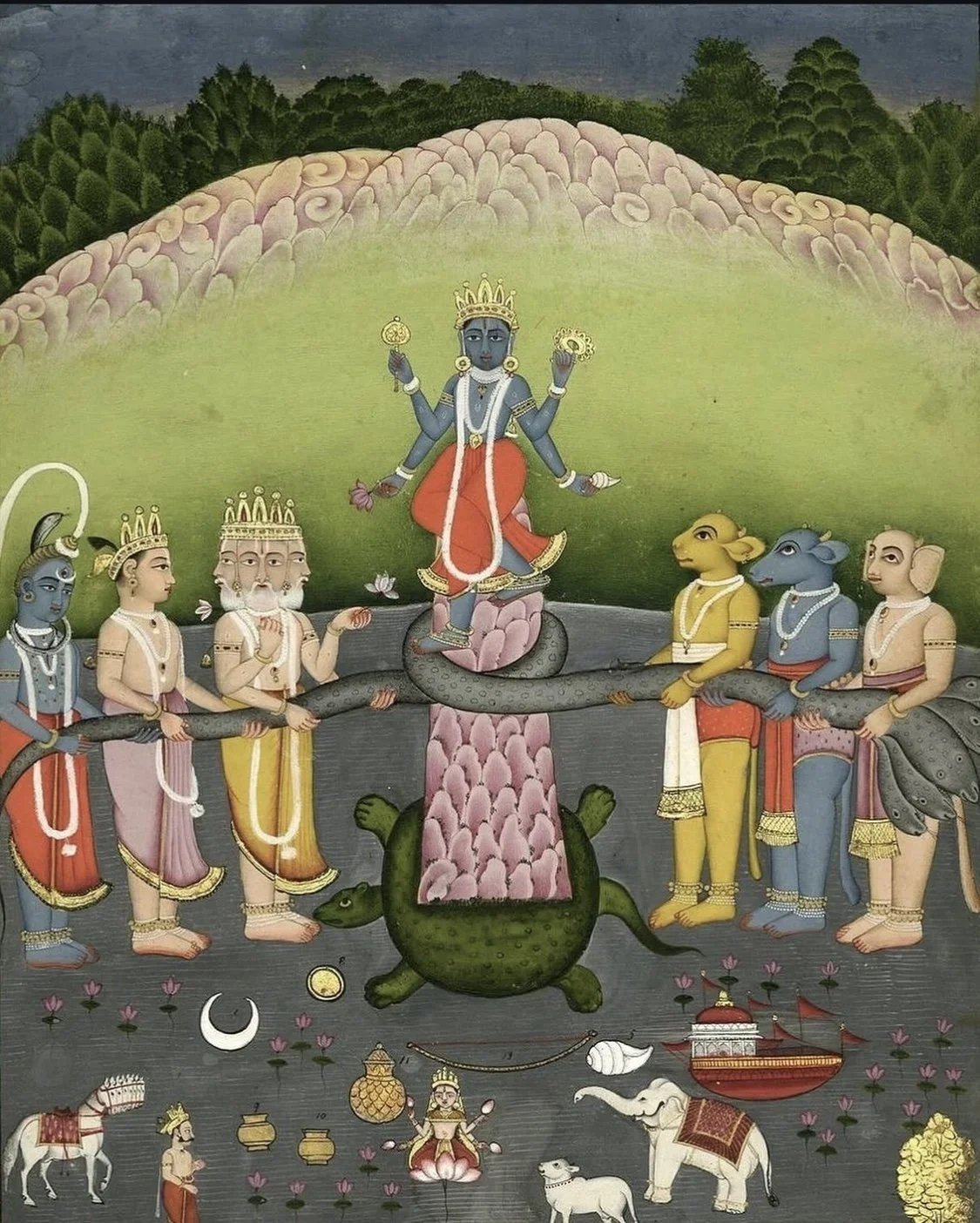
It is said that when Indra, proud and careless, cast aside a garland given by the sage Durvāsa, Śrī withdrew from the three worlds. To bring her back, the devas and asuras churned the ocean of milk, with Mount Mandara as the rod, Vāsuki as the rope, and Viṣṇu as Kūrma holding it all upon his back. Poison rose first, then treasures, then Mahālakṣmī herself. Last came Dhanvantari, physician of the gods and an aṃśa of Viṣṇu, holding the kalaśa of amṛta in his hands. He is revered as the source of Āyurveda.

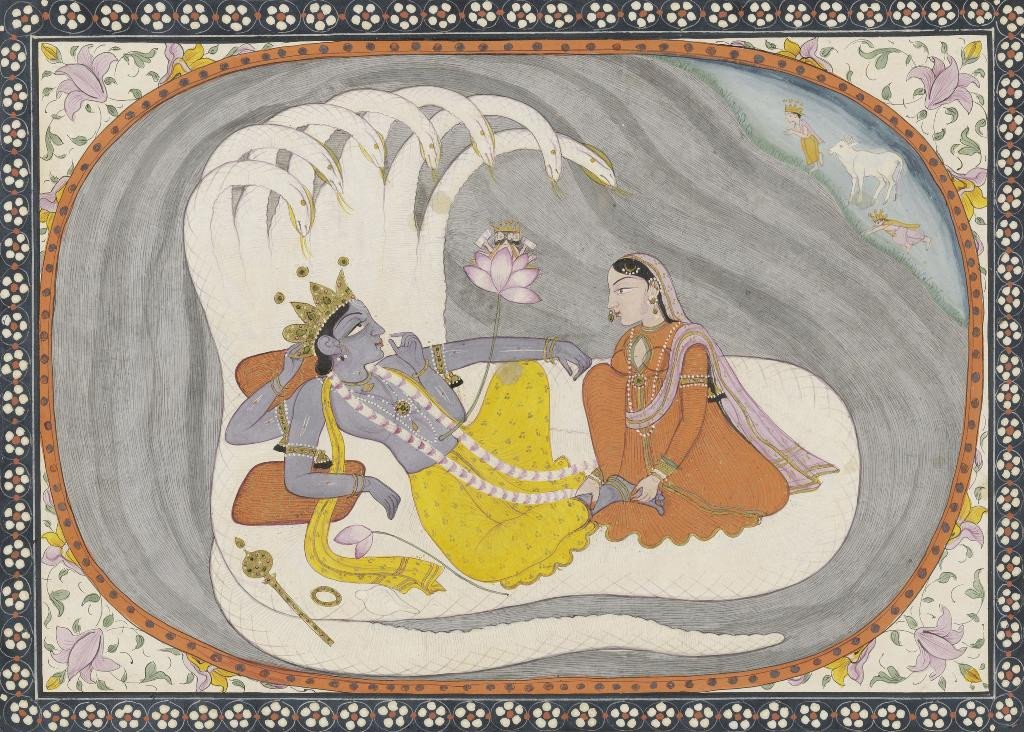
Lakṣmī and Dhanvantari rise from the same ocean. Wealth begins as health.

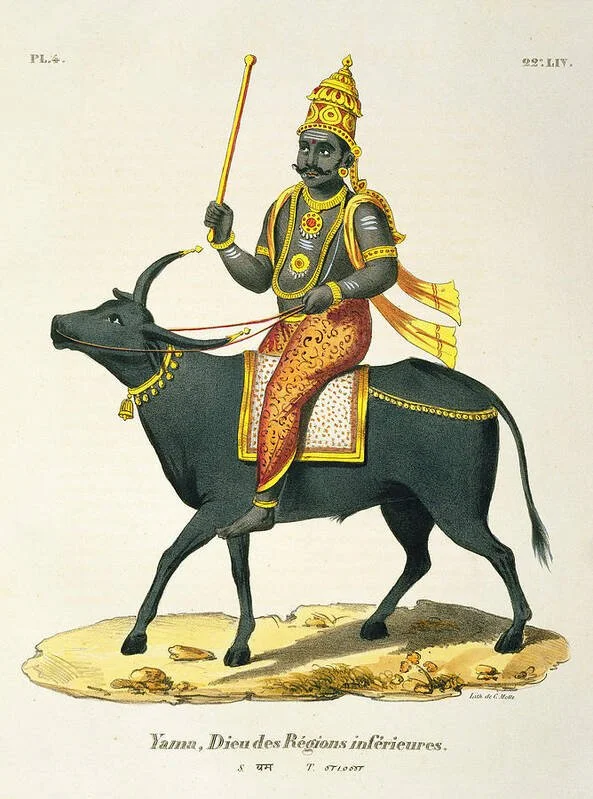
At dusk a single lamp is set facing south, the direction of Yama, the Lord of Death. This Yama Dīpa asks protection from untimely death for the whole household.

Day 1 – Traditionally: Dhanvantari is worshipped for health. Lakṣmī and Kubera are honored in Pradoṣa kāla, the window after sunset, ideally while the fixed Vṛṣabha lagna is rising so that wealth remains. At dusk the Yama Dīpa is lit outside the home. Many also bring home new gold, silver, or a metal vessel.

The act: Wake before sunrise and worship Lord Viṣṇu as Dhanvantari. Help someone with medical care, and buy something auspicious for your home. At dusk, light a diya outside your main entrance, facing south, for Lord Yamarāja; some light one for each family member and keep it lit through the night. After sunset, offer a lamp to Lakṣmī.

Day 2 ✧ Naraka Caturdaśī | Choṭī Dīpāvalī | Kālī Caudaś | Hanumān Pūjā | Saturday 11.07

Jala (Water). The bath, the oil, the tarpaṇam.

On the fourteenth night, Kṛṣṇa ends the demon Narakāsura before dawn and frees the sixteen thousand he held captive. What has bound us is released.

This is also Kālī Caudaś, when the dark goddess is revered as an awakening and purifying force, and in the Ayodhyā tradition, Hanumān Jayantī. Strength and devotion stand guard on the eve of the new moon.

Day 2 – Traditionally: Before sunrise, the body is anointed with sesame oil for abhyaṅga snāna, and the apāmārga plant is circled over the head while bathing to remove the fear of Naraka. Afterward, water is offered to Yama in tarpaṇa, reciting his fourteen names. In the evening a four-wick lamp is lit outside the home for Yama, and lamps are placed throughout the house.

The act: Rise before sunrise. Oil the body with sesame, then bathe with a few drops of Gaṅgā jal in the water. Let what is heavy wash away. This is a day of inner purification, when darkness goes out. In the evening, light diyas, worship Lakṣmī-Nārāyaṇa, offer prayers to Lord Mahādeva and Lord Yamarāja, and offer food or clothes to someone in need.

Day 3 ✧ Dīpāvalī | Lakṣmī Pūjā | New Moon in Viśākhā (Libra) | Sunday 11.08

Agni (Fire). The lamps, the mantras, the inner flame.

The heart of the festival falls on the Amāvāsyā, the darkest night of the year. This year it is the New Moon in Viśākhā (Libra), the Star of Purpose, ruled by Indrāgni: Indra, king of the gods, and Agni, the sacred fire. Its symbol is the triumphal arch, the gateway one passes through after a long road.

It is the arch Rāma walked through on his return to Ayodhyā after fourteen years of exile and his victory over Rāvaṇa, when the whole city lit lamps to bring him home.

We honor Gaṇeśa first, the remover of obstacles, then invoke Mahālakṣmī, the eight-fold embodiment of abundance. It is said her energy resides in harmonious spaces free from conflict. She does not enter the cluttered house. She comes where a lamp is lit and kept. In Bengal, this same night is Kālī Pūjā.

Day 3 – Traditionally: Lakṣmī Pūjā is performed in Pradoṣa kāla, after sunset, during the fixed Vṛṣabha lagna so that she remains. Gaṇeśa is worshipped first, then Lakṣmī, and merchants place their new account books before her. Families clean their homes and draw rangoli at the threshold, don new clothes, set intentions for the year ahead, and exchange gifts and sweets.

The act: Your home is now ready to welcome Gaṇeśa, Sarasvatī, and Lakṣmī. Clean your home, clear any pending dues, and donate to those in need before the end of the day. In the evening, light diyas, make rangoli, do pūjā, and keep one lamp burning through the night.

Day 4 ✧ Govardhana Pūjā | Annakūṭa | Monday 11.09

Vāyu (Air). The mountain, the wind, the offering of food.

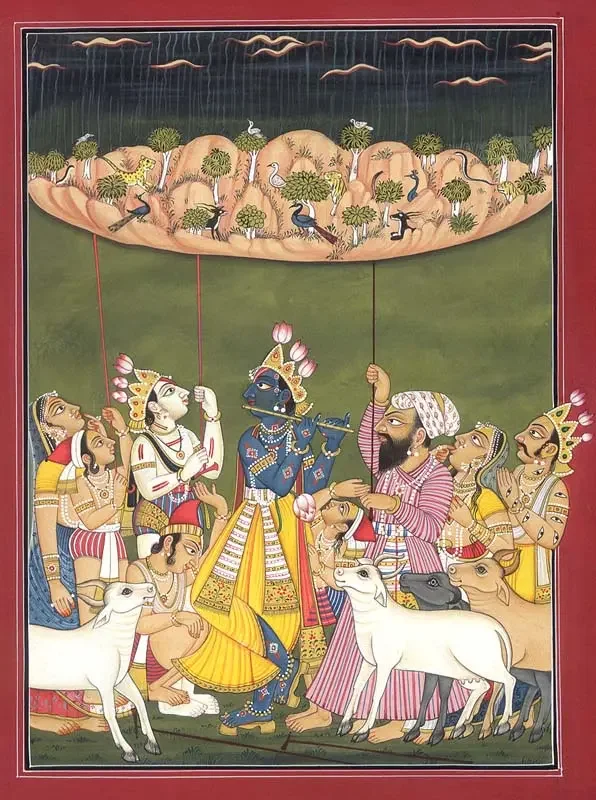
The morning after Indra's star, Indra is humbled. When the people of Vraja turned their worship from him to the hill that fed their cows, Indra sent seven days of storm. Kṛṣṇa lifted Mount Govardhana on one finger, and all of Vraja sheltered beneath it until the rains gave up.

Annakūṭa, the mountain of food, is offered back to the One who sustains. In Gujarat and much of western India, this day opens the new year.

Day 4 – Traditionally: A small Govardhana is shaped, often of cow dung, worshipped, and circled in parikramā. Cows are bathed and honored, and Annakūṭa, a mountain of food, is offered to Kṛṣṇa and then shared. In parts of the South and West, this is also Bali Pratipadā.

The act: Give thanks for what sustains us. Prepare Annakūṭa and offer it to Bhagavān Kṛṣṇa, worship Mā Annapūrṇā, feed the cows, and offer prasād to someone in need.

Day 5 ✧ Yama Dvitīyā | Bhāī Dūj | Tuesday 11.10

Ākāśa (Ether). The bond of brother and sister (jīva to Paramātmā, a stepping into the space of oneness).

Yama visits his sister Yamunā. She marks his brow with tilak and feeds him by her own hand, and in return he blesses all who honor their siblings on this day.

Day 5 – Traditionally: A morning bath, ideally in the Yamunā. In the afternoon (aparāhṇa), Yama is worshipped with Citragupta and his attendants, and arghya is offered. Sisters apply tilak, perform āratī, and feed their brothers by hand, and brothers offer gifts in return.

The act: Feed, call, or bless a brother or sister, or someone you hold as kin.

The lamp between two doors

Day by day, the bhūtas are balanced and the sheaths purified, so that we may welcome Lakṣmī's eight-fold abundance into our homes, our hearts, and our lives. By Bhāī Dūj, we step into the space of oneness, a microcosm in harmony with the macrocosm, and find that the light we lit at every threshold was never outside us.

Tad dūre tad v antike, tad antarasya sarvasya.

That which is far away is also near, and dwells within all.
— Īśa Upaniṣad 5

asato mā sad gamaya
tamaso mā jyotir gamaya
mṛtyor mā amṛtaṃ gamaya

Lead me from the unreal to the real, from darkness to light, from death to immortality.
— Bṛhadāraṇyaka Upaniṣad 1.3.28

As we gather in joy and reflection, let us embrace the energies of renewal and prosperity that accompany this festival. Wishing everyone a joyful and prosperous Dīpāvali! 

With love all ways

शुभ दीपावली | ॐ श्रीं महालक्ष्म्यै नमः


Full Moon in Aśvinī: The Star of Transport

FULL MOON IN AŚVINĪ

Artwork: By @___turiya


Oct 25 9:11PM PDT | Oct 26 12:11AM EDT | IST 9:41AM

The Full Moon पूर्णिमा of October arises in Aśvinī अश्विनी (sidereal Aries), the Vedic lunar mansion known as the Star of Transport, governing movement, as well as the subtle passage between states of being.

Aśvinī stands at the threshold, where one state dissolves and another has not yet fully formed, making it a potent gateway for transition, initiation, and swift reorientation of the path.

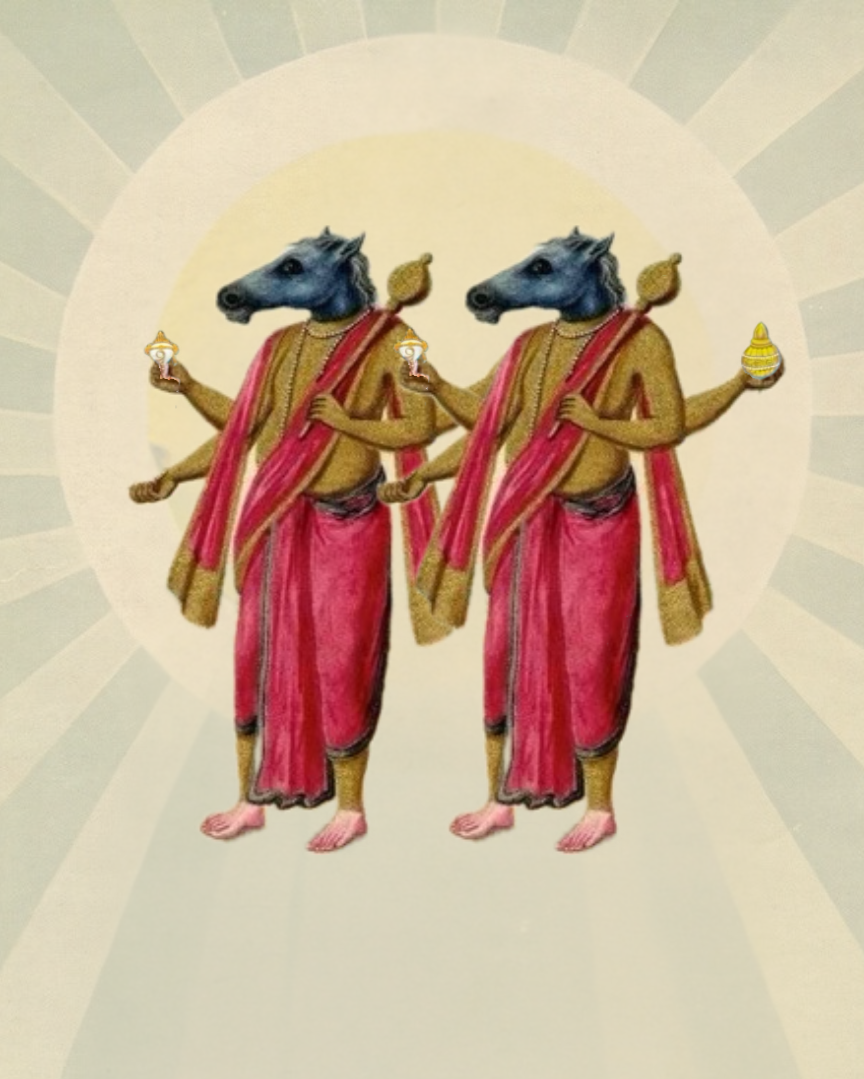
Seated at the beginning of the zodiac, Aśvinī holds the spark of latent power, igniting the unmanifest into manifestation. Initiating the first of the dharma houses and governed by Ketu graha (south node), it marks Sūrya’s uccha (exaltation) point, the emergence of the individual principle, singular and self-illuminating. It is represented in the celestial firmament by two bright stars in the constellation of Meṣa, known in modern astronomy as Hamal (Alpha Arietis) and Sheratan (Beta Arietis), which the ancient Vedic ṛṣis saw as forming the head of a horse.

This asterism holds the energy of Śīghravyāpana Śakti, the power to quickly reach or attain the object of one’s aim. There is a swiftness inherent here, a directness in movement, where intention meets response with minimal delay. There is also an element of the miraculous, an intelligence that moves beyond limitation, where outcomes once thought fixed may be restored, reversed, or brought back into alignment.

Artwork: Pinterest

Ruled by the Aśvinī Kumāras, the celestial physicians to the devas, Daśra and Nāsatya, “bringing help” and “truthfulness,” this Nakṣatra embodies healing, rejuvenation, and the intelligence of alternative medicine. In the Ṛgveda, the twins arrive when called. Help comes to the one who asks. Symbolized by the head of a horse, it carries vitality and the eagerness to begin, to set forth with sensitivity, precision, and a swift, determined current.

The Aśvinī Kumāras are born of a subtle concealment within the solar lineage. When Sañjñā, wife of Sūrya and daughter of Tvaṣṭṛ, could not bear his radiance, she placed her shadow (Chāyā) in her stead and assumed the form of a mare. Sūrya followed, taking the form of a stallion, and through this union the twin horsemen were born, carrying the intelligence of swift restoration, arriving at the threshold where life is renewed.

Initiatives taken now, especially those related to health and healing, are said to bear rapid results, drawing upon the potency of creation itself. There is a subtle current here that replenishes what has been diminished, restoring vitality where life force has waned.

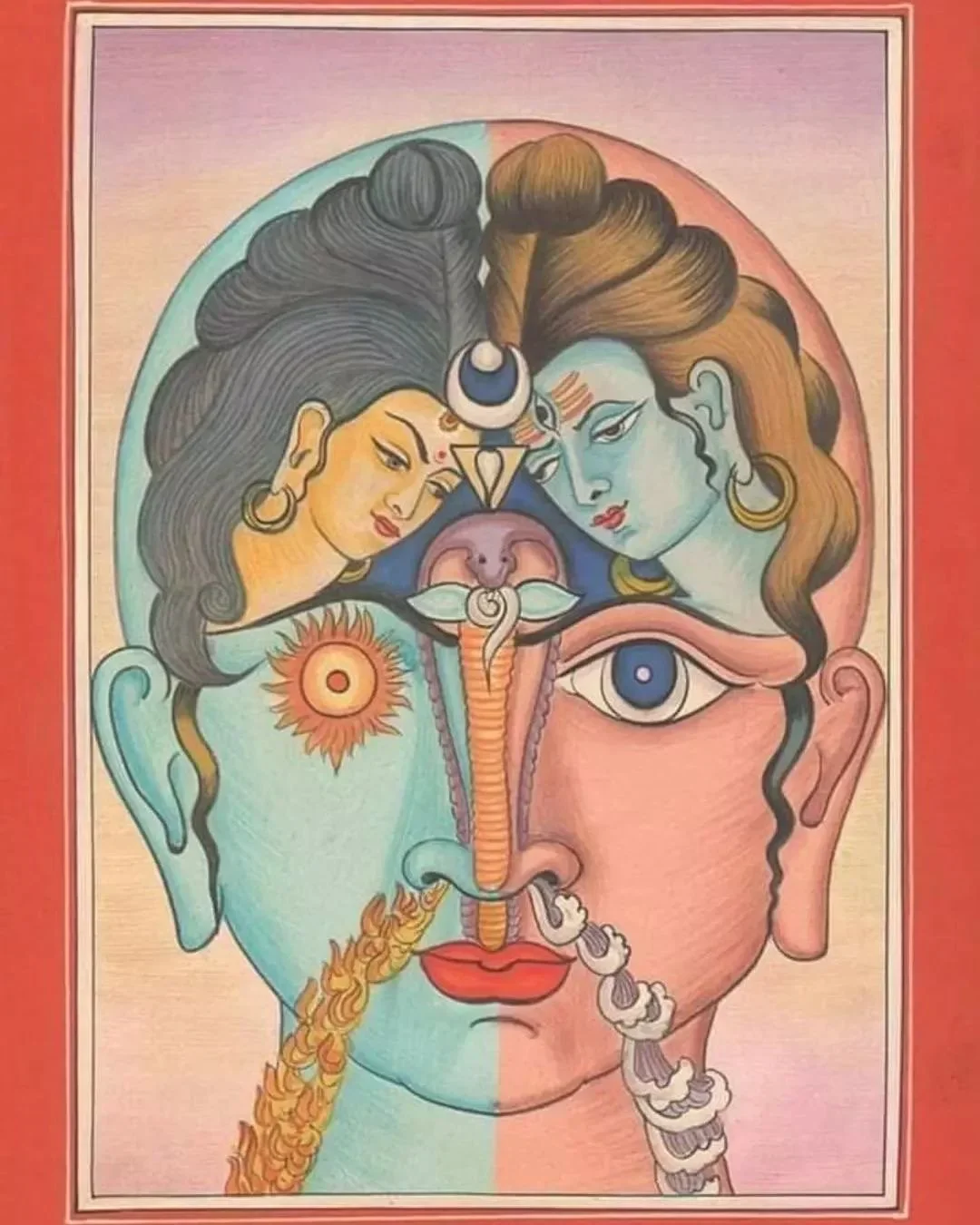
Half animal and half human, they hold an invisible thread linked to the nostrils, to the first and final breath, and to the currents of iḍā and piṅgalā. The practices within Yoga Śāstra encourage the gentle and steady purification of these channels, guiding awareness toward the inner, hidden pathway, through which the journey of transcending identification with the body, the senses, desire, and even the fruits of action unfolds.

Just as the race horse wears blinders to avoid distraction or misstep, we too must maintain singular focus, centered in our own lane. Let us remain resolute, unmoved by the opinions, expectations, or noise of the waking dream and world around us, steadfast in the pursuit of what truly matters.

Kojāgara Pūjā

The lunar month of Āśvina takes its name from this star, for its Pūrṇimā rises in Aśvinī. This is Śarad Pūrṇimā, the autumn full moon, when the Moon shines with all sixteen kalās, sanctified by Kojāgara Pūjā (कोजागरा पूजा), the night vigil to Śrī Lakṣmī.

On this night, Lakṣmī is said to move across the earth, bestowing prosperity, abundance, and auspiciousness upon those she finds awake in devotion. Lamps are lit, mantra japa is offered, vigil is kept, and kheer is left beneath the moonlight to receive its amṛta.

Its name asks a single question: Ko jāgarti? (को जागर्ति?) Who is awake? The one established in the Self, awake through jāgrat, svapna, and suṣupti. As the Bhagavad Gītā says: “That which is night for all beings, therein the self-mastered one is awake.”

In the sky, Śukra, keeper of the Mṛtasañjīvanī vidyā, the knowledge that restores life, rests hidden in Sūrya’s light at the heart of the retrograde, soon to rise reborn as the morning star.

Rāsa Pūrṇimā

Śarad Pūrṇimā is also remembered as the night of the Mahā Rāsa. The Bhāgavata Purāṇa (10.29.1) opens the Rāsa Pañcādhyāyī with these autumn nights: “Seeing those nights of Śarad, fragrant with blossoming jasmine, Bhagavān, taking refuge in Yogamāyā, turned His mind toward play.”

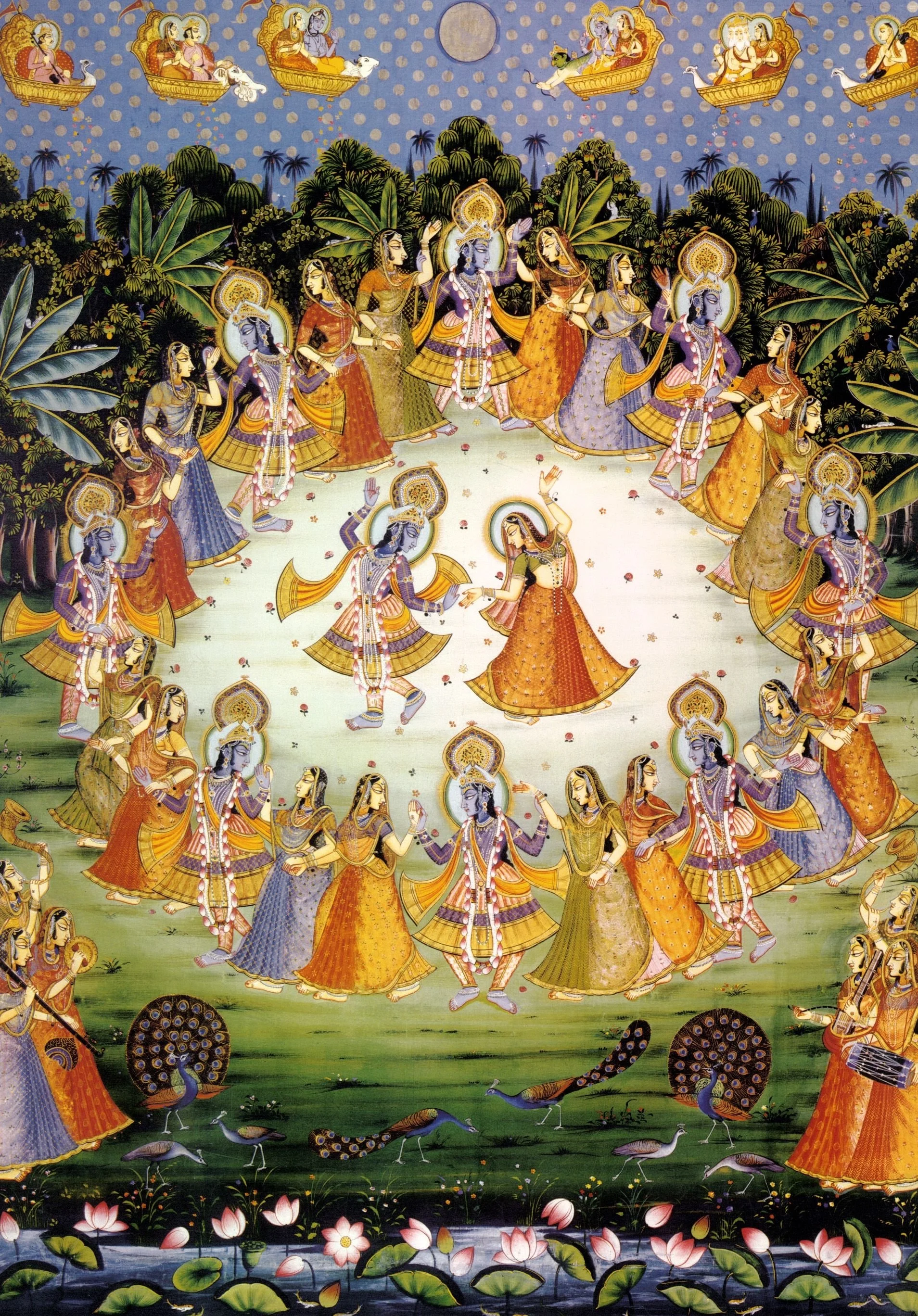
Beneath the full moon, Śrī Kṛṣṇa played his flute on the banks of the Yamunā, and the gopīs, hearing the call, left everything behind. In the circle of the Rāsa, He multiplied Himself, so that each gopī danced with Kṛṣṇa at her side. When pride arose, He vanished. Through longing alone, He returned.

The Rāsa Līlā is the dance of the jīva and Paramātman. The flute is the call of the Self, and the gopīs are the awakened heart, the one who hears and does not delay. Whoever hears this līlā with faith is freed of hṛd-roga, the disease of the heart.

What is ready to be restored? What are you claiming?

Observed Sunday, October 25, with the Pūrṇimā tithi continuing until 9:41 AM IST on October 26.

Kārtika Māsa

The day after this Pūrṇimā, Kārtika begins, revered as the holiest month of the year. The Skanda Purāṇa declares: na kārtika-samo māsaḥ, “there is no month equal to Kārtika.”

As Sūrya passes through his nīca in Tulā and the nights lengthen, Kārtika carries the final stretch of Viṣṇu’s yoga-nidrā, until he rises on Deva Prabodhinī Ekādaśī. It is the threshold where the Divine awakens, and every practice offered now meets that awakening.

It is the month most potent for sādhana. Japa, vrata, dāna, svādhyāya, and the worship of Tulasī are said to bear imperishable fruit, multiplied many times over. Before dawn, the sacred bath of Kārtika snāna is taken, and each evening, lamps are offered (dīpa-dāna), each flame an offering of the inner light.

Kārtika is the month of Dāmodara, Śrī Kṛṣṇa bound by Yaśodā’s rope, the infinite held by love alone. It culminates on Kārtika Pūrṇimā, when the devas themselves descend to celebrate Dev Dīpāvalī.

All my Relations, Tulsi

My schedule is now open again for consultations. → Jyotisa

“Know the Self as the lord of the chariot, the body as the chariot, the intellect as the charioteer, and the mind as the reins. The senses, they say, are the horses.”
Kaṭha Upaniṣad 1.3.3–4