Full Moon in Āśleṣā: The Embracing Star

Full Moon in Āśleṣā

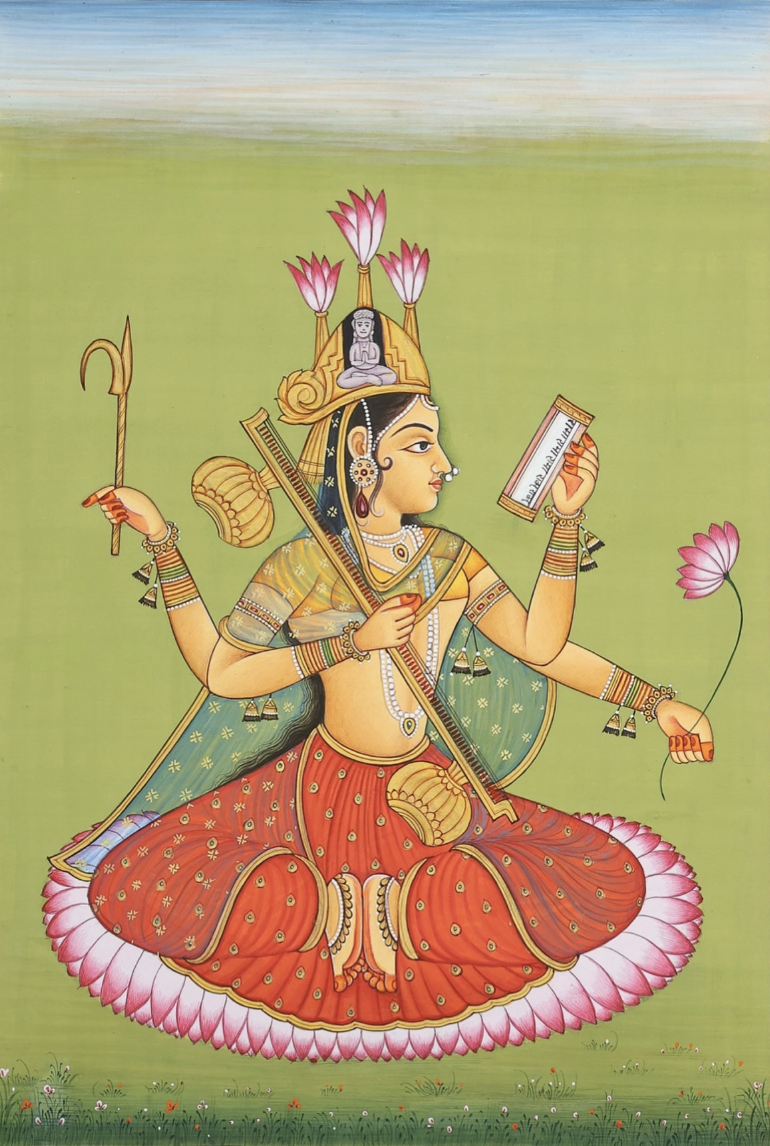
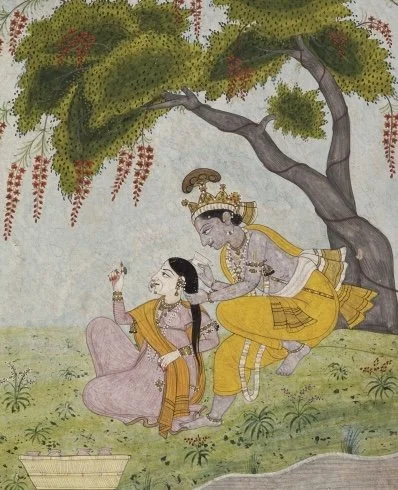
Artowrk: Rita Dixit Indian Miniatures Asavari Ragini: A Painted Melody Murshidabad, Bengal, India c. 1780

The Full Moon (Pūrṇimā) of Māgha (Jan/Feb) rises in the Vedic lunar mansion of Āśleṣā (आश्लेषा). Situated from 16°40′–30° of Kāraka Rāśi (Cancer), the embracing and entwining star appears as a coiling ring of stars in the constellation Hydra. It marks an alchemical threshold where viṣa (poison) becomes amṛta (nectar), drawing awareness toward the subtle work of inner transformation.

Āśleṣā, one of Ketu’s birth stars and the nīca point of Maṅgala (Mars), initiates the gaṇḍānta juncture — the karmic knot between water and fire, Mokṣa and Dharma. Its Devatās are the Nāgās (Sarpas), guardian serpent beings of primordial wisdom. Its animal yoni is the male cat — a nocturnal guardian of thresholds, moving in silence between worlds, master of stillness, instinct, and unseen passage.

Artowrk: Pinterest

Āśleṣā holds the energy of Viṣāśleṣaṇa Śakti — the power to inflict poison, to penetrate and bind at a subtle level — revealing how venom, when rightly handled, becomes medicine, mirroring the inner path where shadow is transmuted into healing. Just as the coiled energy at the base of the spine yearns to merge with its beloved in the crown, Āśleṣā stirs the curiosity to delve deeper and unite with one's desired outcome, weaving disparate elements into coherence and granting true inner authority through the patient art of alchemy.

Āśleṣā is linked with Ādi Śeṣa and Sage Patañjali, pointing to the serpent power of consciousness that binds and releases. Its medicine lies in yoga, mantra, and disciplined inner awareness — the same forces that can entangle the mind become, when refined, the means of profound purification and healing of citta, speech, and body.

What old skin is ready to be shed?

Lalitā Jayantī

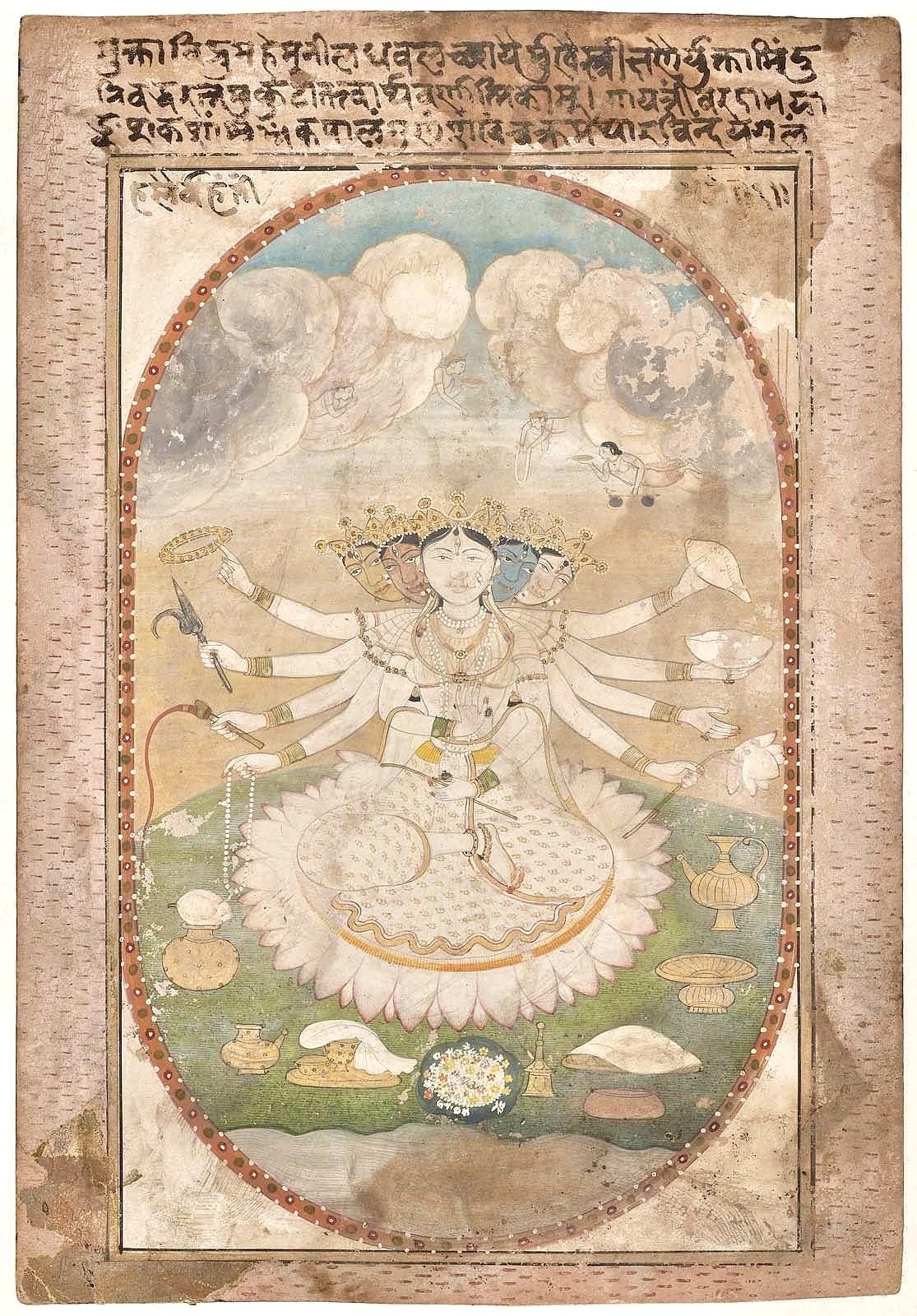
Artwork: Mahāvidyā Tripura Sundarī National Museum, New Delhi 

Lalitā Jayantī commemorates the appearance of the Goddess in her supreme form as Mahāvidyā Tripura Sundarī, the third of the Daśa Mahāvidyās — “Beauty of the Three Cities,” harmonizing the three worlds and the three states of consciousness — who embodies supreme beauty, clarity, and the power of refined discernment. 

This observance honors her as Lalitā (the playful one), Śoḍaśī (ever-perfect youth), Kāmakṣī (she whose gaze bestows grace), and Rājarājeśvarī (the Supreme Empress, sovereign of sovereigns), the radiant fullness of consciousness abiding in effortless grace and wisdom.

All my Relations, Tulsi

Full Moon Timing: 02.01.26 14:09 PST | 02.02.26 3:39 AM IST 

The degree to which a person can grow is directly proportional to the amount of truth he can accept about himself without running away.” 

― Leland Val Van De Wall


Full Moon in Viśākhā: The Star of Purpose

FULL MOON

Artwork: Durga on her mount (vahana) Kota, Rajasthan, North-Western India, ca. 1860 

May 12th 9:56 AM PST | 22:26 IST

May’s full moon (Pūrṇimā) rises on Monday in the Vedic lunar mansion of Viśākhā विशाखा (sidereal Libra), the Star of Purpose.

With the new moon in Bharaṇī (Aries), we were presented with a culmination of recent energies—a pivotal threshold for purification, revealing deeper layers of the self, and initiating us into transformative new beginnings.

Libra, the sign most in need of balance, holds Viśākhā at its edge. This asterism, said to be the birth star of Sūrya Graha (the Sun), invites us to clarify our intentions. Through the churning of duality, the singular is born. Success now depends not only on the goals we set, but on whether they serve a larger whole. There is power in sustained effort and one-pointed focus—while also softening our attachment to the outcome.

Artwork: Pinterst

Viśākhā is symbolized by a triumphal arch, suggesting arrival and initiation, and its name means "two-branched"—signifying the crossroads of choice. Ruled by two deities, Indra (king of the gods and storms) and Agni (god of fire), this lunar mansion awakens the śakti (energy) of ambition, devotion, and courageous pursuit. 

It supports the inner fire needed to clear what has outlived its purpose and to devote oneself to building anew. This lunation invites a quiet harmonizing between self and other—not through striving, but through sincere presence.

This full moon is also known as Buddha Pūrṇimā—the night Siddhārtha Gautama, the one we now revere as the Buddha, sat beneath the Bodhi tree and vowed not to rise until he had seen the truth. Through the long hours of night, he faced the illusions of the mind and the final tests of the path. By dawn, he crossed the threshold into awakening.

Artwork: Pinterest

This full moon also marks Kūrma Jayantī, honoring the second avatāra of Lord Viṣṇu. In this form, Viṣṇu incarnated as the divine tortoise to support Mount Mandara during the Samudra Manthana—the cosmic churning of the ocean. Kūrma avatāra is associated with Śani Graha, who embodies steadiness, restraint, and the capacity to bear what others cannot. Śani exalts in the heart of Libra—governing the control and measured flow of prāṇa that steadies the path of dharma.
We will explore more in our monthly gathering:

Vidyā & Chai — Group Meditation & Sacred Storytelling
5/11 5:30 PM PST | 5/12 6AM IST
More info and blog link in bio. 

All my Relations - Tulsi 

“Ground yourself, strip yourself down, 

To blind loving silence.

Stay there, until you see

You are gazing at the Light

With its own ageless eyes”

~ Jalaluddin Rumi

Full Moon in Aśvinī: The Star of Transport

FULL MOOn पूर्णिमा

Artwork by @chaya.collective - Aśvinī Kumaras

October 17th 13:26 Spain | 4:26 AM PST


The full moon (Pūrṇimā ) of October aligns with the first Vedic lunar mansion in the zodiac, Aśvinī (Aries), known as the star of transport. With the new moon in Hasta finding its culmination here, this period becomes a potent time, charged for new beginnings and the initiation of forward movement with your projects and plans.

Aśvinī holds the spark of latent power, igniting the unmanifest into manifestation. Ruled by the Aśvinī Kumāras, the celestial physicians to the Gods, this nakshatra embodies healing, rejuvenation, and the power of alternative medicine. Symbolized by the head of a horse, it carries the vitality and eagerness to start the journey and express ideas with a swift and determined energy. Initiatives taken now, especially those related to health and healing, are said to bear rapid results, harnessing the potency of creation itself.

Artwork: Pinterest

There’s a desire here for a fresh start and rebirth, one that lays the foundation for something enduring. This is attainable through unwavering focus and a commitment to the inner and outer purifications that may have kept you in a holding pattern. This constellation carries the swift momentum to achieve one’s objectives, much like its animal totem, the horse.  Just as the racehorse wears blinders to avoid distraction or misstep, we too must maintain singular focus, centered in our own lane. Let us remain resolute — unmoved by the opinions, expectations, or noise of the waking dream and world around us — steadfast in the pursuit of what truly matters.

Like a doorway wide open, we enter the final month of Saturn's retrograde, now in Śatabhiṣā. Take advantage of this moment to see things a little more clearly. This period offers a second chance to revisit unresolved matters from early March and April, with a fresh perspective—inviting you to approach them with newfound clarity and refined sense of mastery. 

With Jupiter also retrograde in Mṛgaśirā, the Searching Star, we are called inward—to recalibrate our inner compass and deepen our quest for truth and wisdom. This is a time for introspection, for refining the tools we carry forward on our path, and for embracing the revelations that emerge from within.

Artwork: Pinterest - Rāsalīlā

This potent full moon marks the beginning of Kārttik, one of the most sacred months in the Vedic calendar, and is celebrated as Sharad Pūrṇimā. On this night, the moon is adorned with all sixteen celestial arts (kalas), enhancing its spiritual significance. Its healing and nurturing energies are believed to be at their peak, and its light is said to carry divine nectar, offering rejuvenation to those who bathe in its glow.

Legend tells of Lord Kṛṣṇa performing the divine Rāsalīlā with the gopis of Vṛndāvan under this luminous full moon, symbolizing the union between the devotee and the divine. 

The celebration also marks the end of the monsoon season. It is believed that Goddess Lakṣmī descends to Earth on this night—her devotees seek to become absorbed in her eightfold nature, offering their hearts in devotion and reverence.

Many will engage in moon-gazing, place homemade rice pudding (kheer) under the moonlight, or immerse themselves in devotion to Goddess Lakṣmī. These rituals harness the positive energies of the moon, inviting blessings of abundance, rejuvenation, and spiritual elevation into their lives.

ॐ श्रीं महा लक्ष्म्यै नमः

All my Relations

To book a private Vedic Astrology consultations, pleave visit: Jyotish Astrology