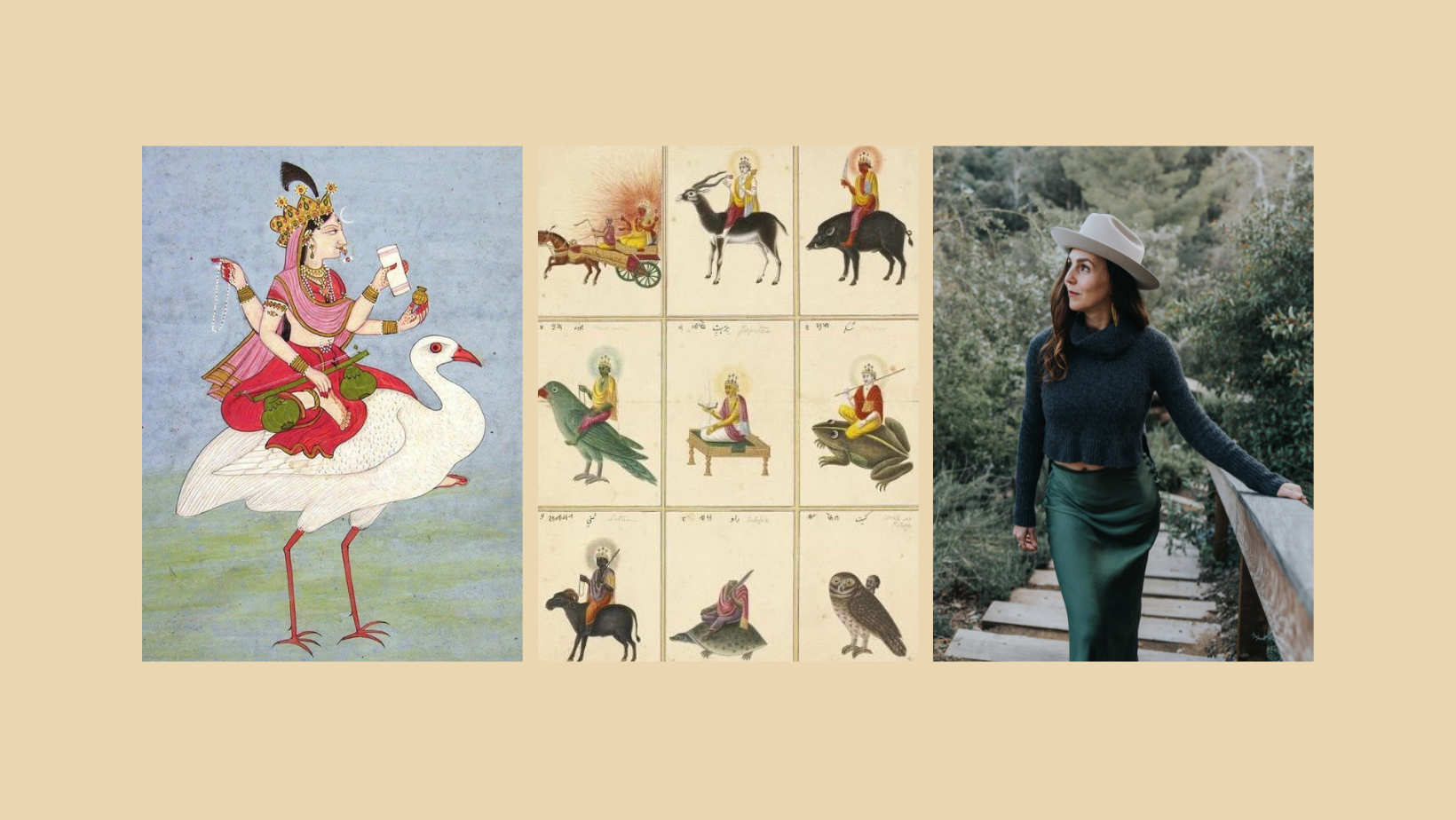
Chaitra Navarātri: The Nine Nights of the Divine Feminine

CHAITRA NAVARĀTRI

March 19th - 27th

Chaitra Navarātri begins on the Pratipadā tithi in the Śukla Pakṣa of Chaitra, marking nine days of devotion and renewal, culminating with Rāma Navamī. This festival celebrates the arrival of spring, symbolizing blossoming life and spiritual purification.

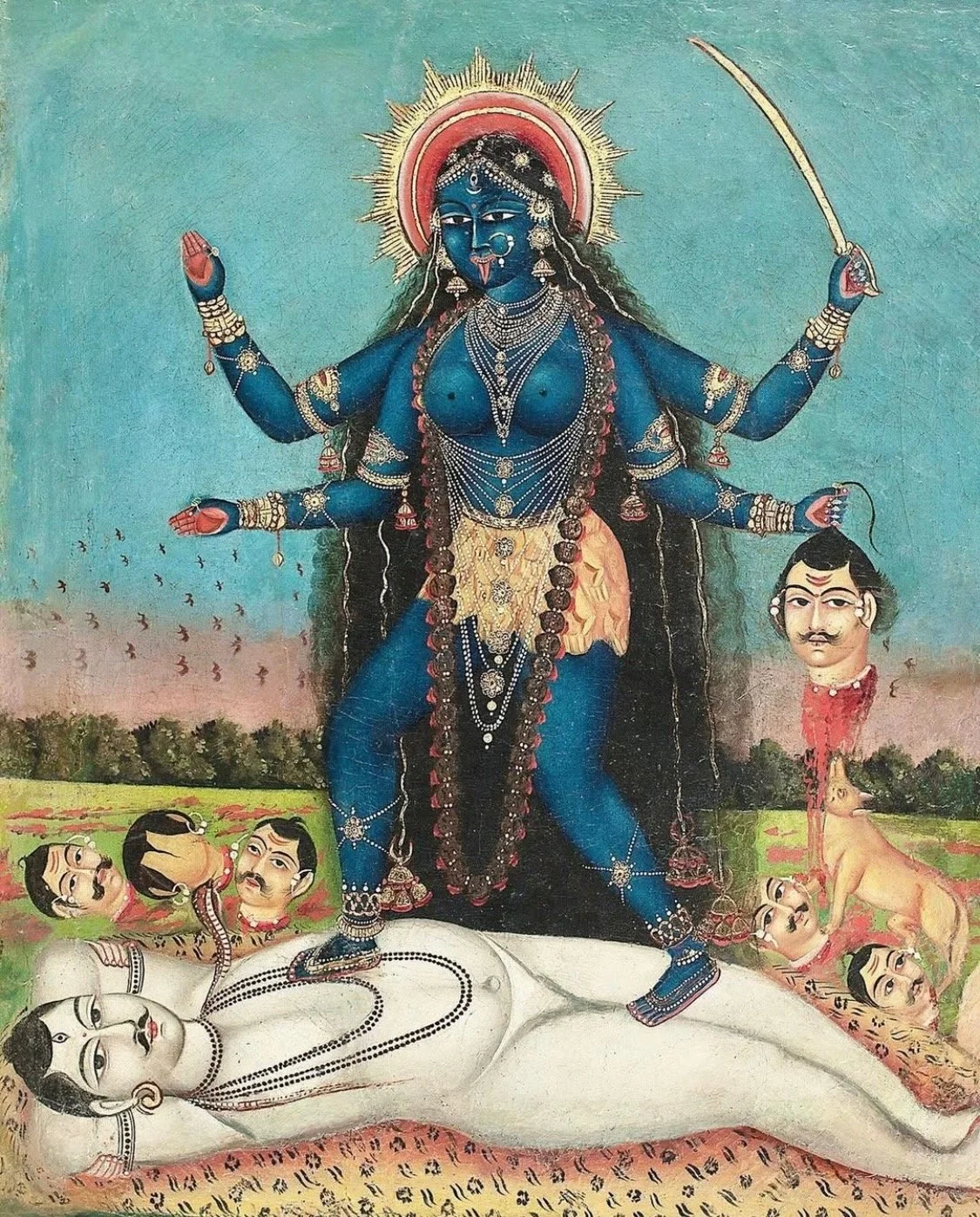
Dedicated to Goddess Durgā and her nine forms (Navadurgā), Navarātri is a time of deep transformation. In Śrīvidyā traditions, it is also associated with Mahāvidyā Tripura Sundarī — The Beautiful One of the Three Cities (also known as Mā Ambikā and Rāja Rājeśvarī), the embodiment of supreme beauty, clarity, and refined discernment. Through her grace, we learn to see beyond the architecture of illusion, aligning with the deeper intelligence that orchestrates all things.

An internal quest is invoked to locate our seat within the heart of the Goddess. In a world that seizes our attention to seek truth outside ourselves, we’re called to go deeper within and cultivate a direct experience with Her.

Devī is that awakening force, the primordial energy within us awaiting our attention. Yoga teaches that whatever we focus on grows stronger in our lives. Move beyond your ideas of who she is and how she can be reached.

This window is ripe for putting into practice the teachings found in the yoga śāstra. In quieting our mind and embracing both our shadows and light — we’re called to enter that space and transcend.

As we tend to śakti and establish a foundation in Her, we awaken our power to focus and draw our energies inside — this continued focus is active meditation calling us to become absorbed in Her.

She is the embodiment of all that is and ever will be; She is our breath and gives life to all. Yet she cannot be reached by contemplation or intellectual understanding; she can only be touched through direct experience — requiring digestion and stabilization to be truly lived.

Can you answer that call?

ॐ श्री मात्रे नमः 

This Pratipadā tithi also marks Ugadi, the beginning of the new year in the South Indian lunisolar calendar — a threshold of renewal and the opening of a new cycle.

Mercury Retrograde in Pūrvabhādrapadā: The Scorching Star

MERCURY RETROGRADE

02.26-03.21

Budha Graha (Mercury) stations retrograde on February 26th in the Vedic lunar mansion of Pūrvabhādrapadā पूर्वभाद्रपदा (Aquarius), the Scorching Star — punctuating a passage of deep reflection, reimagination, and renewal.

As the one who bestows discernment, Budha retrograde invites you to return to the center of your wheel, and as he retraces his steps through Pūrvabhādrapadā, what has already been set into motion gathers weight, asking to be met with greater clarity and consequence.

Pūrva Bhādrapadā is symbolized by metamorphosis, rebirth, tapas (penance), perseverance, and undifferentiated spiritual fire — the kind that has the capacity to raise our consciousness. As one of the birth stars of Mercury, it represents the churning of the chaos and turmoil of fragmentation that births the wisdom of neutrality.

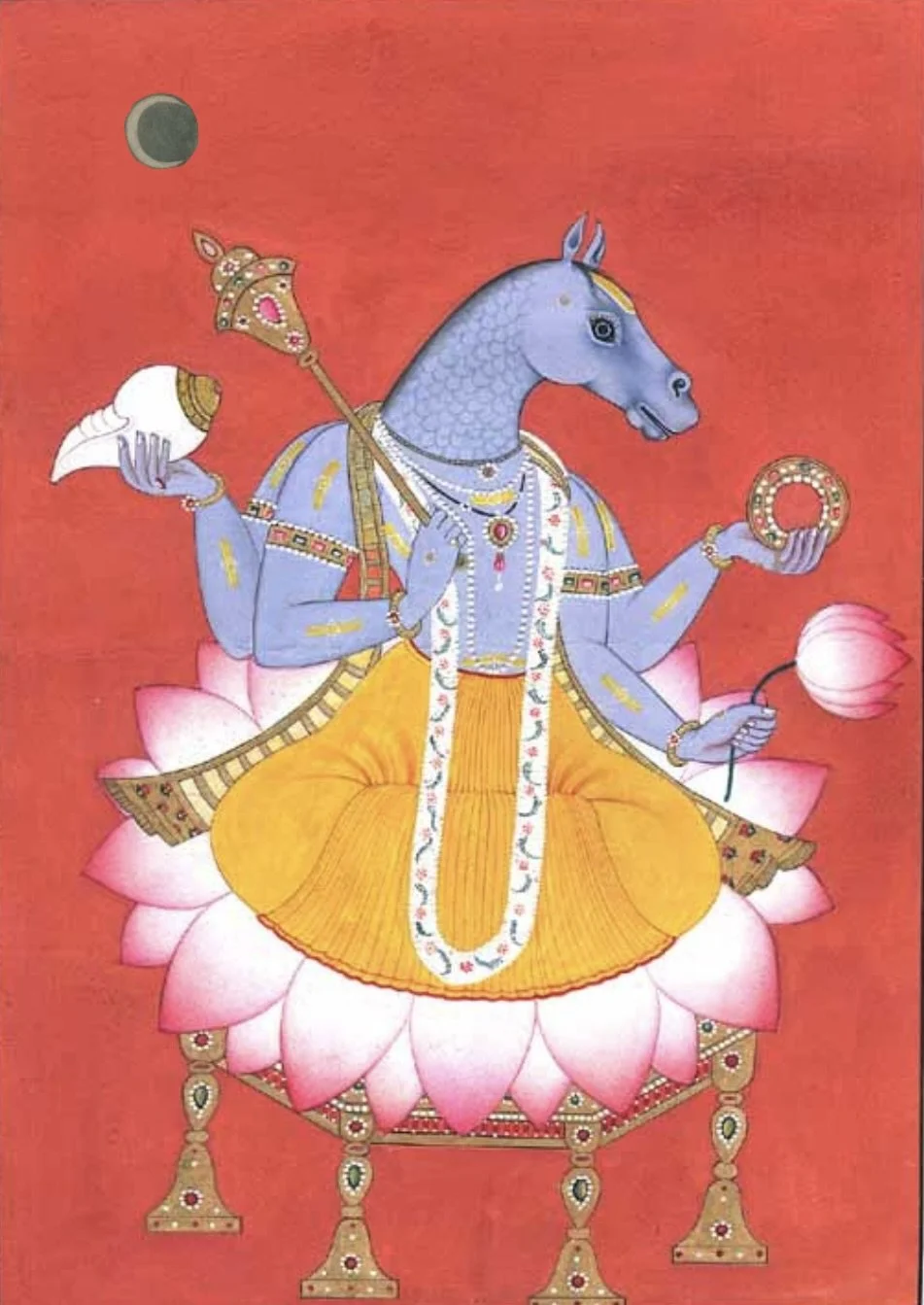
The Burning Pair’s deity (Aja Ekapāda) stands on one leg and has two heads — split yet able to see in both directions — bridging heaven and earth through elevation and sacrifice.

Holding Yajamāna Udyamana Śakti — the power of elevation through sacrifice — Pūrvabhādrapadā initiates an alchemical refinement of raw potential. Through discipline and renunciation, this energy is transformed into awakened wisdom. 

This nakṣatra does not merely demand confrontation with duality; it invites us into a dance of integration, where material ambition and spiritual transcendence find their rightful place.

How we manage vast reservoirs of life force energy becomes the defining arc of this cycle, shaping our capacity to channel intensity into focused intention. Yet the cultivation of inner contentment amidst this dynamic flux is equally vital. 

Symbolized by a funeral pyre, we stand at the precipice of transformation, where the purifying fire of Rūdra dissolves illusion.

Coinciding with the Lunar Eclipse in Leo and accompanied by four other grahas, this passage through Pūrvabhādrapadā heightens its fire, bringing identity, authorship, and intention into sharper focus. What has been extreme seeks tempering. What has been scattered seeks coherence. What has been initiated now demands conscious integration.

It is a period of intellectual purification, where communication is tested and refined — not for speed, but for depth. Unresolved matters from the past — especially those placed on the back burner — may resurface, seeking resolution through contemplation rather than reaction. Through introspection and surrender, the trials of this transit lead not to confusion, but to spiritual illumination and ultimate liberation.

Mercury steps back into Śatabhiṣak on march 10th and stations direct there on March 21st, consolidating what has been clarified in flame and stabilizing the insight that emerged during the eclipse portal, guiding it into a landing space of integration, completion, and practical alignment.

With this stabilization, the energy ignited during this cycle officially sets the year of the Fire Horse ablaze, propelling what has been revealed into motion.

We are stepping powerfully into a new timeline. Some karmas are requesting completion, release, and unraveling. Return to the center of your wheel and step into greater balance and neutrality.

All My Relations

 ॐ ब्रां ब्रीं ब्रौं सः बुधाय नमः

Slow things down and they become more beautiful - David Lynch 

Full Moon in Āśleṣā: The Embracing Star

Full Moon in Āśleṣā

Artowrk: Rita Dixit Indian Miniatures Asavari Ragini: A Painted Melody Murshidabad, Bengal, India c. 1780

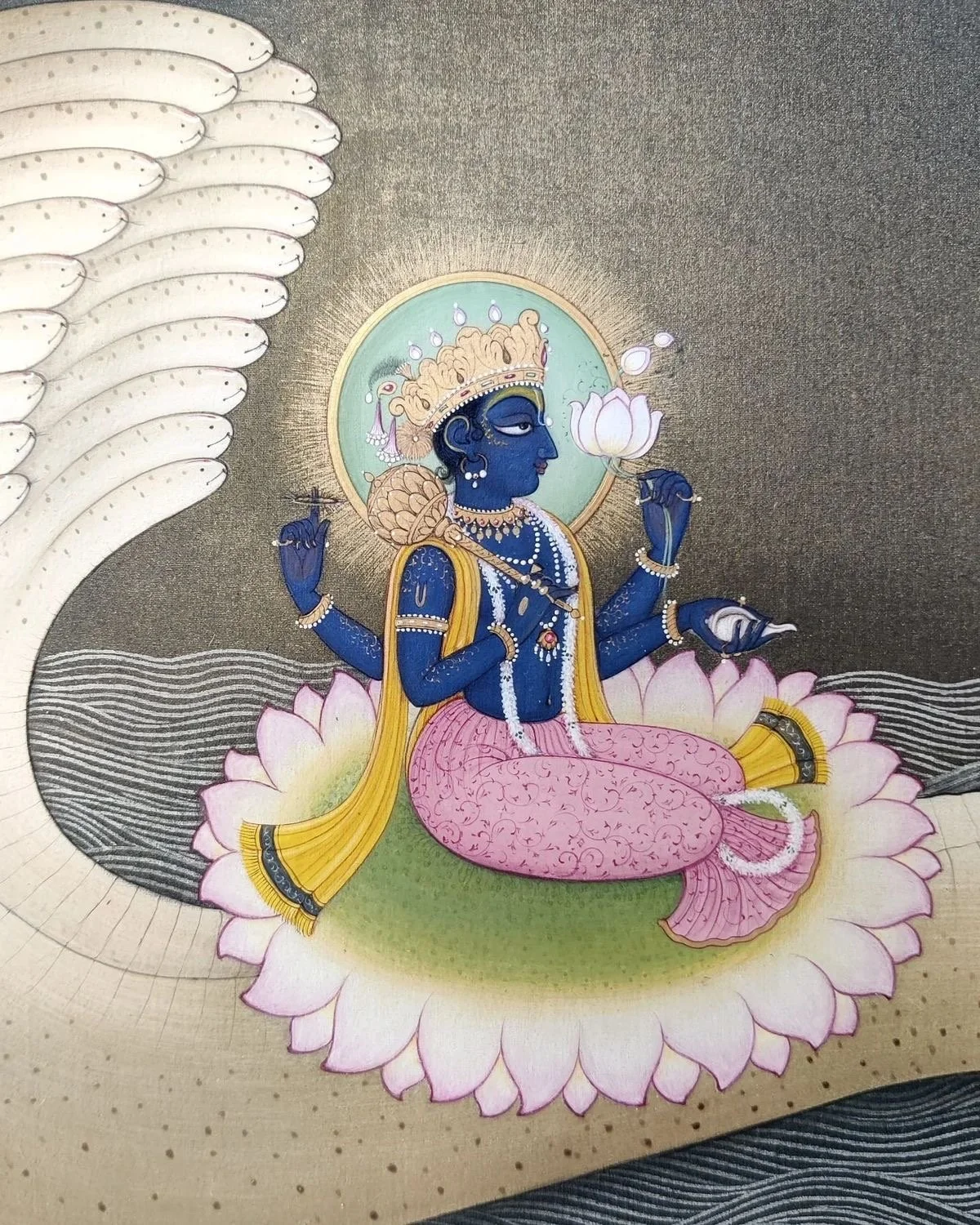
The Full Moon (Pūrṇimā) of Māgha (Jan/Feb) rises in the Vedic lunar mansion of Āśleṣā (आश्लेषा). Situated from 16°40′–30° of Kāraka Rāśi (Cancer), the embracing and entwining star appears as a coiling ring of stars in the constellation Hydra. It marks an alchemical threshold where viṣa (poison) becomes amṛta (nectar), drawing awareness toward the subtle work of inner transformation.

Āśleṣā, one of Ketu’s birth stars and the nīca point of Maṅgala (Mars), initiates the gaṇḍānta juncture — the karmic knot between water and fire, Mokṣa and Dharma. Its Devatās are the Nāgās (Sarpas), guardian serpent beings of primordial wisdom. Its animal yoni is the male cat — a nocturnal guardian of thresholds, moving in silence between worlds, master of stillness, instinct, and unseen passage.

Artowrk: Pinterest

Āśleṣā holds the energy of Viṣāśleṣaṇa Śakti — the power to inflict poison, to penetrate and bind at a subtle level — revealing how venom, when rightly handled, becomes medicine, mirroring the inner path where shadow is transmuted into healing. Just as the coiled energy at the base of the spine yearns to merge with its beloved in the crown, Āśleṣā stirs the curiosity to delve deeper and unite with one's desired outcome, weaving disparate elements into coherence and granting true inner authority through the patient art of alchemy.

Āśleṣā is linked with Ādi Śeṣa and Sage Patañjali, pointing to the serpent power of consciousness that binds and releases. Its medicine lies in yoga, mantra, and disciplined inner awareness — the same forces that can entangle the mind become, when refined, the means of profound purification and healing of citta, speech, and body.

What old skin is ready to be shed?

Lalitā Jayantī

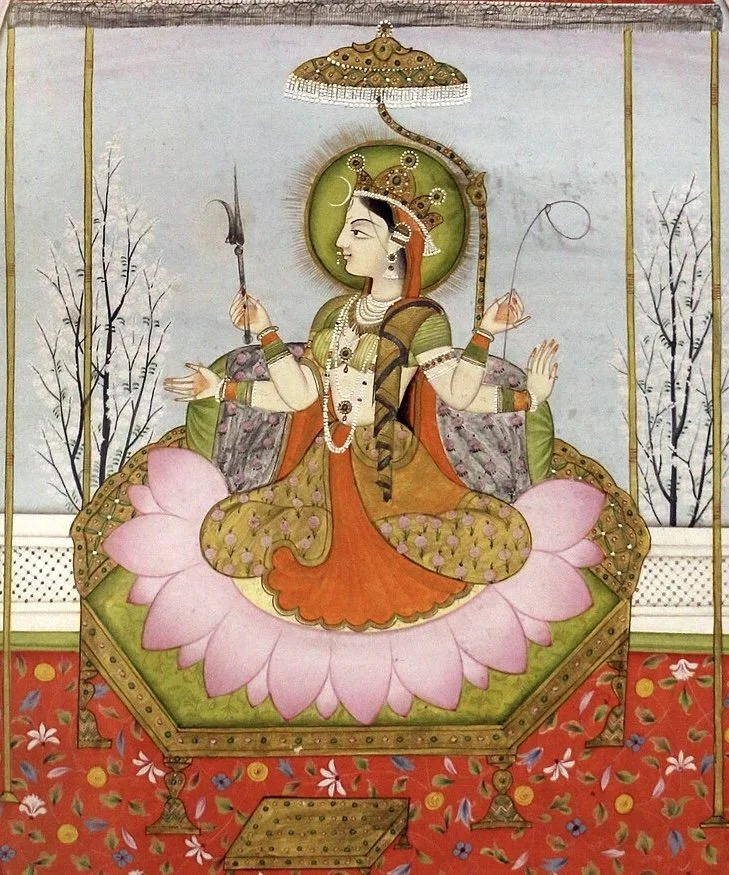
Artwork: Mahāvidyā Tripura Sundarī National Museum, New Delhi 

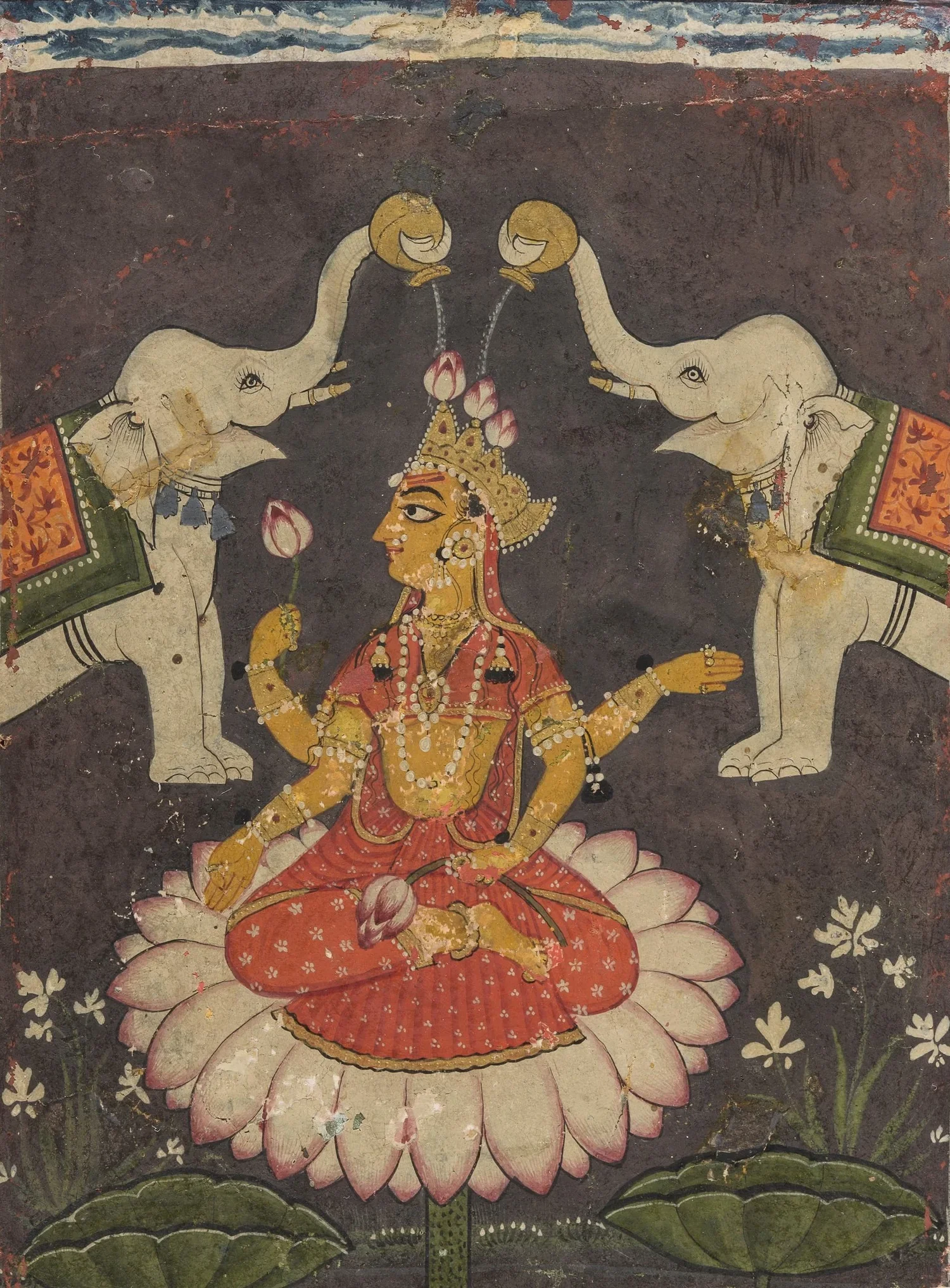
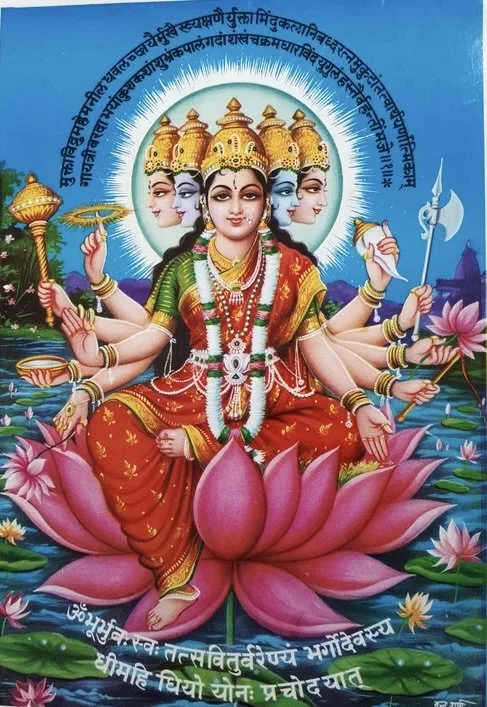
Lalitā Jayantī commemorates the appearance of the Goddess in her supreme form as Mahāvidyā Tripura Sundarī, the third of the Daśa Mahāvidyās — “Beauty of the Three Cities,” harmonizing the three worlds and the three states of consciousness — who embodies supreme beauty, clarity, and the power of refined discernment. 

This observance honors her as Lalitā (the playful one), Śoḍaśī (ever-perfect youth), Kāmakṣī (she whose gaze bestows grace), and Rājarājeśvarī (the Supreme Empress, sovereign of sovereigns), the radiant fullness of consciousness abiding in effortless grace and wisdom.

All my Relations, Tulsi

Full Moon Timing: 02.01.26 14:09 PST | 02.02.26 3:39 AM IST 

The degree to which a person can grow is directly proportional to the amount of truth he can accept about himself without running away.” 

― Leland Val Van De Wall