Dīpāvalī: The Five Days of Light

DĪPĀVALI दीपावलि: FESTIVAL OF LIGHTS
11.06-11.10

November 6th: Dīpāvalī (Dhanteras) | Dhanvantari Jayantī
November 7th: Naraka Caturdaśī | Kālī Caudaś | Hanumān Pūjā
November 8th/9th: New Moon in Viśākhā (Libra) | Dīpāvalī | Mahālakṣmī (Lakṣmī Pūjā)
November 9th: Govardhana Pūjā | Annakūṭa
November 10th: Yama Dvitīyā | Bhāī Dūj

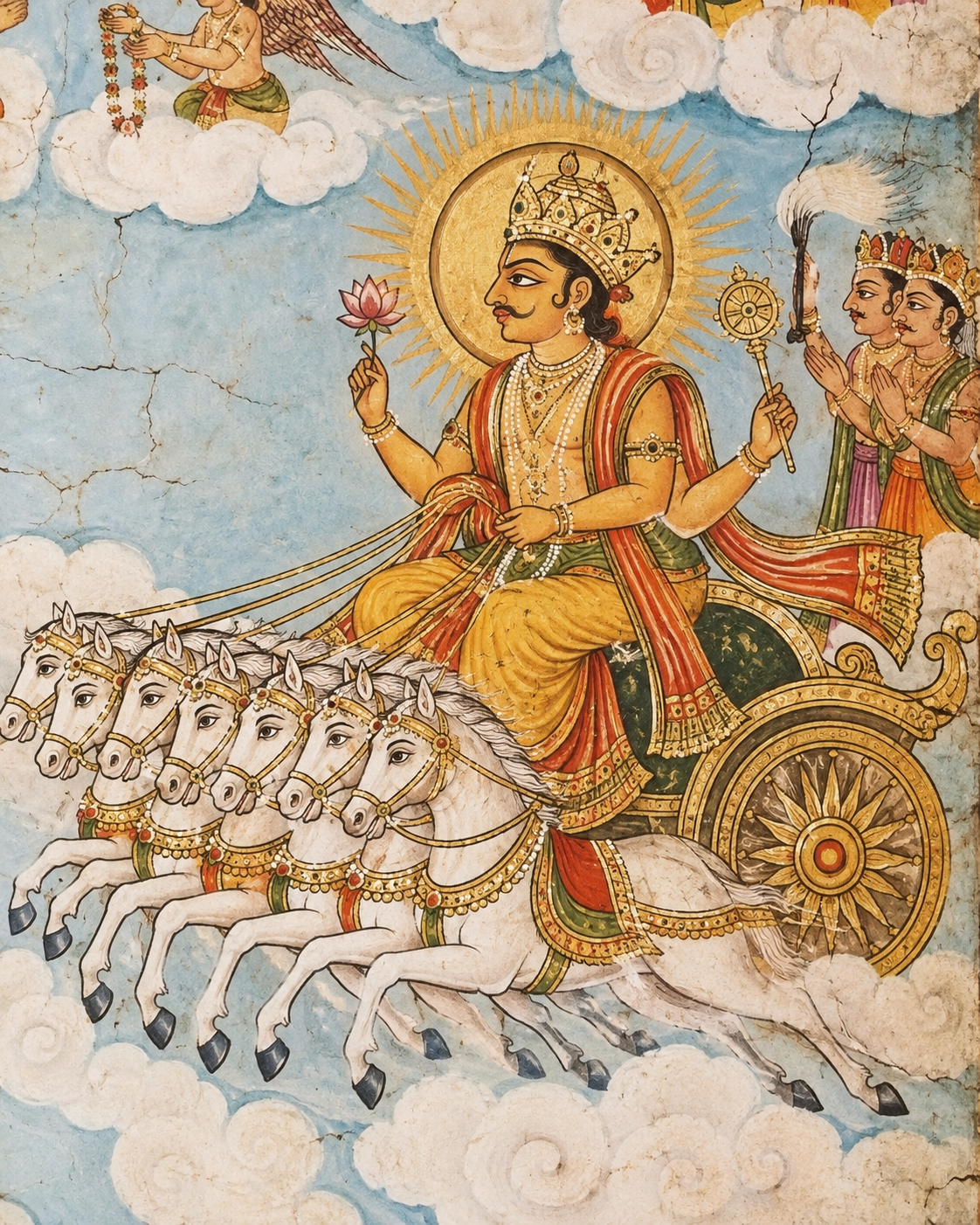
Today marks the beginning of Dīpāvalī, the revered Festival of Lights. Celebrated in the Vedic lunar month of Kārttik (October/November), it unfolds over five days, beginning with Dhanteras and reaching its central observance on the Amāvāsyā tithi (new moon), the most significant night of the festival.

On this occasion, we celebrate the victory of light over darkness. This year the new moon falls in Viśākhā (Tulā), where the Sun is nīca and its light is at its faintest of the year, held in the sign of Śukra, the planet of Lakṣmī. The Ṛṣis placed the festival of lamps precisely where outer light is weakest, so that we might kindle it within.

Five Days as a Path of Ascent (Earth to Ether)

The five days of Dīpāvalī reveal a profound correspondence between the human constitution and the cosmic order. Through the five mahābhūtas, the festival traces the refinement of the embodied self, each day revealing a dimension of the relationship between the individual and the universal. What begins with the honoring of the body and the elements culminates in the recognition of their underlying unity. Each day holds its own teaching and a corresponding offering for the home and the heart.
Day 1 ✧ Dhanteras | Dhanvantari Jayantī | Friday 11.06

Pṛthvī (Earth). The body, the herbs, the vessel of amṛta.

Dhana-trayodaśī opens the festival with the birth of Dhanvantari.

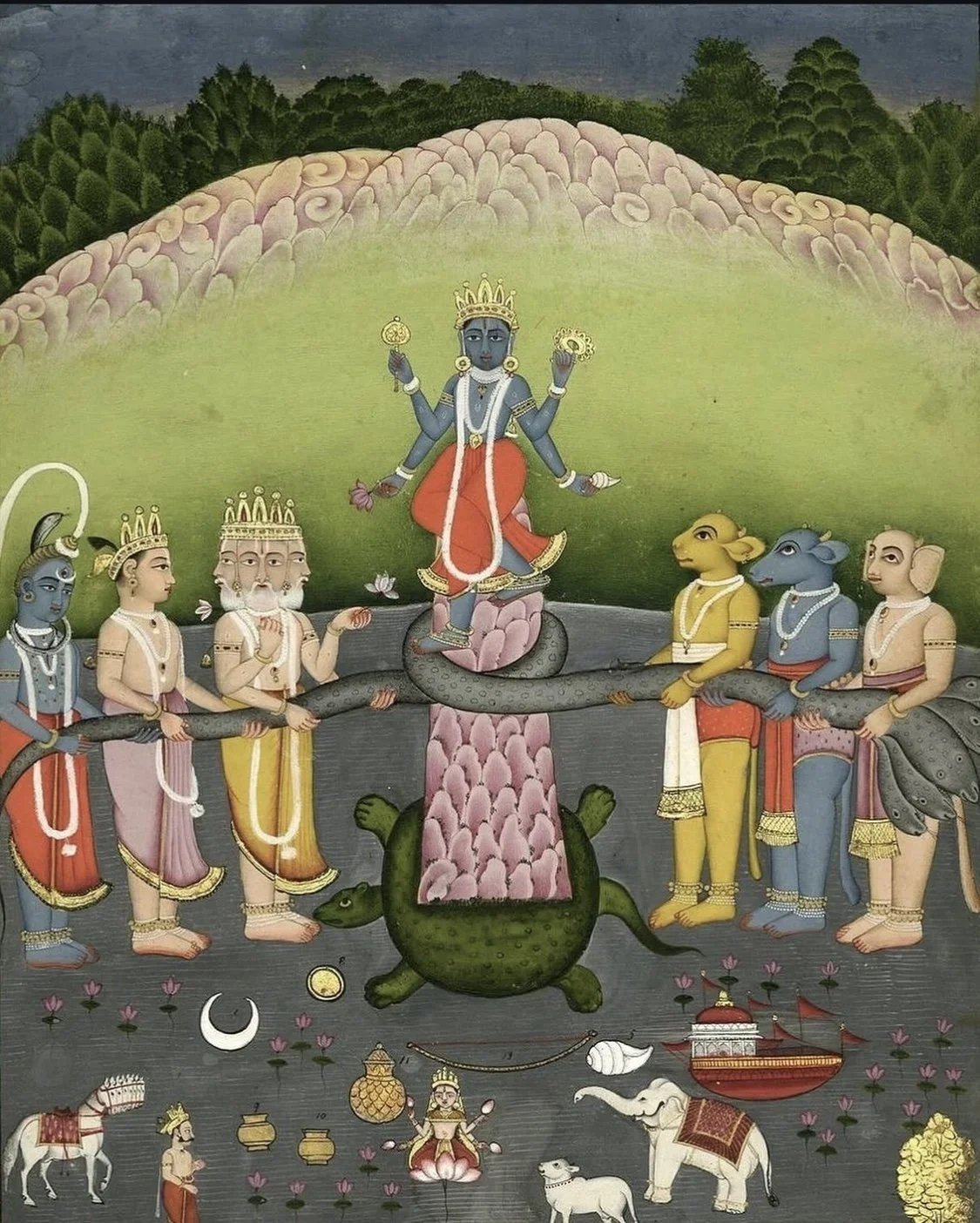
It is said that when Indra, proud and careless, cast aside a garland given by the sage Durvāsa, Śrī withdrew from the three worlds. To bring her back, the devas and asuras churned the ocean of milk, with Mount Mandara as the rod, Vāsuki as the rope, and Viṣṇu as Kūrma holding it all upon his back. Poison rose first, then treasures, then Mahālakṣmī herself. Last came Dhanvantari, physician of the gods and an aṃśa of Viṣṇu, holding the kalaśa of amṛta in his hands. He is revered as the source of Āyurveda.

Lakṣmī and Dhanvantari rise from the same ocean. Wealth begins as health.

At dusk a single lamp is set facing south, the direction of Yama, the Lord of Death. This Yama Dīpa asks protection from untimely death for the whole household.

Day 1 – Traditionally: Dhanvantari is worshipped for health. Lakṣmī and Kubera are honored in Pradoṣa kāla, the window after sunset, ideally while the fixed Vṛṣabha lagna is rising so that wealth remains. At dusk the Yama Dīpa is lit outside the home. Many also bring home new gold, silver, or a metal vessel.

The act: Wake before sunrise and worship Lord Viṣṇu as Dhanvantari. Help someone with medical care, and buy something auspicious for your home. At dusk, light a diya outside your main entrance, facing south, for Lord Yamarāja; some light one for each family member and keep it lit through the night. After sunset, offer a lamp to Lakṣmī.
Day 2 ✧ Naraka Caturdaśī | Choṭī Dīpāvalī | Kālī Caudaś | Hanumān Pūjā | Saturday 11.07

Jala (Water). The bath, the oil, the tarpaṇam.

On the fourteenth night, Kṛṣṇa ends the demon Narakāsura before dawn and frees the sixteen thousand he held captive. What has bound us is released.

This is also Kālī Caudaś, when the dark goddess is revered as an awakening and purifying force, and in the Ayodhyā tradition, Hanumān Jayantī. Strength and devotion stand guard on the eve of the new moon.

Day 2 – Traditionally: Before sunrise, the body is anointed with sesame oil for abhyaṅga snāna, and the apāmārga plant is circled over the head while bathing to remove the fear of Naraka. Afterward, water is offered to Yama in tarpaṇa, reciting his fourteen names. In the evening a four-wick lamp is lit outside the home for Yama, and lamps are placed throughout the house.

The act: Rise before sunrise. Oil the body with sesame, then bathe with a few drops of Gaṅgā jal in the water. Let what is heavy wash away. This is a day of inner purification, when darkness goes out. In the evening, light diyas, worship Lakṣmī-Nārāyaṇa, offer prayers to Lord Mahādeva and Lord Yamarāja, and offer food or clothes to someone in need.

Day 3 ✧ Dīpāvalī | Lakṣmī Pūjā | New Moon in Viśākhā (Libra) | Sunday 11.08

Agni (Fire). The lamps, the mantras, the inner flame.

The heart of the festival falls on the Amāvāsyā, the darkest night of the year. This year it is the New Moon in Viśākhā (Libra), the Star of Purpose, ruled by Indrāgni: Indra, king of the gods, and Agni, the sacred fire. Its symbol is the triumphal arch, the gateway one passes through after a long road.

It is the arch Rāma walked through on his return to Ayodhyā after fourteen years of exile and his victory over Rāvaṇa, when the whole city lit lamps to bring him home.

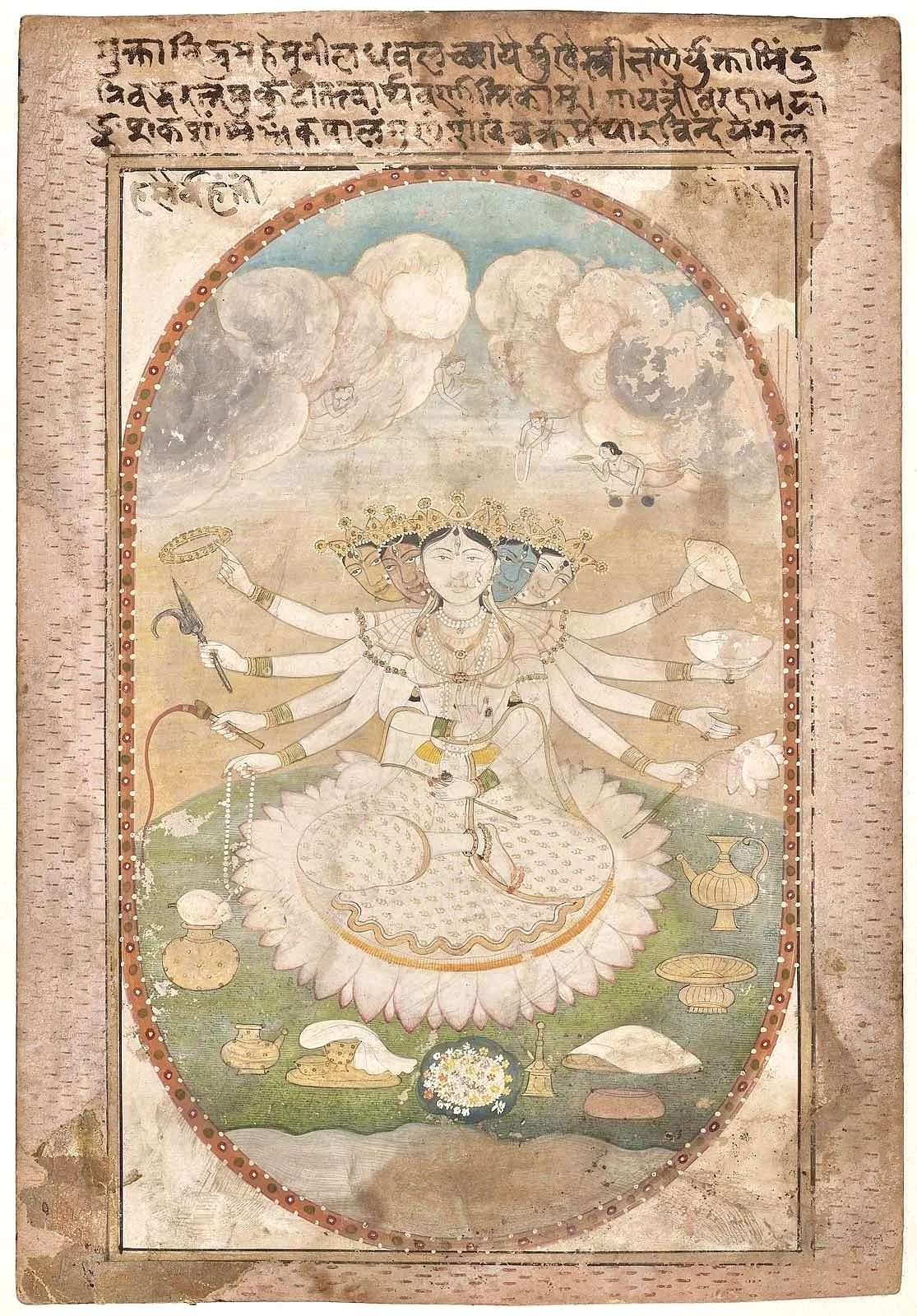
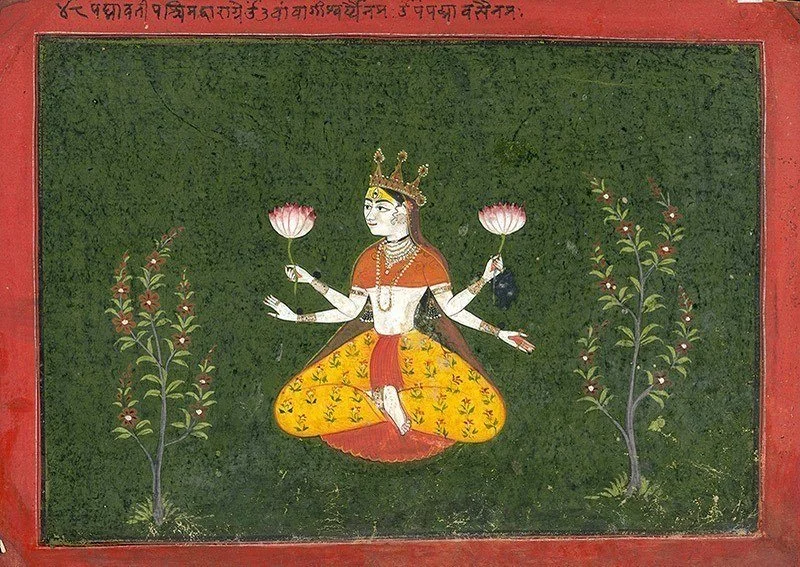
We honor Gaṇeśa first, the remover of obstacles, then invoke Mahālakṣmī, the eight-fold embodiment of abundance. It is said her energy resides in harmonious spaces free from conflict. She does not enter the cluttered house. She comes where a lamp is lit and kept. In Bengal, this same night is Kālī Pūjā.

Day 3 – Traditionally: Lakṣmī Pūjā is performed in Pradoṣa kāla, after sunset, during the fixed Vṛṣabha lagna so that she remains. Gaṇeśa is worshipped first, then Lakṣmī, and merchants place their new account books before her. Families clean their homes and draw rangoli at the threshold, don new clothes, set intentions for the year ahead, and exchange gifts and sweets.

The act: Your home is now ready to welcome Gaṇeśa, Sarasvatī, and Lakṣmī. Clean your home, clear any pending dues, and donate to those in need before the end of the day. In the evening, light diyas, make rangoli, do pūjā, and keep one lamp burning through the night.

Day 4 ✧ Govardhana Pūjā | Annakūṭa | Monday 11.09
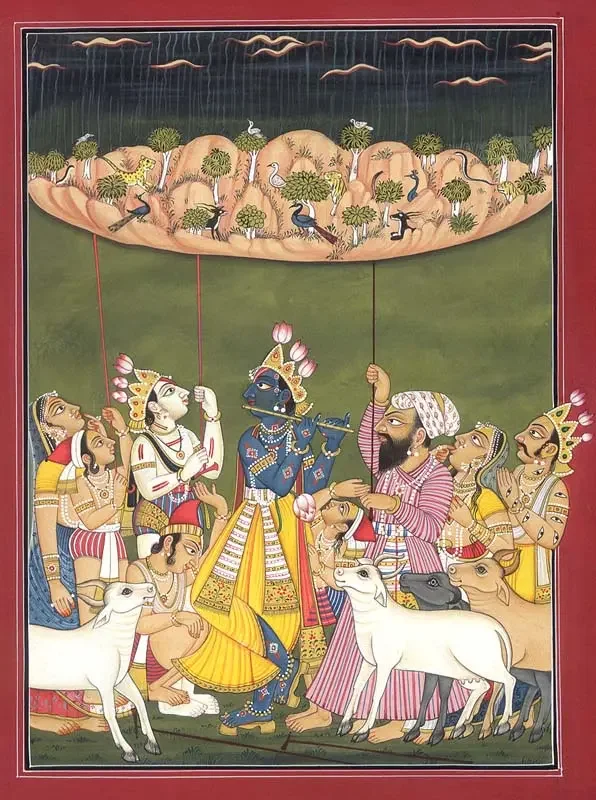
Vāyu (Air). The mountain, the wind, the offering of food.

The morning after Indra's star, Indra is humbled. When the people of Vraja turned their worship from him to the hill that fed their cows, Indra sent seven days of storm. Kṛṣṇa lifted Mount Govardhana on one finger, and all of Vraja sheltered beneath it until the rains gave up.

Annakūṭa, the mountain of food, is offered back to the One who sustains. In Gujarat and much of western India, this day opens the new year.

Day 4 – Traditionally: A small Govardhana is shaped, often of cow dung, worshipped, and circled in parikramā. Cows are bathed and honored, and Annakūṭa, a mountain of food, is offered to Kṛṣṇa and then shared. In parts of the South and West, this is also Bali Pratipadā.

The act: Give thanks for what sustains us. Prepare Annakūṭa and offer it to Bhagavān Kṛṣṇa, worship Mā Annapūrṇā, feed the cows, and offer prasād to someone in need.

Day 5 ✧ Yama Dvitīyā | Bhāī Dūj | Tuesday 11.10
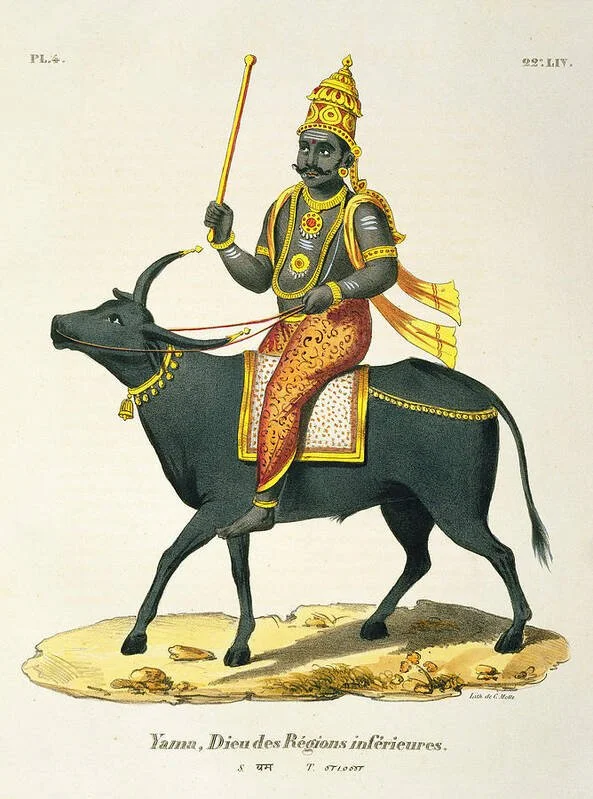
Ākāśa (Ether). The bond of brother and sister (jīva to Paramātmā, a stepping into the space of oneness).

Yama visits his sister Yamunā. She marks his brow with tilak and feeds him by her own hand, and in return he blesses all who honor their siblings on this day.

Day 5 – Traditionally: A morning bath, ideally in the Yamunā. In the afternoon (aparāhṇa), Yama is worshipped with Citragupta and his attendants, and arghya is offered. Sisters apply tilak, perform āratī, and feed their brothers by hand, and brothers offer gifts in return.

The act: Feed, call, or bless a brother or sister, or someone you hold as kin.

The lamp between two doors

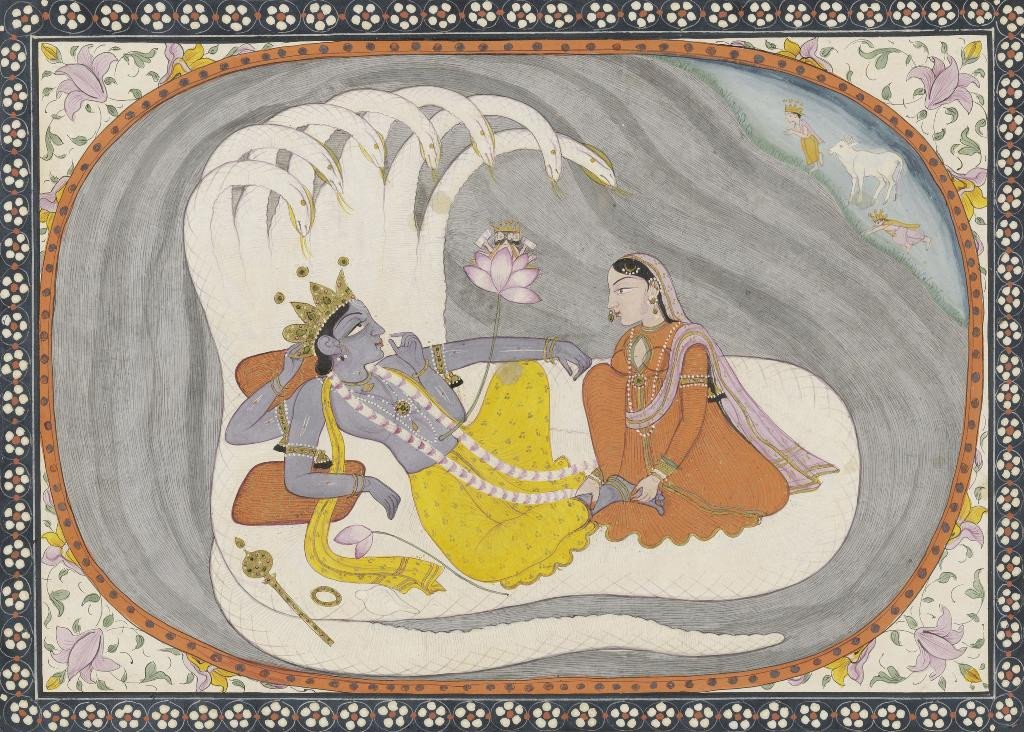
Day by day, the bhūtas are balanced and the sheaths purified, so that we may welcome Lakṣmī's eight-fold abundance into our homes, our hearts, and our lives. By Bhāī Dūj, we step into the space of oneness, a microcosm in harmony with the macrocosm, and find that the light we lit at every threshold was never outside us.

Tad dūre tad v antike, tad antarasya sarvasya.

That which is far away is also near, and dwells within all.
— Īśa Upaniṣad 5

asato mā sad gamaya
tamaso mā jyotir gamaya
mṛtyor mā amṛtaṃ gamaya

Lead me from the unreal to the real, from darkness to light, from death to immortality.
— Bṛhadāraṇyaka Upaniṣad 1.3.28

As we gather in joy and reflection, let us embrace the energies of renewal and prosperity that accompany this festival. Wishing everyone a joyful and prosperous Dīpāvali! 

With love all ways

शुभ दीपावली | ॐ श्रीं महालक्ष्म्यै नमः

New Moon Solar Eclipse in Āśleṣā: The Embracing Star

NEW MOON SOLAR ECLIPSE

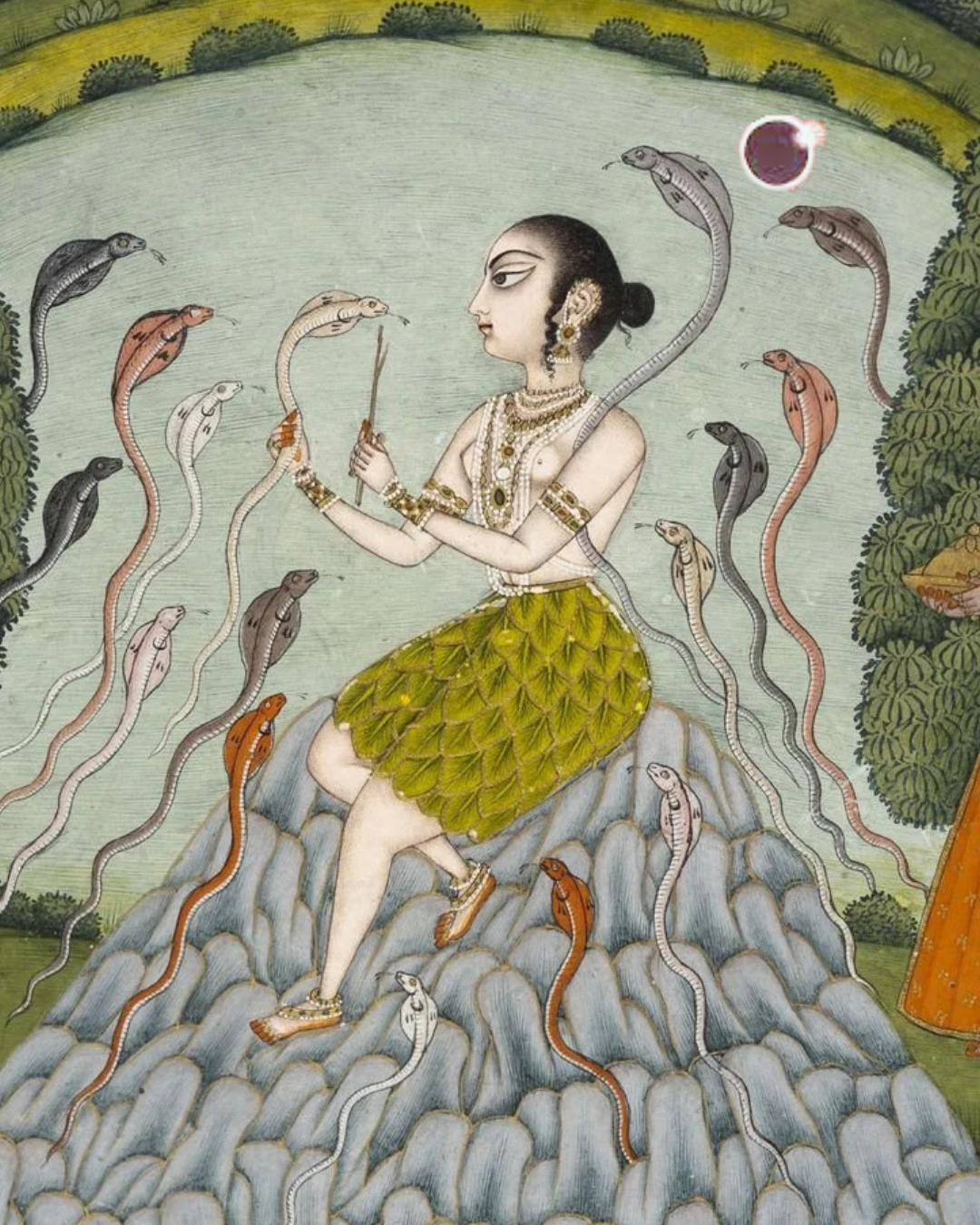
Rita Dixit Indian Miniatures: Asavari Ragini: A Painted Melody. Murshidabad, Bengal, India, c. 1780 | Edit by @___turiya

08.12.2026

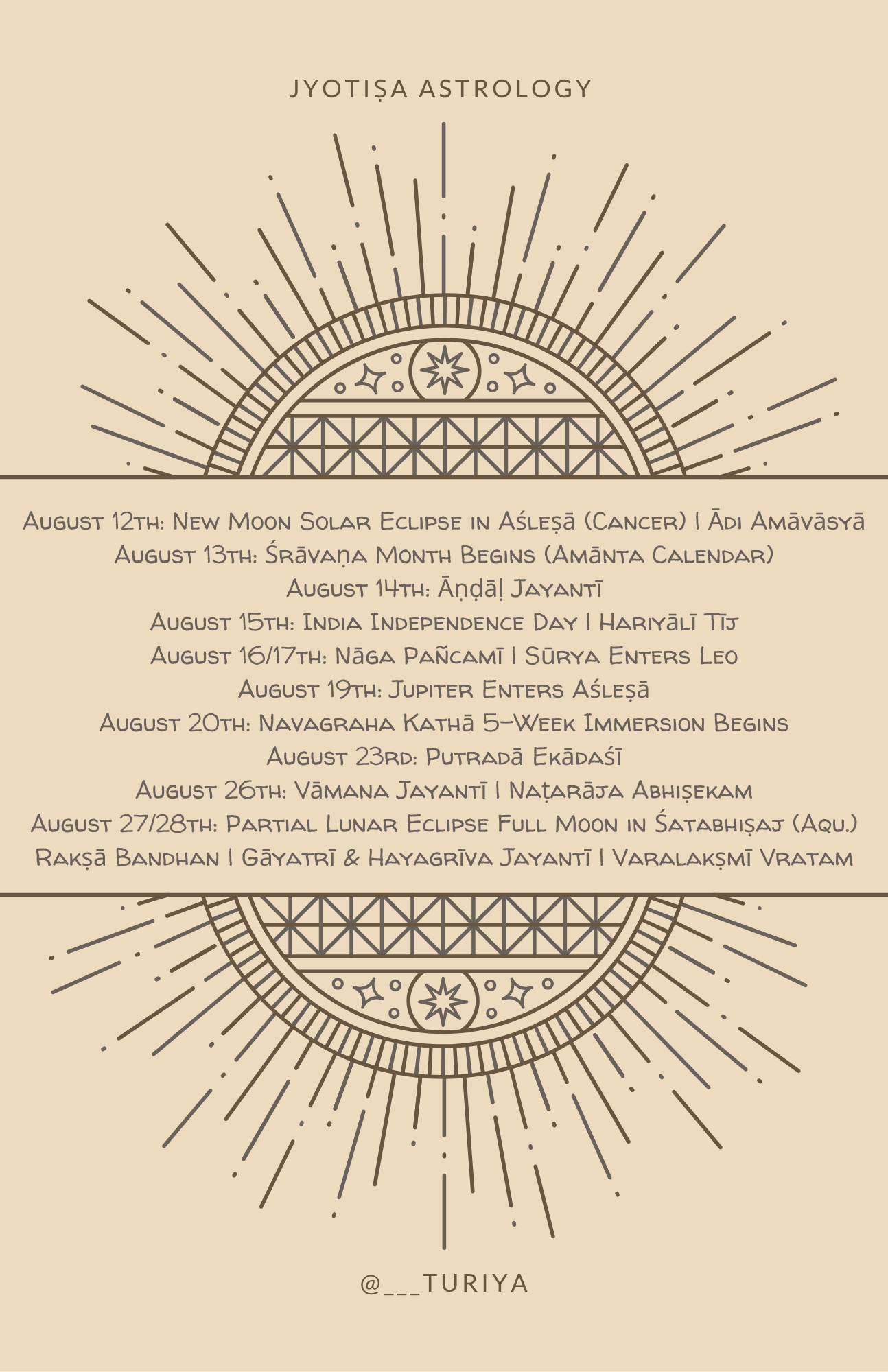
Eclipse season commences with the new moon (Ādi Amāvāsyā | Sūrya Grahaṇam सूर्य ग्रहण ) in the Vedic lunar mansion of Āśleṣā (sidereal Cancer), the embracing and entwining star. Expect deep alchemical transformation and the surfacing of what has long been hidden.

This cycle moves with coiled intensity, calling us to digest and release what has long been held. This eclipse is hemmed by Guru, Budha, and Ketu, intensifying the field of delivery.

The points where the Sun and Moon intersect the ecliptic plane, positioned exactly 180 degrees apart, are known as the lunar nodes — Rāhu and Ketu in Jyotiṣa. These shadowy grahas, often called the great awakeners, govern eclipses and symbolize the eternal dance between light and darkness. They confront us with what has been concealed, disrupt stagnant patterns, and offer the opportunity to awaken to deeper truths along our journey.

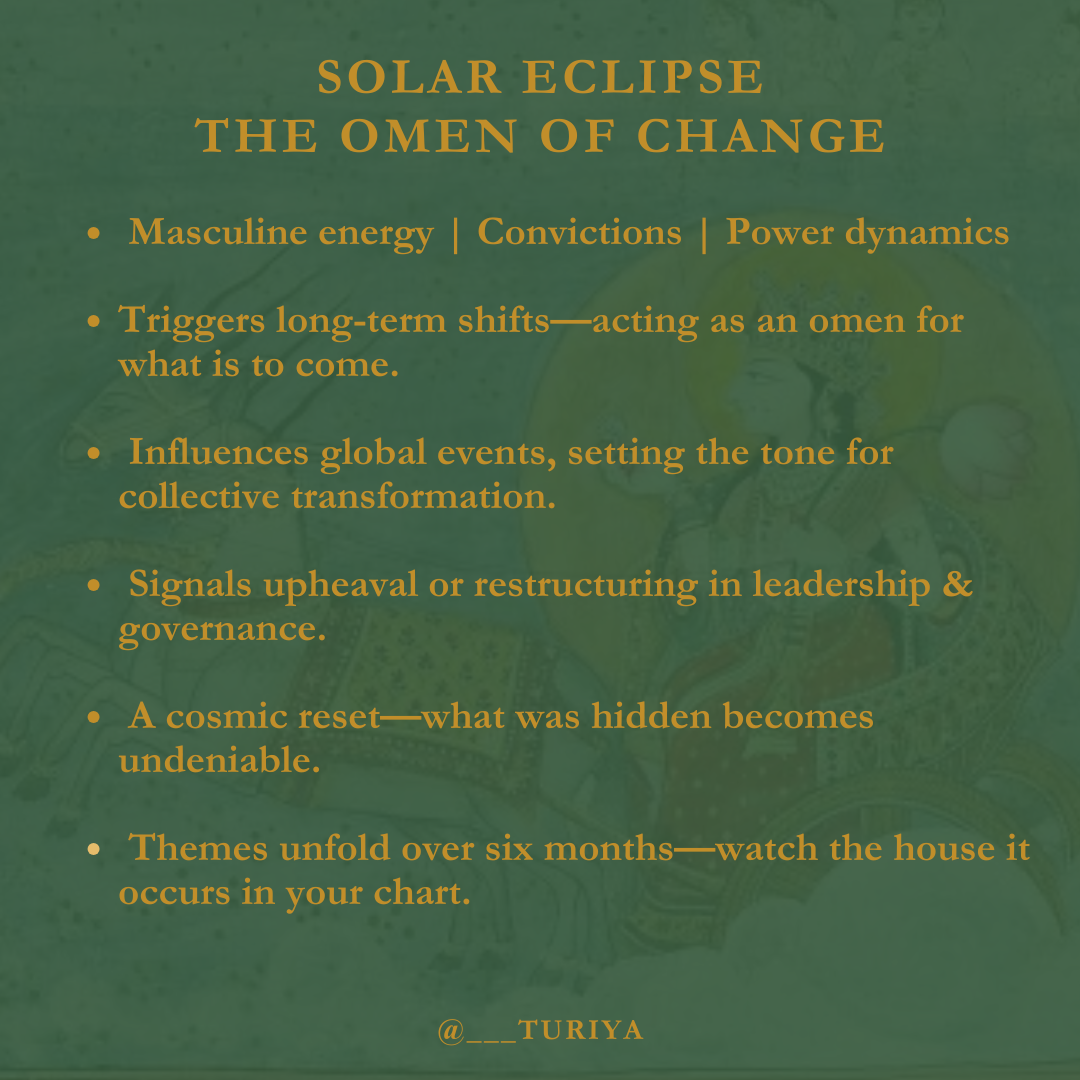
Solar eclipses expose that which has been hidden from view and set the tone as an omen of the energies for the next six months. A spiritual culmination unfolds, signaling transformative endings and the potential for new beginnings — inviting introspection, healing, and the initiation of new creative endeavors. This cycle urges us to refine our inner compass, untangle and release an old karmic pattern.

Situated from 16°40′–30° of Kāraka Rāśi (Cancer), the embracing star appears as a coiling ring of stars in the constellation Hydra. It marks an alchemical threshold where viṣa (poison) becomes amṛta (nectar), drawing awareness toward the subtle work of inner transformation.

Āśleṣā, one of Ketu’s birth stars and the nīca point of Maṅgala (Mars), initiates the gaṇḍānta juncture — the karmic knot between water and fire, Mokṣa and Dharma. 

Gaṇḍānta entrusts genuine potency and spiritual power only to those life has already humbled, entrusting it to those upright in their relationship with power and alchemy. You can only hold a siddhi if you are able to be invisible, to hide, maybe even in plain sight. Held any other way, it spoils whoever presumes to wield it.

Its Devatās are the Nāgās (Sarpas), guardian serpent beings of primordial wisdom. Its animal yoni is the male cat — a nocturnal guardian of thresholds, moving in silence between worlds, master of stillness, instinct, and unseen passage.

Āśleṣā holds the energy of Viṣāśleṣaṇa Śakti — the power to inflict poison, to penetrate and bind at a subtle level — revealing how venom, when rightly handled, becomes medicine, mirroring the inner path where shadow is transmuted into healing. 

Just as the coiled energy at the base of the spine yearns to merge with its beloved in the crown, Āśleṣā stirs the curiosity to delve deeper and unite with one’s desired outcome, weaving disparate elements into coherence and granting true inner authority through the patient art of alchemy.

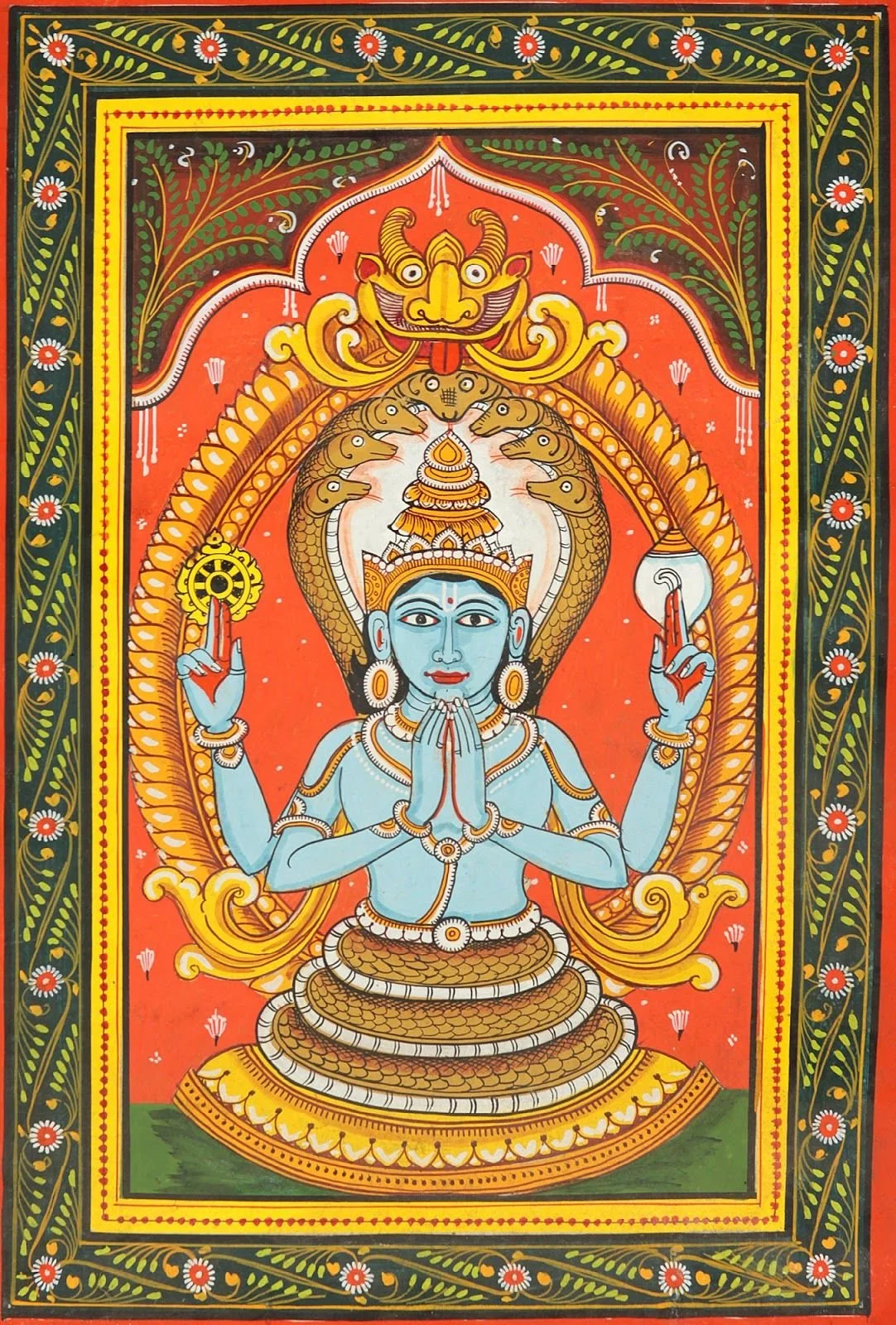
Āśleṣā is linked with Ādi Śeṣa and Sage Patañjali, pointing to the serpent power of consciousness that binds and releases. Its medicine lies in yoga, mantra, and disciplined inner awareness — the same forces that can entangle the mind become, when refined, the means of profound purification and healing of citta, speech, and body.

What is revealed now invites you to reassess and consciously redesign the physical architecture of your life with greater awareness. Accelerated spiritual growth becomes possible when we allow ourselves time to introspect. Some pattern has been attempting to surface for completion and healing. Create space to meet it with steadiness.

During eclipse windows, for most, it is traditionally advised to postpone major auspicious undertakings such as marriage or business ventures. However, it is an ideal time for sādhanā.

Eclipses stir duality to initiate purification — a necessary process through which self-knowledge is deepened and stabilized. Any turbulence you feel is part of this alchemy.

During this eclipse window, keep life simple. Stay grounded. Rest. Reflect on what is being revealed and what needs untangling.

The ancients taught that any practice undertaken during an eclipse bears fruit a thousandfold. In this sacred window, they consumed less — physically and mentally — to keep their channels clear. With the Sun and Moon — our sources of prāṇa — obscured, this becomes a potent time for:

  • Mantra chanting

  • Meditation & breathwork

  • Prayer & fasting

  • Turning inward, rather than outward

It is also recommended to bathe before and after the eclipse to cleanse both body and mind, allowing for a smoother energetic transition.

Trust that this cycle serves as an initiation, sowing the seeds of transformation that will blossom in divine timing, guiding you into the next phase of your journey.

Pay close attention if you have major planets — your Sun, Moon, or Lagna — in Āśleṣā. This cycle may bring sudden change, an unanticipated turning point, or the revelation of something deeper within. Also take note if you are currently running a dāśā or antar dāśā of Ketu, Sun, Moon, or Mercury.

All My Relations, Tulsi

What old skin is ready to be shed?

ॐ अनन्ताय शेषाय विद्महे 

नागराजाय धीमहि 

तन्नो शेषः प्रचोदयात् ॥


Om Anantāya Śeṣāya Vidmahe 

Nāgarājāya Dhīmahi 

Tanno Śeṣaḥ Prachodayāt ॥

Total Solar Eclipse: 08.12.2026

New Moon Aśleṣā (Cancer)

0:36am PST | 23:06 PM IST 

Eclipse hours: 08.12 8:34am - 12:57pm PST | 12/13th 21:04 - 1:27AM IST

With the path of totality extending from northern Russia through Greenland and Iceland to northern Spain and northeastern Portugal.

 Jalāluddīna Rūmī // “In search of yourself, you'll lose yourself.

Leave the little river and join the big river.

Why do you carry the burden of the world on your shoulders like an ox?

Change your direction and become one with the Universe." 

New Moon Solar Eclipse in Uttaraphalgunī: The Star Of Patronage

SOLAR ECLIPSE

Edit by @___turiya

SOLAR ECLIPSE सूर्य ग्रहण 

Eclipse season culminates with the new moon (amāvásyā) and a partial solar eclipse (Sūrya Grahaṇam) in the Vedic Lunar mansion of Uttaraphalgunī उत्तरफल्गुनी (Virgo), the star of Patronage.

This new moon is also known as Sarvapitṛ Amāvāsyā which concludes Pitṛ Pakṣa (fortnight of the ancestors), also called Mahalaya Amāvāsyā, when oblations can be offered to all ancestors (sarva-pitṛ), especially for those who may have been forgotten or for whom individual śrāddha has not been performed.

Solar eclipses are omens for the energies to come. Track what has been trying to make itself known to you in the past few weeks. They expose what is hidden and set the tone for the next six months. A spiritual culmination unfolds, signaling transformative endings and the potential for new beginnings.

Right now, we’re in a time outside of time, where things aren’t what they seem. 

The eclipse portal has delivered confrontation with the unknown as promised and continues to bring old patterns to the surface for transmutation. Don’t touch what’s coming up.

Uttaraphalgunī calls us to build authentic connections through acts of service, generosity, and mutual support. As the patron of contracts and agreements, this asterism, steeped in the qualities of hospitality and protection, encourages us to honor our commitments and nurture relationships that foster both personal and collective growth.

Holding the energy and śakti of prosperity and the accumulation of wealth through partnership, this is a powerful window for collaboration that ignites a fresh perspective and creative growth. 

With the responsibility of breathing life into new architecture, we become most in need of balance. The fine tuning point between self and other — anchoring into and committing fully to self sovereignty, while practicing the grace of presence and participation within this co-created dream.

You can only change and work on yourself. No matter how deeply you feel the need to hold on or piece together something that is unraveling, you may not be able to. Allow yourself to be surprised. This is an opportunity for profound growth—don’t bypass it simply because it’s uncomfortable. Observe what is unfolding and step powerfully into taking responsibility for your own spiritual evolution.

Accelerated spiritual growth awaits if we allow introspection. Some pattern has been attempting to reveal itself for completion and healing. What would it take for you to stop resisting that which you don’t prefer? Welcome it all—the beauty, the terror, the rapture, and the turbulence. Be with it and let it go. It may not be comfortable or easy, but it will undoubtedly be worth it.

Eclipses stir duality to initiate purification, a necessary process through which self-knowledge is deepened and stabilized. The turbulence you may feel is part of the alchemy drawing you deeper into your own psyche.

Know there is light at the end of the tunnel—keep going. Do yourself a favor and create space to delve deeper into what you may have been resisting. Release what you desire and realign with what is in right relationship and highest alignment.

In this phase of heightened impulsivity, keep life simple, stay grounded, and rest. Reflect on what’s being revealed and what needs untangling. Expect the unexpected.

The ancients taught that any practice undertaken during an eclipse bears fruit a thousandfold. In this sacred window, they consumed less—physically and mentally—to keep their channels clear. With the Sun and Moon—our sources of prāṇa—obscured, this becomes a potent time for:

  • Mantra chanting

  • Meditation & breathwork

  • Prayer & fasting

  • Turning inward, rather than outward


It is also recommended to bathe before and after the eclipse to cleanse both body and mind, allowing for a smoother energetic transition.

Trust that this cycle serves as an initiation, sowing the seeds of transformation that will blossom in divine timing, guiding you into the next phase of your journey. Take your time to process things and allow the story to continue unfolding.


Those in a dasha or sub-period of Saturn, or with natal planets (Sun, Moon, Rising) in Uttaraphalgunī, will experience this transit’s transformative energy even more profoundly….

All My Relations 🦚

We will be diving deeper together in our monthly Vidyā & Chai: Group meditation and Sacred Storytelling

September, 22nd 1:30pm pst 🦢☽☼


Partial Solar Eclipse: New Moon in Uttaraphalgunī (Virgo)

Sept 21st 2025 12:54 PM PST | Sept 22nd 1:24 am IST


Eclipse Timing:

Sept 21st 10:29 am PST - Sept 21st 14:53 pm PST

Sept 21st 22:59 pm IST - Sept 22nd 3:23 am IST