Adhika Purusottama Māsa: A Sacred Month of Inner Recalibration

Adhika PuruSottama Māsa

Artwork: Pinterest

05.17–06.15

Approximately every thirty-three months, an additional lunar month arises within the Vedic calendar, Adhika-māsa, also known as Purusottama Māsa and Malamāsa in ancient times.

A sacred interval outside ordinary time.

While the lunar year moves according to the phases of the Moon, the solar year follows the path of the Sun. Over time, a subtle divergence emerges between these two celestial rhythms. Adhika-māsa appears to restore balance—to reconcile the sacred relationship between lunar and solar time.

Yet beyond calendrical adjustment, this month has long been regarded as deeply auspicious for spiritual refinement, restoration, and inward recalibration.

It is a pause within the current of becoming.

Known as the thirteenth month — the one that stands outside the ordinary cycle, belonging neither fully to one year nor the next. A month that exists between —and it is precisely this that makes it sacred.

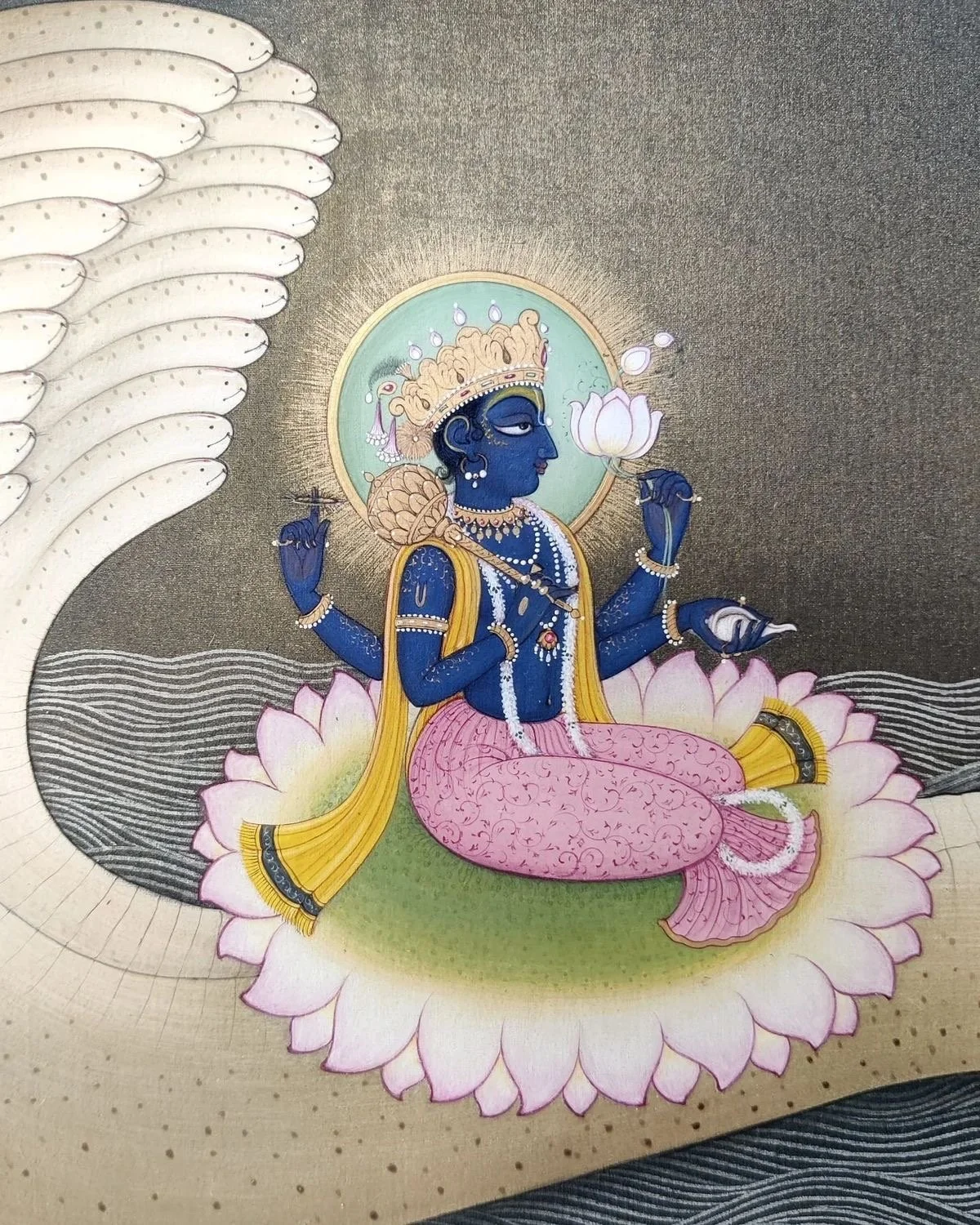
Yet this month carries something deeper than astronomical necessity. The Purāṇas tell us that Adhika Māsa once had no presiding deity — no lord, no festivals, no name of its own. It was considered inauspicious, even orphaned among the months. 

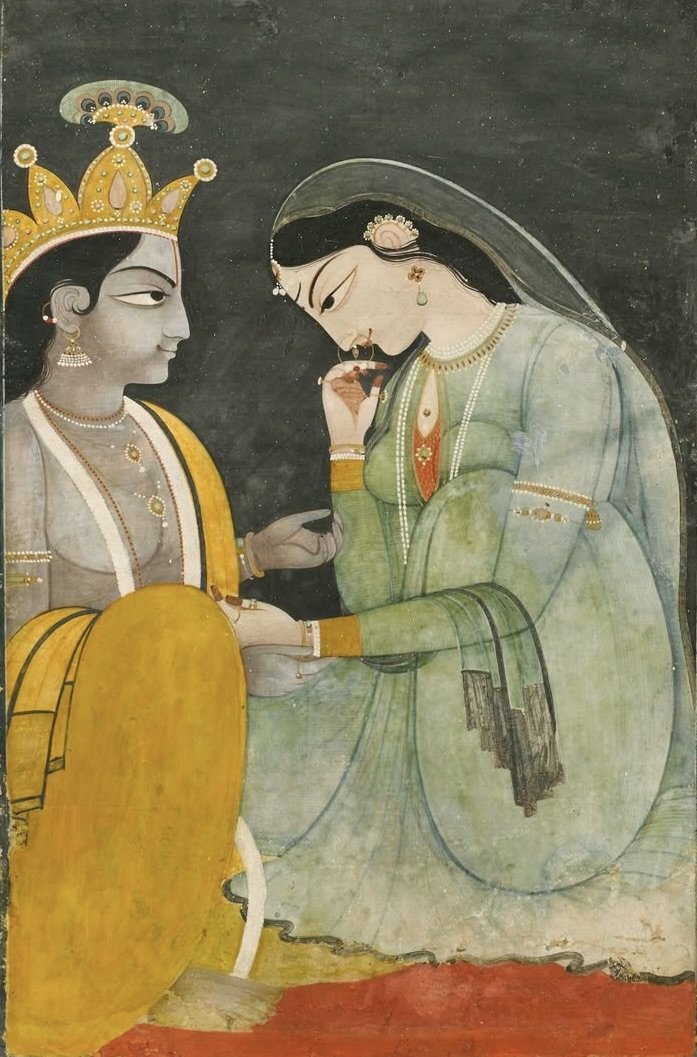
In grief, the month itself approached Viṣṇu, lamenting its incompleteness. Moved by compassion, Viṣṇu claimed it as his own — bestowing upon it his most exalted name: Puruṣottama, the Highest Self. He declared it not merely auspicious but the most potent of all months for spiritual practice, more sacred than any other in the calendar. The month that was cast out became the most beloved.

A month traditionally devoted to simplification, prayer, pilgrimage, mantra, sacred study, nourishing the body, and returning awareness toward what is essential.

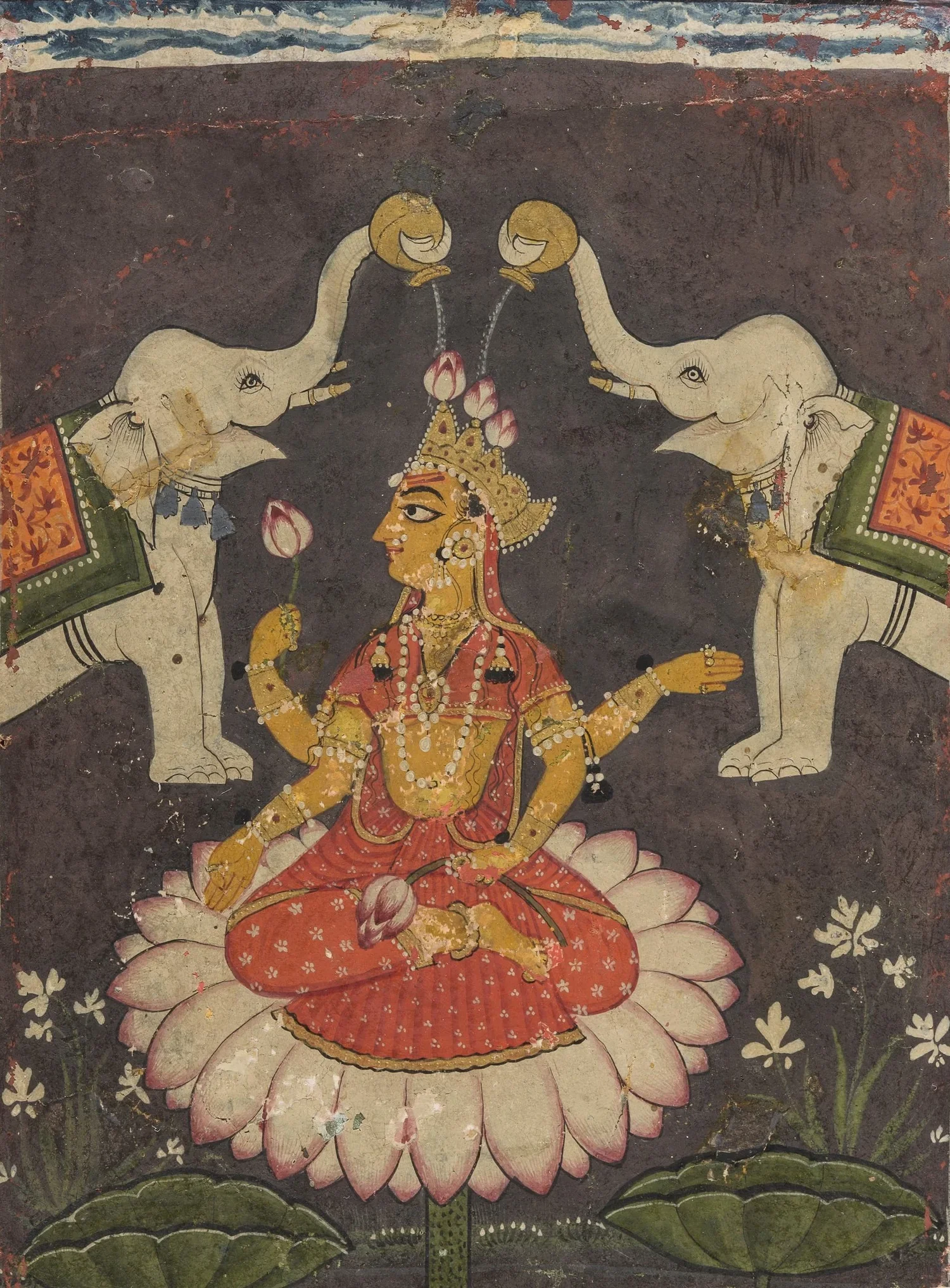
The tradition offers specific practices for this sacred interval — not as obligation, but as invitation. Devotionally, this is a month to recite the Viṣṇu Sahasranāma, to offer lamps, flowers, and tulasī to Viṣṇu daily, to tend the tulasī plant with reverence, and to read or listen to the Bhāgavata Purāṇa. The month carries two Ekādaśīs — both potent for fasting, inward turning, and deepening one’s relationship with the divine.

Artwork: Pinterest

For practice, Puruṣottama Māsa is considered especially auspicious for beginning or deepening a sādhana — whatever discipline you have been waiting to establish, this month holds unusual potency for it. Japa is particularly supported, especially Viṣṇu mantras such as Om Namo Bhagavate Vāsudevāya. 

Prāṇāyāma, Yoga Śāstra study, and any sincere inward discipline find fertile ground here.

In the realm of lifestyle, the tradition invites simplification — of diet, reducing tamasic foods and unnecessary consumption, quieting excess speech, withdrawing from the constant current of screens and stimulation. Charitable giving is considered especially meritorious this month, the merit of any offering said to be multiplied. To give, to fast, to study, to pray — these are not austerities here but acts of alignment.

This year, Adhika-māsa begins under the New Moon in Kṛttikā Nakṣatra (Taurus)—the birth star of the Moon and lunar mansion governed by Agni, the sacred fire.

Kṛttikā carries the power to purify, refine, and illuminate through discernment—burning away excess to reveal what is essential.

A potent threshold for recalibration, nourishment, and refining what we are taking in physically, mentally, emotionally, and spiritually.

And so this Adhika Māsa holds a particular potency — Agni’s discerning fire meeting Viṣṇu’s boundless compassion. What the fire refines, devotion receives. What is burned away reveals not absence, but belonging. Like the month itself, what has felt cast aside or incomplete may find, in this sacred interval, its truest name.

A beautiful time to replenish prāṇa, refine one’s sādhana, and listen more deeply.

ॐ नमो भगवते वासुदेवाय ॥

New Moon in Krttikā: The Star of Fire

NEW MOON IN KRTTIKĀ

May 16th 01:31 AM IST | 13:01 PST 

The Sun and Moon converge for May’s New Moon (Amāvasyā) within the Vedic Lunar Mansion of Krttikā (Taurus), the Star of Fire, known also as the radiant star cluster of the Pleiades—marking a powerful threshold of refinement, purification, and aligned emergence.

Kṛttikā, seed of solar energy, appears in the night sky as a radiant cluster of seven stars within the Pleiades. The ancient Ṛṣis observed these stars as a luminous necklace woven through the heavens, attributing profound significance to their role within the greater movements of natural law. Known as the seven Kṛttikās—the wives of the seven great sages—they are recognized today through Alcyone, Maia, Electra, Taygeta, Merope, Atlas, and Pleione.

The name Kṛttikā translates as “the cutters,” and its symbols—the razor, blade, and sacred fire—speak to its power to refine, purify, and sever what is no longer aligned so that something truer may emerge. Its śakti, Dāhana Śakti, “the power to burn,” holds the capacity to purify through fire, severing attachment to the corporeal and clearing the way for transformation.

Kṛttikā, the exaltation (ucca) point and birth star of the Moon (Candra), holds Agni as its Devatā—the sacred fire and original creative spark with the power to burn, refine, and transform: the ever-consuming flame. Similar to ghee offered into the havan kuṇḍ during a yajña (Vedic fire ritual) to fulfill desires, this Nakṣatra seeks a fertile vessel for the cultivation of stability, prosperity, and purposeful manifestation.

We cannot purify or sit in tapas (austerity) without first fueling the inner fire. Agni cannot burn without an offering—without ghee, or something to consume. Yet this longing for growth is softened and sustained through the coolness of amṛta (divine nectar), the fullness of Soma: that receptive, magnetic force which nourishes and steadies Agni’s intensity, allowing transformation to unfold without exhaustion. Together, they sustain the original impulse toward creation, refinement, and embodied becoming.

The Star of Fire is associated with Lord Murugan (Kārttikeya), the God of War, who wields a spear and rides a peacock, symbolizing courage, directed intelligence and spritual refinement. Here, growth often requires us to move beyond that which is familiar or preferred. The blade of Kṛttikā severs what no longer serves, clearing space for new beginnings, greater clarity, and aligned emergence.

The same fire that burns can be used to assimilate experience into wisdom and transmute food into usable energy. Just like the Goat, the animal medicine of this Nakṣatra, which consumes instinctively and must eventually metabolize all that has been taken in, you may find yourself confronted by pressure, friction, or discomfort in some area of life that is asking to be refined through awareness.

Purification is rarely comfortable, yet it is often the very force through which refinement unfolds. We remain unaware of certain shadows until the inner light begins to intensify. As awareness increases, what has been hidden begins to loosen, surface, and dissolve.

Though this process may feel confronting at times, what rises into awareness is often revealing of a refinement already underway—much like dust stirred into the air after a long-neglected space has finally been cleared.

Be gentle with yourself through the process. Tend steadily to your inner fire and remain present with what is unfolding. If Agni is cared for and kept strong, we cultivate the capacity not only to digest the food we consume, but also the experiences gathered through the senses. Through steady practice and awareness, what is being refined will gradually begin to stabilize, integrate, and reveal itself with greater clarity.

All my Relations, Tulsi

God speaks to each of us as he makes us,
 then walks with us silently out of the night.

These are the words we dimly hear:

You, sent out beyond your recall,
 go to the limits of your longing.
 Embody me.

Flare up like a flame
 and make big shadows I can move in.

Let everything happen to you: beauty and terror.
 Just keep going. No feeling is final.
 Don’t let yourself lose me.

Nearby is the country they call life.
 You will know it by its seriousness.

Give me your hand.

- Rainer Maria Rilke 

May Pañcāṅga: Vedic Calendar

May 2026 — Vedic Calendar

Vedic Pañcāṅga

May 1: Full Moon in Svātī (Libra) | Buddha Jayantī | Kurma Jayanti 

May 2: Nārada Jayantī

May 11: Maṅgala enters Aries 

May 12/13: Aparā Ekādaśī

May 13: Śukra enters Gemini | Vidyā & Chai Gathering 

May 14: Budha enters Taurus

May 14/15: Sūrya enters Taurus (Vṛṣabha Saṅkrānti)

May 15: Vat Sāvitrī Vrat 

May 15/16: Śani Jayantī | New Moon in Kṛttikā Taurus

May 17: Adhika Māsa begins (Purushottama Māsa) | Saturn Enters Revatī (Pisces)

May 23: Dhūmāvatī Jayantī 

May 25/26: Gaṅgā Daśaharā | Padminī Ekādaśī

May 28: Budha enters Gemini

May 29: Vaikasi Visakam - Appearannce day of lord Murugan

May 31: Full Moon in Anurādhā | Kabīr Jayantī

Full Moon in Svāti: Star of Self-Actualization

FULL MOON IN SVĀTĪ

Artwork: Pinterest

May 1st: Full Moon in Svātī (Libra) 10:23am PST | 22:53PM IST

The Full Moon (Pūrṇimā पूर्णिमा) reaches its zenith in the heart of Tulā (Libra) Rāśī (sign) in the Vedic Lunar Mansion of Svāti—the Star of Self-Actualization and the seat of Vāyu.

Suspended in the night sky as the brilliant Arcturus (Alpha Bootis), the fourth brightest star in the night sky, Svāti stands alone—radiant, distinct, and unmistakable.

Enthroned at the very core of Tulā, this Nakṣatra marks a threshold of refinement—where balance is not given, but cultivated. Svāti embodies the movement of Vāyu—the wind—restless, expansive, and capable of both creation and dispersal.

Its symbol, a tender shoot emerging from the earth, reveals the deeper teaching: life that is shaped by the unseen currents of Vāyu—where too much force scatters, and the right touch cultivates resilience.

Its śakti, pradhvaṁsa śakti, holds the energy to scatter—to disperse like the wind, dissolving form, diffusing energy, and transforming through movement. And yet, within this same current lies the deeper invitation: to gather, to recollect, and to direct that which has been scattered.
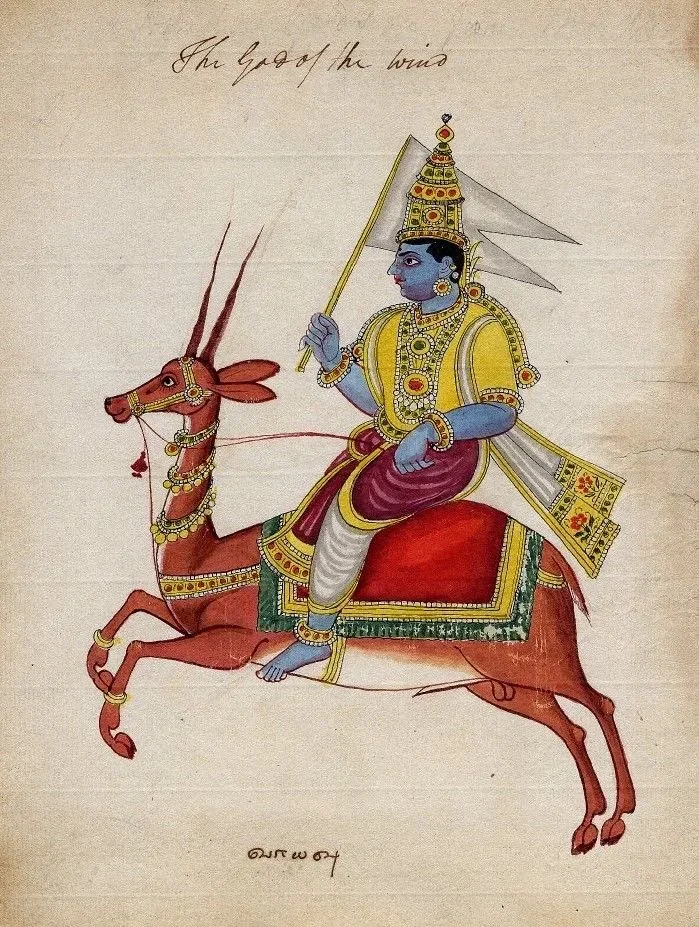
When focus scatters, life force is lost.

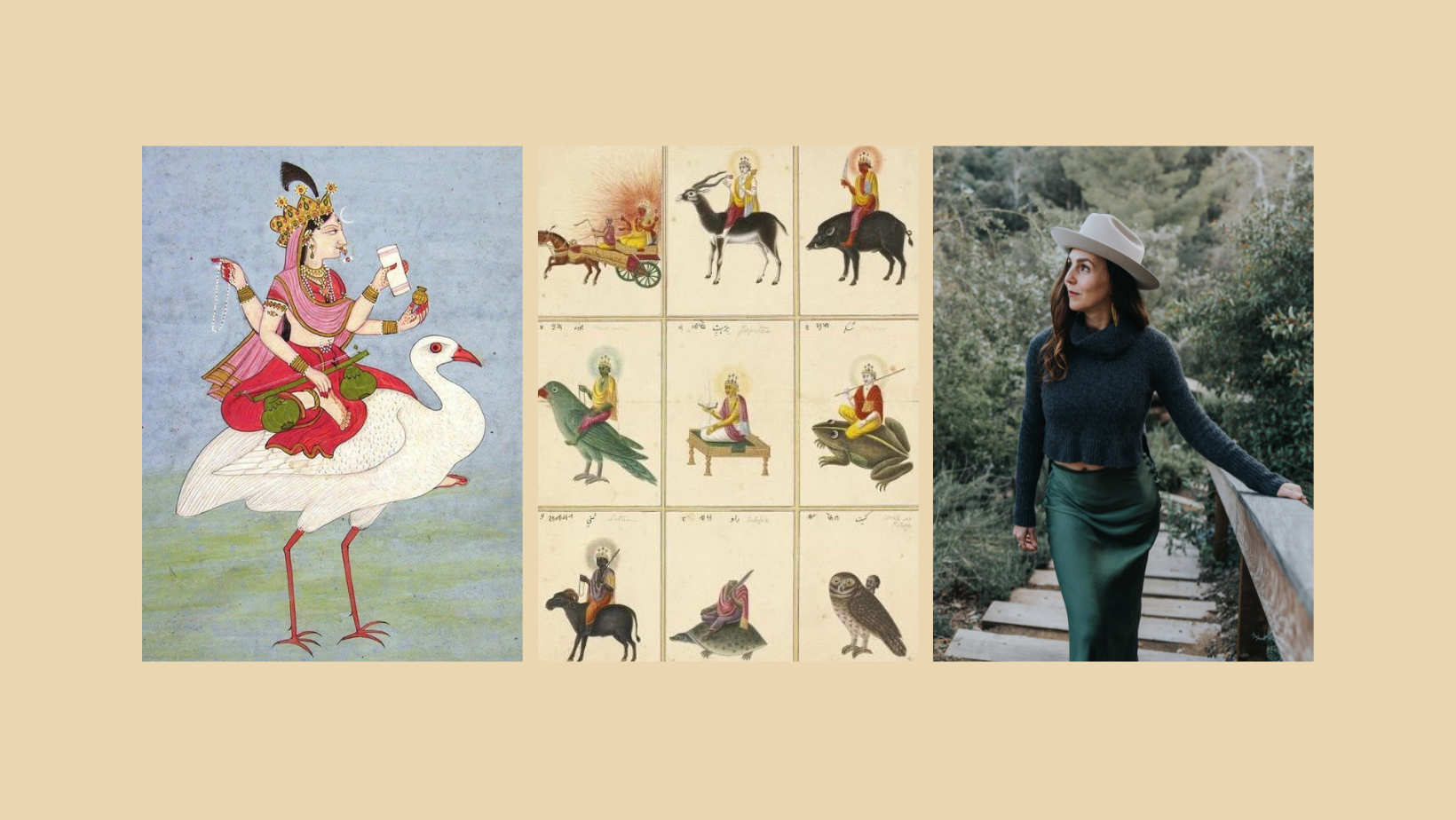
Artwork: Company School, Tanjore style, c. 1814–1825

When awareness is divided, prāṇa dissipates. The mind becomes unanchored, the body more susceptible, the field of being porous and easily influenced. Svāti reveals this delicate tension—the vulnerability of the sprout just breaking through the earth: full of life, yet easily disturbed. Thus, its path is not one of force, but of refinement—learning how to stabilize movement without suppressing it, to remain adaptable, without becoming unrooted.

This Nakṣatra demands direction—without it, dispersion turns to confusion and vulnerability.

Śani (Saturn), renowned for his measured approach and capacity for restraint, finds his uccha (exaltation) point in the constellation of Svāti. The great regulator of time, lord of the western direction (7th house, the heart of Tulā Rāśī), he is the embodiment of patience—measured, deliberate, and the giver of longevity (Āyuḥ-kāraka). 

When our thoughts and focus disperse, our energy becomes scattered and immunity diminishes. Through discipline of breath—through mastery of the pañcavāyus (five yogic breaths)—Śani instructs us to gather our prāṇa, harness our focus (dhāraṇā), and cultivate a steady foundation rooted in devotion.

In contrast, Sūrya (the Sun) reaches his nīca point here. When untempered, his radiance can overextend—burning through prāṇa, scattering vitality. Yet this too holds wisdom: when energy is dispersed, immunity weakens; when gathered, one becomes unwavering, rooted, and resilient.

Svāti teaches that not all movement is progress. Without direction, even great force is lost to the winds. The deeper longing within this Nakṣatra is not merely freedom—but purposeful alignment. To move with intention. 

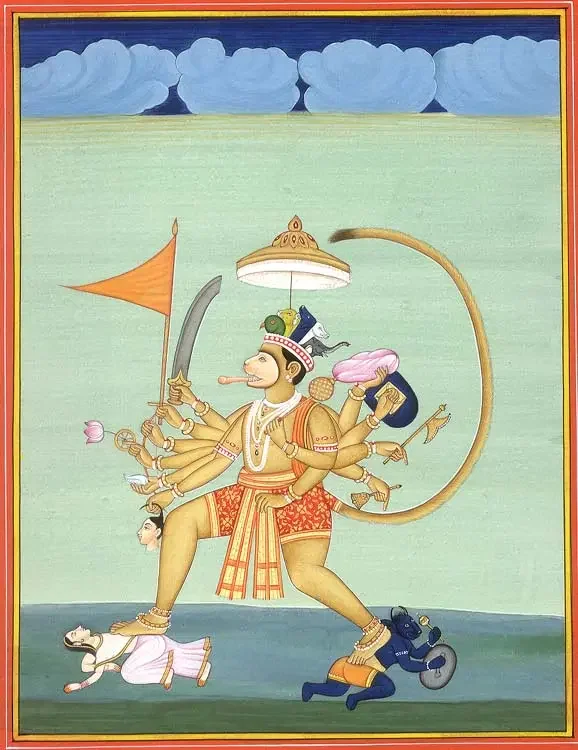
3) 19th Century Rajasthani Hanuman by Suresh Dhawan 

To act without fragmentation.

This Full Moon, then, becomes a mirror.

Where has your energy been scattered?

Where are you overextending, giving beyond your reserves?

And where are you being called to gather—to return, to root, to stabilize?

Like the threshold quality of Aśvinī—the Star of Transport—Svāti too holds a passage between states of being. If Aśvinī ignites the spark of emergence and directs us toward a singular point of focus, Svāti refines what has been set into motion. It asks not for initiation, but for integration. Not for speed, but for steadiness within movement.

Release the illusion of control over outcomes. Move from balance and responsibility—neither grasping nor resisting. Significant shifts unfold over time. Patience is not passive; it is the quiet power of sustained direction.

As the winds shift, focus your energy on the projects, people, and ideas that truly matter to you. Proceed with patience and release attachment to the fruits of your efforts—become self-sovereign in your listening. Gather your prāṇa. From this place—act.

Artwork: Exotic India

Kūrma Jayantī is observed on this Pūrṇimā — celebrating the second of the daśa mahā avatārs of Lord Viṣṇu, who descended during the Satya Yuga. Śani governs Kūrma, the divine tortoise who steadied the cosmic mountain Mandara during the Samudra Manthana — the great churning of the ocean of milk. One who cultivates a strong foundation sustains the world itself.​​​​​​​​​​​​​​​​

This Pūrṇimā also marks Buddha Pūrṇimā — the sacred night upon which Siddhārtha Gautama, seated beneath the Bodhi tree, turned his gaze inward and did not waver. Through the long hours of darkness, he neither grasped nor fled — he simply remained. Awake. Steady. Until the light of the morning star met his own.

Remember the timeless wisdom of Lord Kṛṣṇa in the Śrīmad Bhagavad Gītā:
“You have control over action alone, never over its fruits. Live not for the fruits of action, nor attach yourself to inaction.”

All My Relations, Tulsi

"This is love: to fly toward a secret sky, to cause a hundred veils to fall each moment. First to let go of life. Finally, to take a step without feet." - Rumi