
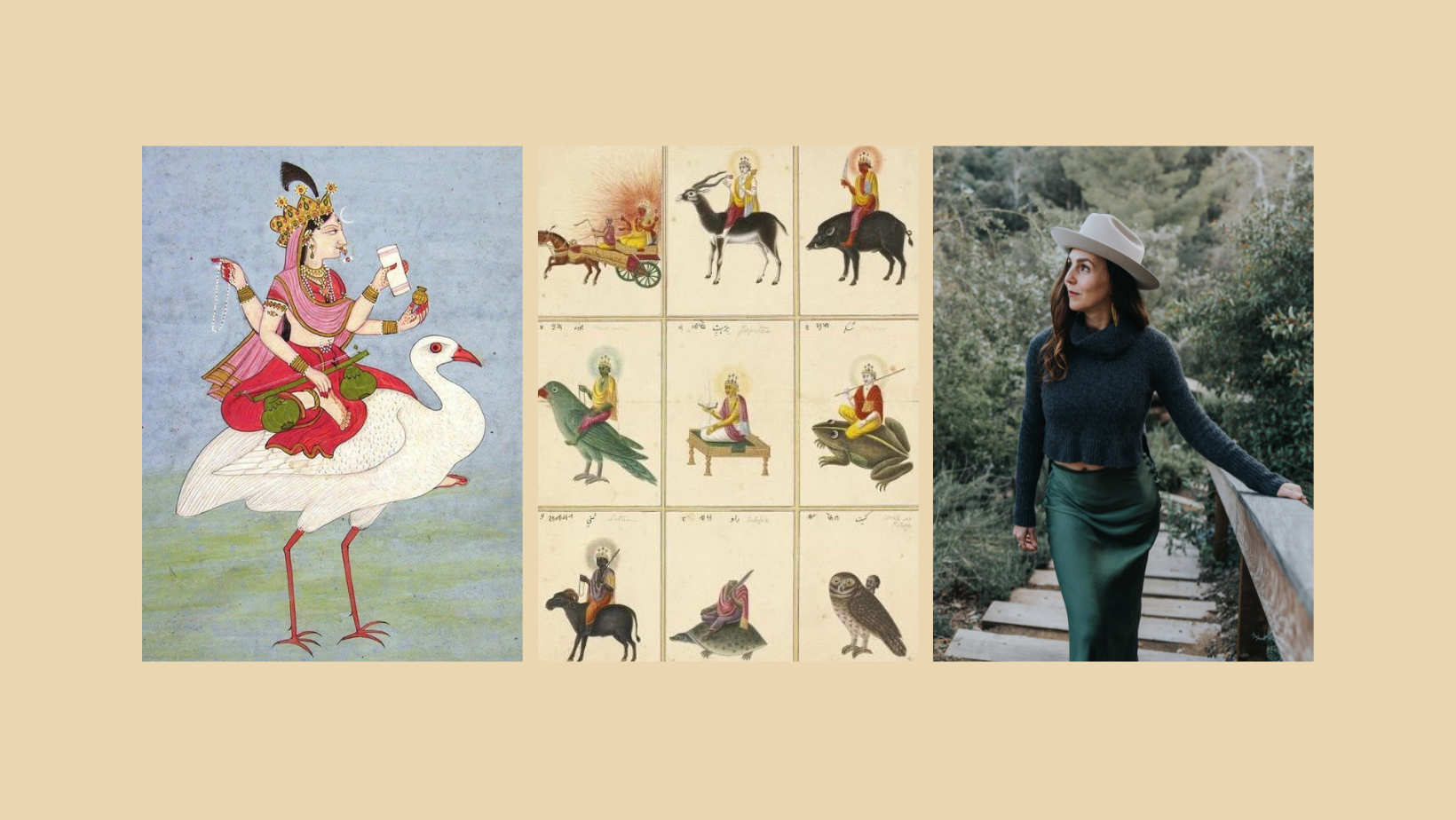
FULL MOON IN SVĀTĪ
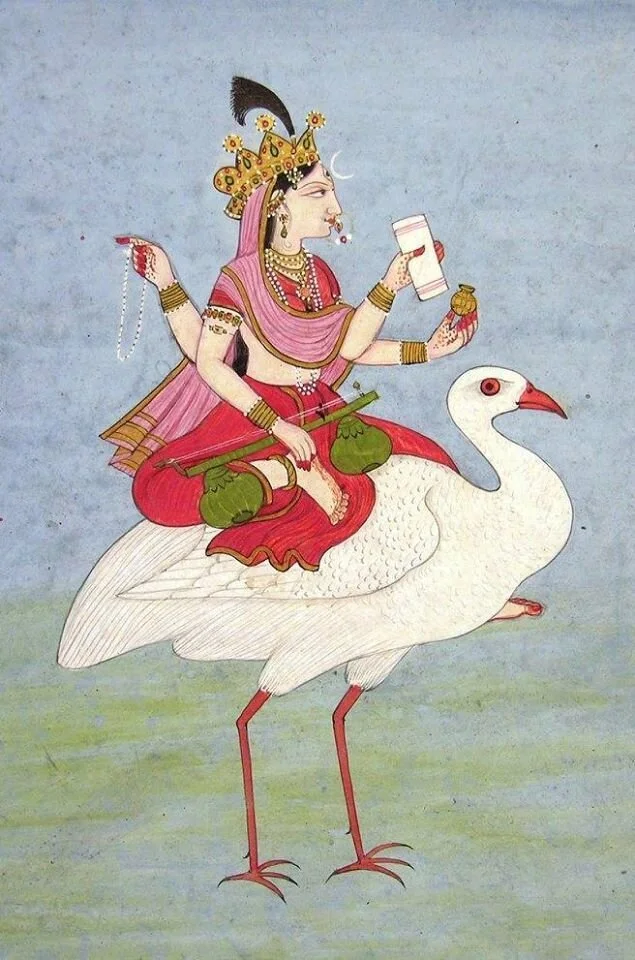
Artwork: Pinterest
May 1st: Full Moon in Svātī (Libra) 10:23am PST | 22:53PM IST
The Full Moon (Pūrṇimā पूर्णिमा) reaches its zenith in the heart of Tulā (Libra) Rāśī (sign) in the Vedic Lunar Mansion of Svāti—the Star of Self-Actualization and the seat of Vāyu.
Suspended in the night sky as the brilliant Arcturus (Alpha Bootis), the fourth brightest star in the night sky, Svāti stands alone—radiant, distinct, and unmistakable.
Enthroned at the very core of Tulā, this Nakṣatra marks a threshold of refinement—where balance is not given, but cultivated. Svāti embodies the movement of Vāyu—the wind—restless, expansive, and capable of both creation and dispersal.
Its symbol, a tender shoot emerging from the earth, reveals the deeper teaching: life that is shaped by the unseen currents of Vāyu—where too much force scatters, and the right touch cultivates resilience.
Its śakti, pradhvaṁsa śakti, holds the energy to scatter—to disperse like the wind, dissolving form, diffusing energy, and transforming through movement. And yet, within this same current lies the deeper invitation: to gather, to recollect, and to direct that which has been scattered.
When focus scatters, life force is lost.
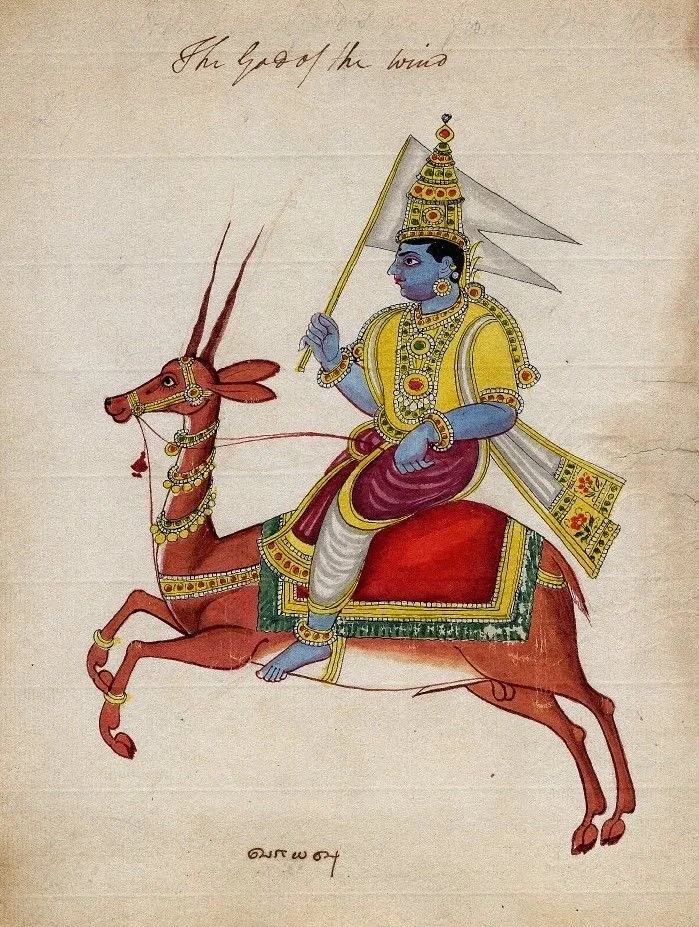
Artwork: Company School, Tanjore style, c. 1814–1825
When awareness is divided, prāṇa dissipates. The mind becomes unanchored, the body more susceptible, the field of being porous and easily influenced. Svāti reveals this delicate tension—the vulnerability of the sprout just breaking through the earth: full of life, yet easily disturbed. Thus, its path is not one of force, but of refinement—learning how to stabilize movement without suppressing it, to remain adaptable, without becoming unrooted.
This Nakṣatra demands direction—without it, dispersion turns to confusion and vulnerability.
Śani (Saturn), renowned for his measured approach and capacity for restraint, finds his uccha (exaltation) point in the constellation of Svāti. The great regulator of time, lord of the western direction (7th house, the heart of Tulā Rāśī), he is the embodiment of patience—measured, deliberate, and the giver of longevity (Āyuḥ-kāraka).
When our thoughts and focus disperse, our energy becomes scattered and immunity diminishes. Through discipline of breath—through mastery of the pañcavāyus (five yogic breaths)—Śani instructs us to gather our prāṇa, harness our focus (dhāraṇā), and cultivate a steady foundation rooted in devotion.
In contrast, Sūrya (the Sun) reaches his nīca point here. When untempered, his radiance can overextend—burning through prāṇa, scattering vitality. Yet this too holds wisdom: when energy is dispersed, immunity weakens; when gathered, one becomes unwavering, rooted, and resilient.
Svāti teaches that not all movement is progress. Without direction, even great force is lost to the winds. The deeper longing within this Nakṣatra is not merely freedom—but purposeful alignment. To move with intention.
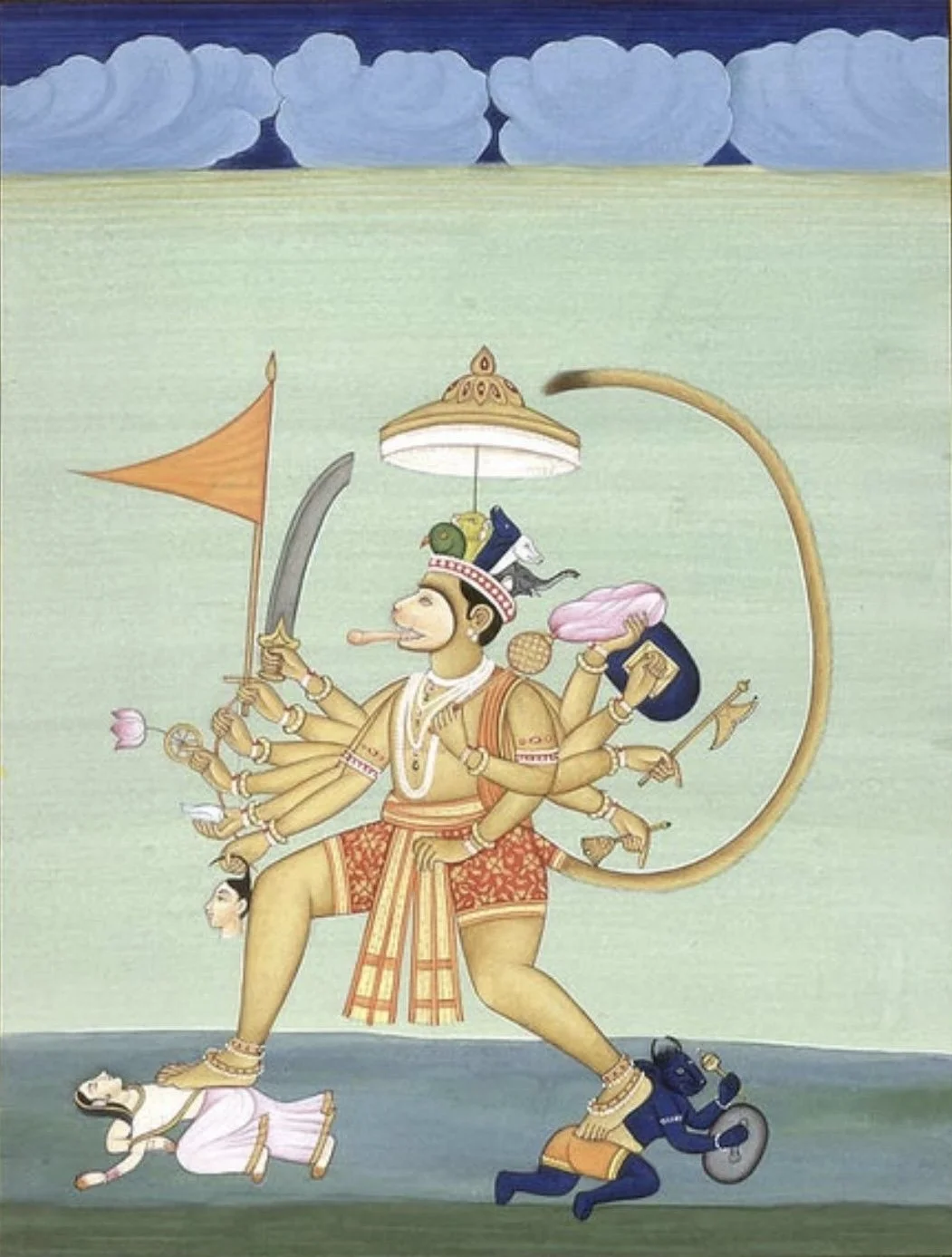
3) 19th Century Rajasthani Hanuman by Suresh Dhawan
To act without fragmentation.
This Full Moon, then, becomes a mirror.
Where has your energy been scattered?
Where are you overextending, giving beyond your reserves?
And where are you being called to gather—to return, to root, to stabilize?
Like the threshold quality of Aśvinī—the Star of Transport—Svāti too holds a passage between states of being. If Aśvinī ignites the spark of emergence and directs us toward a singular point of focus, Svāti refines what has been set into motion. It asks not for initiation, but for integration. Not for speed, but for steadiness within movement.
Release the illusion of control over outcomes. Move from balance and responsibility—neither grasping nor resisting. Significant shifts unfold over time. Patience is not passive; it is the quiet power of sustained direction.
As the winds shift, focus your energy on the projects, people, and ideas that truly matter to you. Proceed with patience and release attachment to the fruits of your efforts—become self-sovereign in your listening. Gather your prāṇa. From this place—act.
Artwork: Exotic India
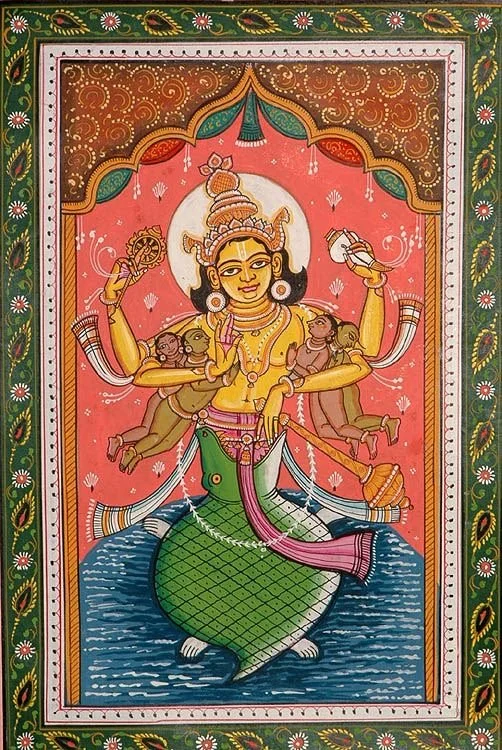
Kūrma Jayantī is observed on this Pūrṇimā — celebrating the second of the daśa mahā avatārs of Lord Viṣṇu, who descended during the Satya Yuga. Śani governs Kūrma, the divine tortoise who steadied the cosmic mountain Mandara during the Samudra Manthana — the great churning of the ocean of milk. One who cultivates a strong foundation sustains the world itself.
This Pūrṇimā also marks Buddha Pūrṇimā — the sacred night upon which Siddhārtha Gautama, seated beneath the Bodhi tree, turned his gaze inward and did not waver. Through the long hours of darkness, he neither grasped nor fled — he simply remained. Awake. Steady. Until the light of the morning star met his own.
Remember the timeless wisdom of Lord Kṛṣṇa in the Śrīmad Bhagavad Gītā:
“You have control over action alone, never over its fruits. Live not for the fruits of action, nor attach yourself to inaction.”
All My Relations, Tulsi
"This is love: to fly toward a secret sky, to cause a hundred veils to fall each moment. First to let go of life. Finally, to take a step without feet." - Rumi

