DĪPĀVALI दीपावलि: FESTIVAL OF LIGHTS
11.06-11.10
November 6th: Dīpāvalī (Dhanteras) | Dhanvantari Jayantī
November 7th: Naraka Caturdaśī | Kālī Caudaś | Hanumān Pūjā
November 8th/9th: New Moon in Viśākhā (Libra) | Dīpāvalī | Mahālakṣmī (Lakṣmī Pūjā)
November 9th: Govardhana Pūjā | Annakūṭa
November 10th: Yama Dvitīyā | Bhāī Dūj
Today marks the beginning of Dīpāvalī, the revered Festival of Lights. Celebrated in the Vedic lunar month of Kārttik (October/November), it unfolds over five days, beginning with Dhanteras and reaching its central observance on the Amāvāsyā tithi (new moon), the most significant night of the festival.
On this occasion, we celebrate the victory of light over darkness. This year the new moon falls in Viśākhā (Tulā), where the Sun is nīca and its light is at its faintest of the year, held in the sign of Śukra, the planet of Lakṣmī. The Ṛṣis placed the festival of lamps precisely where outer light is weakest, so that we might kindle it within.
Five Days as a Path of Ascent (Earth to Ether)
The five days of Dīpāvalī reveal a profound correspondence between the human constitution and the cosmic order. Through the five mahābhūtas, the festival traces the refinement of the embodied self, each day revealing a dimension of the relationship between the individual and the universal. What begins with the honoring of the body and the elements culminates in the recognition of their underlying unity. Each day holds its own teaching and a corresponding offering for the home and the heart.
Day 1 ✧ Dhanteras | Dhanvantari Jayantī | Friday 11.06
Pṛthvī (Earth). The body, the herbs, the vessel of amṛta.
Dhana-trayodaśī opens the festival with the birth of Dhanvantari.
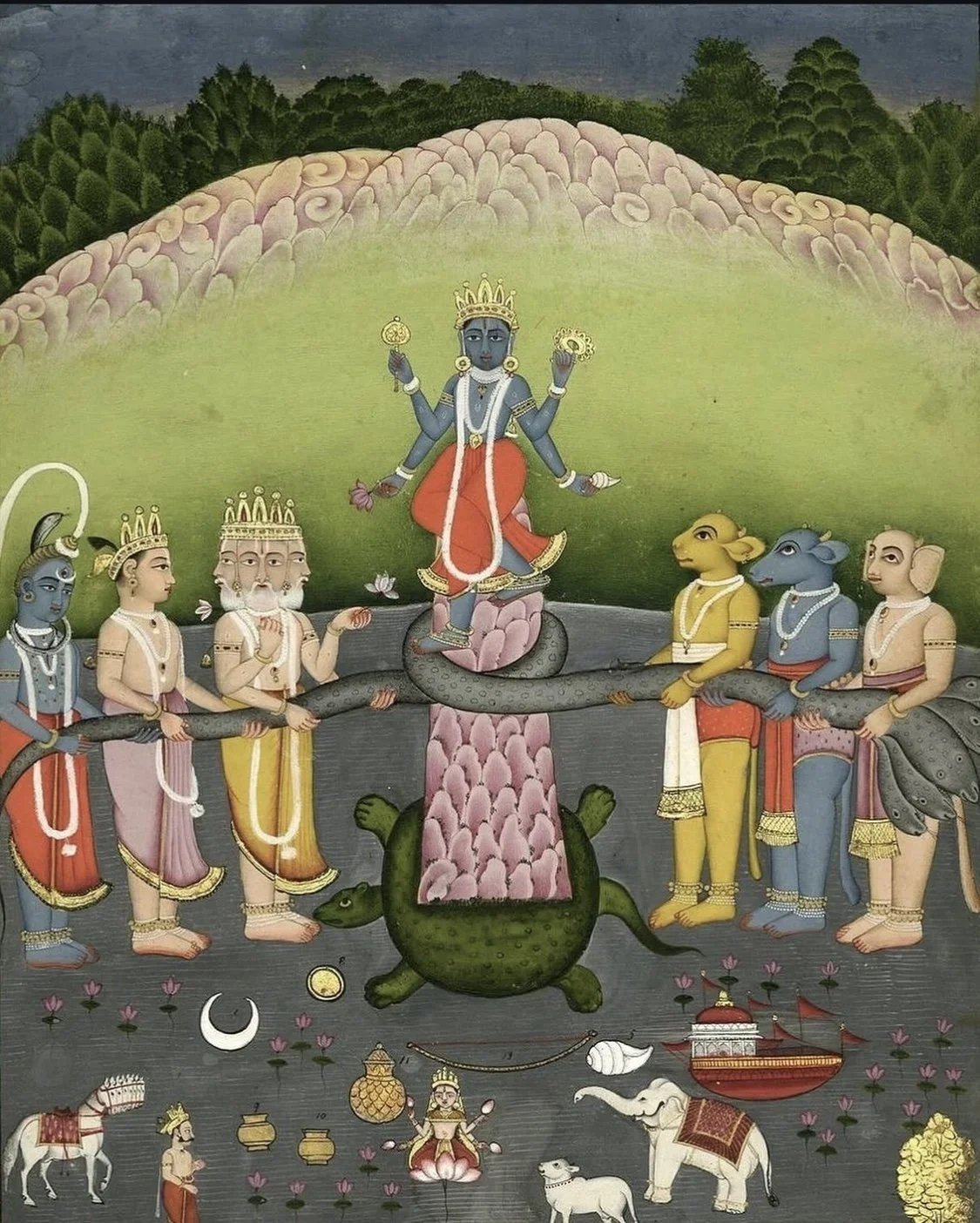
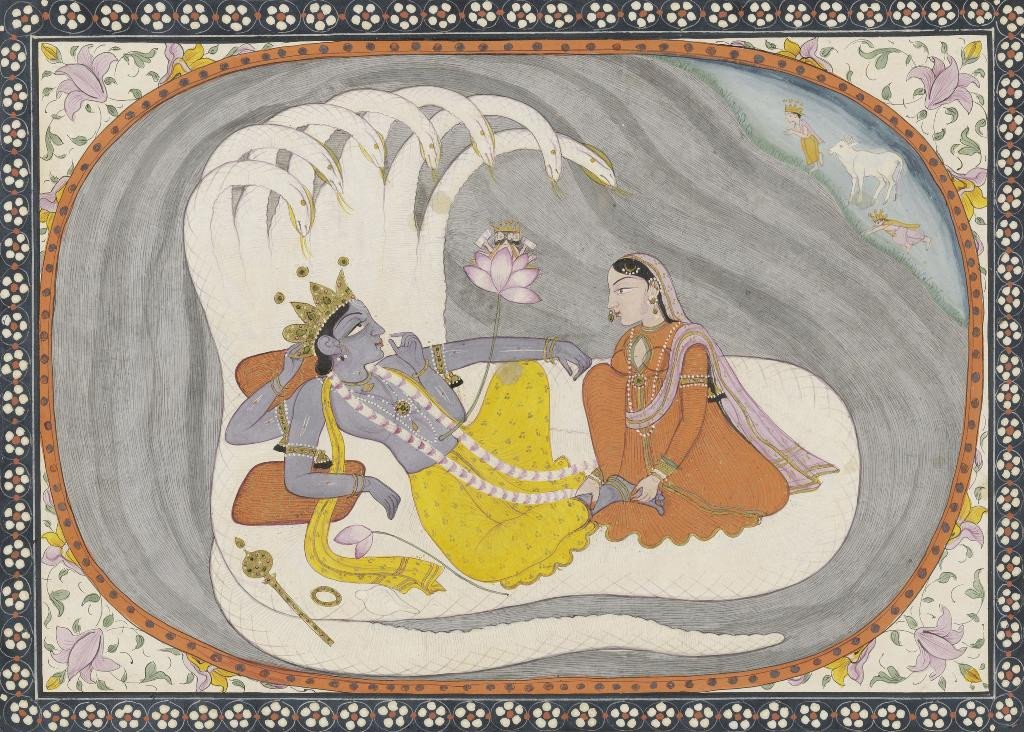
It is said that when Indra, proud and careless, cast aside a garland given by the sage Durvāsa, Śrī withdrew from the three worlds. To bring her back, the devas and asuras churned the ocean of milk, with Mount Mandara as the rod, Vāsuki as the rope, and Viṣṇu as Kūrma holding it all upon his back. Poison rose first, then treasures, then Mahālakṣmī herself. Last came Dhanvantari, physician of the gods and an aṃśa of Viṣṇu, holding the kalaśa of amṛta in his hands. He is revered as the source of Āyurveda.
Lakṣmī and Dhanvantari rise from the same ocean. Wealth begins as health.
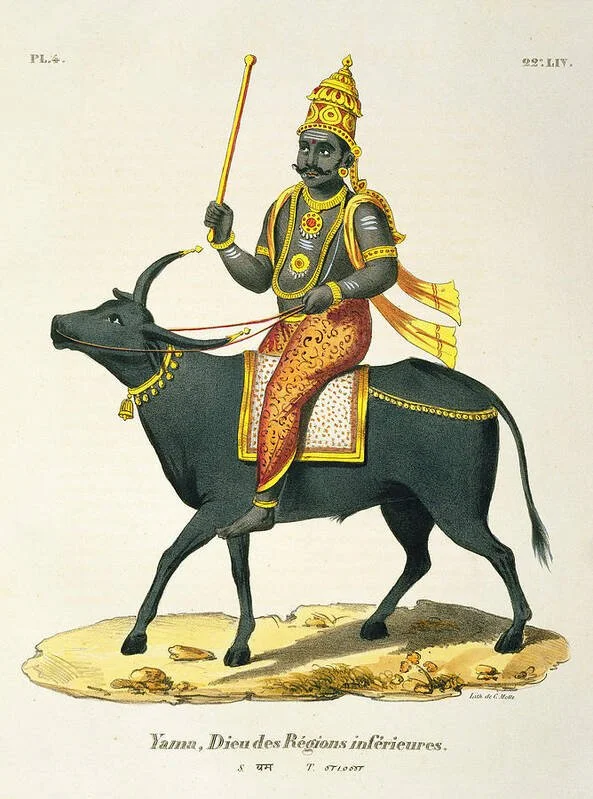
At dusk a single lamp is set facing south, the direction of Yama, the Lord of Death. This Yama Dīpa asks protection from untimely death for the whole household.
Day 1 – Traditionally: Dhanvantari is worshipped for health. Lakṣmī and Kubera are honored in Pradoṣa kāla, the window after sunset, ideally while the fixed Vṛṣabha lagna is rising so that wealth remains. At dusk the Yama Dīpa is lit outside the home. Many also bring home new gold, silver, or a metal vessel.
The act: Wake before sunrise and worship Lord Viṣṇu as Dhanvantari. Help someone with medical care, and buy something auspicious for your home. At dusk, light a diya outside your main entrance, facing south, for Lord Yamarāja; some light one for each family member and keep it lit through the night. After sunset, offer a lamp to Lakṣmī.
Day 2 ✧ Naraka Caturdaśī | Choṭī Dīpāvalī | Kālī Caudaś | Hanumān Pūjā | Saturday 11.07
Jala (Water). The bath, the oil, the tarpaṇam.
On the fourteenth night, Kṛṣṇa ends the demon Narakāsura before dawn and frees the sixteen thousand he held captive. What has bound us is released.
This is also Kālī Caudaś, when the dark goddess is revered as an awakening and purifying force, and in the Ayodhyā tradition, Hanumān Jayantī. Strength and devotion stand guard on the eve of the new moon.
Day 2 – Traditionally: Before sunrise, the body is anointed with sesame oil for abhyaṅga snāna, and the apāmārga plant is circled over the head while bathing to remove the fear of Naraka. Afterward, water is offered to Yama in tarpaṇa, reciting his fourteen names. In the evening a four-wick lamp is lit outside the home for Yama, and lamps are placed throughout the house.
The act: Rise before sunrise. Oil the body with sesame, then bathe with a few drops of Gaṅgā jal in the water. Let what is heavy wash away. This is a day of inner purification, when darkness goes out. In the evening, light diyas, worship Lakṣmī-Nārāyaṇa, offer prayers to Lord Mahādeva and Lord Yamarāja, and offer food or clothes to someone in need.
Day 3 ✧ Dīpāvalī | Lakṣmī Pūjā | New Moon in Viśākhā (Libra) | Sunday 11.08
Agni (Fire). The lamps, the mantras, the inner flame.
The heart of the festival falls on the Amāvāsyā, the darkest night of the year. This year it is the New Moon in Viśākhā (Libra), the Star of Purpose, ruled by Indrāgni: Indra, king of the gods, and Agni, the sacred fire. Its symbol is the triumphal arch, the gateway one passes through after a long road.
It is the arch Rāma walked through on his return to Ayodhyā after fourteen years of exile and his victory over Rāvaṇa, when the whole city lit lamps to bring him home.
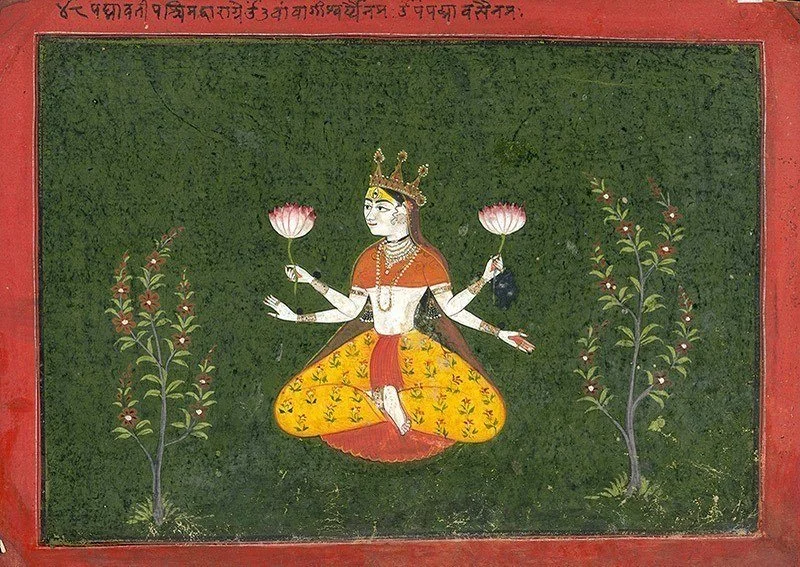
We honor Gaṇeśa first, the remover of obstacles, then invoke Mahālakṣmī, the eight-fold embodiment of abundance. It is said her energy resides in harmonious spaces free from conflict. She does not enter the cluttered house. She comes where a lamp is lit and kept. In Bengal, this same night is Kālī Pūjā.
Day 3 – Traditionally: Lakṣmī Pūjā is performed in Pradoṣa kāla, after sunset, during the fixed Vṛṣabha lagna so that she remains. Gaṇeśa is worshipped first, then Lakṣmī, and merchants place their new account books before her. Families clean their homes and draw rangoli at the threshold, don new clothes, set intentions for the year ahead, and exchange gifts and sweets.
The act: Your home is now ready to welcome Gaṇeśa, Sarasvatī, and Lakṣmī. Clean your home, clear any pending dues, and donate to those in need before the end of the day. In the evening, light diyas, make rangoli, do pūjā, and keep one lamp burning through the night.
Day 4 ✧ Govardhana Pūjā | Annakūṭa | Monday 11.09
Vāyu (Air). The mountain, the wind, the offering of food.
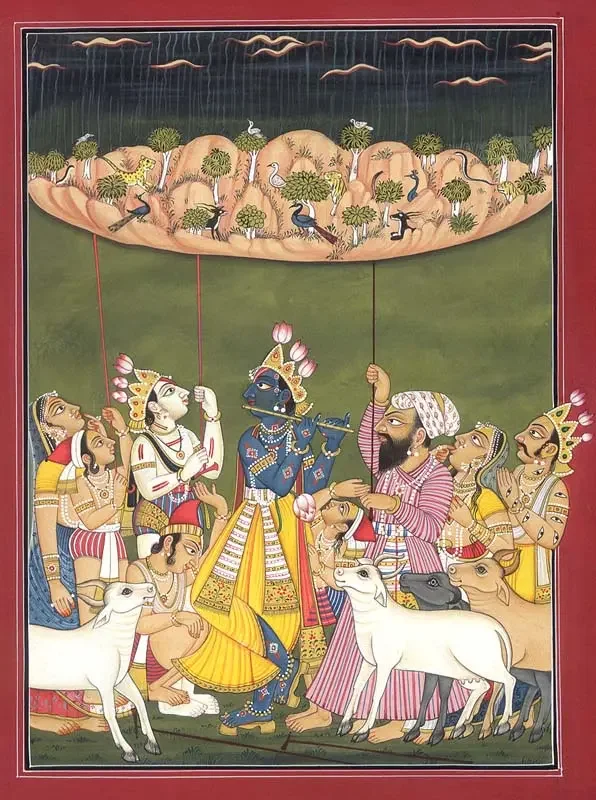
The morning after Indra's star, Indra is humbled. When the people of Vraja turned their worship from him to the hill that fed their cows, Indra sent seven days of storm. Kṛṣṇa lifted Mount Govardhana on one finger, and all of Vraja sheltered beneath it until the rains gave up.
Annakūṭa, the mountain of food, is offered back to the One who sustains. In Gujarat and much of western India, this day opens the new year.
Day 4 – Traditionally: A small Govardhana is shaped, often of cow dung, worshipped, and circled in parikramā. Cows are bathed and honored, and Annakūṭa, a mountain of food, is offered to Kṛṣṇa and then shared. In parts of the South and West, this is also Bali Pratipadā.
The act: Give thanks for what sustains us. Prepare Annakūṭa and offer it to Bhagavān Kṛṣṇa, worship Mā Annapūrṇā, feed the cows, and offer prasād to someone in need.
Day 5 ✧ Yama Dvitīyā | Bhāī Dūj | Tuesday 11.10
Ākāśa (Ether). The bond of brother and sister (jīva to Paramātmā, a stepping into the space of oneness).
Yama visits his sister Yamunā. She marks his brow with tilak and feeds him by her own hand, and in return he blesses all who honor their siblings on this day.
Day 5 – Traditionally: A morning bath, ideally in the Yamunā. In the afternoon (aparāhṇa), Yama is worshipped with Citragupta and his attendants, and arghya is offered. Sisters apply tilak, perform āratī, and feed their brothers by hand, and brothers offer gifts in return.
The act: Feed, call, or bless a brother or sister, or someone you hold as kin.
The lamp between two doors
Day by day, the bhūtas are balanced and the sheaths purified, so that we may welcome Lakṣmī's eight-fold abundance into our homes, our hearts, and our lives. By Bhāī Dūj, we step into the space of oneness, a microcosm in harmony with the macrocosm, and find that the light we lit at every threshold was never outside us.
Tad dūre tad v antike, tad antarasya sarvasya.
That which is far away is also near, and dwells within all.
— Īśa Upaniṣad 5
asato mā sad gamaya
tamaso mā jyotir gamaya
mṛtyor mā amṛtaṃ gamaya
Lead me from the unreal to the real, from darkness to light, from death to immortality.
— Bṛhadāraṇyaka Upaniṣad 1.3.28
As we gather in joy and reflection, let us embrace the energies of renewal and prosperity that accompany this festival. Wishing everyone a joyful and prosperous Dīpāvali!
With love all ways
शुभ दीपावली | ॐ श्रीं महालक्ष्म्यै नमः