Full Moon Guru Pūrṇimā in Śravaṇa: The Listening Star

GURU PŪRṆIMĀ IN ŚRAVAṆA
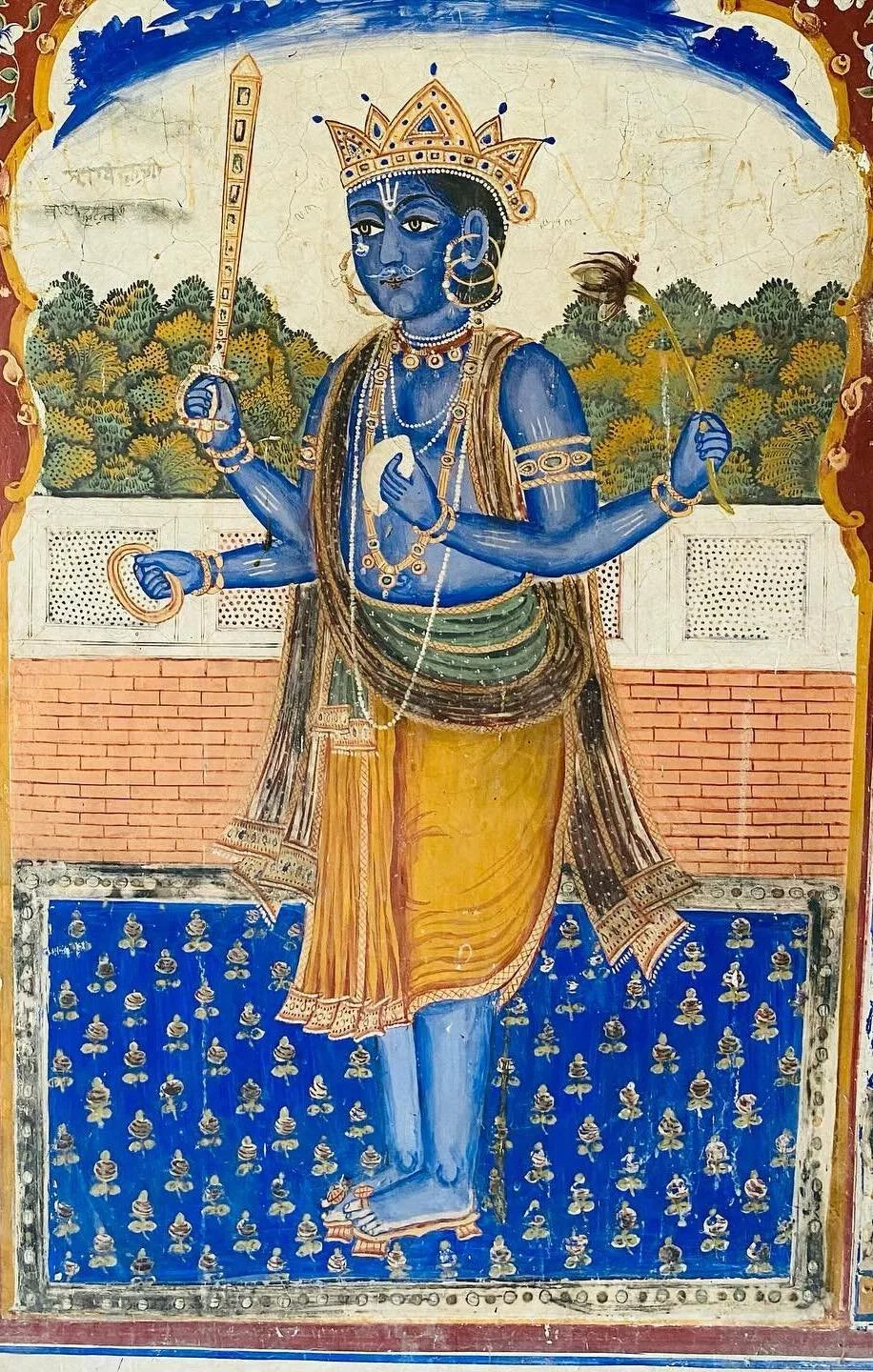
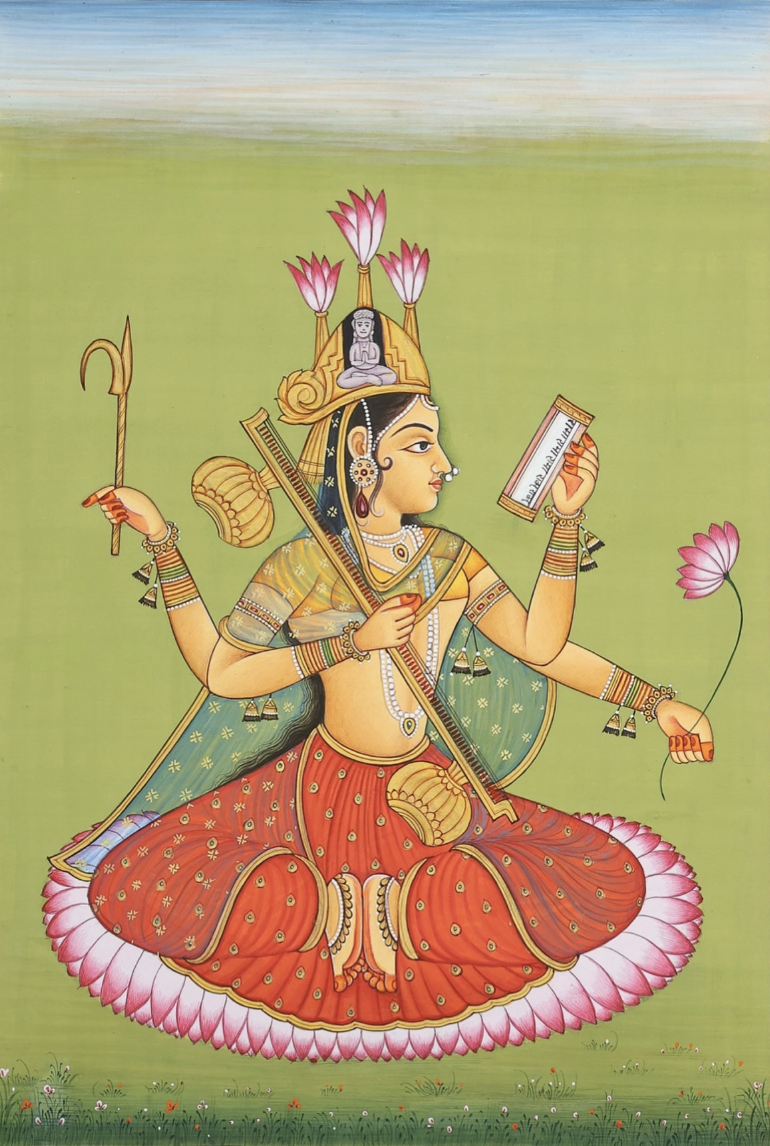
Artwork: Lord Viṣṇu. Located within the samadhi of Sardar Bahadur Lal Singh in Amritsar, India. 1890

07.29
On the Full Moon of Āṣāḍha, we venerate Guru Pūrṇimā, also known as Vyāsa Pūrṇimā. This year the Moon rises in the Vedic lunar mansion of Śravaṇa (Capricorn), The Star of Listening.

Commemorating the appearance of Bhagavān Vedavyāsa, the Maharṣi who compiled the Vedas, composed the Mahābhārata, and preserved the timeless wisdom of the Vedic tradition for humanity. It is a sacred day to honor the Guru Paramparā, the unbroken lineage of teachers through whom this knowledge has been faithfully transmitted across the ages.

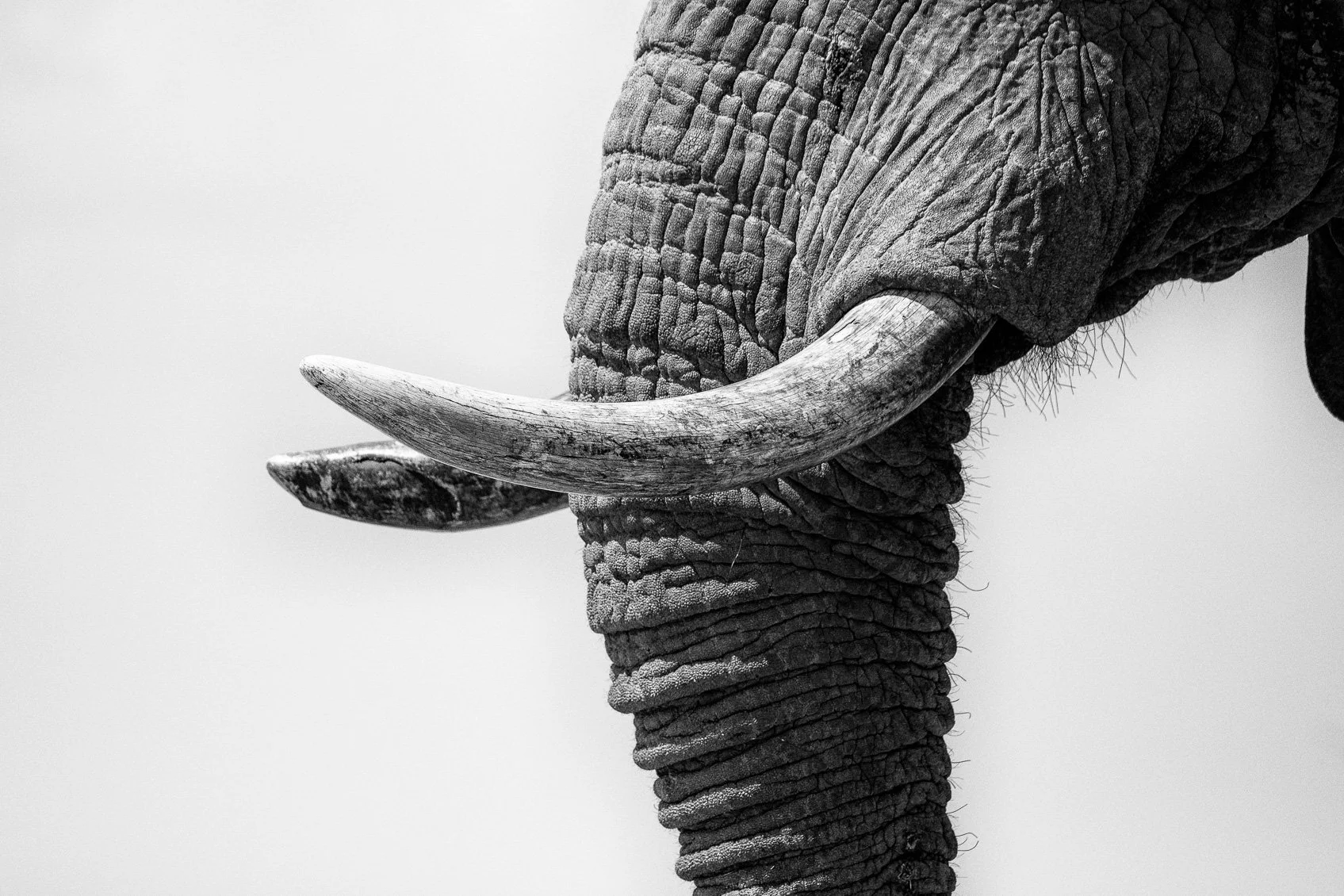
Śravaṇa is symbolized by an ear and a row of three uneven footprints, recalling Viṣṇu's Vāmana avatāra measuring the three worlds. It is associated with communication of all kinds, connectivity, learning, language, ancient knowledge, oral traditions, and music. This asterism is ruled by Lord Viṣṇu, who maintains Brahmā's dream and comes to restore balance whenever dharma declines and adharma rises. The name comes from śruti, that which is heard, the sacred sound preserved not through writing but through the ear, teacher to student, across generations.

Guru Pūrṇimā is said to be the brightest full moon of the year, while the Moon in Śravaṇa marks the zenith of lunar energy and sits in the heart of Capricorn, the final earth sign. The ancient Ṛṣis saw its three guiding stars, known today as Altair, Alshain, and Tarazed, as the footsteps of Viṣṇu measuring the heavens.

Before King Bali, Viṣṇu asked for only three steps of land, then spanned the heavens, the earth, and Bali himself, restoring the devas to their rightful place. The demons displaced were never external, they were distraction, excess, and desire that had veiled what mattered most. Śravaṇa asks the same of us now: release what has taken the seat of your highest priorities, and let dharma return to its rightful place within.

This listening is not only of the ears but of the heart, attuned to the inner voice, intuition, and the words that are never spoken aloud. Śravaṇa carries the śakti Saṃhanana, the power to unite what has scattered into wholeness, awakening our capacity for connection and the emotional duty we hold toward others, offered without expectation of return.

This same Full Moon is also Dakṣiṇāmūrti Jayantī, honoring Śiva in his form as the silent guru, seated beneath the banyan tree, teaching the four sage sons of Brahmā through stillness rather than speech. His wisdom passed not through words but through darśana, the direct transmission of presence, the highest teaching offered in complete silence. Dakṣiṇāmūrti reminds us that the deepest knowledge is never spoken, it is received.

The Guru is not merely an individual, but the living embodiment of Divine Knowledge. In honoring the Guru, we honor the unbroken Guru Paramparā through which the timeless wisdom of the Vedas has flowed from Bhagavān Vedavyāsa through the ages, dispelling the darkness of ignorance and illuminating the Self that has always been present.

गुरुर्ब्रह्मा गुरुर्विष्णुः गुरुर्देवो महेश्वरः।
गुरुः साक्षात् परं ब्रह्म तस्मै श्री गुरवे नमः॥
Full Moon in Pūrvāṣāḍhā: The Invincible Star

FULL MOON IN PŪRVĀṢĀḌHĀ

Artwork: Kailash Raj

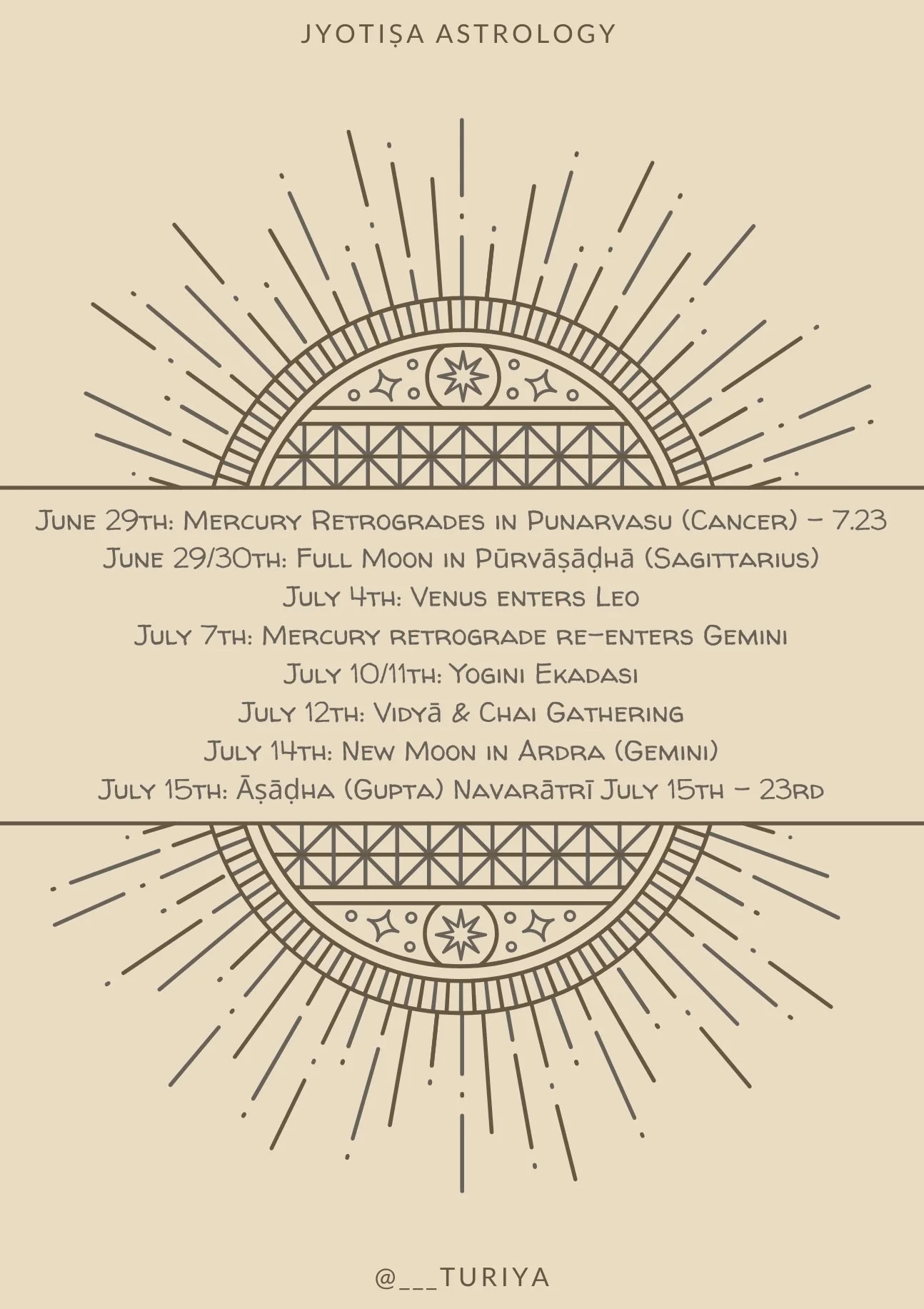
June 29/30

The Full moon (Jyeṣṭha Pūrṇimā) of June rises in the Vedic lunar mansion of Pūrvāṣāḍhā पूर्वाषाढा (Sag), the Invincible Star. This lunation cycle invites us to clarify and consecrate an elevated and refreshed timeline.

The pinnacle of Śukra Graha's (Venus) energy, Pūrvāṣāḍhā is represented in the celestial firmament by the brilliant stars Kaus Australis, Kaus Media, and Kaus Borealis within the heart of Sagittarius, the peak of the dharma trine. The ancient Ṛṣis perceived their formation as a handheld fan, while its name, "the Former Invincible," points not merely to victory, but to the sustained energy that makes victory possible.

Apah, the water goddess, presides over this nakṣatra and is said to be the birth star of Goddess Sarasvatī, she who awakens us to who we really are. Beyond the life-giving and nurturing qualities of water, this constellation is associated with the purification of impurities, rejuvenation, and the restoration of vitality.

She who replenishes what is spent, protects what is sacred, and ensures the one who endures is the one who prevails. To be truly unconquered is to guard the vital essence within — what you do not deplete, you do not have to recover. Protect the nervous system. Protect what sustains you so that you may continue to rise.

Being one of the birth stars of maṅgal graha (mars), who is that engine that easily rises to the top, this constellation desires a lasting victory and authorship of the new timelime — to be the one who narratives “the story” — this is acquired by getting our prioriites in alignment with the deeper truths that are being revealed to us now.

This Full Moon marks the culmination of the inner search initiated under the Mṛgaśīrā New Moon, illuminating what has quietly taken root within.

This renewal brings about rejuvenation, which sustains, energizes, and holds the śakti of varcograhaṇa—the power to invigorate, enliven, and encourage growth. There is a promise of victory to come when your focus is aligned with life-sustaining forces. What poisons in your life need to be transmuted into a healing experience?

Just like the winnowing basket, a symbol for this constellation, who is used to separate the husk from the grain, this cycle encourages a shedding of unnecessary obstacles in order to bring out the useful portion “inside”. This may relate to people places and things. Stay attunded to deep listening and any wise counsel that is bestow upon you during this time.

Budha Graha (Mercury) stations retrograde (Vakri) in the Vedic lunar mansion of Punarvasu (sidereal Cancer), the Star of Renewal, initiating a passage of reflection, reimagination, and restoration that echoes the wisdom of the winnowing basket.

Move deliberately. Distill what is true, stabilize what is worthy, and recommit with discernment. What you choose now has the power to sustain you far beyond this cycle.

All my Relations

Pūrṇimā (Exact Full Moon)

6.29 16:56 PDT | 19:56 EDT | 6.30 01:56AM Spain | 5:26AM IST

Full Moon in Āśleṣā: The Clinging Star

Pūrṇimā

Artwork by @mooncrab.jpg

The bright moon on Sunday morning awakens the primordial, serpent energy, bound within the constellation of Āśleṣā आश्लेषा (Cancer), The Clinging Star. Just like the coiled energy that sits dormant at the base of the spine, which yearns to merge with its beloved in the crown, Āśleṣā enlivens the curiosity to investigate deeper to unite with one’s desired outcome.

A quest which draws us to embrace balance between good and bad — the dance of our lower nature that must be won over before we can attune to our higher power. This kind of transmutation, which turns poison into medicine, very much relates to the shadow energies entwined within our ego — awaiting to be acknowledged and thus subdued, for the throne of authority to be achieved. 

What are you ready to shed? We’re moving out of Mercury retrograde's shadow period and the subtle impulses of your intuition are reawakening. Continue to distill down the wisdom and lessons that have been presenting themselves since the beginning of the year. Learn to transcend your emotional reactions and become more goal oriented, consistent and disciplined in your pursuit to establish your desired hopes and dreams. Wait out the fortnight of the waning moon before initiating those new beginnings, commitments and projects that have been awaiting you. 

All my Relations

For more in depth, personalized guidance on how to align with the current planetary cycle, please visit Vedic Astrology Consultations to book a consultation. Love all ways

Dogen Zenji // “Enlightenment is intimacy with all things.”

Artwork by Caroline Smith

  • February 5th: Full Moon Āśleṣā (Cancer) 

  • February 6th: Mercury enters Capricorn 

  • February 12: Sun enters Aquarius 

  • February 15th: Venus enters Pisces 

  • February 18th: Maha Shivaratri 

  • February 19th: New Moon Shatabhishā (Aquarius)

  • February 27th: Mercury enters Aquarius