GURU PŪRṆIMĀ IN ŚRAVAṆA
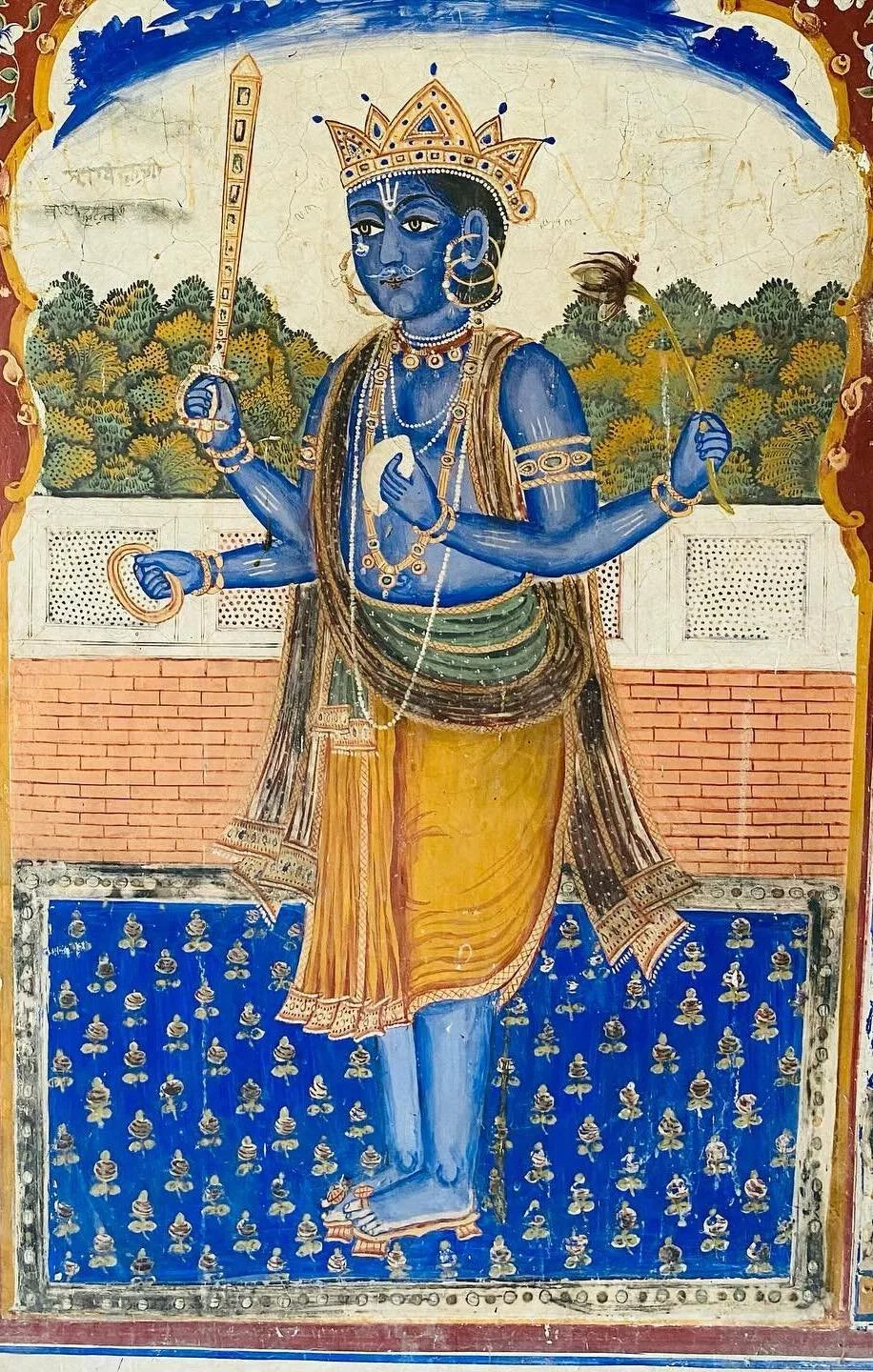
Artwork: Lord Viṣṇu. Located within the samadhi of Sardar Bahadur Lal Singh in Amritsar, India. 1890
07.29
On the Full Moon of Āṣāḍha, we venerate Guru Pūrṇimā, also known as Vyāsa Pūrṇimā. This year the Moon rises in the Vedic lunar mansion of Śravaṇa (Capricorn), The Star of Listening.
Commemorating the appearance of Bhagavān Vedavyāsa, the Maharṣi who compiled the Vedas, composed the Mahābhārata, and preserved the timeless wisdom of the Vedic tradition for humanity. It is a sacred day to honor the Guru Paramparā, the unbroken lineage of teachers through whom this knowledge has been faithfully transmitted across the ages.
Śravaṇa is symbolized by an ear and a row of three uneven footprints, recalling Viṣṇu's Vāmana avatāra measuring the three worlds. It is associated with communication of all kinds, connectivity, learning, language, ancient knowledge, oral traditions, and music. This asterism is ruled by Lord Viṣṇu, who maintains Brahmā's dream and comes to restore balance whenever dharma declines and adharma rises. The name comes from śruti, that which is heard, the sacred sound preserved not through writing but through the ear, teacher to student, across generations.
Guru Pūrṇimā is said to be the brightest full moon of the year, while the Moon in Śravaṇa marks the zenith of lunar energy and sits in the heart of Capricorn, the final earth sign. The ancient Ṛṣis saw its three guiding stars, known today as Altair, Alshain, and Tarazed, as the footsteps of Viṣṇu measuring the heavens.
Before King Bali, Viṣṇu asked for only three steps of land, then spanned the heavens, the earth, and Bali himself, restoring the devas to their rightful place. The demons displaced were never external, they were distraction, excess, and desire that had veiled what mattered most. Śravaṇa asks the same of us now: release what has taken the seat of your highest priorities, and let dharma return to its rightful place within.
This listening is not only of the ears but of the heart, attuned to the inner voice, intuition, and the words that are never spoken aloud. Śravaṇa carries the śakti Saṃhanana, the power to unite what has scattered into wholeness, awakening our capacity for connection and the emotional duty we hold toward others, offered without expectation of return.
This same Full Moon is also Dakṣiṇāmūrti Jayantī, honoring Śiva in his form as the silent guru, seated beneath the banyan tree, teaching the four sage sons of Brahmā through stillness rather than speech. His wisdom passed not through words but through darśana, the direct transmission of presence, the highest teaching offered in complete silence. Dakṣiṇāmūrti reminds us that the deepest knowledge is never spoken, it is received.
The Guru is not merely an individual, but the living embodiment of Divine Knowledge. In honoring the Guru, we honor the unbroken Guru Paramparā through which the timeless wisdom of the Vedas has flowed from Bhagavān Vedavyāsa through the ages, dispelling the darkness of ignorance and illuminating the Self that has always been present.
गुरुर्ब्रह्मा गुरुर्विष्णुः गुरुर्देवो महेश्वरः।
गुरुः साक्षात् परं ब्रह्म तस्मै श्री गुरवे नमः॥