Nāga Pañcamī

NĀGA PAÑCAMĪ

Pinterest

August 16/17

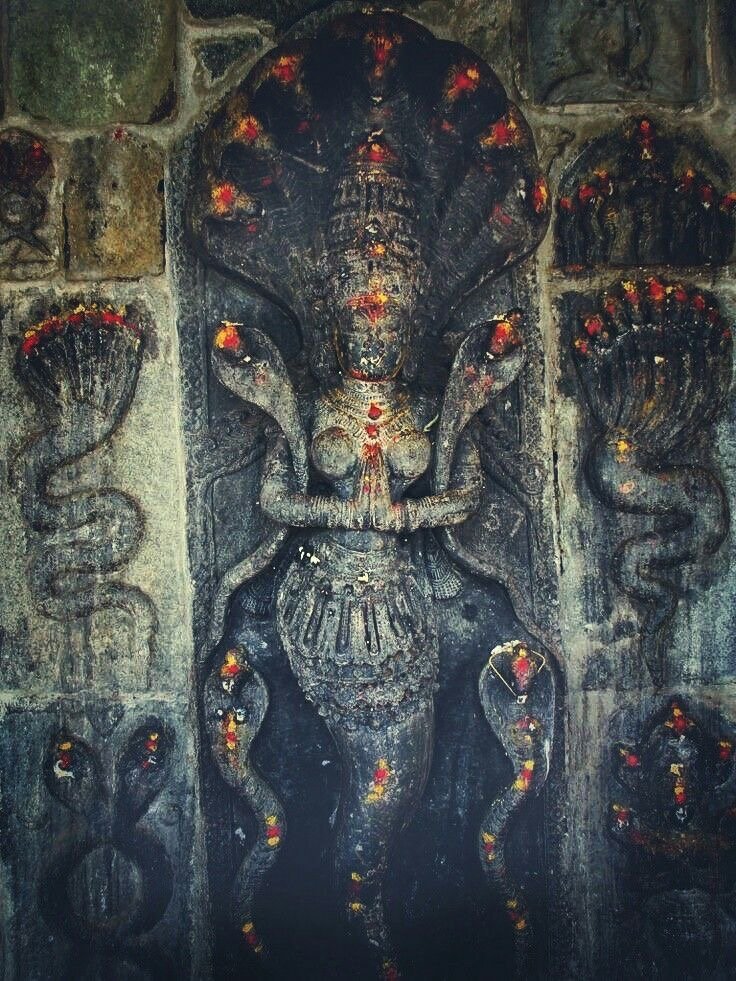
On the fifth day of the bright half of the lunar month of Śravaṇa (July/August), we commemorate Nāga Pañcamī (नागपञ्चमी) and honor the Nāgas, divine serpents.

In the epic Mahābhārata, the sage Āstika intervened to halt King Janamejaya's great snake sacrifice, the Sarpa Satra, which was intended to annihilate the serpent race in vengeance for his father Parīkṣit's death, caused by Takṣaka, the king of serpents.

This pivotal event occurred on Śrāvaṇa Śukla Pañcamī, the fifth day of the waxing moon in Śrāvaṇa. It was on this sacred day that the Mahābhārata was first recited by the sage Vaiśampāyana. Since that time, Nāga Pañcamī has been observed in reverence, marking the divine protection of the serpent beings.
Pinterest

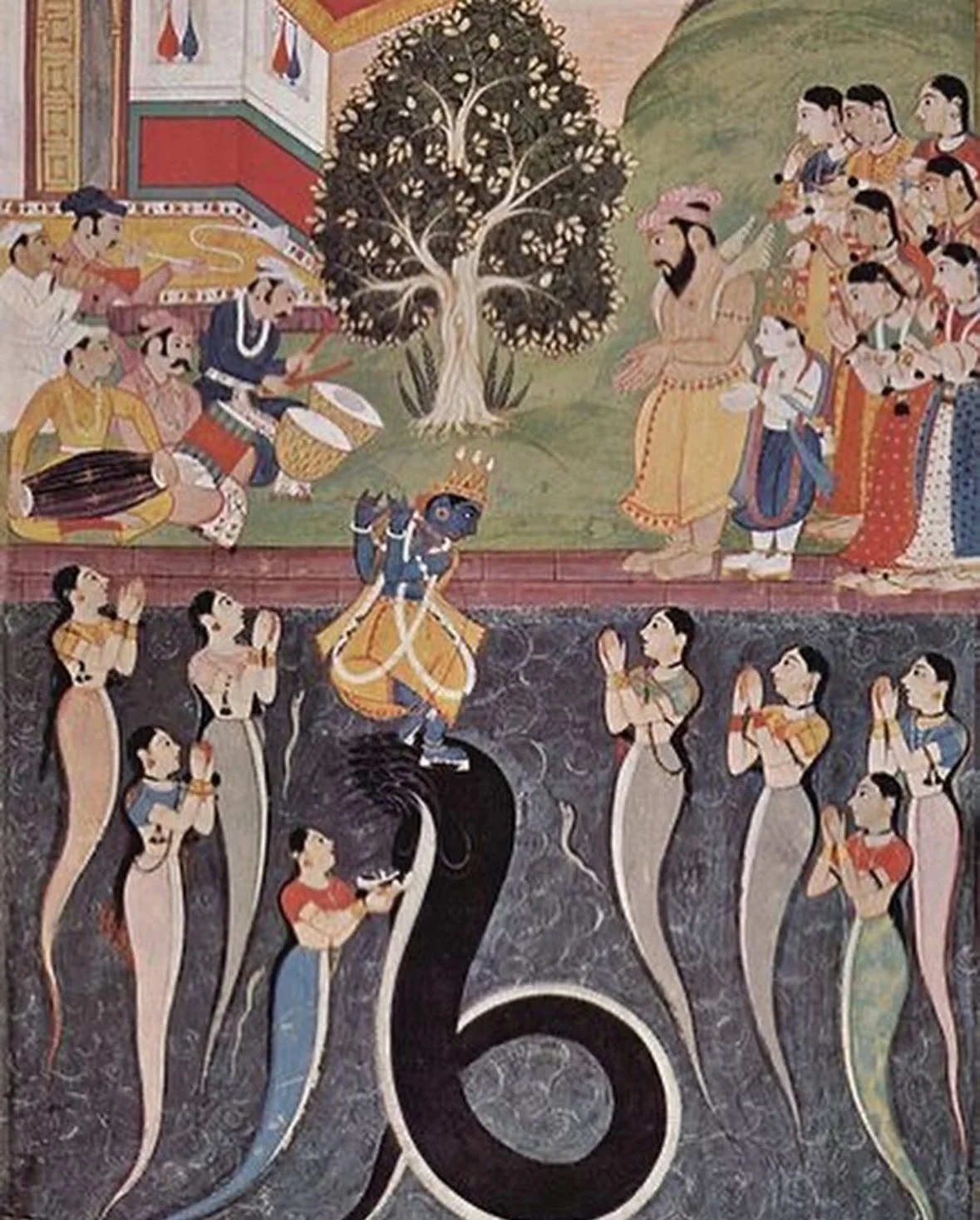
On this day, deities of serpents, crafted from silver, stone, or wood, are ritually bathed in milk and offered sweets, lotus flowers, lamps, mantras, and even fire sacrifices, as families seek their blessings and protection. Live snakes, especially cobras, are also honored with offerings of milk.

The Nāgas, often misunderstood, hold profound significance in the Vedic tradition. They are the devatā of Āśleṣā, the nakṣatra of this year's total solar eclipse, now flavoring the theme of the six months ahead. Revered in India as symbols of Kuṇḍalinī, they carry the coiled spiritual energy awaiting awakening.
Pinterest

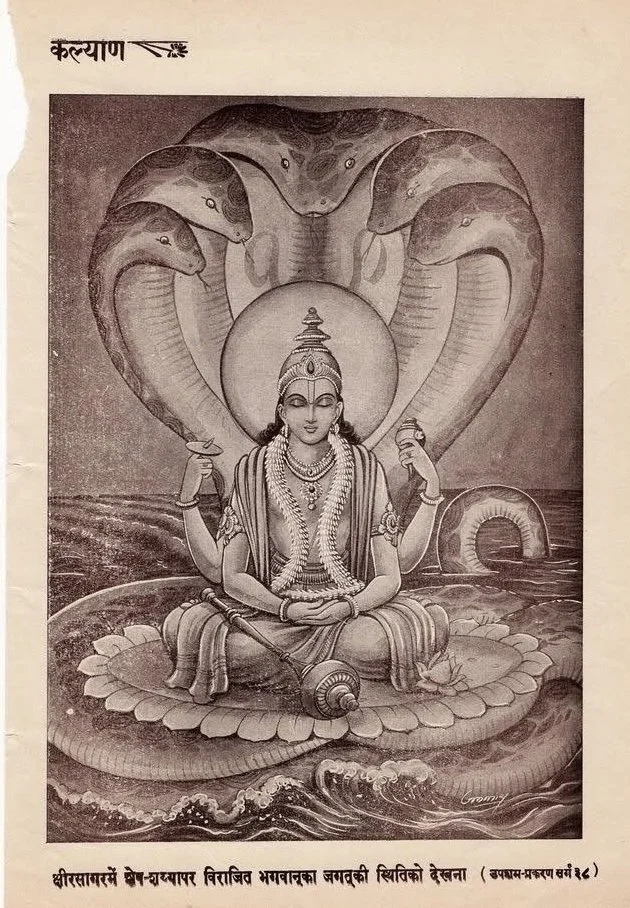
Serpents embody the essence of water, a force of life, transformation, and purification, and are honored as guardians of the waters and of hidden treasure. Chief among them is Ādi Śeṣa (Nāgarāja), the serpent king, upon whom Viṣṇu reclines and who is said to uphold the Earth itself.

Śiva wears Karkoṭaka, another of the great serpent kings, coiled around his neck. Vasuki served as the churning rope around Mount Mandara during the Samudra Manthan, when the gods and demons churned the cosmic ocean for the nectar of immortality. They are also seen as powerful healers, with the ability to absorb and transmute poison, both literal and metaphorical.

ॐ अनन्ताय शेषाय विद्महे
नागराजाय धीमहि
तन्नो शेषः प्रचोदयात् ॥
Gaṅgā Saptamī: Reappearance of the River of Time

GAṄGĀ SAPTAMĪ

Artwork: Pinterest

Sunday, May 4th
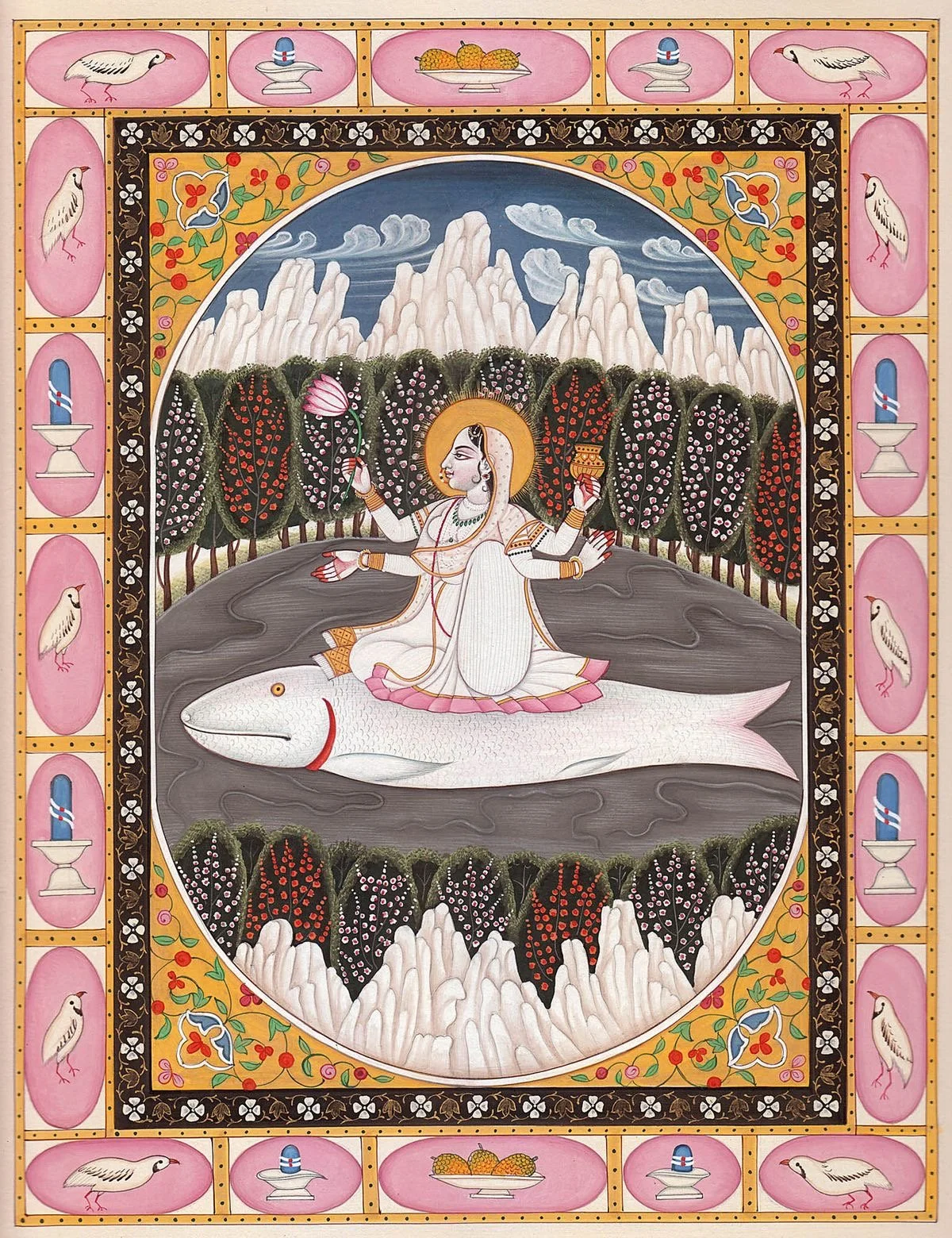
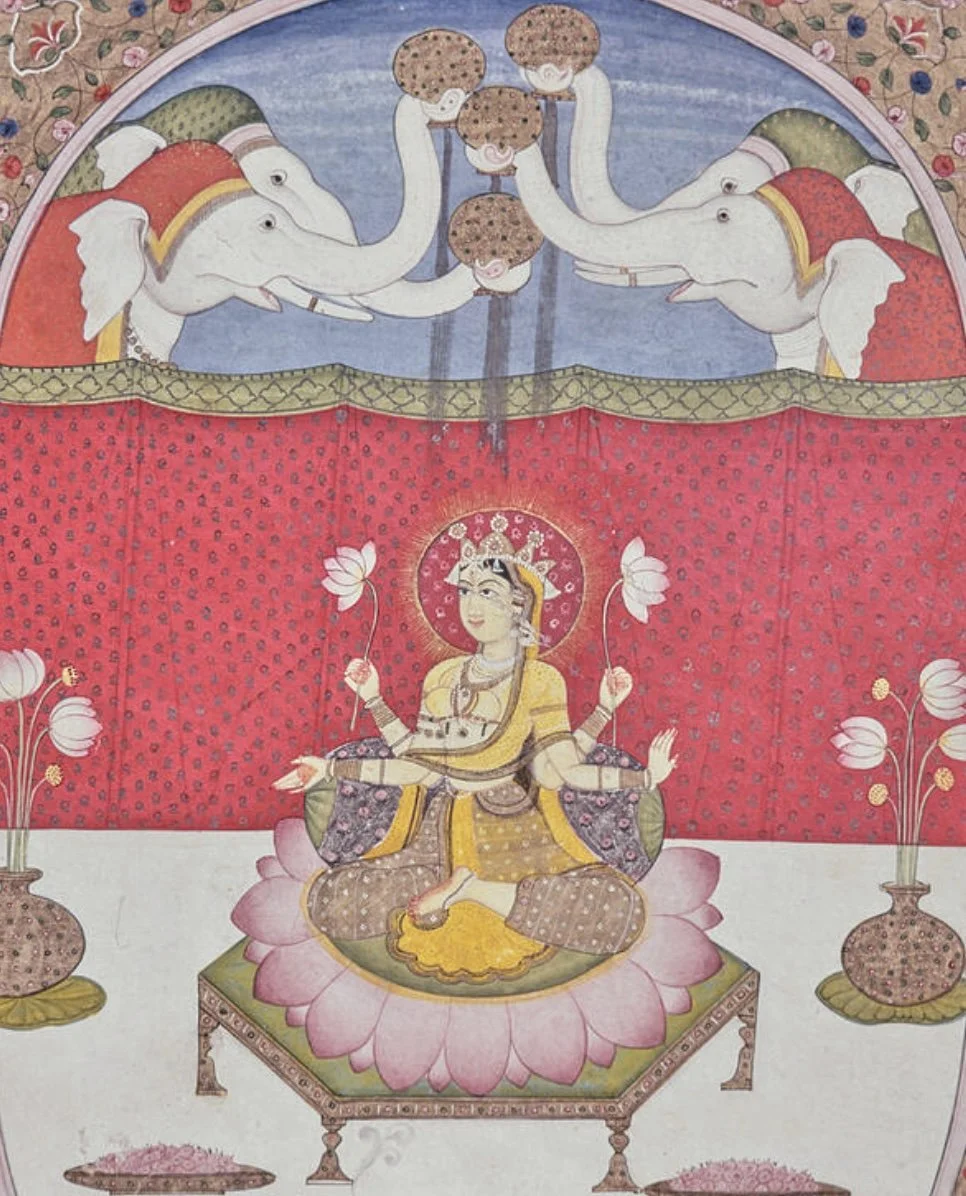
This sacred observance falls on the Saptamī tithi (seventh lunar day) of the waxing phase of the Moon in the Vedic month of Vaiśākha (April/May), and commemorates the auspicious reappearance of Gaṅgā Devī upon Earth.  

Through King Bhagīratha’s penance, Gaṅgā descended from Svarga-loka, crossing realms to reach Earth, where her sacred waters released the sons of Sagara from their karmic imprisonment.  

While Akṣaya Tṛtīyā celebrates the boon of her descent, it is on Gaṅgā Saptamī that her celestial stream was finally released from the matted locks (jaṭā) of Lord Śiva and began to sanctify the Earth.

Artwork: Pinterest

The Purāṇas, including the Rāmāyaṇa (Bālakāṇḍa) and the Bhāgavata Purāṇa (Skandha 9), recount the tale of King Bhagīratha, whose generations-long tapasya invoked Gaṅgā’s compassion to liberate the souls of the sons of Sagara. 

Yet her descent was so powerful that it threatened to shatter the Earth—only Śiva, in his vast stillness, could receive her. Holding her within his jaṭā, he did not restrain her, but contained her—transforming overwhelming force into sacred flow.

Artowrk: Pinterest

Here lies a deep teaching: Gaṅgā is awakened śakti—pure descent, untamed grace. Śiva, as the unmoving ground, is the stabilizing force of consciousness that alone can channel her power without collapse. This is the union of śakti and śiva, the dance of movement and stillness, of becoming and being. Her release from Śiva’s locks symbolizes not chaos, but the sanctified expression of grace once held in silence.

Gaṅgā is also the river of Time—kalā herself, flowing endlessly through the three worlds. To bathe in her is to step beyond the bounds of karma, if only for a moment. Śiva, as Mahākāla, the Great Time, stands not within the current of time but beyond it, as the witness of all cycles. In her descent, Time meets the Timeless; and through her, we glimpse the possibility of release from the wheel.

Artwork: Pinterst

In yogic traditions, Gaṅgā is traditionally associated with the Iḍā nāḍī—the left-sided lunar channel, governed by the Moon’s cooling, inward-drawing current of śakti. Alongside Yamunā (Piṅgalā) and Sarasvatī (Suṣumṇā), she forms the subtle triveṇī saṅgam within the energetic body—the sacred inner confluence of breath, mind, and consciousness at the heart of spiritual awakening.

In tantric linages, Gaṅgā is also envisioned as the luminous current of consciousness descending from sahasrāra (the crown) through the Suṣumṇā nāḍī (central channel)—a divine fall not unlike her celestial plunge. Her flow through the inner spine mirrors her outer journey: a river of remembrance, rethreading the soul toward its Source.

Artwork: Pinterest

On this day, devotees honor her presence through mantras, ritual bathing, and silent invocation. Even remembrance is an offering. For those far from her physical waters, to close the eyes and chant her name is to be washed in her subtle presence. May we allow ourselves to be received as she was received—held, softened, and sanctified by the stillness within.

All my Relations - Tulsi

Oṁ Gaṅgāyai Namaḥ
Jaya Jāhnavī Mā

AKṢAYA TṚTĪYĀ: Day of Lasting Achievements

Akṣaya Tṛtīyā

अक्षय तृतीया

Pinterest

Today marks the most auspicious day in the Vedic calendar, where both the luminaries, sūrya (sun) and chandra (moon) are in their exalted positions. Occuring on the third (tr̥tīyā) lunar day of the spring month of Vaiśākha, Akṣaya, meaning “never decreasing,” illuminates this day as a beacon of enduring accomplishments.

This auspicious occasion beckons new beginnings with unparalleled favorability, be it in the sacred bond of marriage, the initiation of ventures, the acquisition of gold or a new abode, or acts of benevolence. Such is its potency that the necessity of calculating an auspicious moment, known as muhūrta, becomes obsolete, for the entire day brims with divine blessings.

Today commemorates the denouement of the epochal Mahābhārata war, a pivotal event signaling the transition from Satyayuga, the golden age, to Tretāyuga, the silver era. It is also revered as the day when Lord Gaṇeśa and Veda Vyāsa commenced the writing of the Mahābhārata, and the moment when the celestial waters of river Gaṅgā decended from heaven to grace the earth realm.

This revered thiti (तिथि), or lunar phase, spans from 4:19 am 5/10 - 2:51 am 5/11 IST |  15:49 5/9 - 14:21 5/10 PST