
NĀGA PAÑCAMĪ
August 16/17
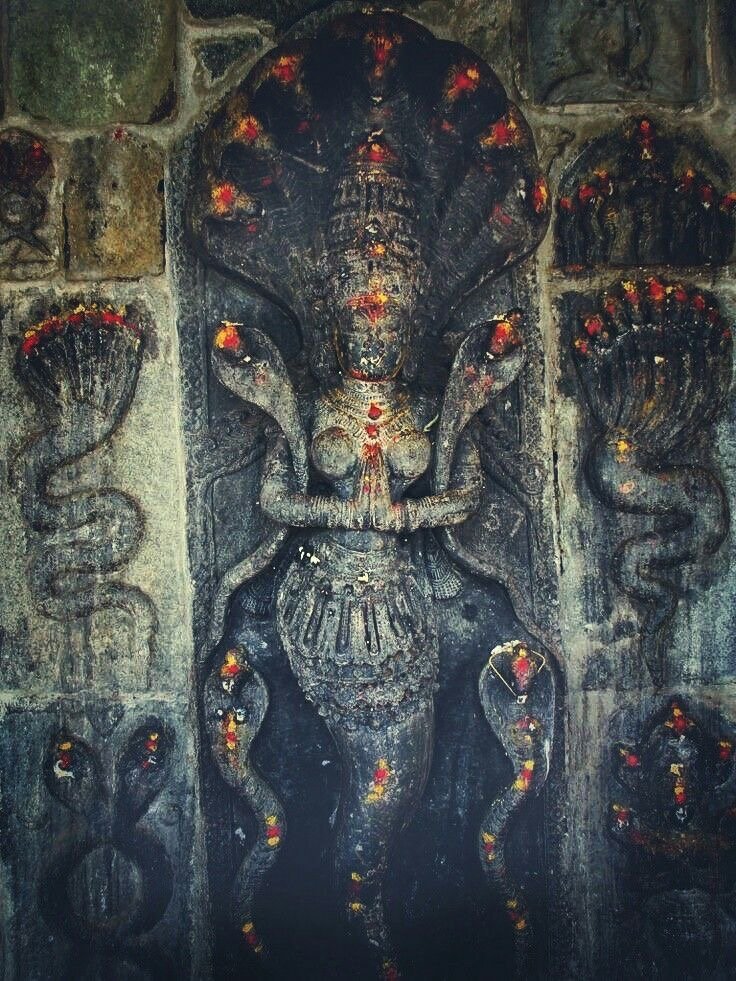
On the fifth day of the bright half of the lunar month of Śravaṇa (July/August), we commemorate Nāga Pañcamī (नागपञ्चमी) and honor the Nāgas, divine serpents.
In the epic Mahābhārata, the sage Āstika intervened to halt King Janamejaya's great snake sacrifice, the Sarpa Satra, which was intended to annihilate the serpent race in vengeance for his father Parīkṣit's death, caused by Takṣaka, the king of serpents.
This pivotal event occurred on Śrāvaṇa Śukla Pañcamī, the fifth day of the waxing moon in Śrāvaṇa. It was on this sacred day that the Mahābhārata was first recited by the sage Vaiśampāyana. Since that time, Nāga Pañcamī has been observed in reverence, marking the divine protection of the serpent beings.
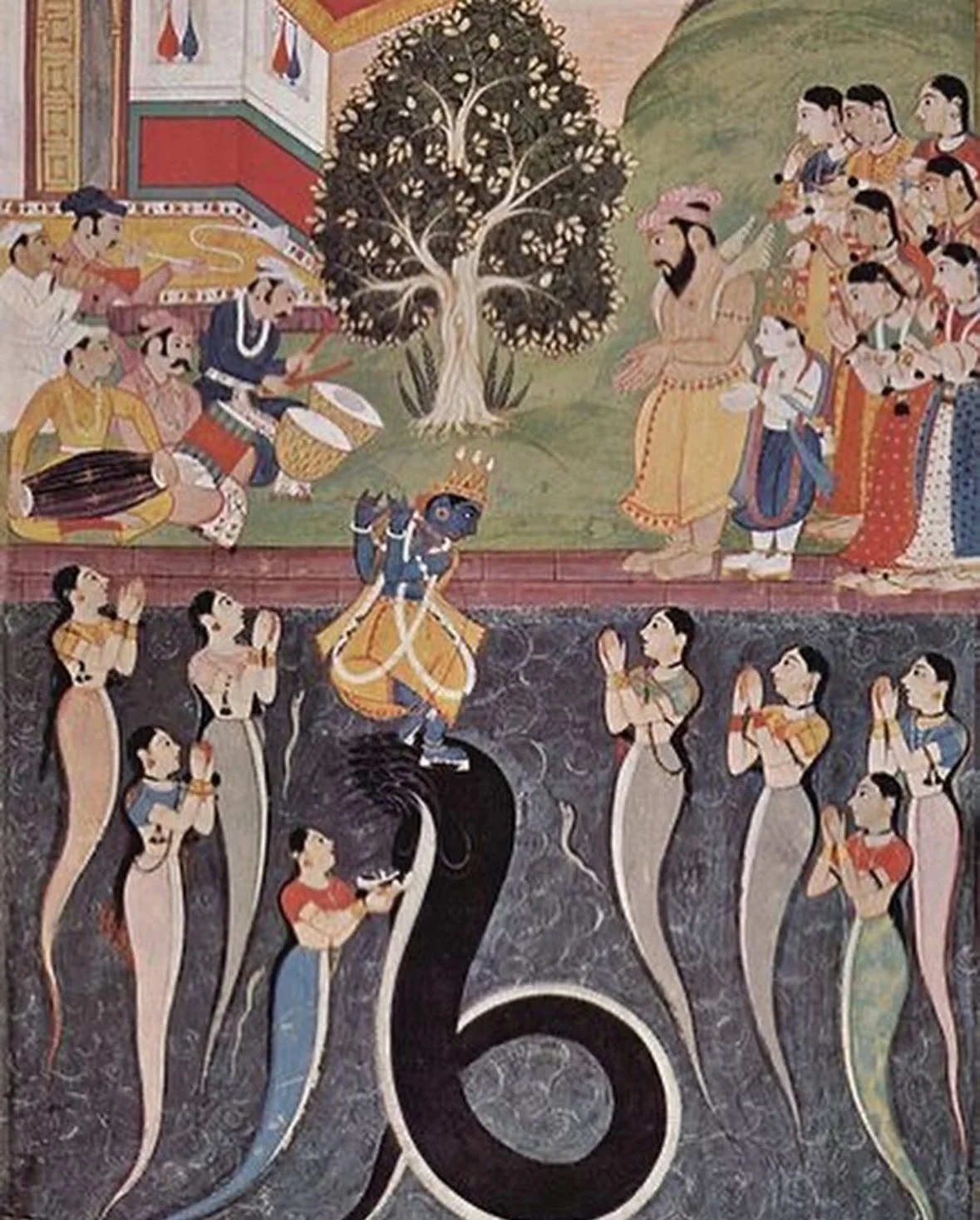
On this day, deities of serpents, crafted from silver, stone, or wood, are ritually bathed in milk and offered sweets, lotus flowers, lamps, mantras, and even fire sacrifices, as families seek their blessings and protection. Live snakes, especially cobras, are also honored with offerings of milk.
The Nāgas, often misunderstood, hold profound significance in the Vedic tradition. They are the devatā of Āśleṣā, the nakṣatra of this year's total solar eclipse, now flavoring the theme of the six months ahead. Revered in India as symbols of Kuṇḍalinī, they carry the coiled spiritual energy awaiting awakening.
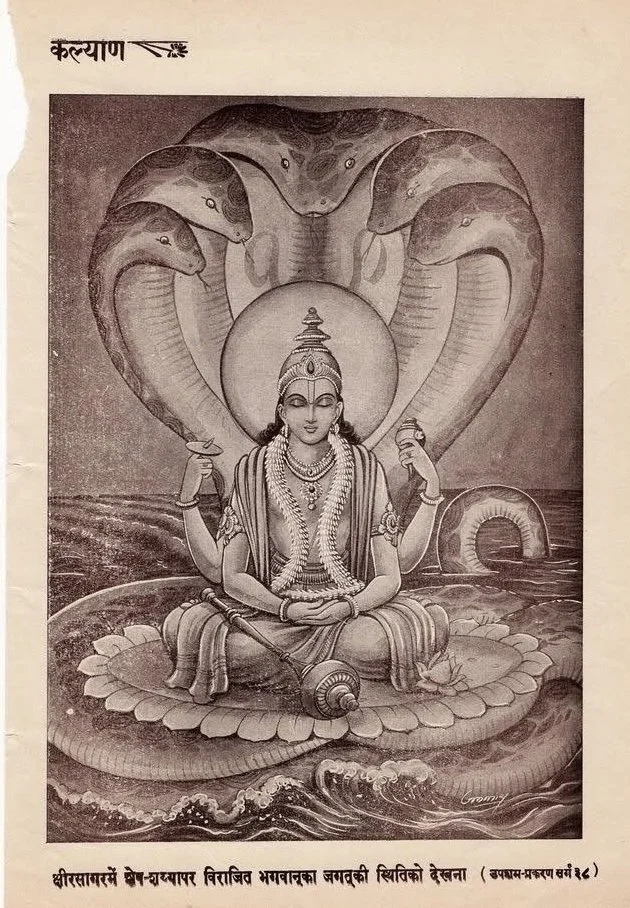
Serpents embody the essence of water, a force of life, transformation, and purification, and are honored as guardians of the waters and of hidden treasure. Chief among them is Ādi Śeṣa (Nāgarāja), the serpent king, upon whom Viṣṇu reclines and who is said to uphold the Earth itself.
Śiva wears Karkoṭaka, another of the great serpent kings, coiled around his neck. Vasuki served as the churning rope around Mount Mandara during the Samudra Manthan, when the gods and demons churned the cosmic ocean for the nectar of immortality. They are also seen as powerful healers, with the ability to absorb and transmute poison, both literal and metaphorical.
ॐ अनन्ताय शेषाय विद्महे
नागराजाय धीमहि
तन्नो शेषः प्रचोदयात् ॥