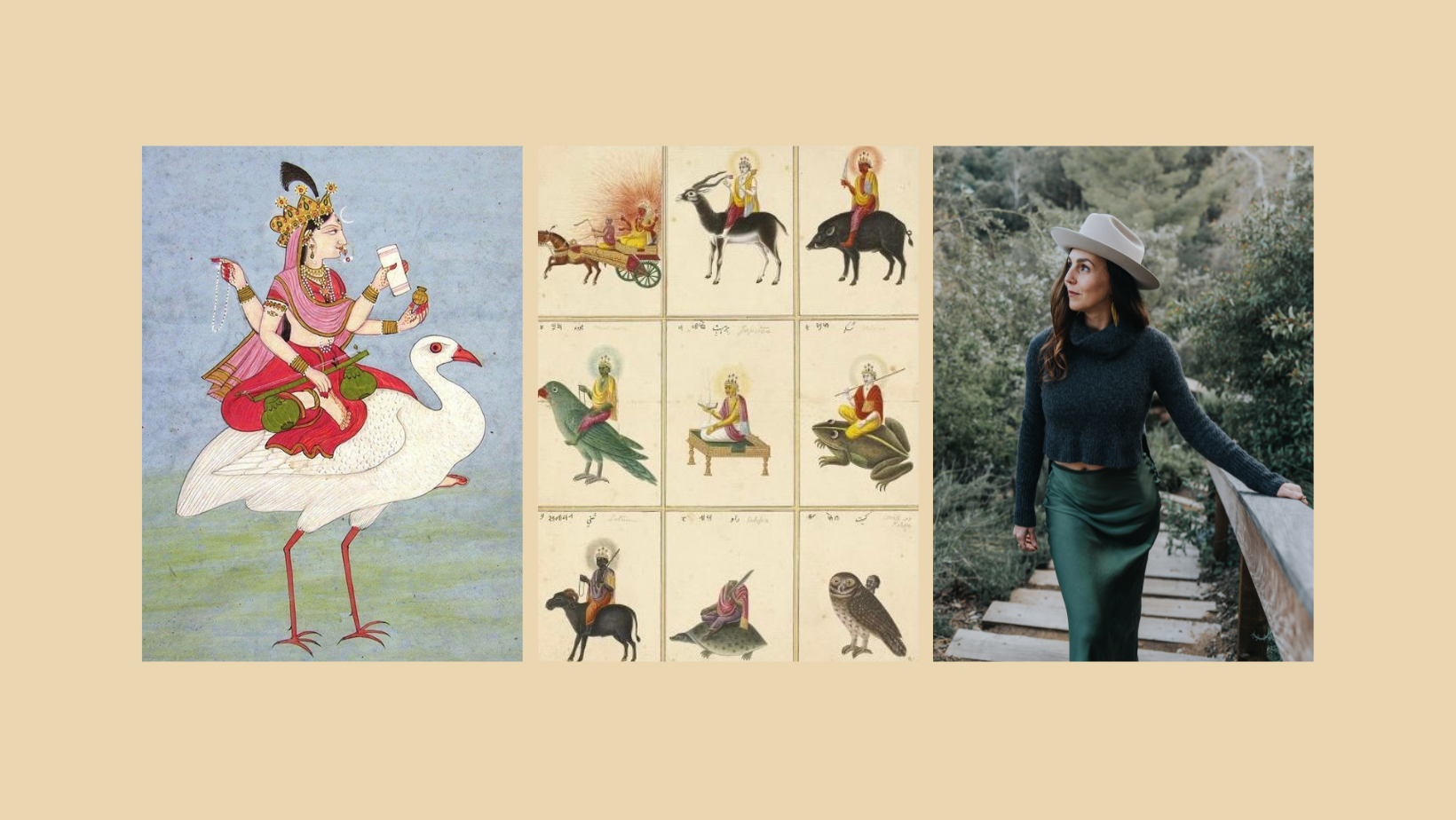
Jupiter Enters Maghā: The Star of Power

JUPITER ENTERS IN MAGHA
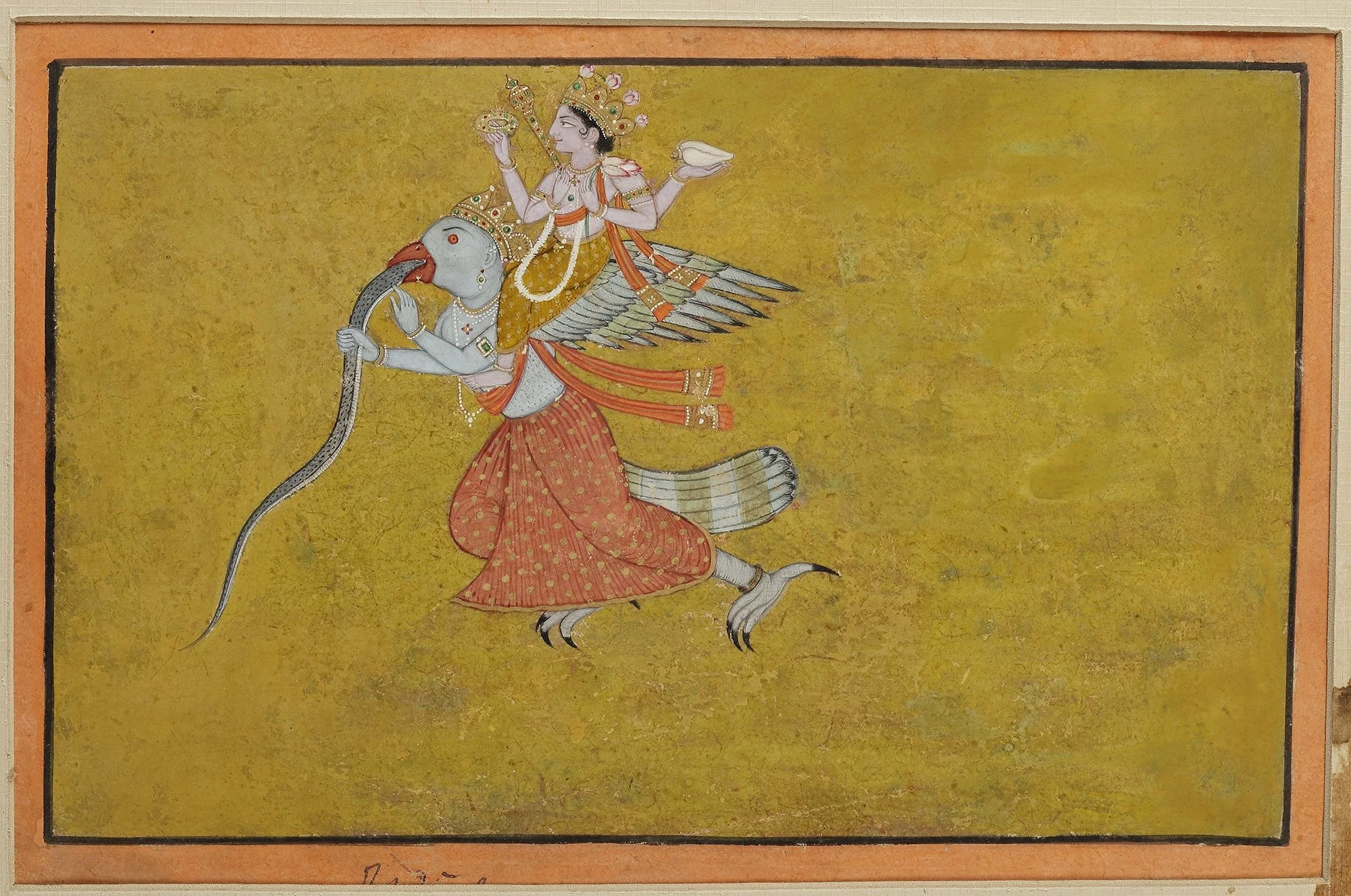
Artowrl: VISHNU RIDING ON GARUDA Kangra School, 18th Century

10.31 - 01.25

On October 31st, Jupiter leaves his exaltation in Cancer and enters the majestic Vedic Lunar Mansion of Maghā मघा (sidereal Leo), the Star of Power, for approximately 86 days.

This initial passage offers a glimpse of the longer transit beginning in June 2027. Pay attention to what begins to emerge over the coming weeks, as these themes may return for deeper exploration when Guru re-enters Maghā.

Known as Guru, Bṛhaspati, and Vācaspati, Lord of Speech, Jupiter is Jīva Kāraka, the significator of life itself. Said to possess a voice like a lion, Guru governs wisdom, knowledge, counsel, dharma, and the intelligence through which we understand our experiences, restoring things to their rightful place according to their inherent nature. As kāraka of the ninth house and preceptor of the Devas, he upholds divine justice and guards the storehouse of merit (puṇya), the fruits of righteous action.

Before entering Maghā, Jupiter crosses the gaṇḍānta point, the karmic knot where water meets fire. Known as Pitṛ Gaṇḍānta, this threshold marks the dissolution of one cycle and the emergence of another. What remains unresolved within our ancestral lineage may now come forward for recognition, understanding, and release.

Maghā means the Magnificent or Bountiful. Symbolized by the royal throne, its presiding devatās are the Pitṛs, the ancestors, and its planetary ruler is Ketu, the kāraka of mokṣa and our genetics.

Maghā holds tyāge kṣepaṇī śakti, the power to leave the body. Beneath its symbolism of royalty and succession lies a profound teaching on inheritance, impermanence, and renunciation. Every throne is inherited, and eventually every throne must be relinquished.

In the Vedic understanding, we are born with pitṛ ṛṇa, an obligation to the ancestral lineage through which we have received this precious human birth. The throne represents not simply power or privilege, but the responsibilities that accompany what we inherit. Through the fulfillment of dharma, we cultivate puṇya and gradually become free of the obligations that bind us.

Here, Guru takes his seat upon the throne of the Pitṛs, bringing the intelligence of dharma to the inheritance of our ancestors. Jupiter illuminates the relationship between what has been passed down to us, what we are here to fulfill, and what we may ultimately transcend.

This is a time to remember our ancestors and reflect upon our interdependence with all things. To shine light on inherited habits, cycles, and reactions, as well as the legacy we are leaving behind through the imprint of our thoughts, speech, and actions.

On December 13th, Jupiter stations retrograde in Maghā, turning our attention inward to reflect, review, and reassess our relationship with knowledge, teachers, beliefs, and the foundations upon which we have built our lives. Returning to Cancer on January 25th, Guru crosses this ancestral threshold once more, inviting us to revisit what remains unfinished.

Pay particular attention if you are running a Guru or Ketu daśā or antardaśā, as this transit may intensify the ripening of karma (karma-phala), bringing the fruits of past actions more prominently into experience, whether as blessings, responsibilities, or opportunities for resolution.

There is intergenerational work to be done. Yet this passage is not solely concerned with what must be healed or released. Maghā is also the seat of ancestral blessings, accumulated merit (puṇya), and the wisdom we are entrusted to carry forward.

Rise above the collective narrative and inherited limitations. Put into practice the wisdom you have cultivated, and step fully into your individuality, established in your own dharma.

With Jupiter conjunct Ketu, and Mars entering Leo in November, be mindful of excess intensity. Stay rested and grounded; āsana and time in nature will be of great service.

Courage stems from the Latin cor, meaning heart. May we have the courage to live and speak from the fullness of our hearts, honoring what has come before us while consciously shaping what we leave behind.

ॐ श्री गुरुभ्यो नमः

Jupiters Transit

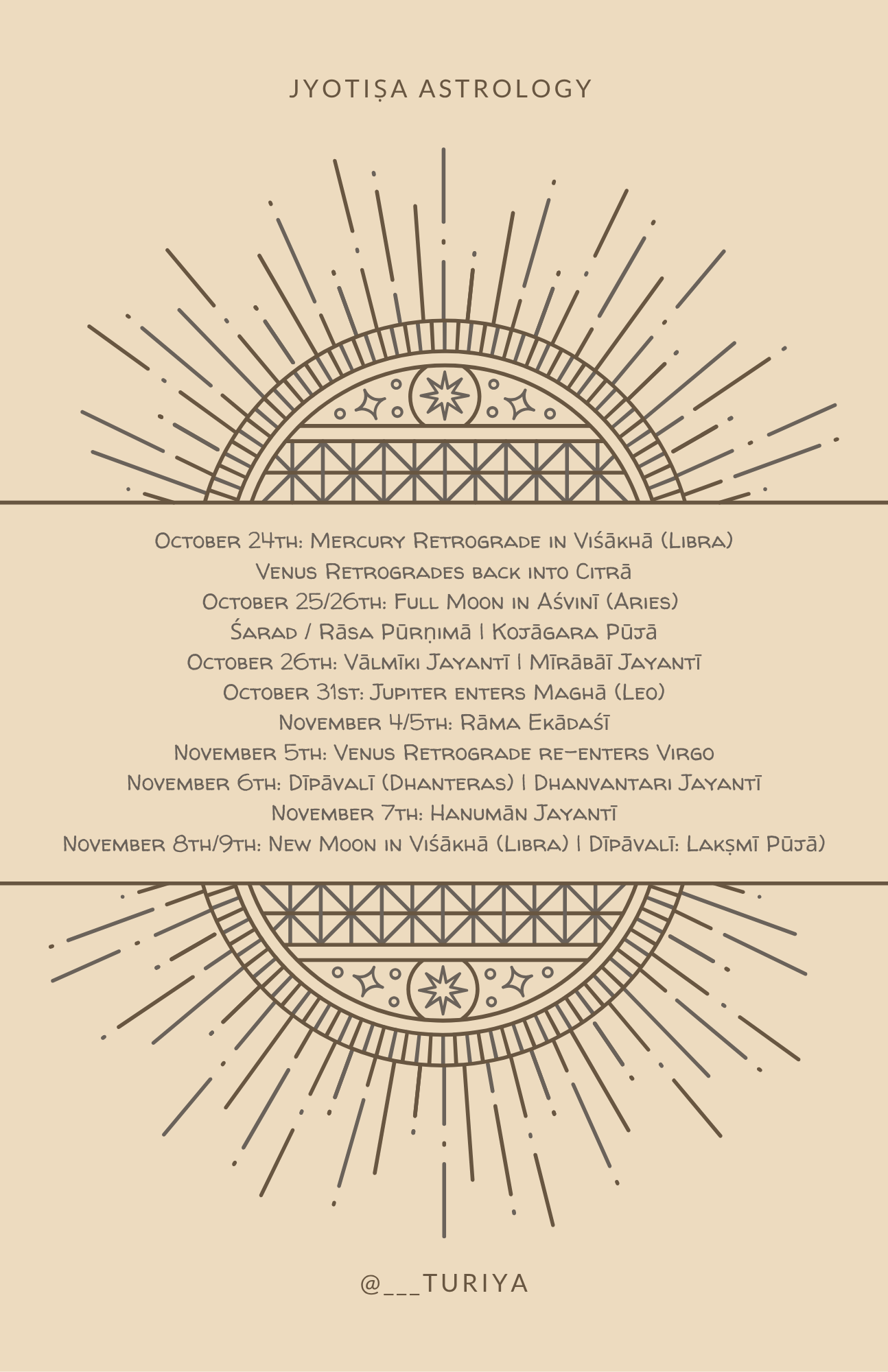
October 31st: Jupiter Enters Maghā (Leo) 

December 13th: Jupiter Retrograde in Maghā (Leo) | Dec 13th - April 13th 2027

January 25th: Jupiter Retrograde re-enters Aśleṣā (Cancer)

April 13th: Jupiter Stations Direct in Aśleṣā (Cancer)

June 26th: Jupiter re-enters Maghā (Leo)
Full Moon in Aśvinī: The Star of Transport

FULL MOON IN AŚVINĪ

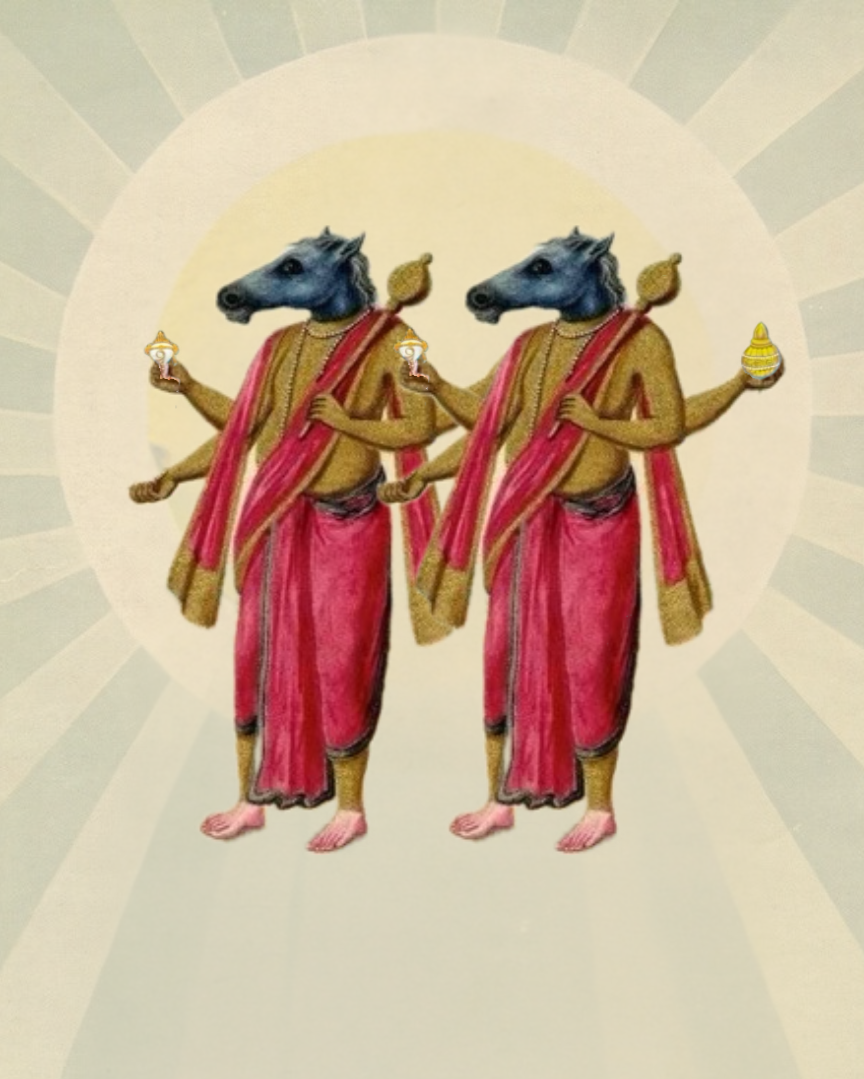
Artwork: By @___turiya


Oct 25 9:11PM PDT | Oct 26 12:11AM EDT | IST 9:41AM

The Full Moon पूर्णिमा of October arises in Aśvinī अश्विनी (sidereal Aries), the Vedic lunar mansion known as the Star of Transport, governing movement, as well as the subtle passage between states of being.

Aśvinī stands at the threshold, where one state dissolves and another has not yet fully formed, making it a potent gateway for transition, initiation, and swift reorientation of the path.

Seated at the beginning of the zodiac, Aśvinī holds the spark of latent power, igniting the unmanifest into manifestation. Initiating the first of the dharma houses and governed by Ketu graha (south node), it marks Sūrya’s uccha (exaltation) point, the emergence of the individual principle, singular and self-illuminating. It is represented in the celestial firmament by two bright stars in the constellation of Meṣa, known in modern astronomy as Hamal (Alpha Arietis) and Sheratan (Beta Arietis), which the ancient Vedic ṛṣis saw as forming the head of a horse.

This asterism holds the energy of Śīghravyāpana Śakti, the power to quickly reach or attain the object of one’s aim. There is a swiftness inherent here, a directness in movement, where intention meets response with minimal delay. There is also an element of the miraculous, an intelligence that moves beyond limitation, where outcomes once thought fixed may be restored, reversed, or brought back into alignment.

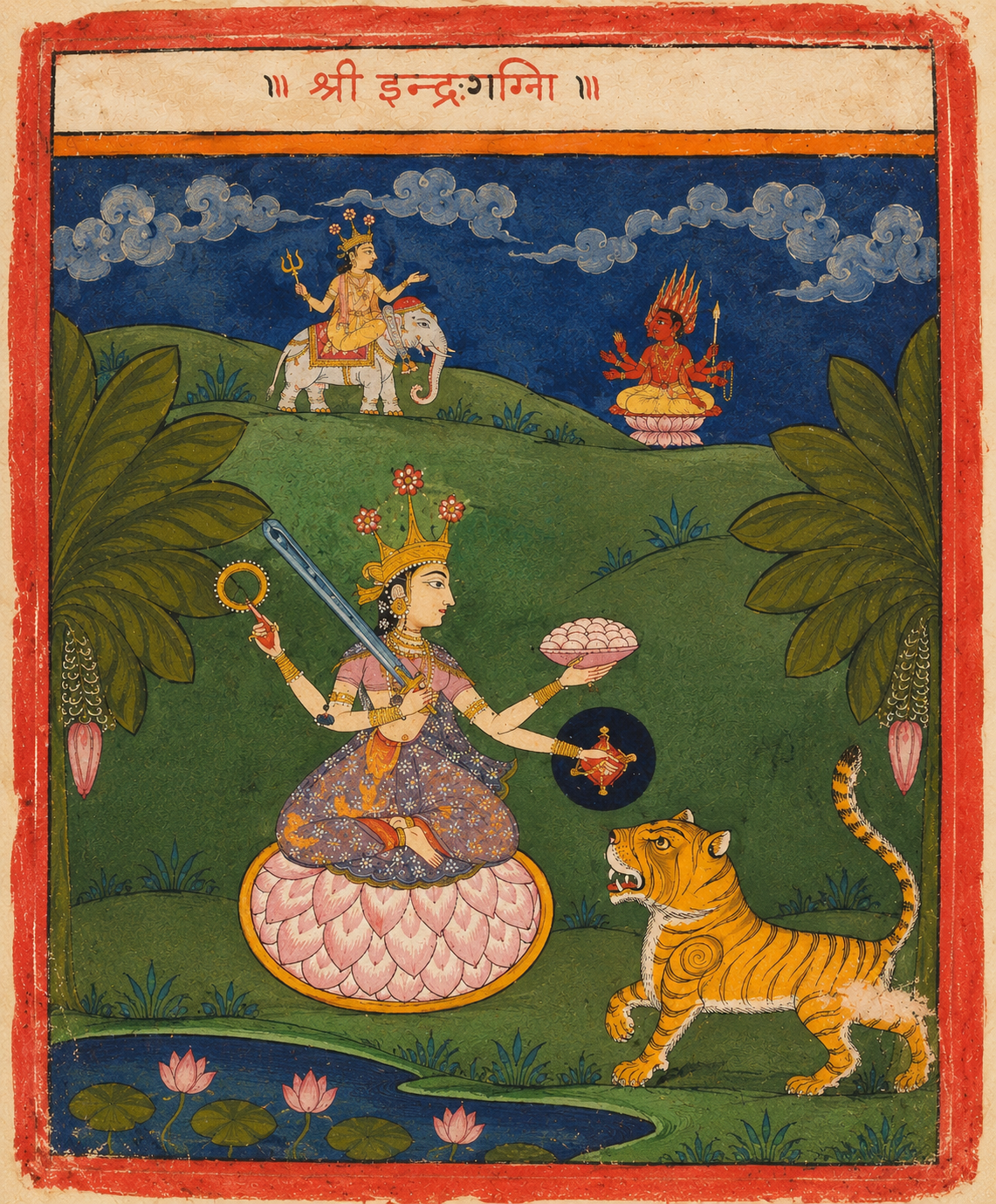
Artwork: Pinterest

Ruled by the Aśvinī Kumāras, the celestial physicians to the devas, Daśra and Nāsatya, “bringing help” and “truthfulness,” this Nakṣatra embodies healing, rejuvenation, and the intelligence of alternative medicine. In the Ṛgveda, the twins arrive when called. Help comes to the one who asks. Symbolized by the head of a horse, it carries vitality and the eagerness to begin, to set forth with sensitivity, precision, and a swift, determined current.

The Aśvinī Kumāras are born of a subtle concealment within the solar lineage. When Sañjñā, wife of Sūrya and daughter of Tvaṣṭṛ, could not bear his radiance, she placed her shadow (Chāyā) in her stead and assumed the form of a mare. Sūrya followed, taking the form of a stallion, and through this union the twin horsemen were born, carrying the intelligence of swift restoration, arriving at the threshold where life is renewed.

Initiatives taken now, especially those related to health and healing, are said to bear rapid results, drawing upon the potency of creation itself. There is a subtle current here that replenishes what has been diminished, restoring vitality where life force has waned.

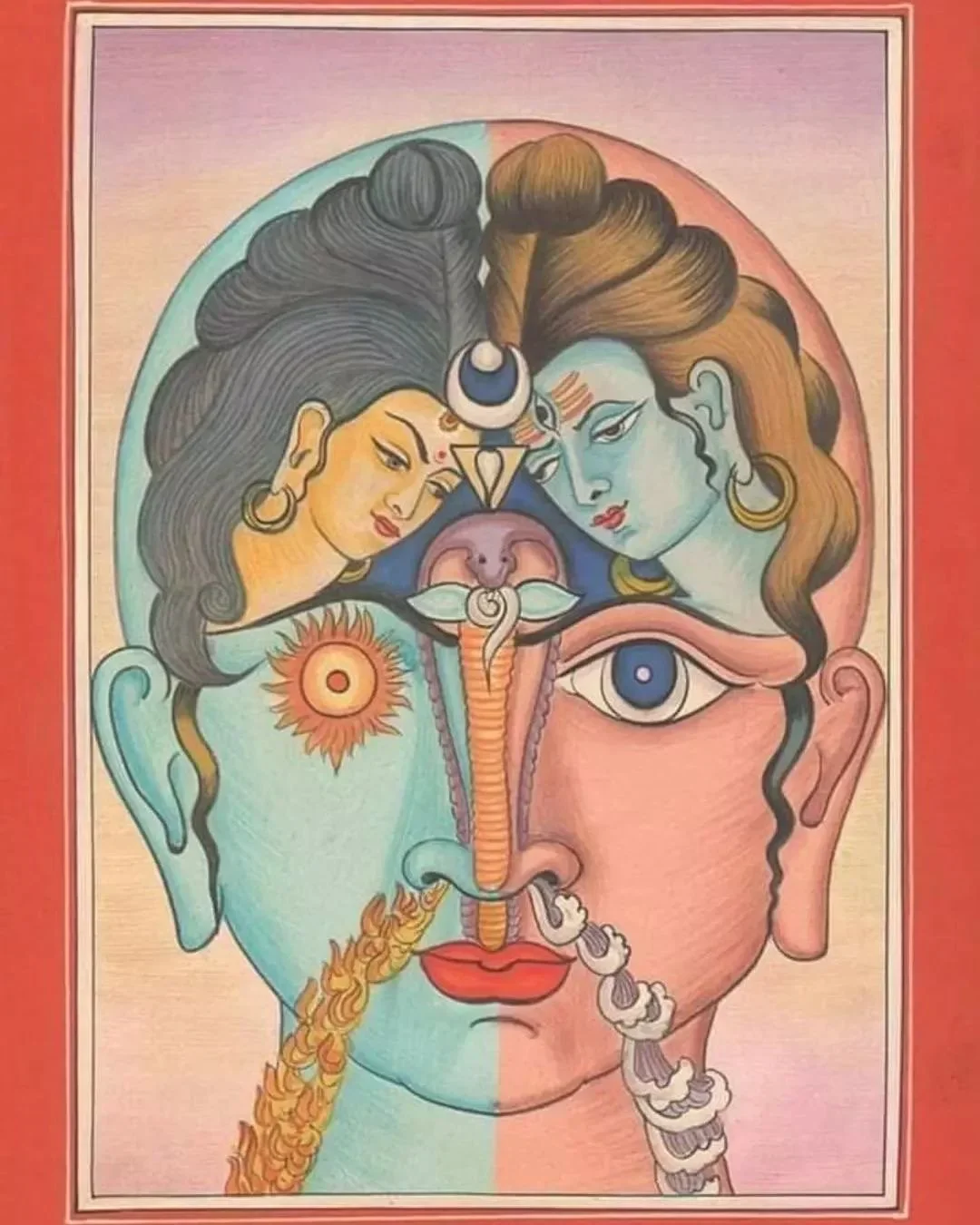
Half animal and half human, they hold an invisible thread linked to the nostrils, to the first and final breath, and to the currents of iḍā and piṅgalā. The practices within Yoga Śāstra encourage the gentle and steady purification of these channels, guiding awareness toward the inner, hidden pathway, through which the journey of transcending identification with the body, the senses, desire, and even the fruits of action unfolds.

Just as the race horse wears blinders to avoid distraction or misstep, we too must maintain singular focus, centered in our own lane. Let us remain resolute, unmoved by the opinions, expectations, or noise of the waking dream and world around us, steadfast in the pursuit of what truly matters.

Kojāgara Pūjā

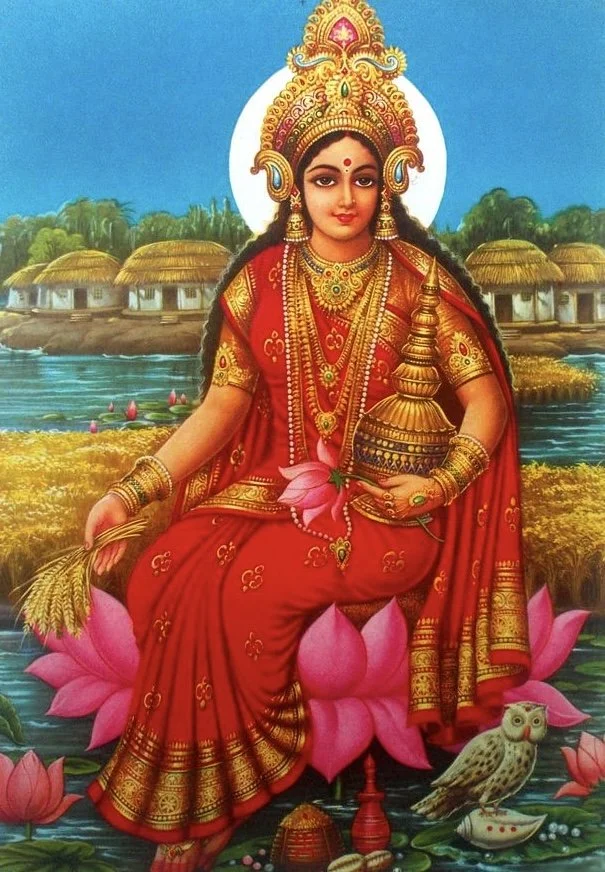
The lunar month of Āśvina takes its name from this star, for its Pūrṇimā rises in Aśvinī. This is Śarad Pūrṇimā, the autumn full moon, when the Moon shines with all sixteen kalās, sanctified by Kojāgara Pūjā (कोजागरा पूजा), the night vigil to Śrī Lakṣmī.

On this night, Lakṣmī is said to move across the earth, bestowing prosperity, abundance, and auspiciousness upon those she finds awake in devotion. Lamps are lit, mantra japa is offered, vigil is kept, and kheer is left beneath the moonlight to receive its amṛta.

Its name asks a single question: Ko jāgarti? (को जागर्ति?) Who is awake? The one established in the Self, awake through jāgrat, svapna, and suṣupti. As the Bhagavad Gītā says: “That which is night for all beings, therein the self-mastered one is awake.”

In the sky, Śukra, keeper of the Mṛtasañjīvanī vidyā, the knowledge that restores life, rests hidden in Sūrya’s light at the heart of the retrograde, soon to rise reborn as the morning star.

Rāsa Pūrṇimā

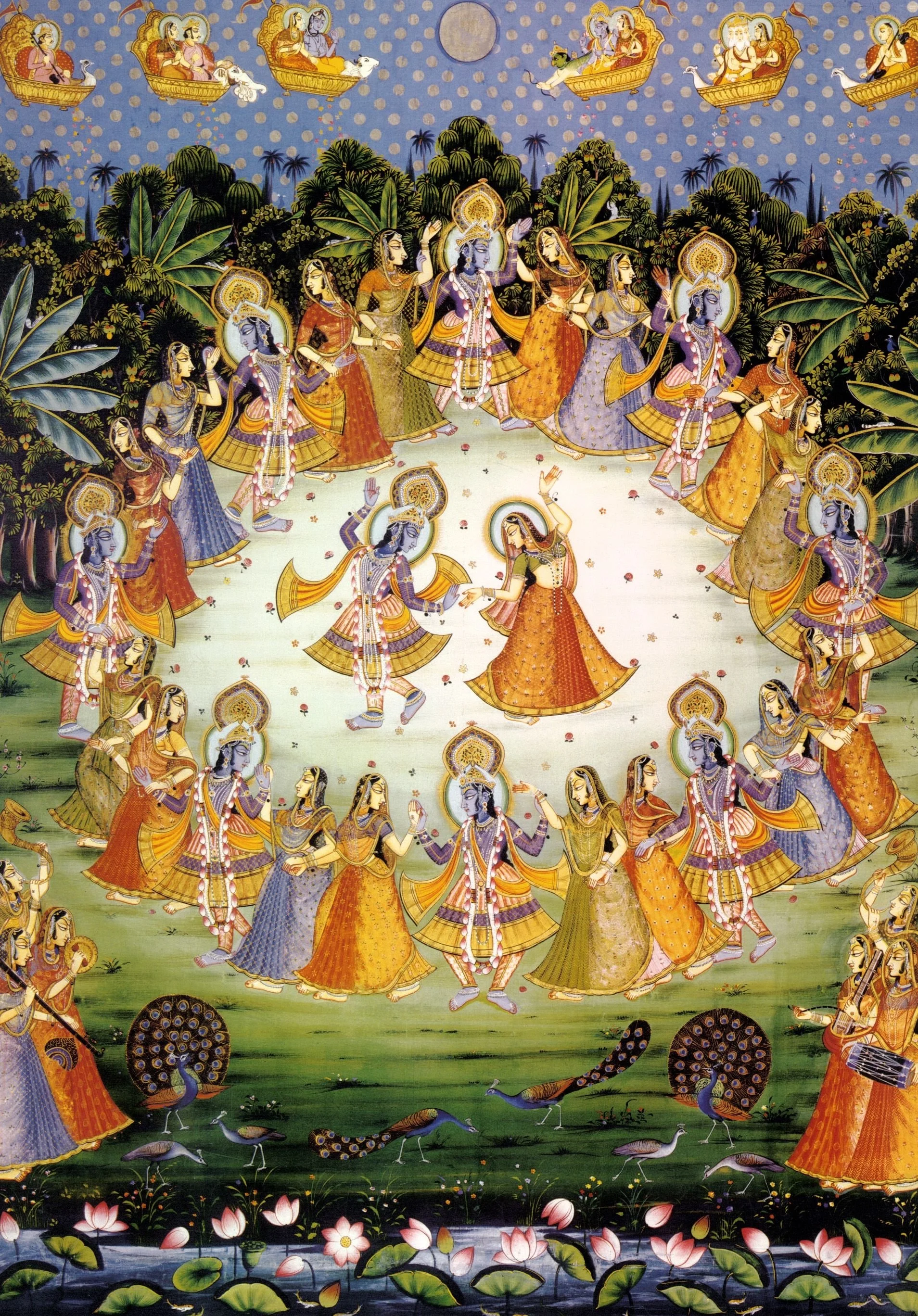
Śarad Pūrṇimā is also remembered as the night of the Mahā Rāsa. The Bhāgavata Purāṇa (10.29.1) opens the Rāsa Pañcādhyāyī with these autumn nights: “Seeing those nights of Śarad, fragrant with blossoming jasmine, Bhagavān, taking refuge in Yogamāyā, turned His mind toward play.”

Beneath the full moon, Śrī Kṛṣṇa played his flute on the banks of the Yamunā, and the gopīs, hearing the call, left everything behind. In the circle of the Rāsa, He multiplied Himself, so that each gopī danced with Kṛṣṇa at her side. When pride arose, He vanished. Through longing alone, He returned.

The Rāsa Līlā is the dance of the jīva and Paramātman. The flute is the call of the Self, and the gopīs are the awakened heart, the one who hears and does not delay. Whoever hears this līlā with faith is freed of hṛd-roga, the disease of the heart.

What is ready to be restored? What are you claiming?

Observed Sunday, October 25, with the Pūrṇimā tithi continuing until 9:41 AM IST on October 26.

Kārtika Māsa

The day after this Pūrṇimā, Kārtika begins, revered as the holiest month of the year. The Skanda Purāṇa declares: na kārtika-samo māsaḥ, “there is no month equal to Kārtika.”

As Sūrya passes through his nīca in Tulā and the nights lengthen, Kārtika carries the final stretch of Viṣṇu’s yoga-nidrā, until he rises on Deva Prabodhinī Ekādaśī. It is the threshold where the Divine awakens, and every practice offered now meets that awakening.

It is the month most potent for sādhana. Japa, vrata, dāna, svādhyāya, and the worship of Tulasī are said to bear imperishable fruit, multiplied many times over. Before dawn, the sacred bath of Kārtika snāna is taken, and each evening, lamps are offered (dīpa-dāna), each flame an offering of the inner light.

Kārtika is the month of Dāmodara, Śrī Kṛṣṇa bound by Yaśodā’s rope, the infinite held by love alone. It culminates on Kārtika Pūrṇimā, when the devas themselves descend to celebrate Dev Dīpāvalī.

All my Relations, Tulsi

My schedule is now open again for consultations. → Jyotisa

“Know the Self as the lord of the chariot, the body as the chariot, the intellect as the charioteer, and the mind as the reins. The senses, they say, are the horses.”
Kaṭha Upaniṣad 1.3.3–4

Mercury Retrograde in Viśākhā: The Star of Purpose

MERCURY RETROGRADE IN VIŚĀKHĀ | 10.24–11.13

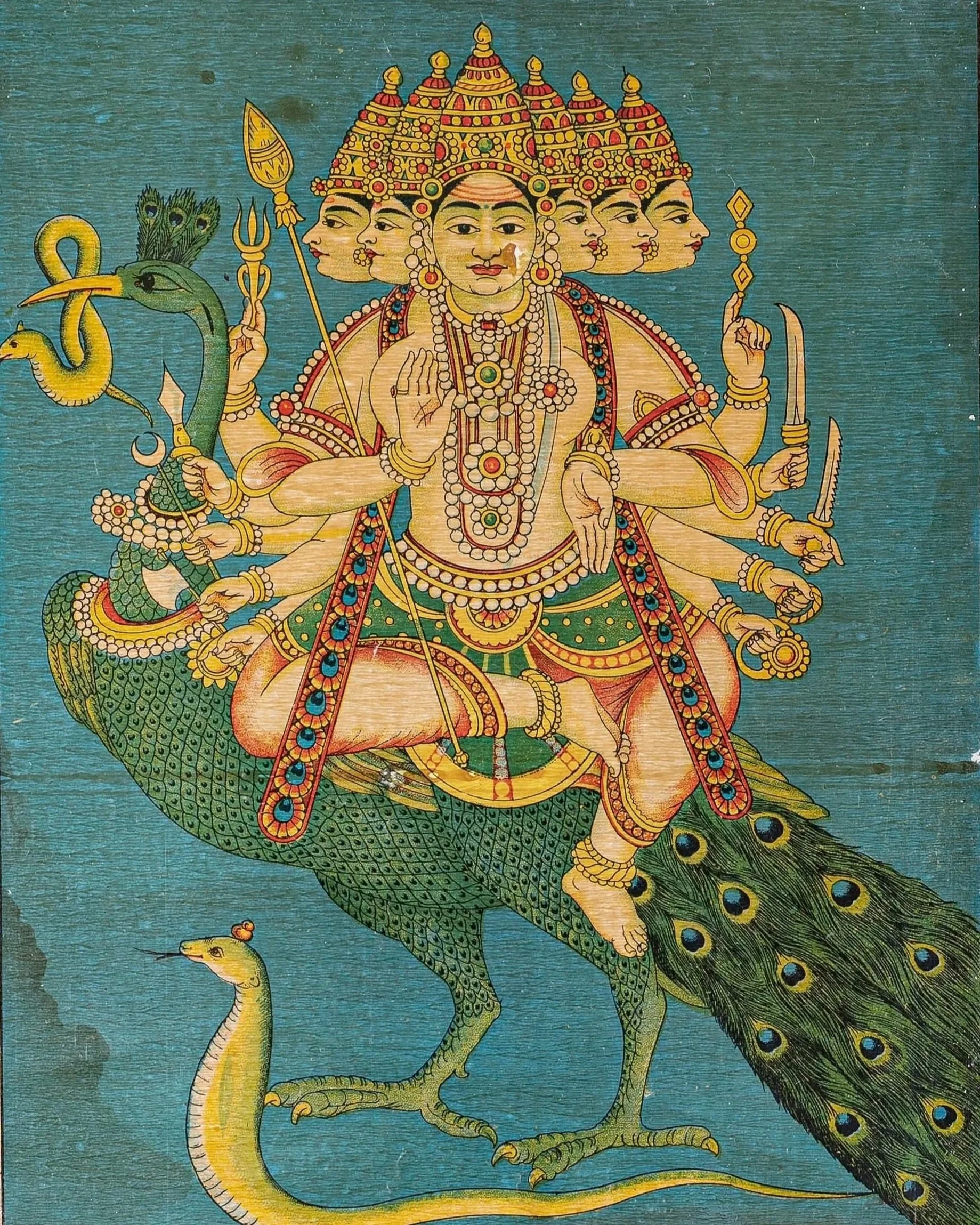
Artwork: Kārttikeya by Raja Ravi Varma

Budha Graha (Mercury) stations retrograde (Vakri) in the Vedic lunar mansion of Viśākhā विशाखा (sidereal Libra), the Star of Purpose, initiating a passage of reflection, reconsideration, and refocusing.

In Jyotiṣa, when a graha stations retrograde, its apparent backward motion signals a turning inward, an intensification of its essential nature.

Budha

Fourth among the Navagrahas, Budha is the graha of intellect, viveka (discernment), speech, skill, storytelling, negotiation, and balance. Born of Chandra, he asks a single question: Who am I? He is also connected to Tripura Sundarī, who embodies supreme beauty, clarity, and the power of refined discernment.

Viśākhā in the Sky

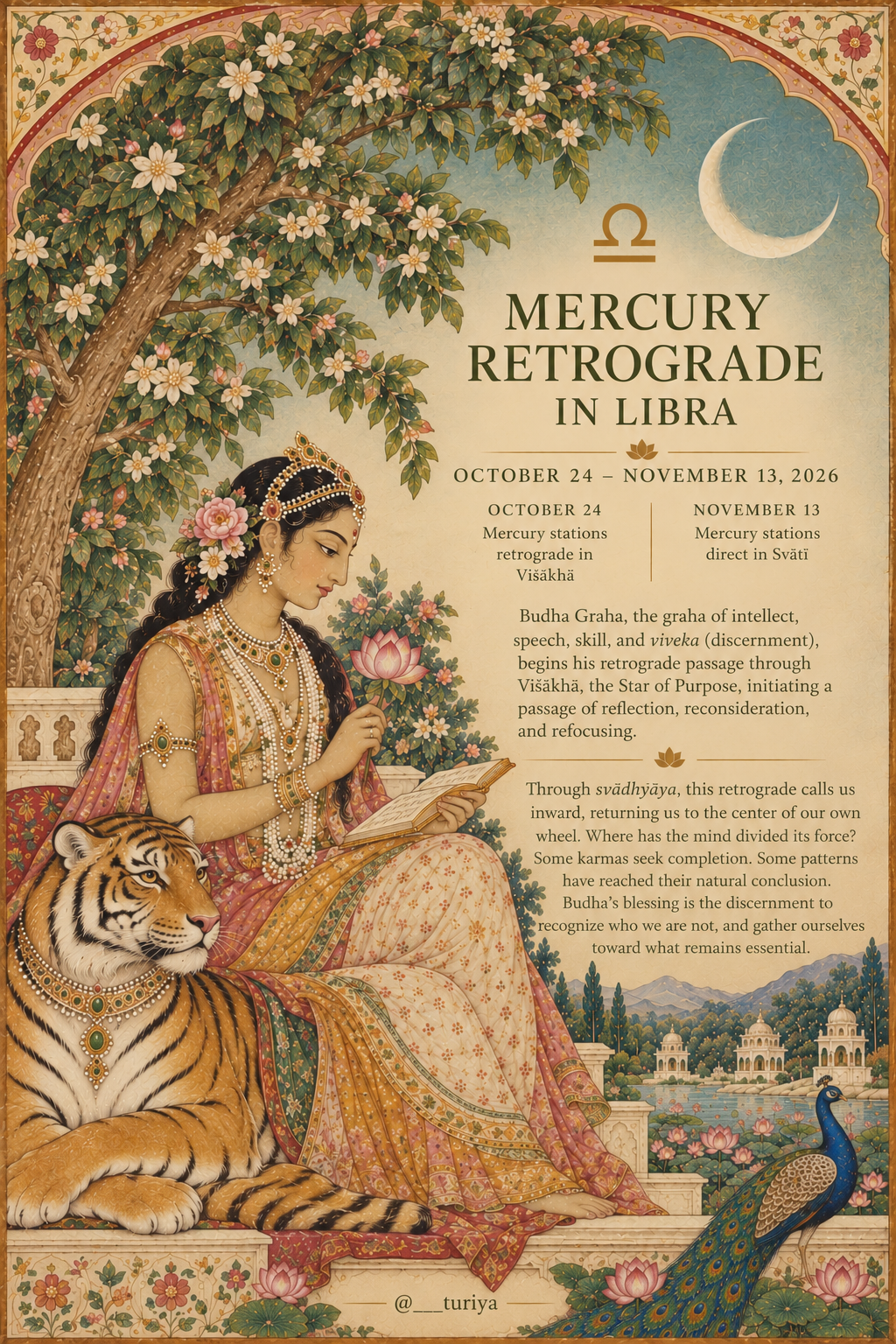
In the sky, Viśākhā shines as two stars of the Scales, α and β Librae, whose Arabic names still mean the southern and northern claw. The ancient ṛṣis saw them as a forked branch.

Artwork by @___turiya

The Forked Branch

Libra, the sign most in need of balance, holds Viśākhā at its edge. Its name means “two-branched,” the forked branch at the crossroads of choice. In the Vedic hymns it also bears the name Rādhā. Yet its deity is one: Indrāgnī, Indra and Agni invoked as a single pair.

Said to be the birth star of Sūrya Graha (the Sun), Viśākhā reveals how light is born. Through the churning of duality, the singular is born. At the fork, viveka is the one who chooses.

Viśākhā is symbolized by a triumphal arch, suggesting arrival and initiation. Dispersed, its force divides; gathered into one channel, it is unstoppable.

What We Protect

Viśākhā’s yoni is the male tiger, guardian of its territory. With Budha and Śukra conjunct, rajo-guṇa is amplified, along with a heightened sense of protection. Indra guards his throne; his fury and his generosity are two faces of one kingship. What is it that you are seeking to protect? A position you have claimed? A sense of personal justice? Where has the mind divided its force?

Returning to Center

Just as Viṣṇu descends age after age to restore balance, this retrograde calls us inward through svādhyāya, returning to the center of our own wheel. Some karmas are seeking completion. Some patterns have reached their natural conclusion. The old is truly complete; Budha’s blessing is realizing who you are not.

Move slowly. Reconsider before reacting. Viśākhā reminds us that triumph is not found by pushing forward. It is found by gathering the mind into one aim.

ॐ ब्रां ब्रीं ब्रौं सः बुधाय नमः

Śarad Navarātri: Nine nights of the Divine Feminie

ŚARAD NAVARĀTRI

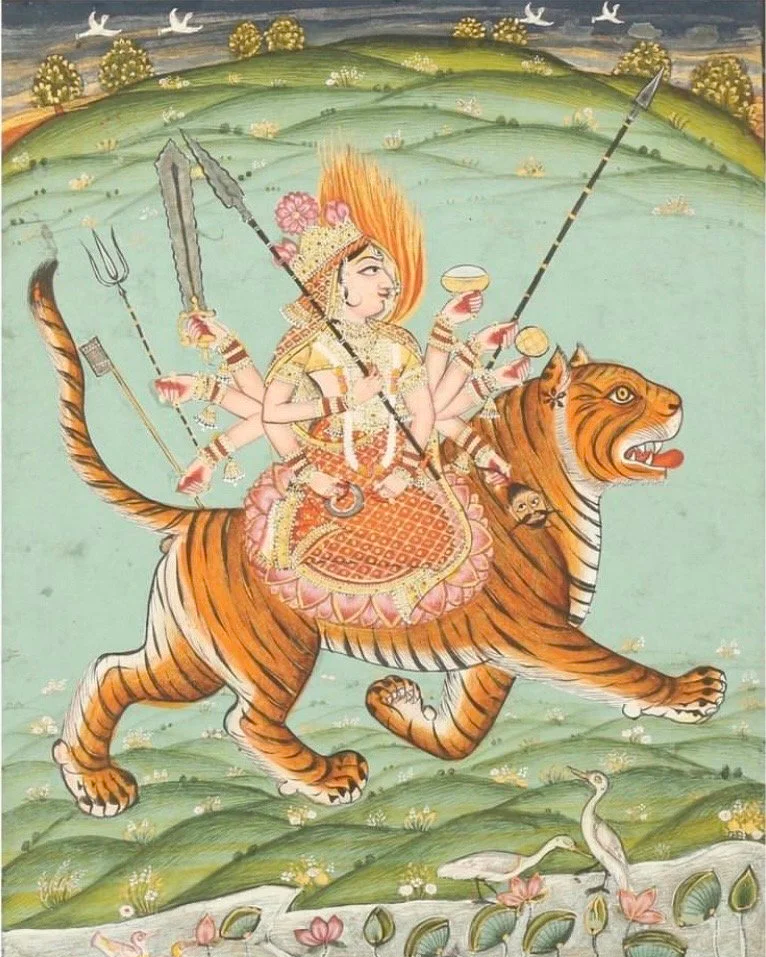
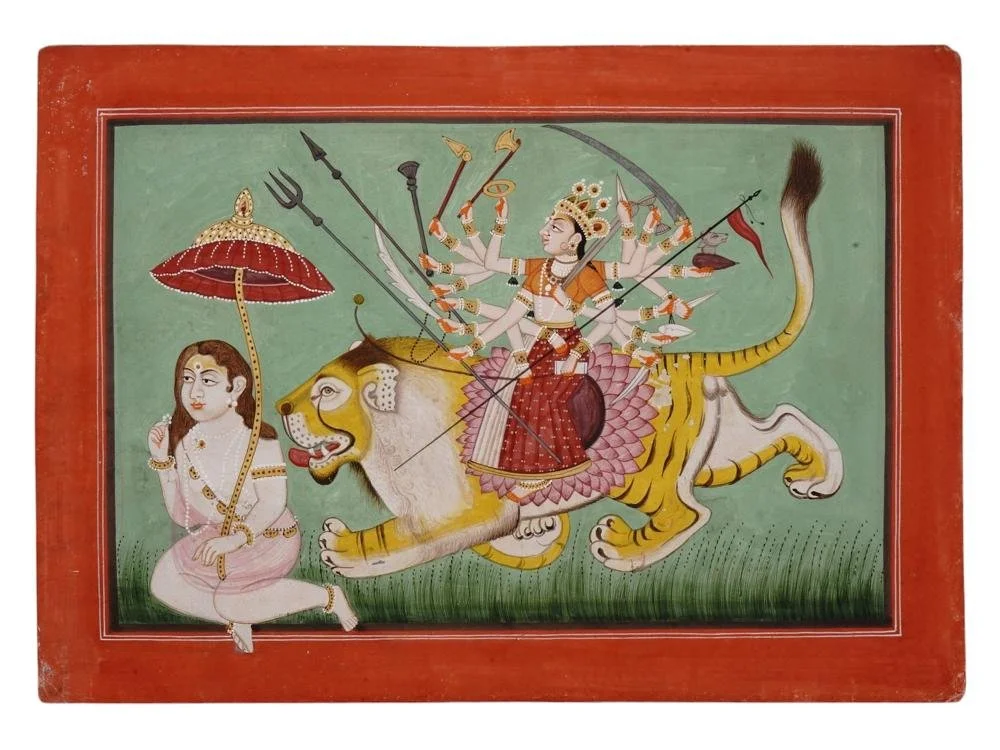
Durgā on Her Vāhana | Kota, Rajasthan, North-Western India, ca. 1860 

OCT 11-19

Śarad Navarātri शरद् नवरात्रि commences on the tithi after the new moon, from Pratipadā tithi (1st lunar day) to the Navamī tithi (9th) of the Śukla Pakṣa (waxing moon) in the month of Aśvina (Sept/Oct). This nine day festival marks the end of monsoon season, the transition into autumn, and is the most celebrated of the four yearly Navarātris.

The word Navarātri means "nine nights" in Sanskrit, nava meaning "nine" and rātri meaning "nights." During these nine nights and ten days of devotion, nine different forms of goddess Durgā (navadurgā), also known as Śakti are worshiped. The tenth day is commonly referred to as Vijayā-Daśamī or Dussehra, celebrating the victory of good over evil.

Navarātri invokes an internal quest to locate and establish our seat within the center of the heart of the Goddess. In a world that grasps our attention and seizes our mind to look outside of ourselves to seek truth, validation and even to gain a so called glimpse of the goddess, this festival calls us to go deeper within to attune with her rivers that flow within us and to cultivate a direct experience, and personal relationship with Her.

Devī is that awakening force, that primordial energy that lives within us and awaits our attention. Yoga teaches us that whatever we put our attention on grows stronger in our lives. Move beyond your ideas of who she is and how she can be reached.

This window is ripe for putting into physical practice the teachings found in the yoga śāstra. In the quieting of our mind (yogaś-citta-vr̥tti-nirodhaḥ) and the investigation of all that lies below the surface—in the observation and embrace of both our shadows and our light, which are ultimately one and the same—we’re being called now to enter into that space, and to transcend.

As we tend to śakti, and begin to establish a firm foundation in Her, we begin to awaken our power to focus, to cultivate our dhāraṇā and draw all our energies inside. This continued focus is the active meditation requesting our attention, calling us to become completely absorbed in Her.

She is the embodiment of all that is and ever will be, She is our very breath and that which gives life to all, yet she cannot be reached by contemplation or intellectual understanding and philosophizing, or even described through words, she can only be touched through direct experience, that which requires digestion and stabilization to be truly lived. Can you answer that call?

The nine names of manifestation have been spoken in the Devīmāhātmyam Devī Kavacaṃ, by the Lord Brahmā (the creator) Himself:

"First is Goddess Śailaputrī, the Daughter of the Himālayas, and second is Brahmachāriṇī, She who observes the vow of celibacy, the Goddess of sacred study and penance; third is Chandraghaṇṭā, the Goddess of the Delight of Practice, who bears the moon in her necklace, Kūṣmāṇḍa, the Goddess of Purifying Austerity is fourth.”

“Fifth is the Goddess Skanda-Mātā, the mother of Skanda, born out of her powers, sixth is Kātyāyanī, the One Who is Ever Pure; seventh is Kālarātrī, the Goddess of the Dark Night of Overcoming Egotism; Mahāgaurī, the wife of Lord Śiva, is eighth.”

“Ninth is the Goddess Siddhidātrī, the provider of Siddhis, and bestower of mystic powers; the nine Durgas, relievers of difficulties, have been enumerated, and these names have been revealed by the great soul of the Supreme Brahmā himself."

ॐ दुं दुर्गायै नमः | ॐ श्री मात्रे नमः