
ŚARAD NAVARĀTRI
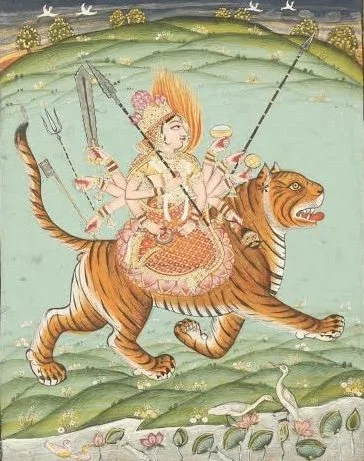
Durgā on Her Vāhana | Kota, Rajasthan, North-Western India, ca. 1860
OCT 11-19
Śarad Navarātri शरद् नवरात्रि commences on the tithi after the new moon, from Pratipadā tithi (1st lunar day) to the Navamī tithi (9th) of the Śukla Pakṣa (waxing moon) in the month of Aśvina (Sept/Oct). This nine day festival marks the end of monsoon season, the transition into autumn, and is the most celebrated of the four yearly Navarātris.
The word Navarātri means "nine nights" in Sanskrit, nava meaning "nine" and rātri meaning "nights." During these nine nights and ten days of devotion, nine different forms of goddess Durgā (navadurgā), also known as Śakti are worshiped. The tenth day is commonly referred to as Vijayā-Daśamī or Dussehra, celebrating the victory of good over evil.
Navarātri invokes an internal quest to locate and establish our seat within the center of the heart of the Goddess. In a world that grasps our attention and seizes our mind to look outside of ourselves to seek truth, validation and even to gain a so called glimpse of the goddess, this festival calls us to go deeper within to attune with her rivers that flow within us and to cultivate a direct experience, and personal relationship with Her.
Devī is that awakening force, that primordial energy that lives within us and awaits our attention. Yoga teaches us that whatever we put our attention on grows stronger in our lives. Move beyond your ideas of who she is and how she can be reached.
This window is ripe for putting into physical practice the teachings found in the yoga śāstra. In the quieting of our mind (yogaś-citta-vr̥tti-nirodhaḥ) and the investigation of all that lies below the surface—in the observation and embrace of both our shadows and our light, which are ultimately one and the same—we’re being called now to enter into that space, and to transcend.
As we tend to śakti, and begin to establish a firm foundation in Her, we begin to awaken our power to focus, to cultivate our dhāraṇā and draw all our energies inside. This continued focus is the active meditation requesting our attention, calling us to become completely absorbed in Her.
She is the embodiment of all that is and ever will be, She is our very breath and that which gives life to all, yet she cannot be reached by contemplation or intellectual understanding and philosophizing, or even described through words, she can only be touched through direct experience, that which requires digestion and stabilization to be truly lived. Can you answer that call?
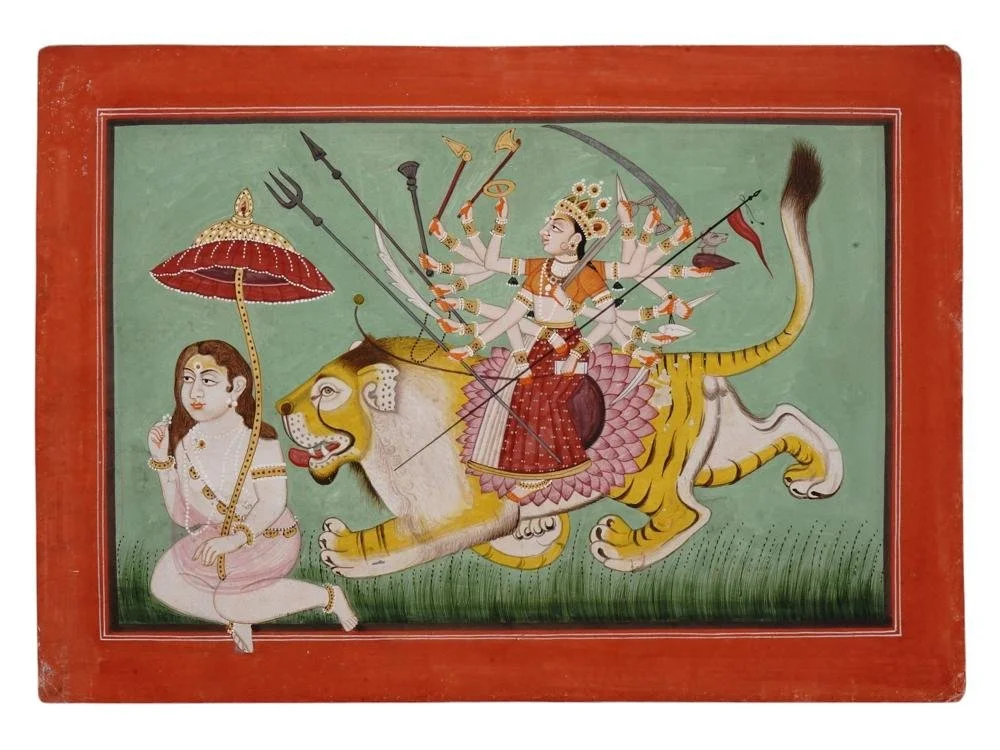
The nine names of manifestation have been spoken in the Devīmāhātmyam Devī Kavacaṃ, by the Lord Brahmā (the creator) Himself:
"First is Goddess Śailaputrī, the Daughter of the Himālayas, and second is Brahmachāriṇī, She who observes the vow of celibacy, the Goddess of sacred study and penance; third is Chandraghaṇṭā, the Goddess of the Delight of Practice, who bears the moon in her necklace, Kūṣmāṇḍa, the Goddess of Purifying Austerity is fourth.”
“Fifth is the Goddess Skanda-Mātā, the mother of Skanda, born out of her powers, sixth is Kātyāyanī, the One Who is Ever Pure; seventh is Kālarātrī, the Goddess of the Dark Night of Overcoming Egotism; Mahāgaurī, the wife of Lord Śiva, is eighth.”
“Ninth is the Goddess Siddhidātrī, the provider of Siddhis, and bestower of mystic powers; the nine Durgas, relievers of difficulties, have been enumerated, and these names have been revealed by the great soul of the Supreme Brahmā himself."
ॐ दुं दुर्गायै नमः | ॐ श्री मात्रे नमः