Full Moon Guru Pūrṇimā in Śravaṇa: The Listening Star

GURU PŪRṆIMĀ IN ŚRAVAṆA
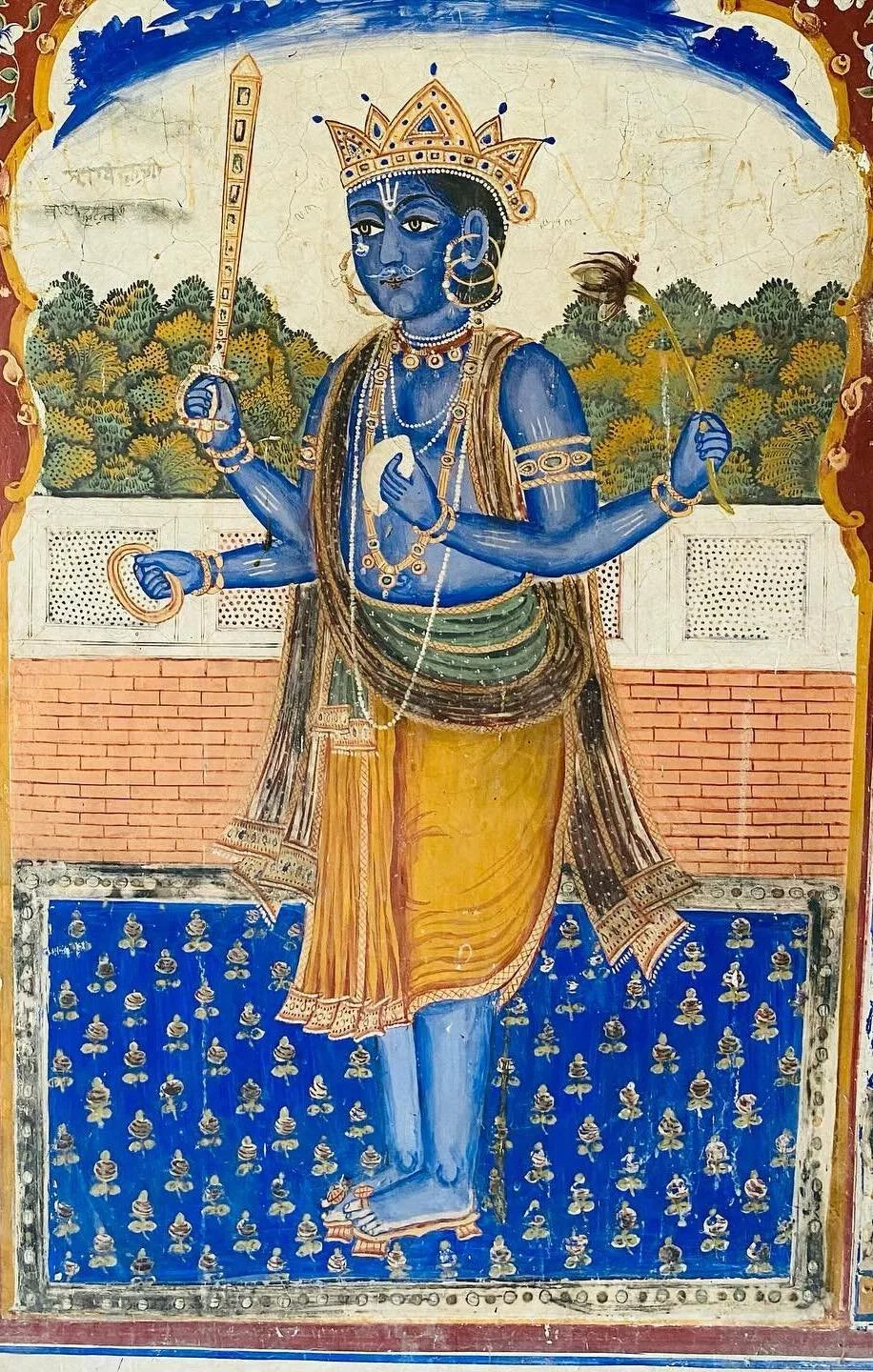
Artwork: Lord Viṣṇu. Located within the samadhi of Sardar Bahadur Lal Singh in Amritsar, India. 1890

07.29
On the Full Moon of Āṣāḍha, we venerate Guru Pūrṇimā, also known as Vyāsa Pūrṇimā. This year the Moon rises in the Vedic lunar mansion of Śravaṇa (Capricorn), The Star of Listening.

Commemorating the appearance of Bhagavān Vedavyāsa, the Maharṣi who compiled the Vedas, composed the Mahābhārata, and preserved the timeless wisdom of the Vedic tradition for humanity. It is a sacred day to honor the Guru Paramparā, the unbroken lineage of teachers through whom this knowledge has been faithfully transmitted across the ages.

Śravaṇa is symbolized by an ear and a row of three uneven footprints, recalling Viṣṇu's Vāmana avatāra measuring the three worlds. It is associated with communication of all kinds, connectivity, learning, language, ancient knowledge, oral traditions, and music. This asterism is ruled by Lord Viṣṇu, who maintains Brahmā's dream and comes to restore balance whenever dharma declines and adharma rises. The name comes from śruti, that which is heard, the sacred sound preserved not through writing but through the ear, teacher to student, across generations.

Guru Pūrṇimā is said to be the brightest full moon of the year, while the Moon in Śravaṇa marks the zenith of lunar energy and sits in the heart of Capricorn, the final earth sign. The ancient Ṛṣis saw its three guiding stars, known today as Altair, Alshain, and Tarazed, as the footsteps of Viṣṇu measuring the heavens.

Before King Bali, Viṣṇu asked for only three steps of land, then spanned the heavens, the earth, and Bali himself, restoring the devas to their rightful place. The demons displaced were never external, they were distraction, excess, and desire that had veiled what mattered most. Śravaṇa asks the same of us now: release what has taken the seat of your highest priorities, and let dharma return to its rightful place within.

This listening is not only of the ears but of the heart, attuned to the inner voice, intuition, and the words that are never spoken aloud. Śravaṇa carries the śakti Saṃhanana, the power to unite what has scattered into wholeness, awakening our capacity for connection and the emotional duty we hold toward others, offered without expectation of return.

This same Full Moon is also Dakṣiṇāmūrti Jayantī, honoring Śiva in his form as the silent guru, seated beneath the banyan tree, teaching the four sage sons of Brahmā through stillness rather than speech. His wisdom passed not through words but through darśana, the direct transmission of presence, the highest teaching offered in complete silence. Dakṣiṇāmūrti reminds us that the deepest knowledge is never spoken, it is received.

The Guru is not merely an individual, but the living embodiment of Divine Knowledge. In honoring the Guru, we honor the unbroken Guru Paramparā through which the timeless wisdom of the Vedas has flowed from Bhagavān Vedavyāsa through the ages, dispelling the darkness of ignorance and illuminating the Self that has always been present.

गुरुर्ब्रह्मा गुरुर्विष्णुः गुरुर्देवो महेश्वरः।
गुरुः साक्षात् परं ब्रह्म तस्मै श्री गुरवे नमः॥
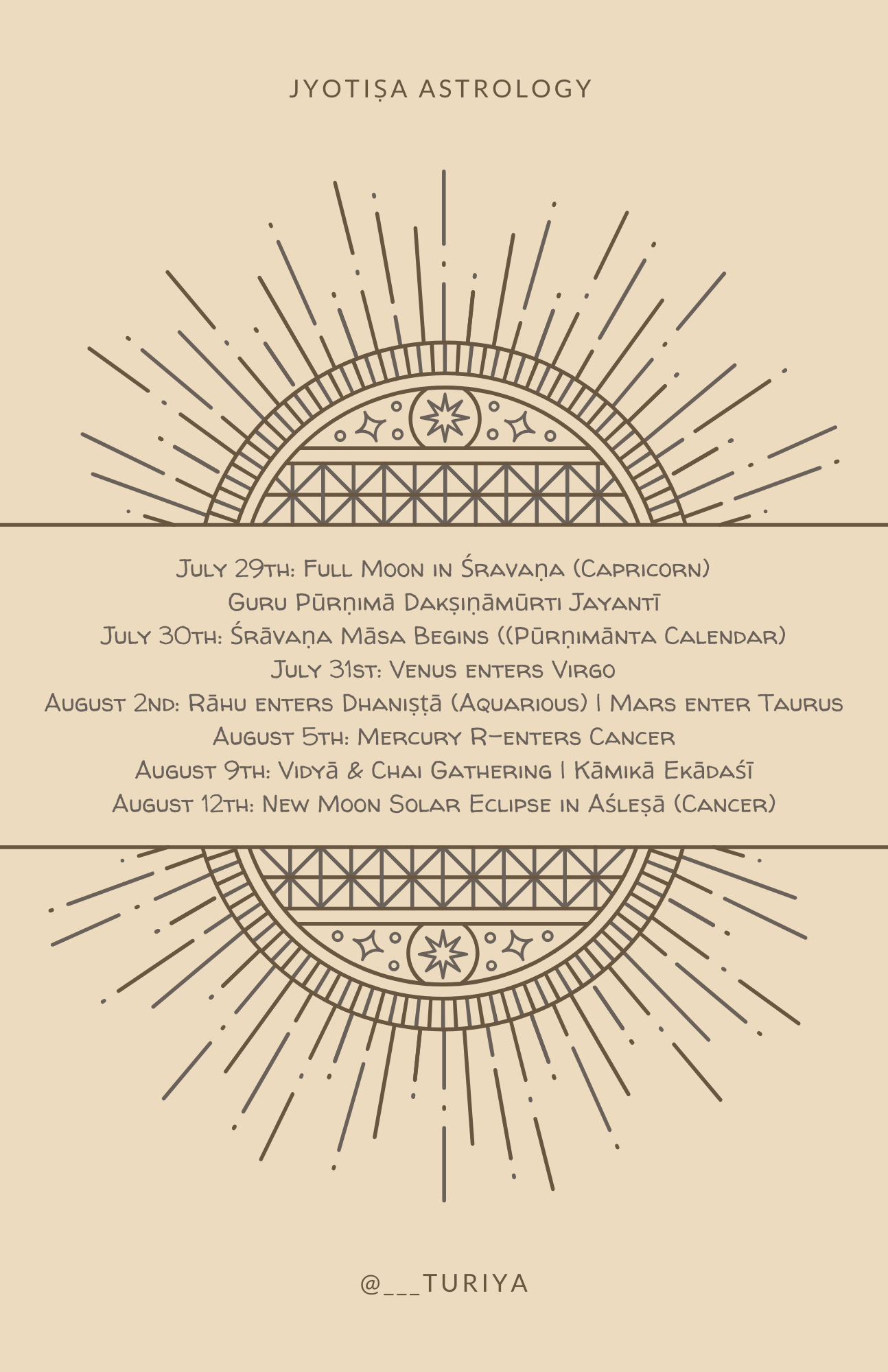
Saturn Retrogrades in Revatī: The Wealthy Star

SATURN RETROGRADE IN REVATĪ

July 26th - December 10th

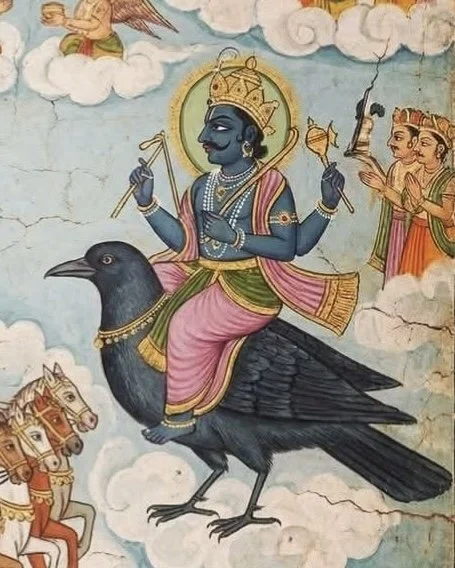
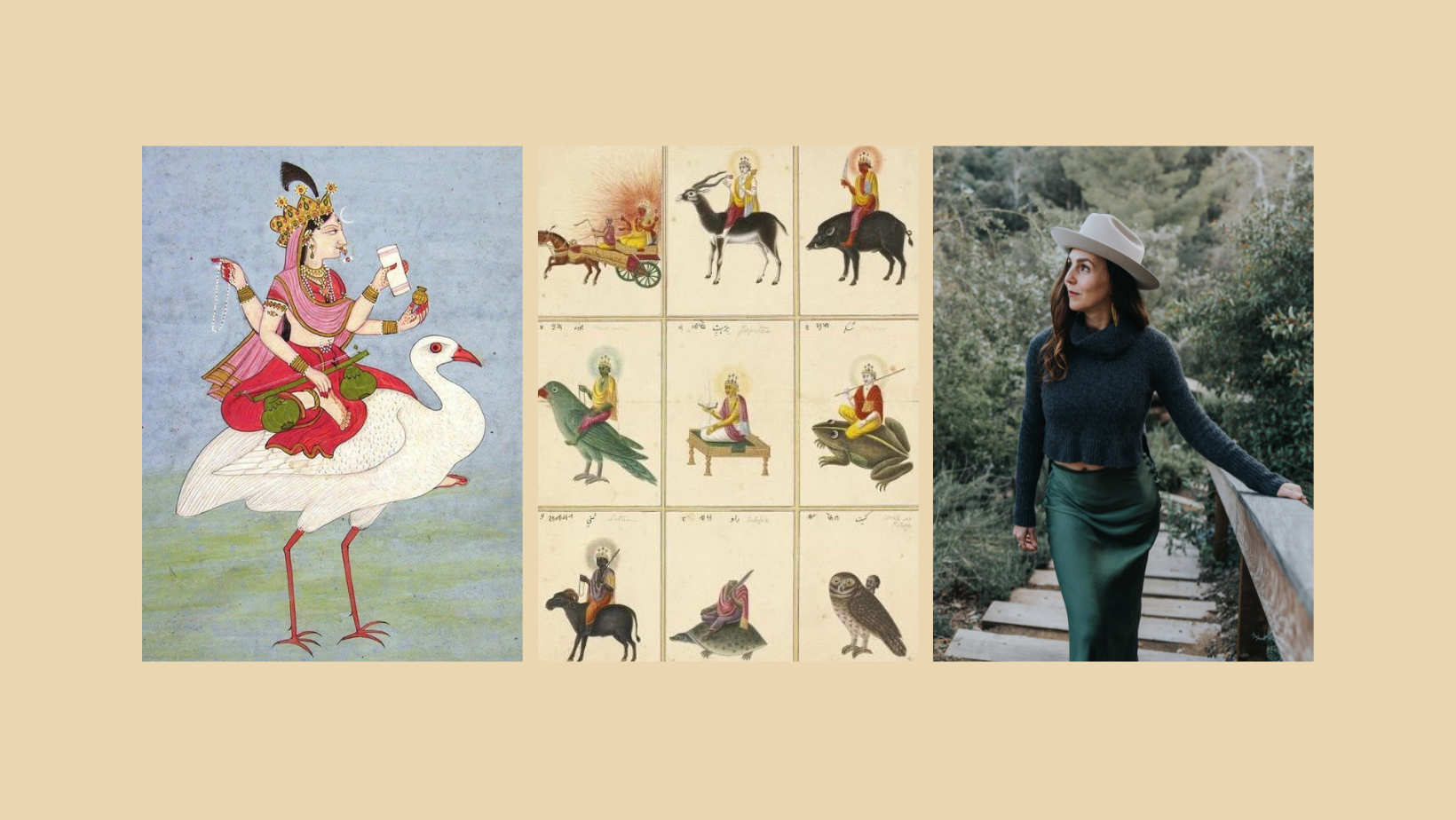
Śani, the venerable son of Sūrya Dev and his shadowy consort Chāyā, is often depicted as a dark figure seated upon a crow. He is the planet of restraint and duty, measured and deliberate, the giver of responsibility and longevity (Āyuṣkāraka).

From July 26th to December 10th, Saturn turns retrograde (vakrī) in the Vedic lunar mansion Revatī (Pisces), the Wealthy Star, his own janma-nakṣatra. Revatī is the final nakṣatra, the last waters of the zodiac, a transit that deepens the call toward completion, discernment, and the releasing of what no longer belongs to the path ahead.

Retrograde planets are said to increase in power, drawing their influence inward, where lasting transformation begins, a strength classical astrology calls Ceṣṭā Bala. Śani's return to his birth star beckons a season of karmic refinement, reassessment, and renewal.

Revatī is governed by Pūṣan, divine nourisher and protector of all who wander, carrying the śakti Kṣīradyāpana, the power to nourish and sustain until fulfillment. Before new life can be sustained, what has run its course must first be completed. This retrograde asks us to revisit unfinished responsibilities, close long-standing chapters, and cultivate only what has the strength to endure.

This retrograde also arrives within Chaturmāsya, the four months when Lord Viṣṇu is said to rest, and the pairing is fitting: two great forces of the sky now ask for stillness rather than motion. Use this season to finish what's unfinished and deepen your practice, not to launch what's new.

Revatī is the threshold between worlds, the final breath before one cycle gives way to the next. It governs endings, departures, and the passage from one state of being into another. Old matters seek resolution; hidden truths surface. Saturn asks that every ending be met with maturity and discernment.

Counted among the Ādityas, his very name comes from puṣ, to nourish, so his role as nourisher is not just poetic, it's etymological. Pūṣan also guards the crossroads, the meeting point of paths, fitting for Revatī's own threshold between worlds. In the Ṛg Veda he is invoked to find what is lost, stray cattle, wealth, the way home, which is why hidden truths surface and old matters seek resolution under his watch.

Pūṣan never abandons the traveler. He protects those on uncertain roads and leads both the living and the departed toward their destined arrival. This is Revatī's quiet promise: the waters may be unfamiliar, but sincere effort is never without destination. Trust the slow unfolding, nourish what is worthy of enduring, and let Saturn carry you toward the chapter waiting to begin.

ॐ शनि शनैश्चराय नमः। 

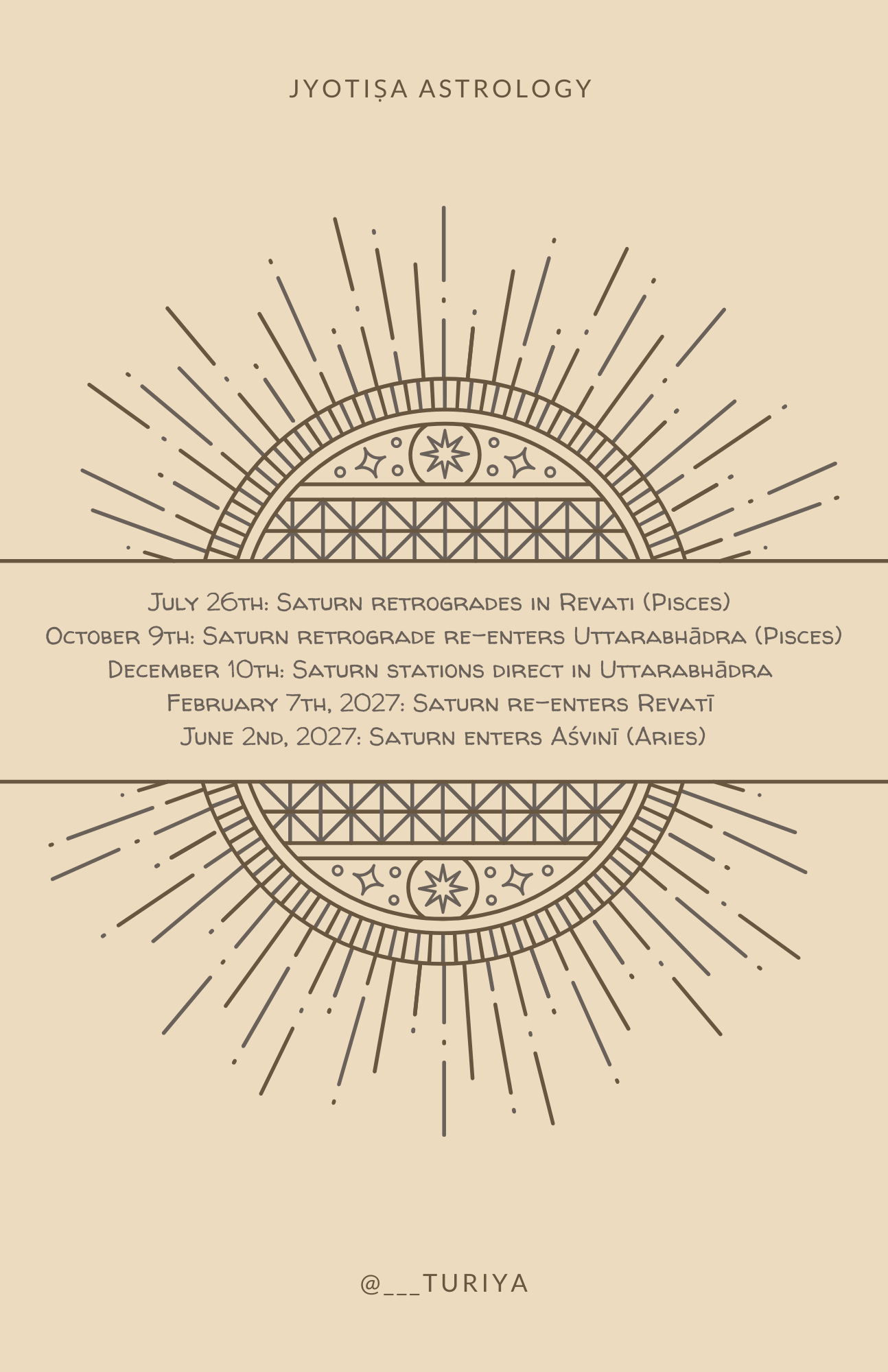
Transit Dates:

July 26th: Saturn retrogrades in Revati (Pisces) 

October 9th: Saturn retrograde re-enters Uttarabhādra (Pisces)

December 10th: Saturn stations direct in Uttarabhādra 

February 7th, 2027: Saturn re-enters Revatī 

June 2nd, 2027: Saturn enters Aśvinī (Aries)

Pārvatī Jayantī

PĀRVATĪ JAYANTĪ

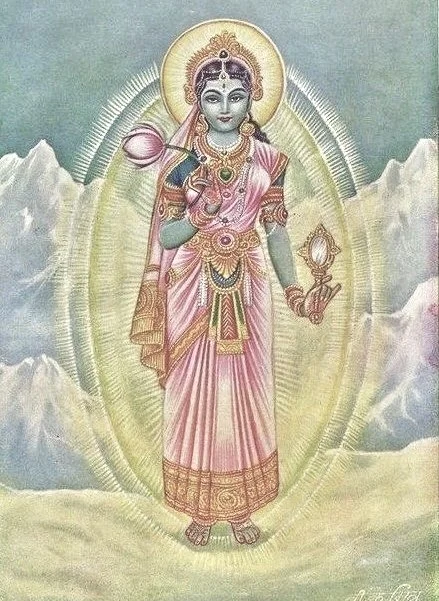
Artwork: Pinterest

07.21.2026

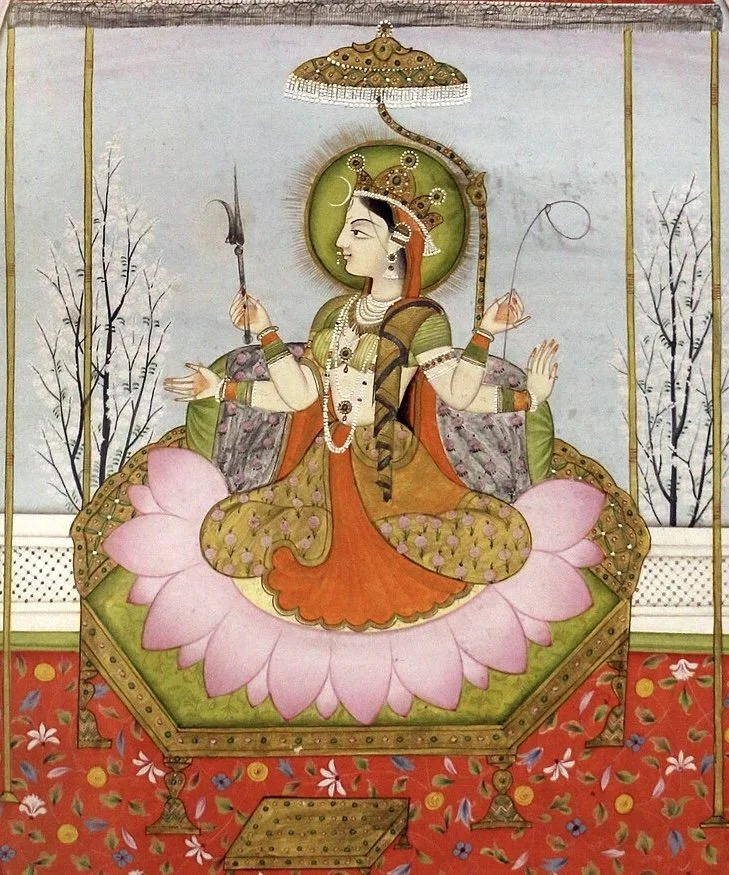
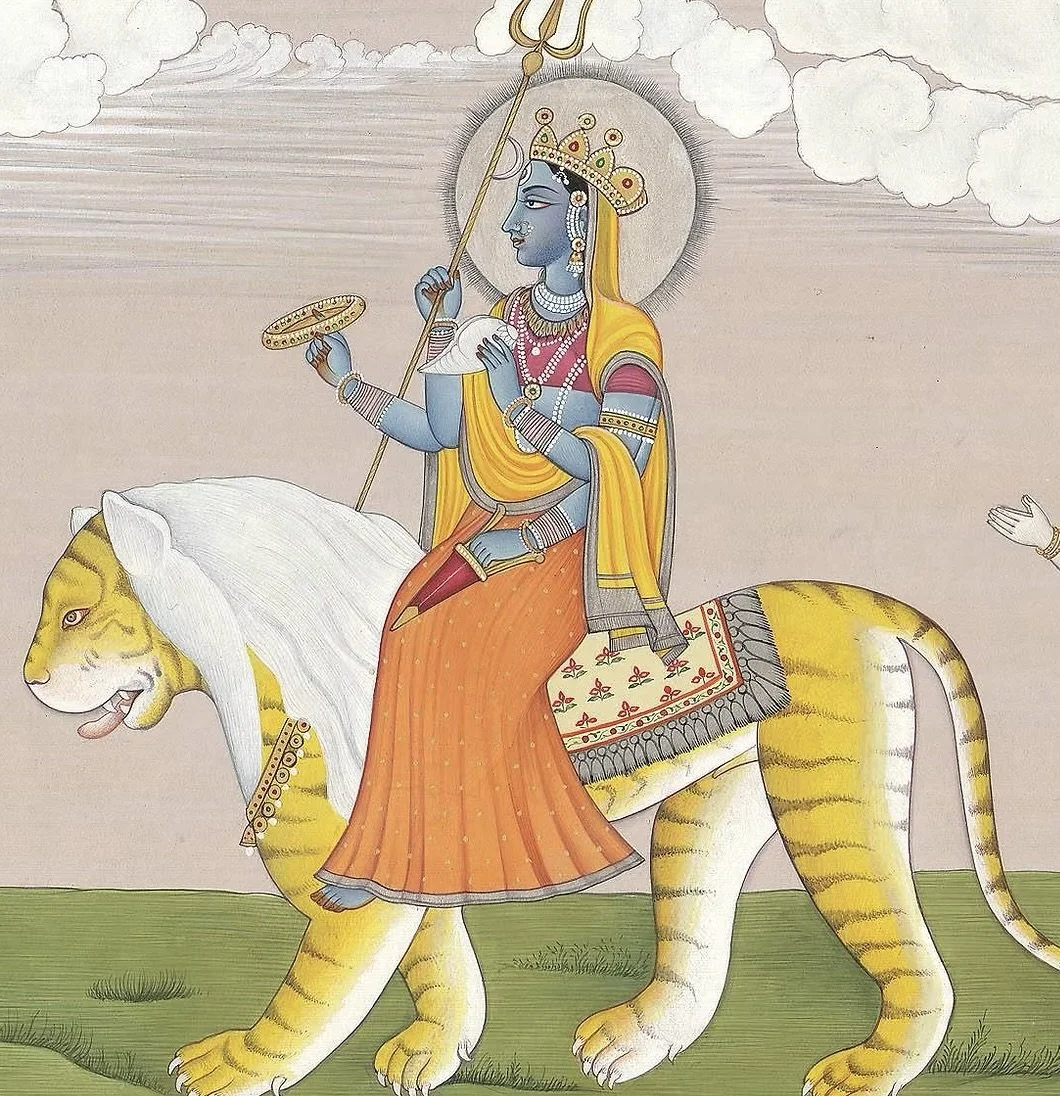
Observed on the Śukla Pakṣa Aṣṭamī (the eighth lunar day of the waxing moon) in the month of Āṣāḍha, Pārvatī Jayantī commemorates the divine appearance of Goddess Pārvatī, the daughter of Himavān and Menā.

Derived from the Sanskrit parvata (पर्वत), meaning “mountain,” Pārvatī means “Daughter of the Mountain,” a name that reflects the steadfastness, quiet strength, and unwavering devotion that define her path.

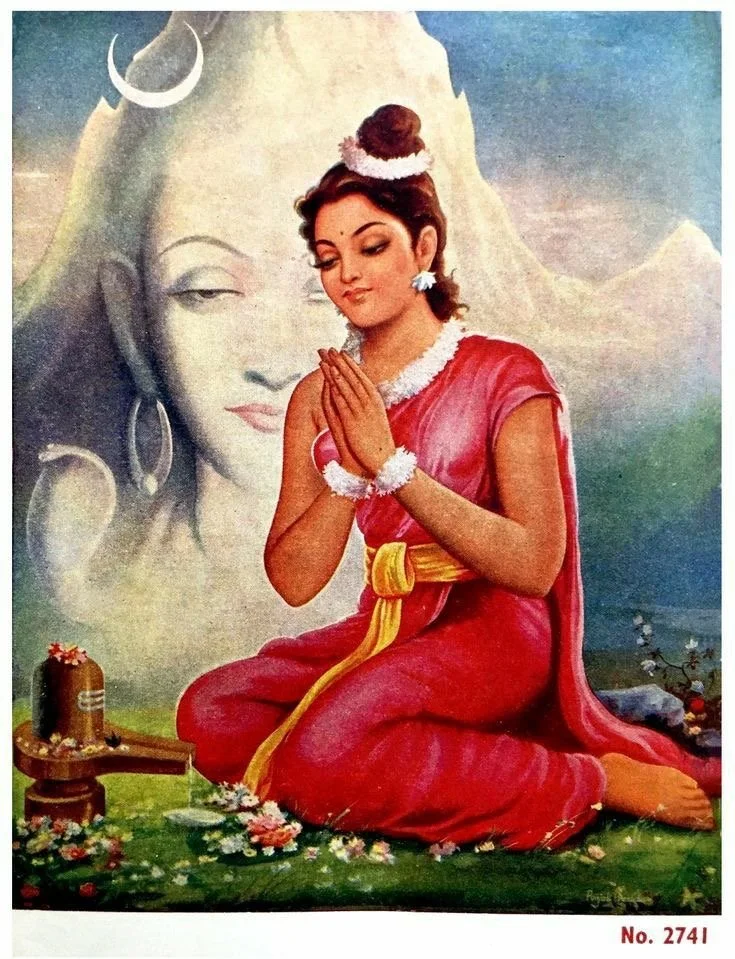
Artwork: Pinterest

The rebirth of Satī and an incarnation of Ādi Śakti, the primordial creative power of the universe, she returned to restore the eternal union of Śiva and Śakti. Through profound tapas, she attained union with Lord Śiva, Ādi Yogi.

Their sacred union reveals one of the central teachings of the Vedic tradition: the inseparable wholeness of Śiva as Puruṣa, pure consciousness, and Pārvatī as Prakṛti, the dynamic creative energy.

Artwork: Pinterest

As the Divine Mother, she is revered as Jagadambā, the Mother of the Universe; in tantric lineages she is also honored as one of the Dvādaśa Siddhividyā Goddesses, and as the loving mother of Śrī Gaṇeśa, remover of obstacles, and Śrī Kārttikeya, commander of the celestial hosts.

Lord Śiva entrusted Pārvatī with the highest teachings of Yoga and the hidden wisdom of Guhya Vidyā, receiving her as his foremost śiṣyā. Through their timeless dialogue, she stands not only as his beloved consort, but as an illumined disciple, teacher, and guide, preserving the eternal wisdom that continues to lead sincere seekers toward Self‑realization.

ॐ पार्वत्यै नमः
Om Pārvatyai Namaḥ

Āṣāḍha (Gupta) Navarātrī: 9 Nights of the Divine Mother

ĀṢĀḌHA GUPTA NAVARĀTRĪ

JULY 14/15–22/23

Observed during the month of Ashadha (June/July), this auspicious nine-night festival honors the Divine Mother in her many forms, especially Mā Durgā. It begins on the Pratipadā tithi (1st lunar day) and continues through the Navamī tithi (9th lunar day) of the Śukla Pakṣa (waxing moon), coinciding with the onset of the monsoon season.

It is one of the two lesser-known Navarātris observed each year and is considered a more secretive, inward-facing period of worship. “Gupta” means hidden or secret, reflecting its esoteric character.

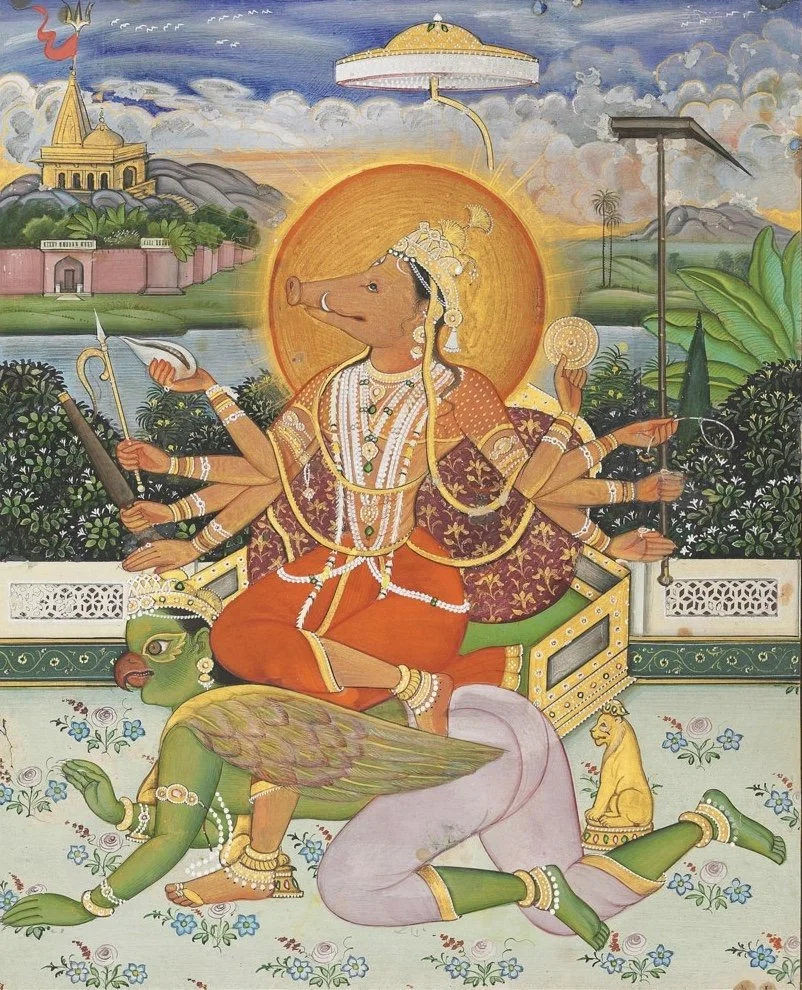
This observance is especially associated with Goddess Vārāhī, one of the Saptamātṛkās (Seven Mother Goddesses) and a fierce form of the Divine Mother. In Śrī Vidyā traditions, Vārāhī is revered as Daṇḍanāthā, the commander and protector of Śrī Lalitā Tripurasundarī army, and in some traditions she is said to embody the force of Yama Deva. 

Often depicted as a blue-hued, eight-armed, boar-faced sovereign goddess holding a staff, she is honored as a goddess of protection, wisdom, and the destruction of ignorance. Just as the boar delves beneath the surface to unearth what lies buried, Vārāhī unveils what has remained concealed, uprooting avidyā.

Many devotees fast during the day, chant mantras to Goddess Durgā, recite the Devī Māhātmyam (Durgā Saptashatī), and perform Daśa Mahāvidyā sādhanas.

ॐ श्री वाराही देव्यै नमः

Tradtionally this festival is observed when Pratipadā tithi (S1) is present at Sunrise in your location. July 14th US | July 15th India