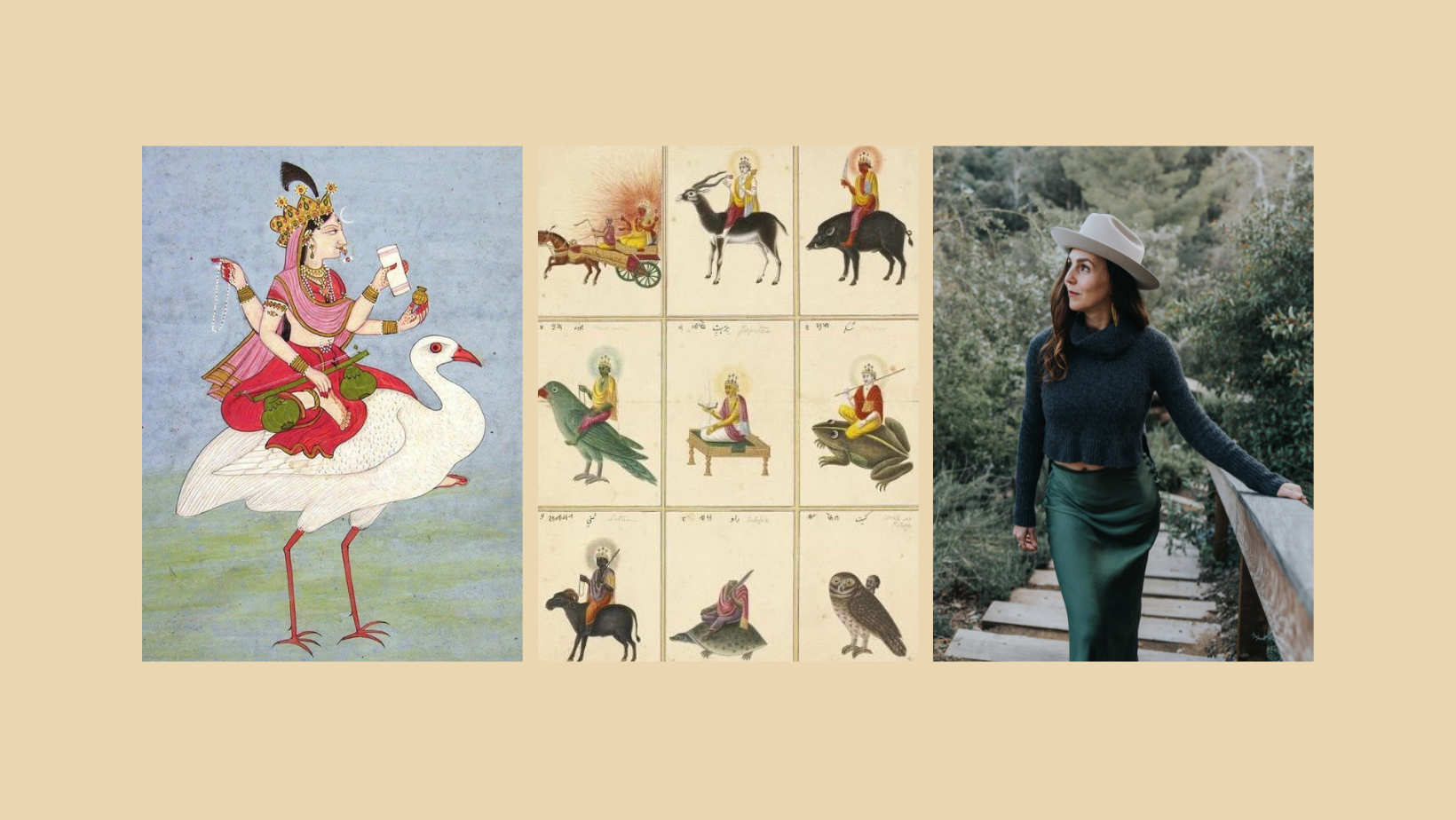
May 2026 — Vedic Calendar
Vedic Pañcāṅga

Your Custom Text Here
BLOG: Pulse of the Stars
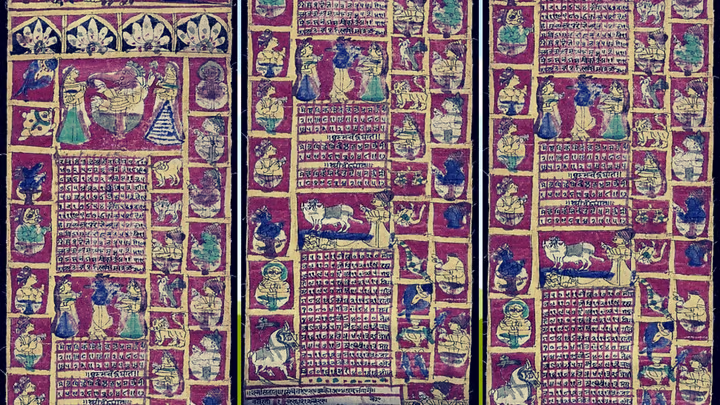
Vedic Pañcāṅga
FULL MOON IN SVĀTĪ
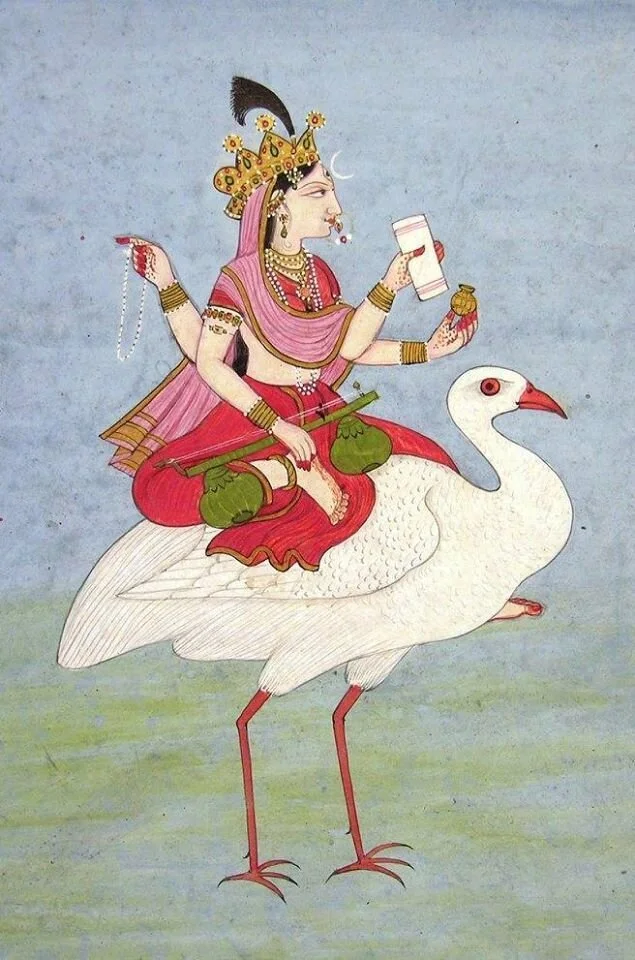
Artwork: Pinterest
May 1st: Full Moon in Svātī (Libra) 10:23am PST | 22:53PM IST
The Full Moon (Pūrṇimā पूर्णिमा) reaches its zenith in the heart of Tulā (Libra) Rāśī (sign) in the Vedic Lunar Mansion of Svāti—the Star of Self-Actualization and the seat of Vāyu.
Suspended in the night sky as the brilliant Arcturus (Alpha Bootis), the fourth brightest star in the night sky, Svāti stands alone—radiant, distinct, and unmistakable.
Enthroned at the very core of Tulā, this Nakṣatra marks a threshold of refinement—where balance is not given, but cultivated. Svāti embodies the movement of Vāyu—the wind—restless, expansive, and capable of both creation and dispersal.
Its symbol, a tender shoot emerging from the earth, reveals the deeper teaching: life that is shaped by the unseen currents of Vāyu—where too much force scatters, and the right touch cultivates resilience.
Its śakti, pradhvaṁsa śakti, holds the energy to scatter—to disperse like the wind, dissolving form, diffusing energy, and transforming through movement. And yet, within this same current lies the deeper invitation: to gather, to recollect, and to direct that which has been scattered.
When focus scatters, life force is lost.
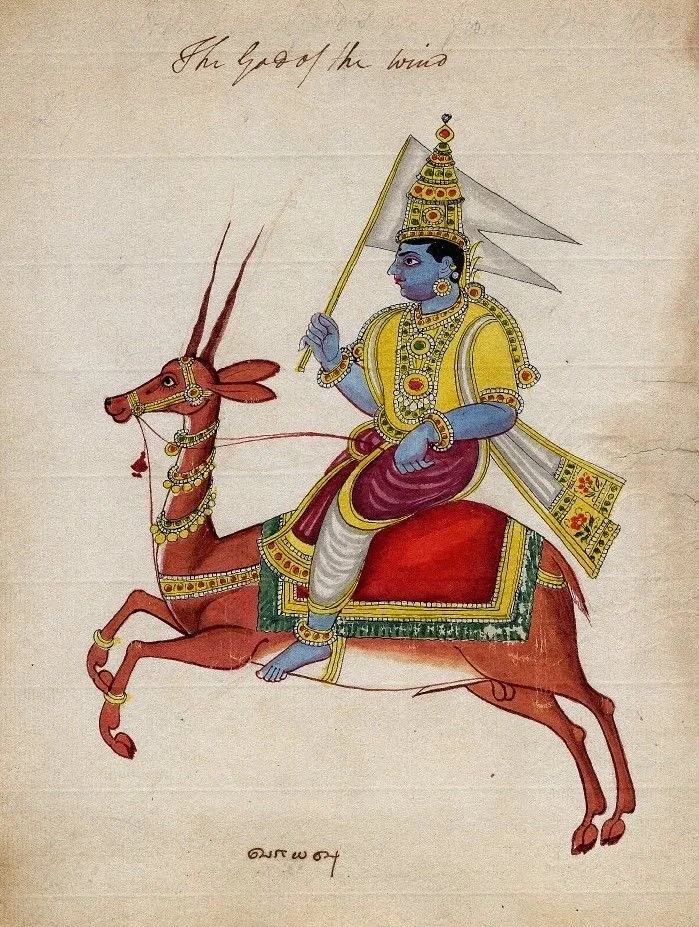
Artwork: Company School, Tanjore style, c. 1814–1825
When awareness is divided, prāṇa dissipates. The mind becomes unanchored, the body more susceptible, the field of being porous and easily influenced. Svāti reveals this delicate tension—the vulnerability of the sprout just breaking through the earth: full of life, yet easily disturbed. Thus, its path is not one of force, but of refinement—learning how to stabilize movement without suppressing it, to remain adaptable, without becoming unrooted.
This Nakṣatra demands direction—without it, dispersion turns to confusion and vulnerability.
Śani (Saturn), renowned for his measured approach and capacity for restraint, finds his uccha (exaltation) point in the constellation of Svāti. The great regulator of time, lord of the western direction (7th house, the heart of Tulā Rāśī), he is the embodiment of patience—measured, deliberate, and the giver of longevity (Āyuḥ-kāraka).
When our thoughts and focus disperse, our energy becomes scattered and immunity diminishes. Through discipline of breath—through mastery of the pañcavāyus (five yogic breaths)—Śani instructs us to gather our prāṇa, harness our focus (dhāraṇā), and cultivate a steady foundation rooted in devotion.
In contrast, Sūrya (the Sun) reaches his nīca point here. When untempered, his radiance can overextend—burning through prāṇa, scattering vitality. Yet this too holds wisdom: when energy is dispersed, immunity weakens; when gathered, one becomes unwavering, rooted, and resilient.
Svāti teaches that not all movement is progress. Without direction, even great force is lost to the winds. The deeper longing within this Nakṣatra is not merely freedom—but purposeful alignment. To move with intention.
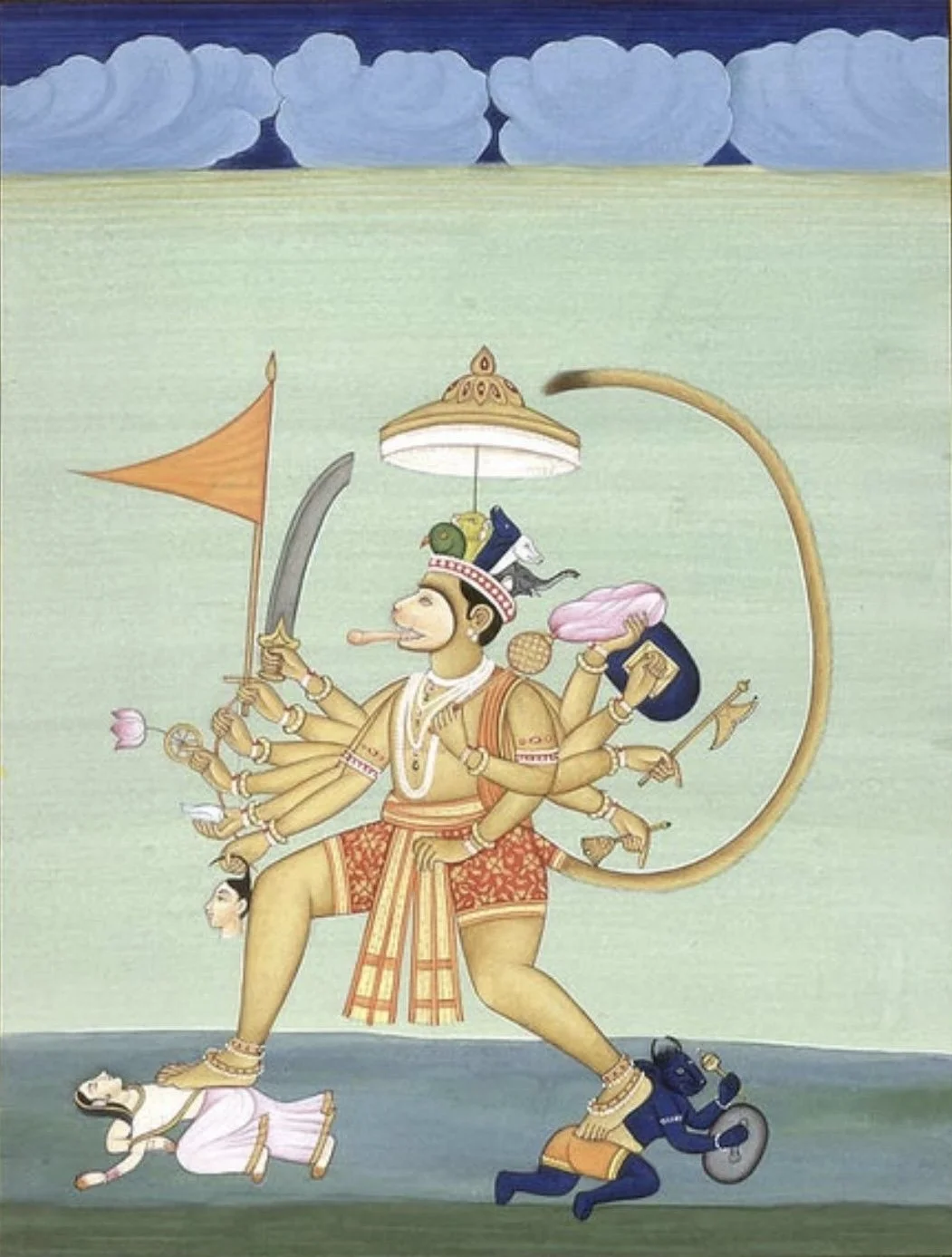
3) 19th Century Rajasthani Hanuman by Suresh Dhawan
To act without fragmentation.
This Full Moon, then, becomes a mirror.
Where has your energy been scattered?
Where are you overextending, giving beyond your reserves?
And where are you being called to gather—to return, to root, to stabilize?
Like the threshold quality of Aśvinī—the Star of Transport—Svāti too holds a passage between states of being. If Aśvinī ignites the spark of emergence and directs us toward a singular point of focus, Svāti refines what has been set into motion. It asks not for initiation, but for integration. Not for speed, but for steadiness within movement.
Release the illusion of control over outcomes. Move from balance and responsibility—neither grasping nor resisting. Significant shifts unfold over time. Patience is not passive; it is the quiet power of sustained direction.
As the winds shift, focus your energy on the projects, people, and ideas that truly matter to you. Proceed with patience and release attachment to the fruits of your efforts—become self-sovereign in your listening. Gather your prāṇa. From this place—act.
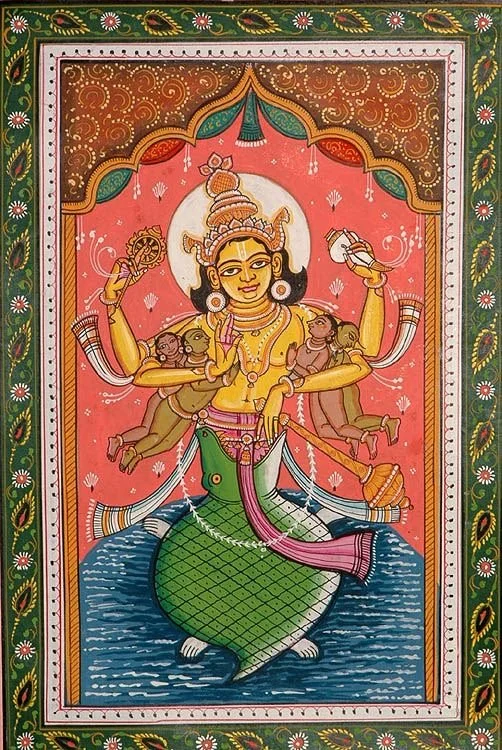
Artwork: Exotic India
Kūrma Jayantī is observed on this Pūrṇimā — celebrating the second of the daśa mahā avatārs of Lord Viṣṇu, who descended during the Satya Yuga. Śani governs Kūrma, the divine tortoise who steadied the cosmic mountain Mandara during the Samudra Manthana — the great churning of the ocean of milk. One who cultivates a strong foundation sustains the world itself.
This Pūrṇimā also marks Buddha Pūrṇimā — the sacred night upon which Siddhārtha Gautama, seated beneath the Bodhi tree, turned his gaze inward and did not waver. Through the long hours of darkness, he neither grasped nor fled — he simply remained. Awake. Steady. Until the light of the morning star met his own.
Remember the timeless wisdom of Lord Kṛṣṇa in the Śrīmad Bhagavad Gītā:
“You have control over action alone, never over its fruits. Live not for the fruits of action, nor attach yourself to inaction.”
All My Relations, Tulsi
"This is love: to fly toward a secret sky, to cause a hundred veils to fall each moment. First to let go of life. Finally, to take a step without feet." - Rumi
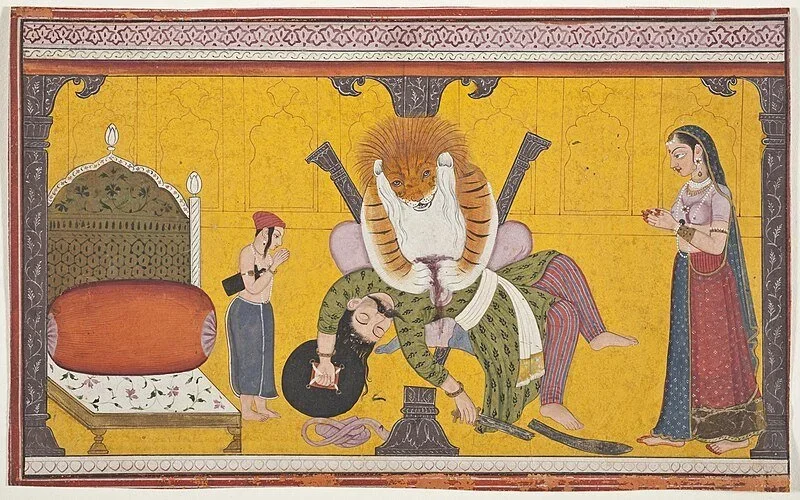
Artwork: Nasli and Alice Heeramaneck Collection, India, Himachal Pradesh, Nurpur, circa 1760-1770
On the fourteenth (caturdaśī) day of the bright half of the month of Vaiśākha, the festival honoring Narasiṃha Avatār, the fourth incarnation of the daśāvatāra of Lord Viṣṇu, the man-lion, is celebrated.
Narasiṃha’s story begins with King Hiraṇyakaśipu’s brother being killed by Śrī Varāha, the boar. Seeking revenge, Hiraṇyakaśipu performs deep penance to obtain immortality. Pleased, Lord Brahmā (the creator) grants him a boon, rendering him invulnerable to any man or animal, among other stipulations. Arrogant and enraged, Hiraṇyakaśipu conquers the three worlds to avenge his brother.
The āsura king had a son, Prahlād, who was born a great bhākta of Lord Viṣṇu, having heard stories of him from Nārada Muni while in the womb. Hiraṇyakaśipu was outraged that his son would not accept him as God and tried many ways to convince him otherwise. After numerous failed attempts, he ordered his soldiers to torture and kill Prahlād.
Being a great devotee of Mahāviṣṇu, Prahlād surrendered completely, and the lord saved him from every attempt on his life. When Hiraṇyakaśipu questioned his son, while kicking a pillar, “Is your lord in the pillar too?” The pillar split, and the fierce half-man, half-lion Narasiṃha emerged — at dusk, upon the threshold, neither fully within nor without, neither by day nor by night — defying the very categories specified by Hiraṇyakaśipu’s boon, and thereby subduing him, to vanquish the oppressive āsura king and protect Prahlād.
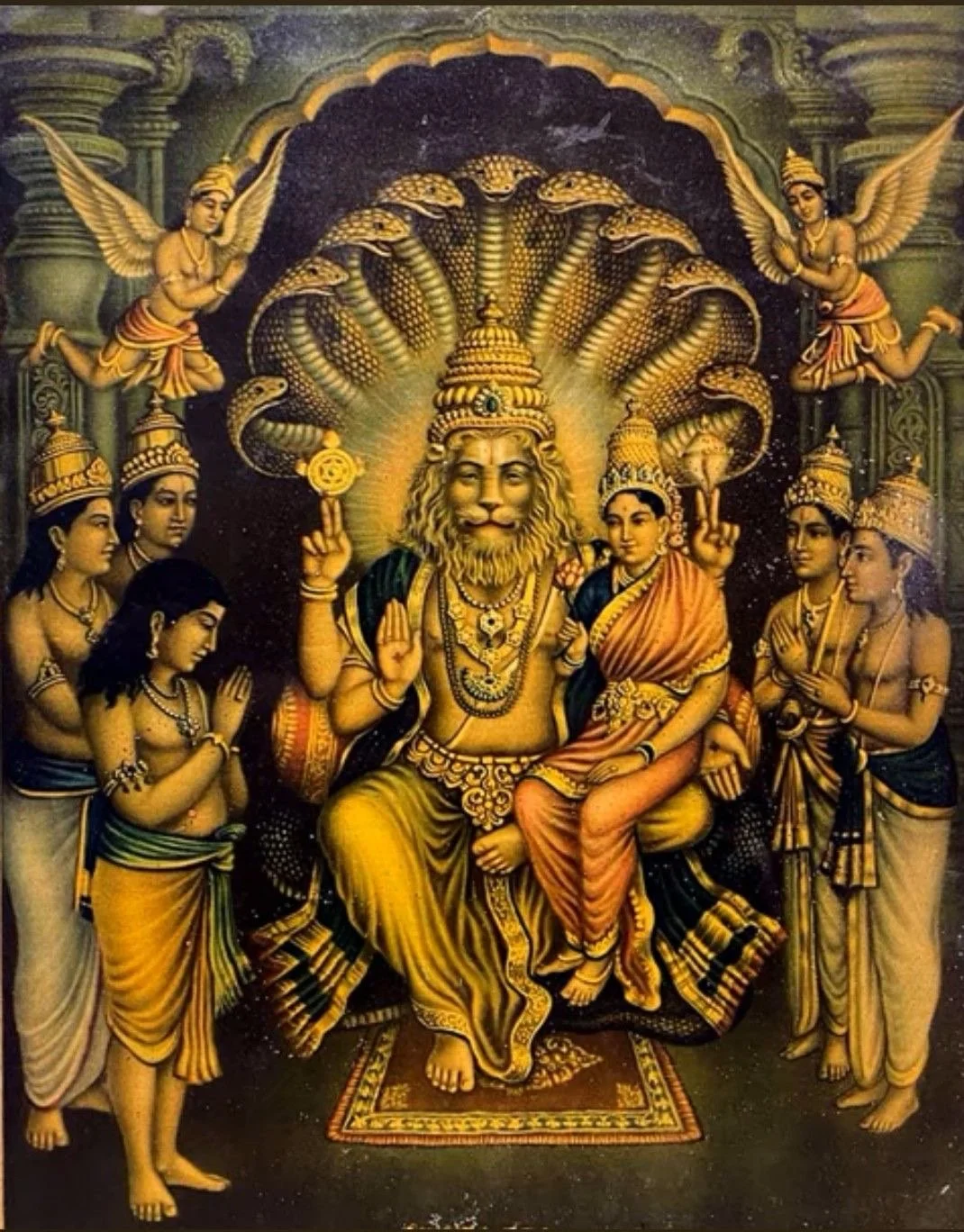
Artwork: Pinterest
He who is Ugra, the ferocious, and simultaneously Śānta, the tranquil — Narasiṃha embodies the supreme paradox of divine wrath deployed in the service of pure love. His terror is not cruelty; it is the unflinching protection of the surrendered soul. It is Prahlād’s unwavering devotion, his complete and total surrender, that draws forth the lord from the very pillar — and it is that same surrendered heart that instantly pacifies the lord’s fierce form.
The lord incarnates age after age to restore balance, protect the virtuous, and vanquish the wicked. Allegedly born from the sweat of Lord Śiva during his tapas, Maṅgal Graha (planet Mars) is said to be associated with the story of Narasiṃha.
Maṅgal is Deha Karaka or the indicator of the body, the heart, and the immune system, as he is the defense system within our bodies. He is the carrier of Agni (fire) tattva, the significator of one-pointed focus, the lord of logic, power, preservation, and violence. He represents protection, particularly the protection of the innocent.
He is further Ṛṇa Karaka, the indicator of debt — for it is Maṅgal who governs what is owed, what must be repaid, and the burdens carried across lifetimes through action and obligation. He is equally Roga Karaka, the indicator of sickness and disease — for when his Agni burns without discipline or direction, it turns inward, inflaming the body and disturbing the vital equilibrium he is otherwise sworn to protect.
Like Narasiṃha himself, Maṅgal is both Ugra and Śānta — fierce in the face of violation, steady in the protection of the devoted. On this Narasiṃha Caturdaśī, one may offer prayer to Lakṣmī-Narasiṃha not only for courage and protection, but for the dissolution of all Ṛṇa and Roga — that the lord who emerged from stone to answer the cry of his devotee may equally dissolve what binds us and restore what has been disturbed.
ॐ श्री लक्ष्मीनृसिंहाय नम:
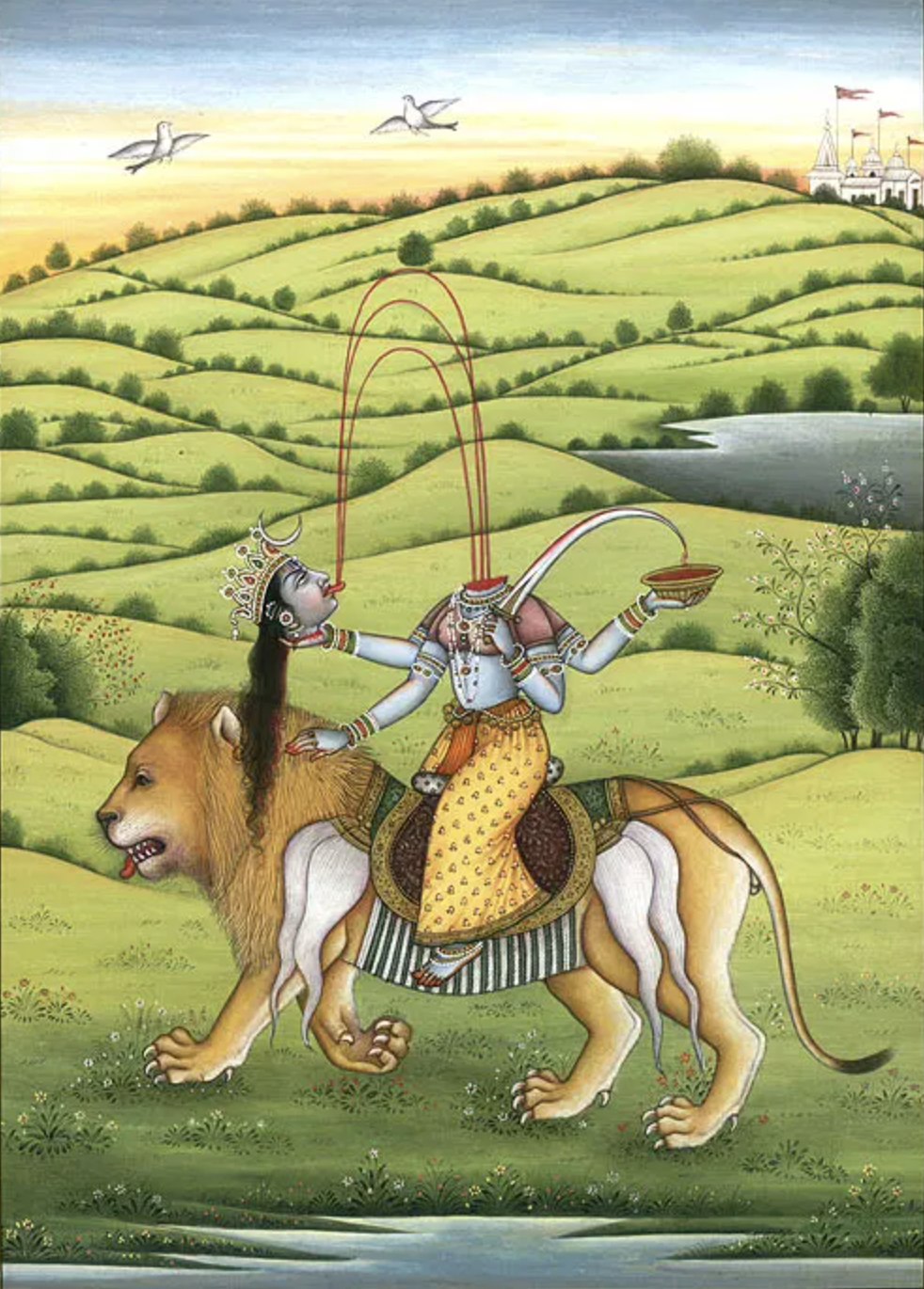
Mahāvidyā Chinnamastā Riding Lion by Kailash Raj
Today also marks Chinnamastā Jayantī, honoring the sixth of the Daśa Mahāvidyā—the self-decapitated Goddess who reveals the hidden movement of prāṇa and the deeper alchemy of the guṇas; severing her own head, she drinks from the central stream while two currents nourish her attendants, illuminating how life sustains itself through offering and how consciousness awakens when identification is cut—standing upon the union of desire, she makes clear that the very force that binds can liberate when seen—deeply linked to Rahu, she governs the threshold where hunger, desire, and dissolution converge, transmuting tamas into grounded potency, rajas into conscious circulation, and sattva into a clear channel that must also be released, revealing that true freedom arises not from refinement alone, but from moving beyond all three into the unbound Self.
ॐ ह्रीं श्रीं क्लीं ऐं वज्रवैरोचनीयै हुँ हुँ फट् स्वाहा ॥
All my Relations, Tulsi
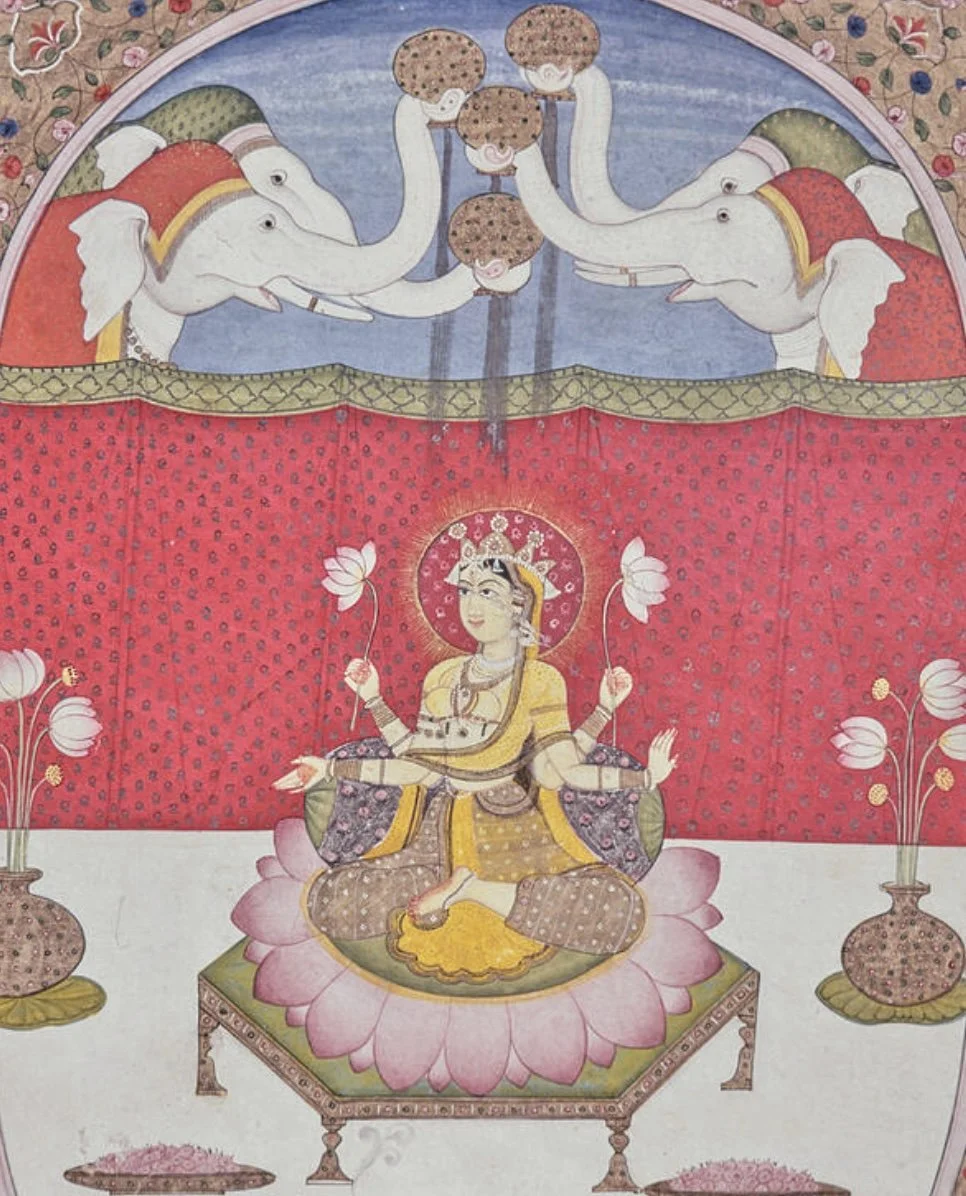
Artwork: Pinterest
Sunday marks the most auspicious day in the Vedic calendar, where both the luminaries, sūrya (sun) and chandra (moon) are in their exalted positions, occurring on the third (trtīyā) lunar day of the spring month of Vaiśākha. Aksaya, meaning “never diminishing,” illuminates this day as a beacon of enduring accomplishments—also known as the day of lasting achievements.
This auspicious occasion beckons new beginnings with unparalleled favorability, be it in the sacred bond of marriage, the initiation of ventures, the acquisition of gold or a new abode, or acts of benevolence. Such is its potency that the necessity of calculating an auspicious moment, known as muhūrta, becomes obsolete, for the entire day brims with divine blessings.
Trtīyā Tithi
IST: April 19, 10:49 AM – April 20, 7:27 AM
PDT: April 18, 10:19 PM – April 19, 4:57 PM
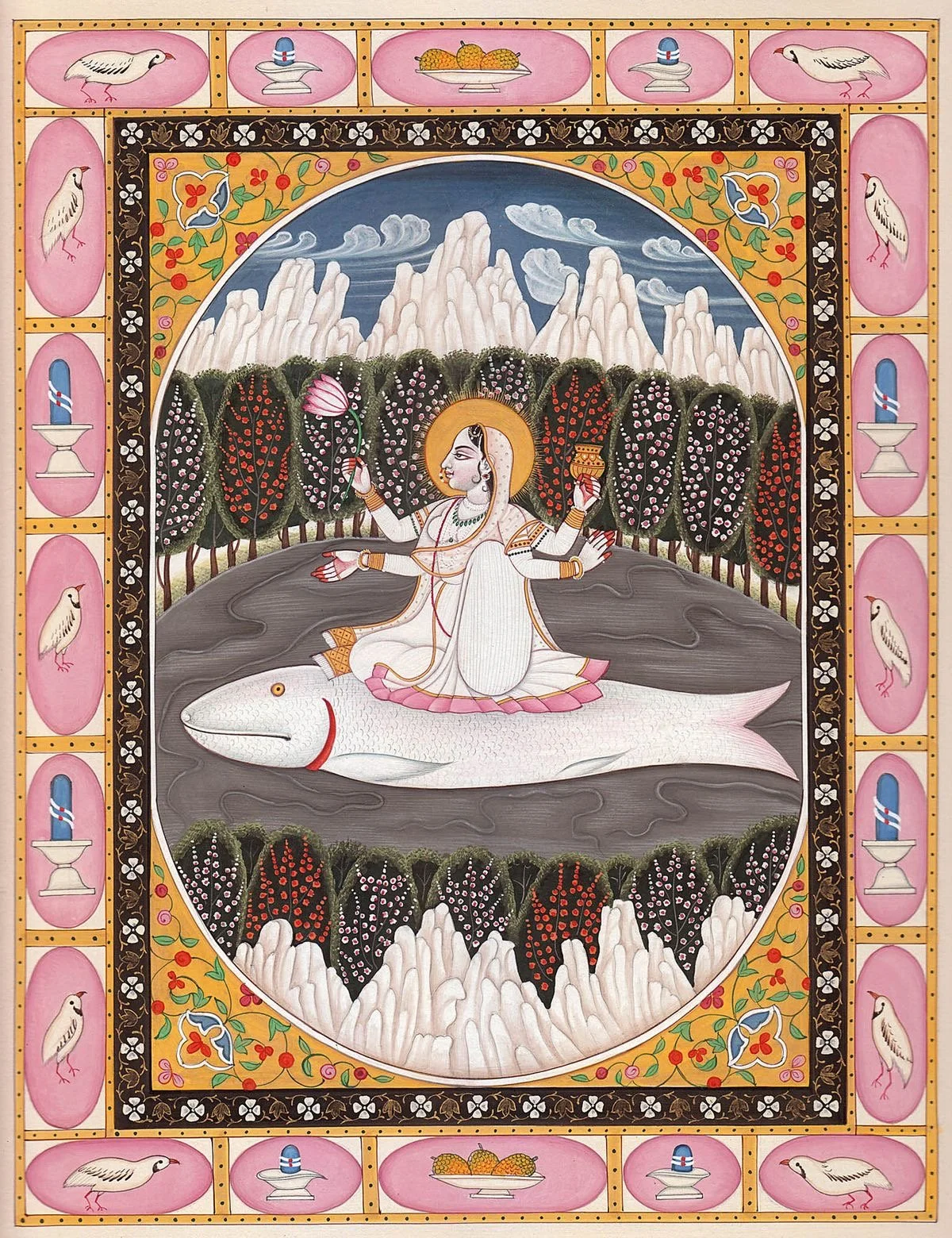
Sunday commemorates the denouement of the epochal Mahābhārata war, a pivotal event marking the transition from Satya Yuga, the golden age, to Tretā Yuga, the silver era. It is also revered as the day when Lord Gaṇeśa and Veda Vyāsa commenced the writing of the Mahābhārata, and the moment when, through King Bhagīratha’s penance, the celestial waters of Gaṅgā descended from Svarga Loka to grace the earthly realm.
This day is further sanctified by the celebration of Mātangī Jayantī, honoring the Mahāvidyā who embodies knowledge, creativity, and the mastery of sacred speech. Governing the subtle realms of sound and thought, Mātangī refines perception and harmonizes the mind with the cosmic rhythms of truth. She holds a deep connection to Sūrya Graha—the illuminator of consciousness and the eternal ātman (Self)—guiding the soul’s expression through the purity of voice, wisdom, and inner sovereignty.
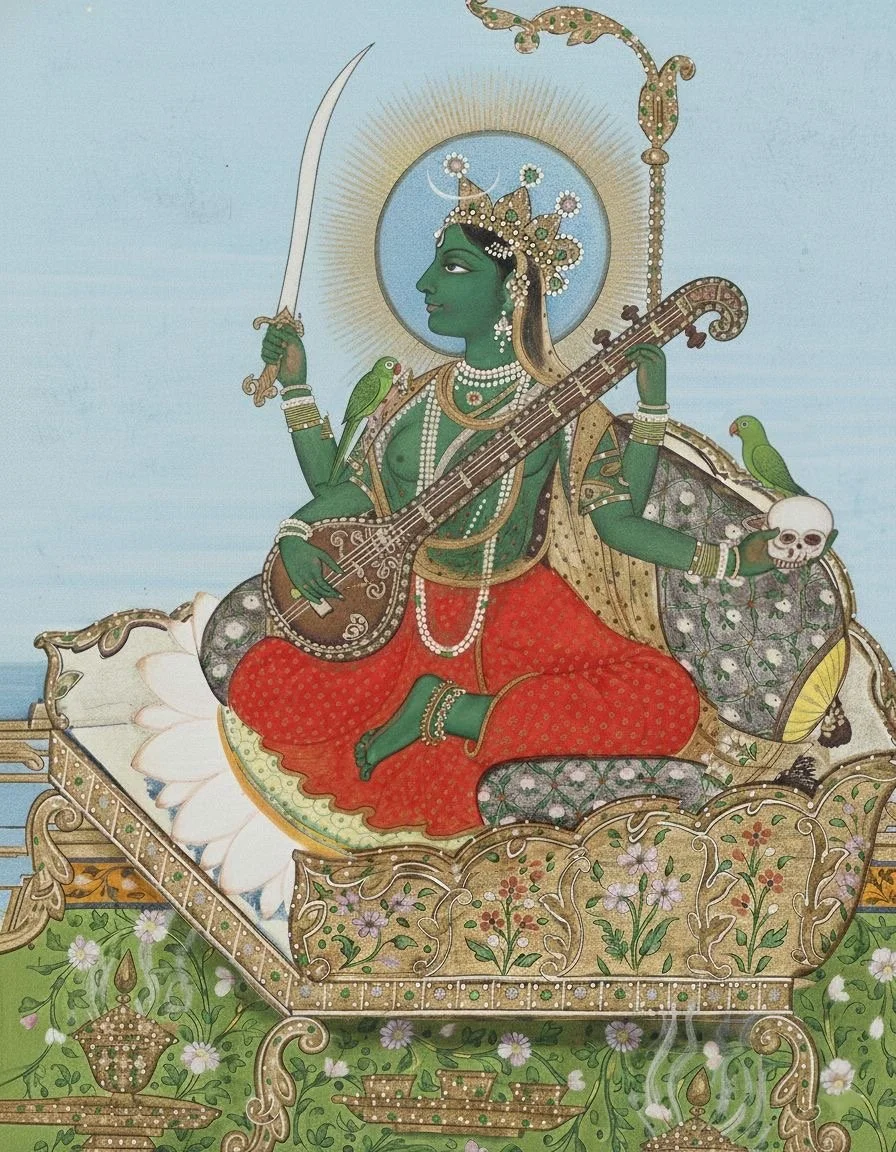
Artwork: @bhobhoniya on Pinterest
Finally, Aksaya Trtīyā also coincides with Paraśurāma Jayantī—the birth anniversary of Bhagavān Paraśurāma, the sixth avatāra of Viṣnu, the divine warrior-sage, connected to Śukra Graha (Venus), whose fierce incarnation saw him wield the paraśu (axe) against the ksatriya (political/ruling) seat to restore dharma and renew a more righteous society.
ॐ नमो नारायणाय | Om Namo Nārāyanāya
All my Relations, Tulsi