Let us return to the last time Rāhu and Ketu moved through the Kumbha–Siṃha axis: 2005 to 2007. It was a period shaped by the tension between personal sovereignty and collective belonging—between the need to stand apart, and the yearning to find one’s place within a greater whole.
Rāhu in Kumbha stirred the impulse to question systems and seek new forms, while Ketu in Siṃha quietly loosened the grip of self-importance, revealing where identity had been entangled with status or validation. As one of the co-rulers of Kumbha, alongside Śani, Rāhu moves through this sign with a certain authority—its drive to rupture, innovate, and unbind finds natural expression here. For many, it was a time of inward reorientation—of discerning what it truly means to offer oneself without needing to be seen.
Timing Matters: Mean and True Node Gap
In that cycle, the difference between the mean and true node transitions was pronounced. The mean node entered Kumbha in November 2005, while the true node did not follow until March 2006—resulting in a gap of nearly four months.
This delay was due to greater oscillation in the Moon’s nodal path at the time, which caused the true node to temporarily move direct or hover near the sign boundary. In contrast, the 2025 transit is far more aligned: the mean node enters Kumbha on May 9, 2025, and the true node follows just ten days later on May 19. The shorter gap reflects minimal oscillation in the nodal path during this period, resulting in a more immediate and unified shift.
This convergence in 2025 holds deeper significance for Jyotiṣa interpretation:
While the true node reflects the Moon’s exact astronomical path, including its erratic oscillations, the mean node offers a steady, symbolically coherent trajectory through the zodiac. During periods of minimal oscillation—such as the 2025 transit—the closeness between mean and true nodes lends further support to the mean node’s use in timing and interpretation. Many Jyotiṣa practitioners favor the mean node for its predictive consistency and alignment with the symbolic essence of Rāhu and Ketu as karmic forces that operate beyond the visible realm.
In traditional South Indian lineages, the mean node remains the standard—a practice that reflects its longstanding alignment with the metaphysical dimension of Jyotisa rather than only astronomical precision.
Clean Threshold, Swift Delivery
Most discussions of Rāhu and Ketu focus on their symbolism, yet their movement itself tells us something. In 2005–2006, the true node lagged nearly four months behind the mean, creating a prolonged liminal space. The karmic axis had shifted—yet hadn’t. This delay, subtle as it was, mirrored a period of energetic diffusion: slower integration, ambiguous thresholds, and karmic delivery that unfolded in layers.
In contrast, the 2025 shift occurs with near exactness. The true and mean nodes enter Kumbha–Siṃha just ten days apart. When the nodes move with precision, karma tends to deliver without pause. There is less wavering at the threshold, and the cycle begins cleanly. Have you been noticing a quickening? A sense that movement has already begun—subtle shifts, sudden truths, old patterns unraveling without ceremony. The timing may be astronomical, but the delivery is already in motion.
First full eclipse season in the Aquarius / Leo Axis:
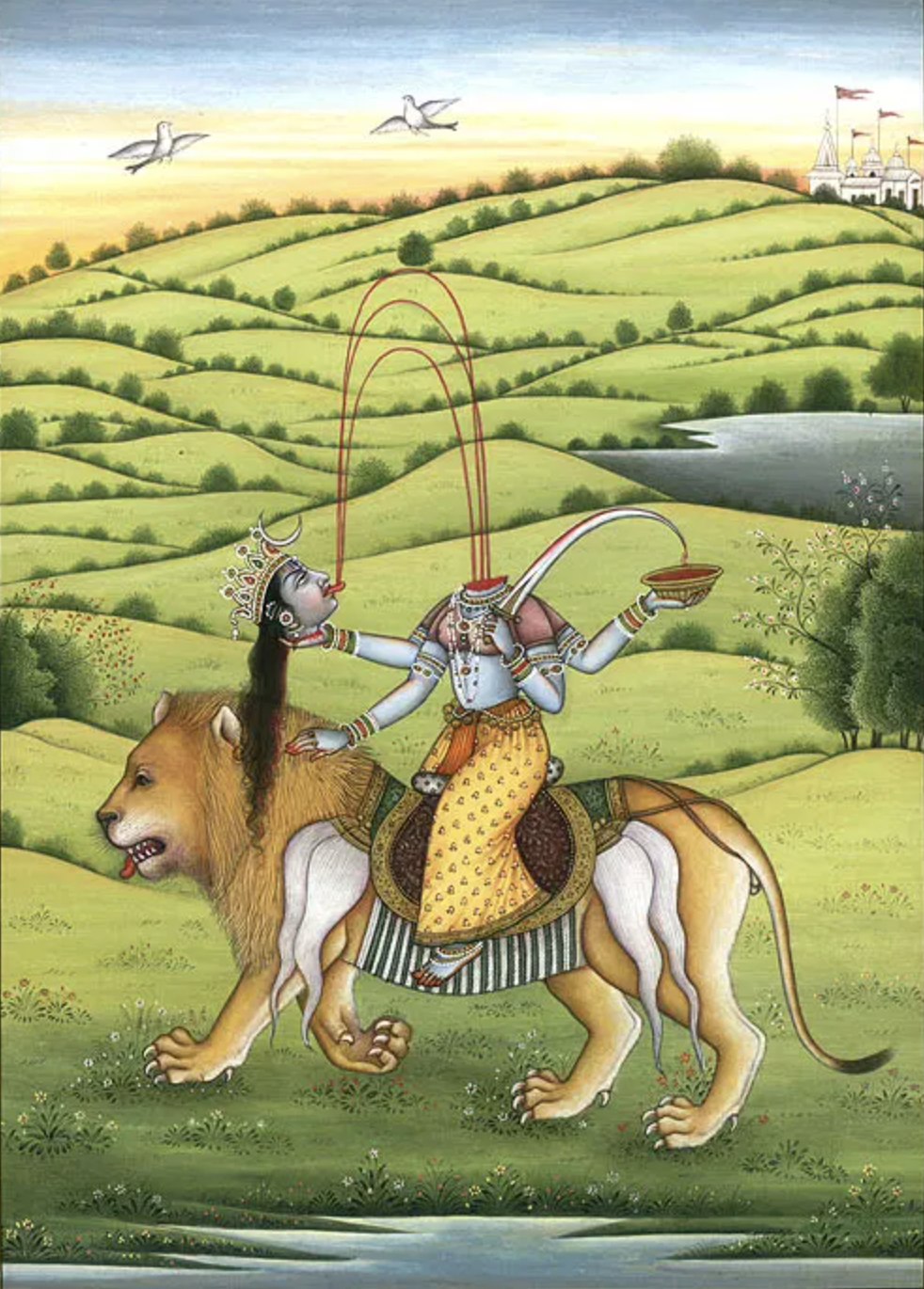
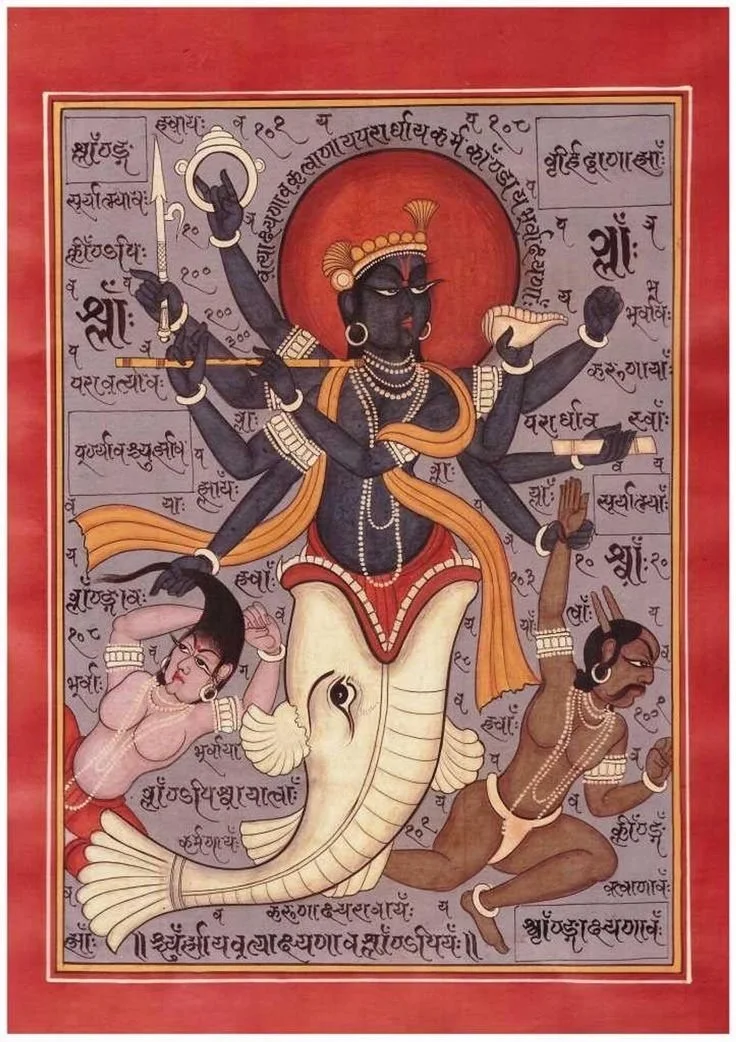
Mythic Origins