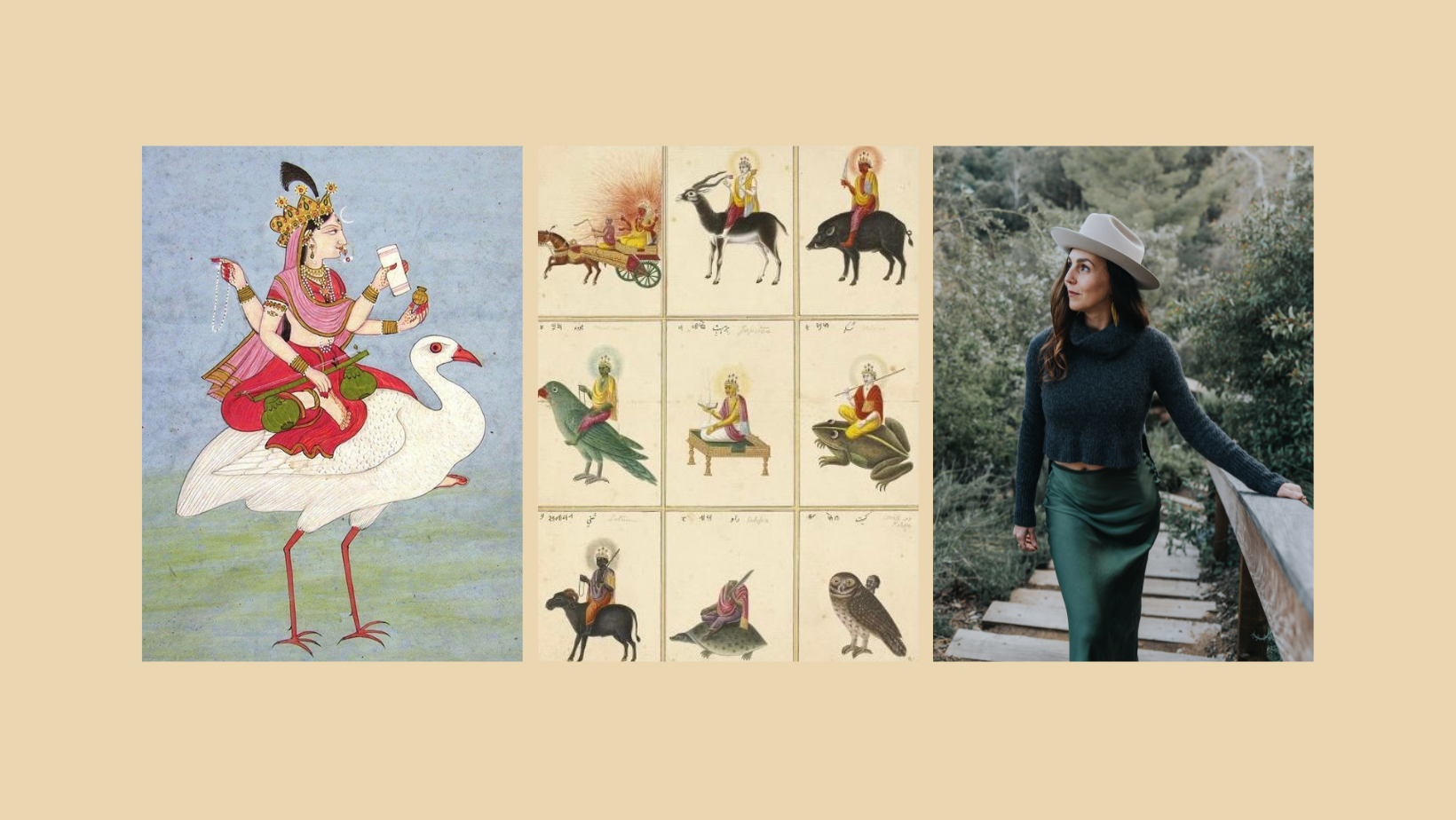
Mercury Retrograde in Viśākhā: The Star of Purpose

MERCURY RETROGRADE IN VIŚĀKHĀ | 10.24–11.13
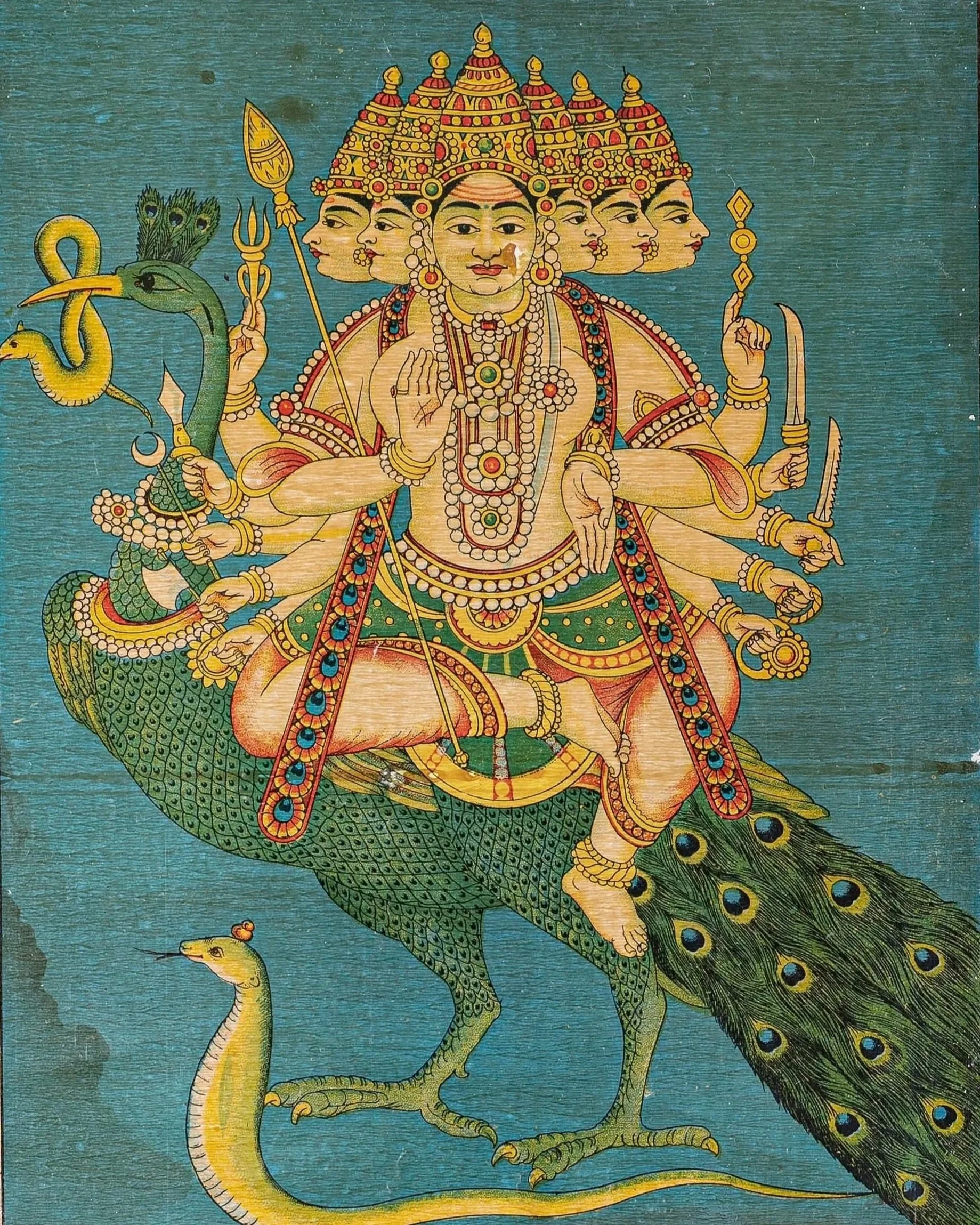
Artwork: Kārttikeya by Raja Ravi Varma

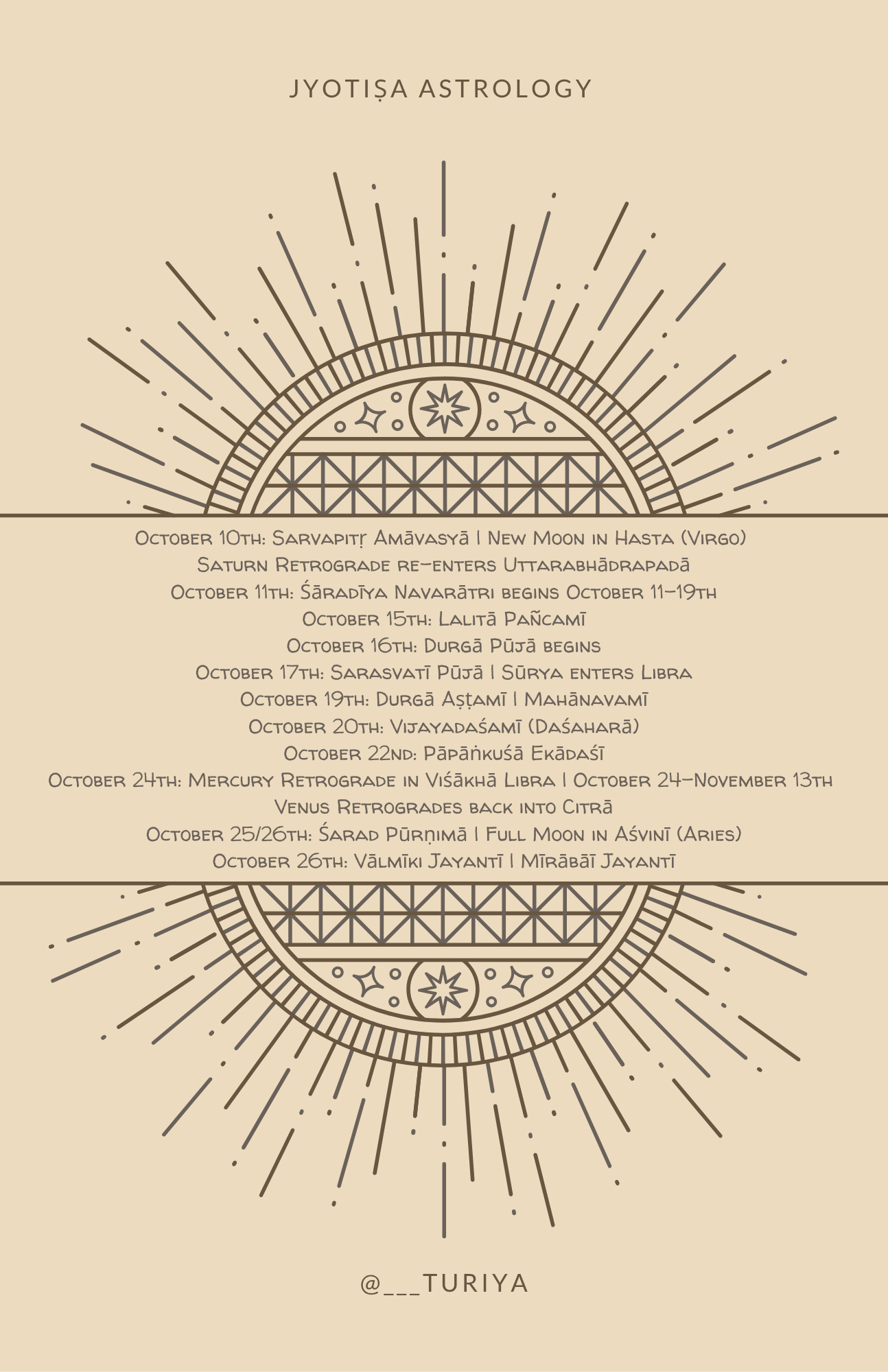
Budha Graha (Mercury) stations retrograde (Vakri) in the Vedic lunar mansion of Viśākhā विशाखा (sidereal Libra), the Star of Purpose, initiating a passage of reflection, reconsideration, and refocusing.

In Jyotiṣa, when a graha stations retrograde, its apparent backward motion signals a turning inward, an intensification of its essential nature.

Budha

Fourth among the Navagrahas, Budha is the graha of intellect, viveka (discernment), speech, skill, storytelling, negotiation, and balance. Born of Chandra, he asks a single question: Who am I? He is also connected to Tripura Sundarī, who embodies supreme beauty, clarity, and the power of refined discernment.

Viśākhā in the Sky

In the sky, Viśākhā shines as two stars of the Scales, α and β Librae, whose Arabic names still mean the southern and northern claw. The ancient ṛṣis saw them as a forked branch.
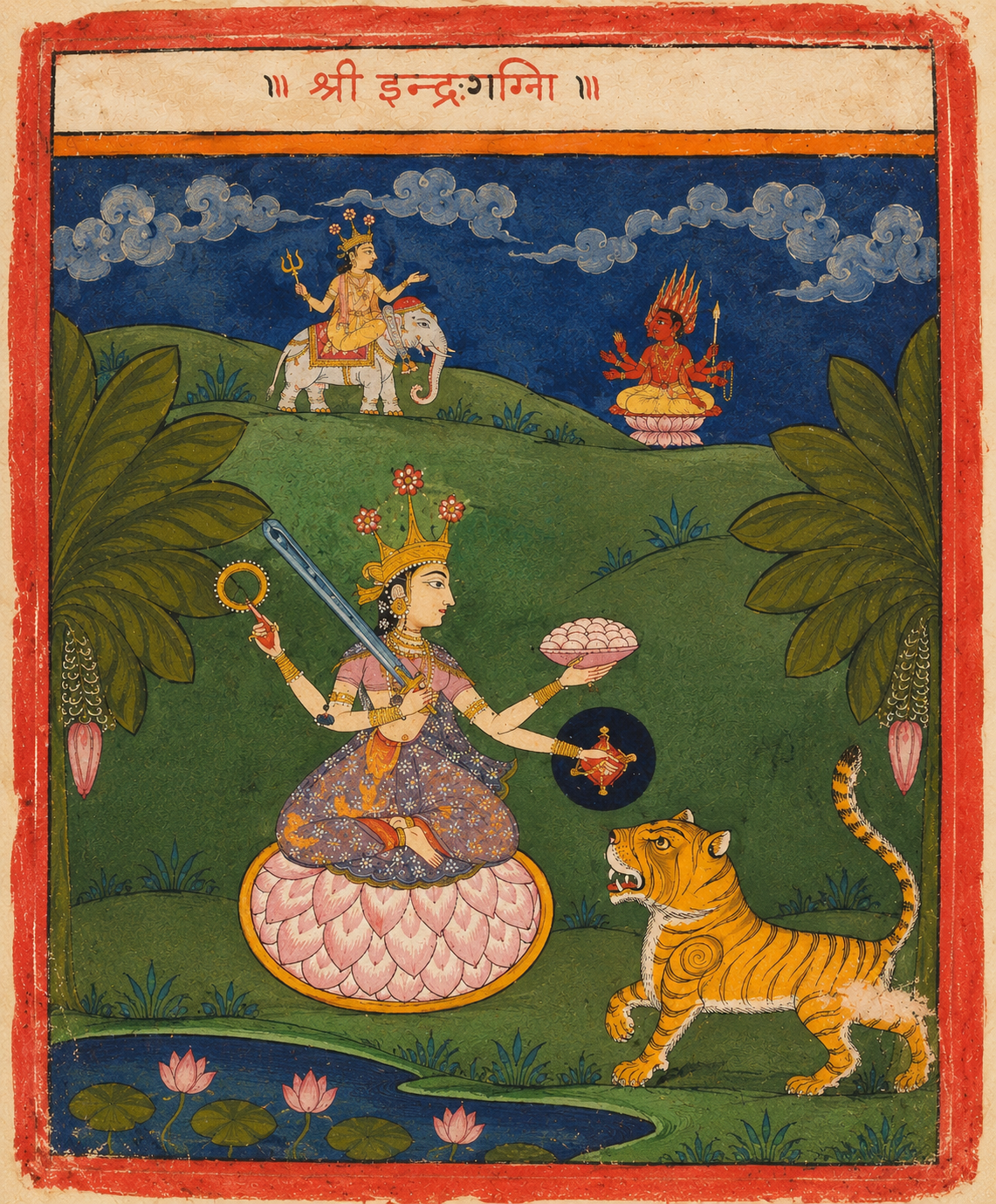
Artwork by @___turiya

The Forked Branch

Libra, the sign most in need of balance, holds Viśākhā at its edge. Its name means “two-branched,” the forked branch at the crossroads of choice. In the Vedic hymns it also bears the name Rādhā. Yet its deity is one: Indrāgnī, Indra and Agni invoked as a single pair.

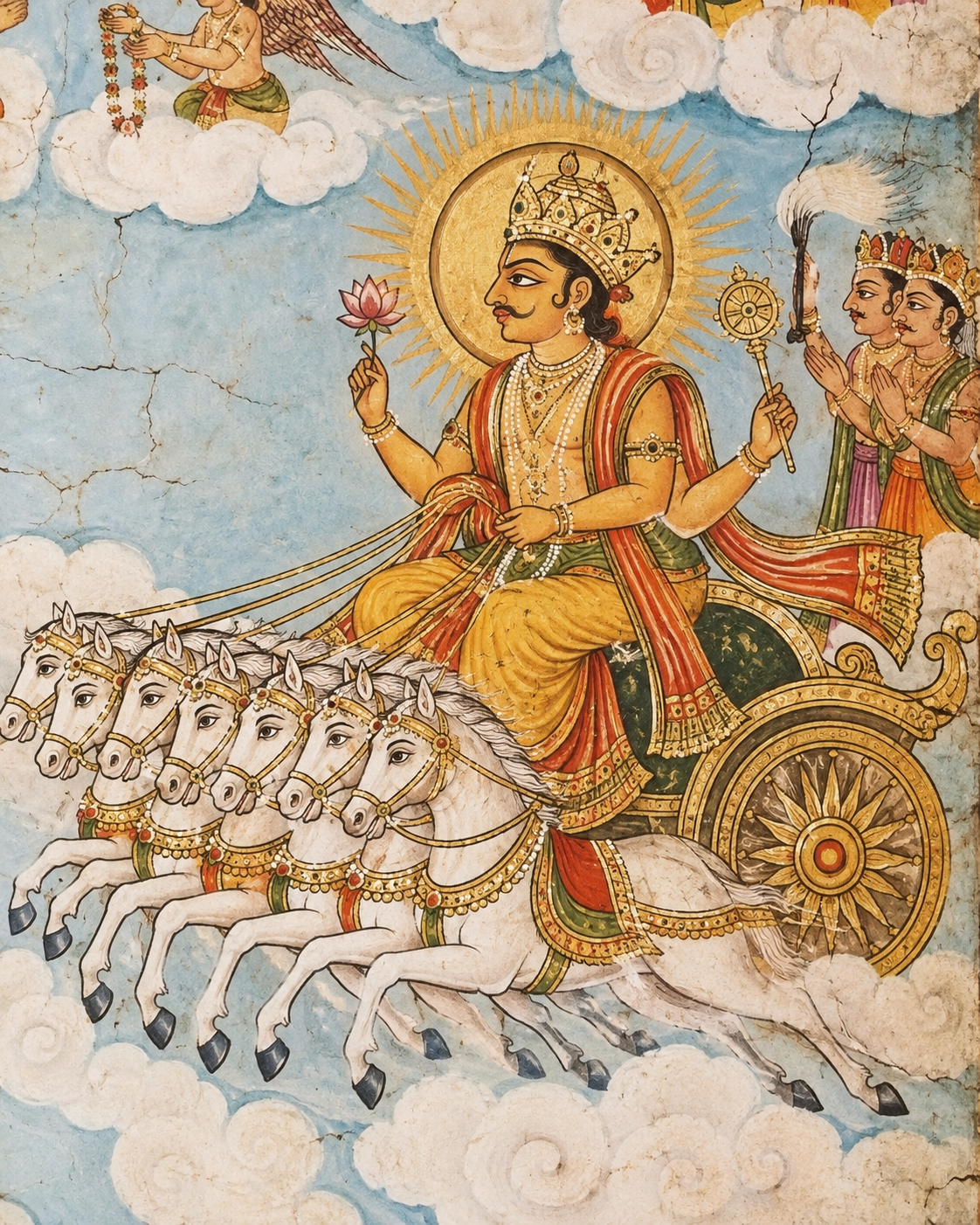
Said to be the birth star of Sūrya Graha (the Sun), Viśākhā reveals how light is born. Through the churning of duality, the singular is born. At the fork, viveka is the one who chooses.

Viśākhā is symbolized by a triumphal arch, suggesting arrival and initiation. Dispersed, its force divides; gathered into one channel, it is unstoppable.

What We Protect

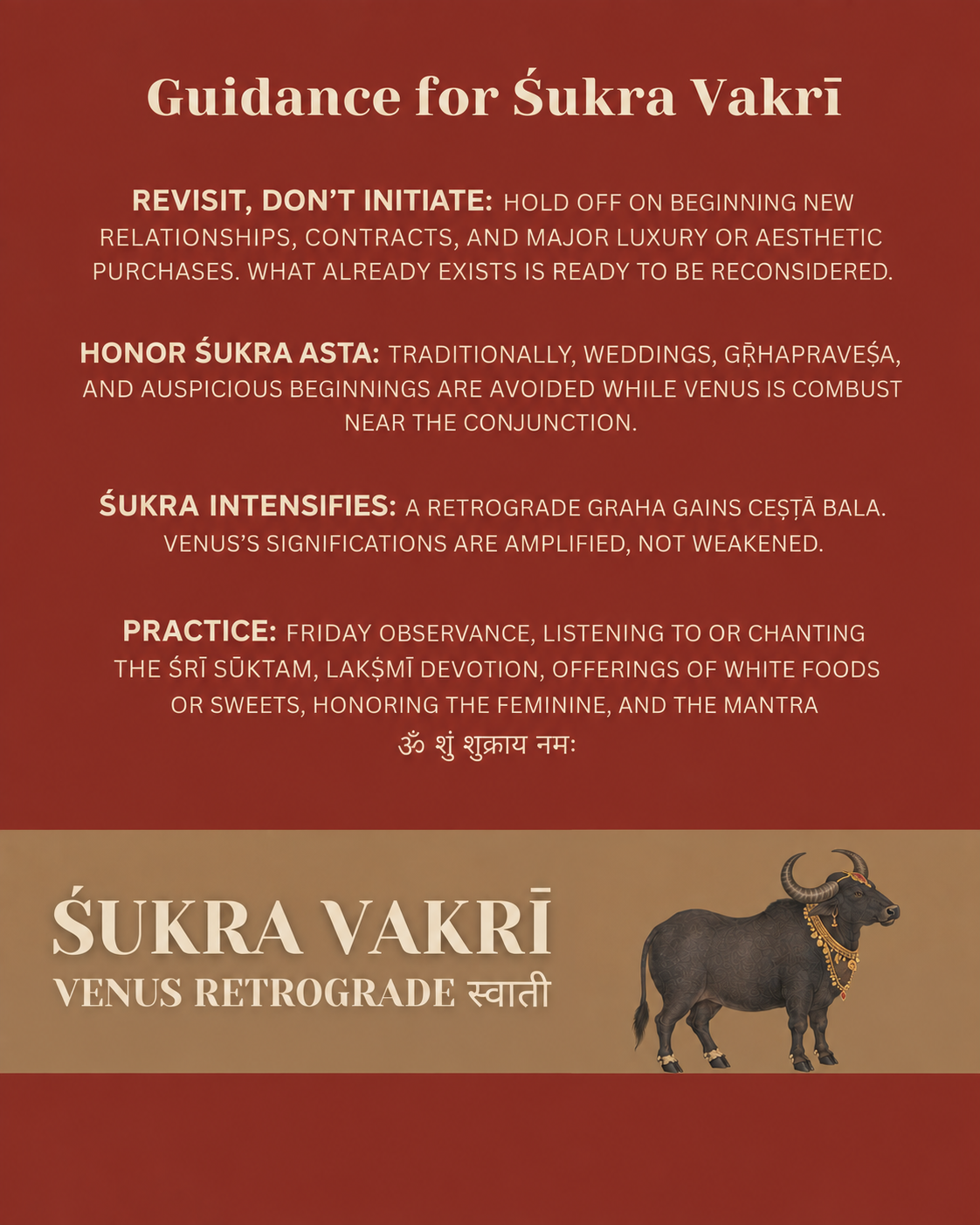
Viśākhā’s yoni is the male tiger, guardian of its territory. With Budha and Śukra conjunct, rajo-guṇa is amplified, along with a heightened sense of protection. Indra guards his throne; his fury and his generosity are two faces of one kingship. What is it that you are seeking to protect? A position you have claimed? A sense of personal justice? Where has the mind divided its force?

Returning to Center

Just as Viṣṇu descends age after age to restore balance, this retrograde calls us inward through svādhyāya, returning to the center of our own wheel. Some karmas are seeking completion. Some patterns have reached their natural conclusion. The old is truly complete; Budha’s blessing is realizing who you are not.

Move slowly. Reconsider before reacting. Viśākhā reminds us that triumph is not found by pushing forward. It is found by gathering the mind into one aim.

ॐ ब्रां ब्रीं ब्रौं सः बुधाय नमः
Śarad Navarātri: Nine nights of the Divine Feminie

ŚARAD NAVARĀTRI

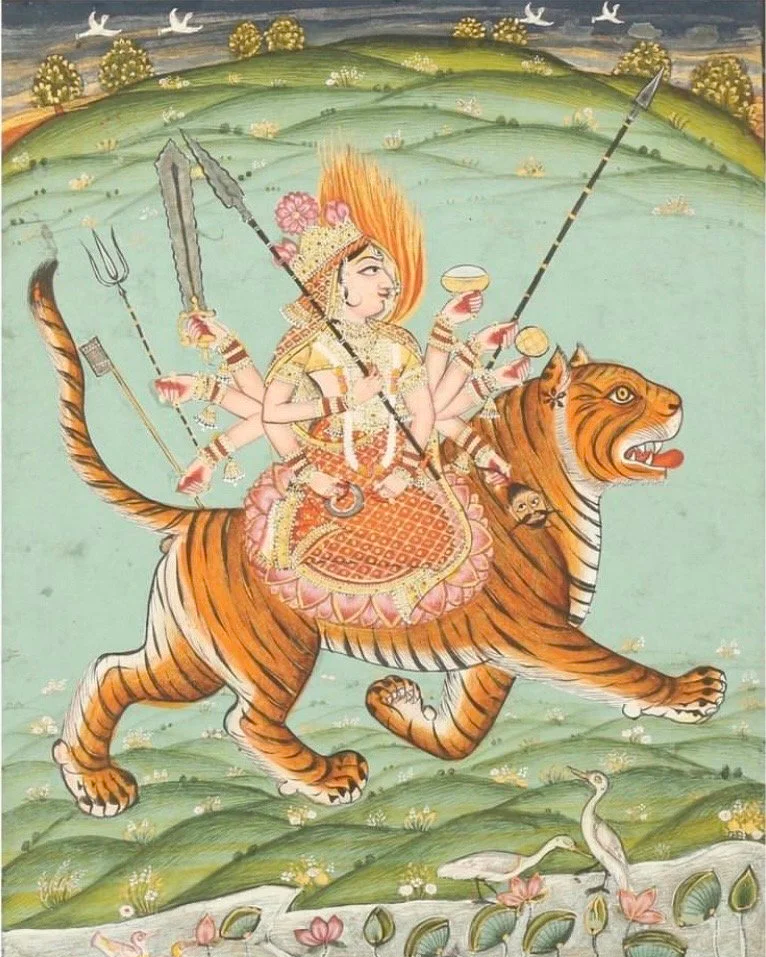
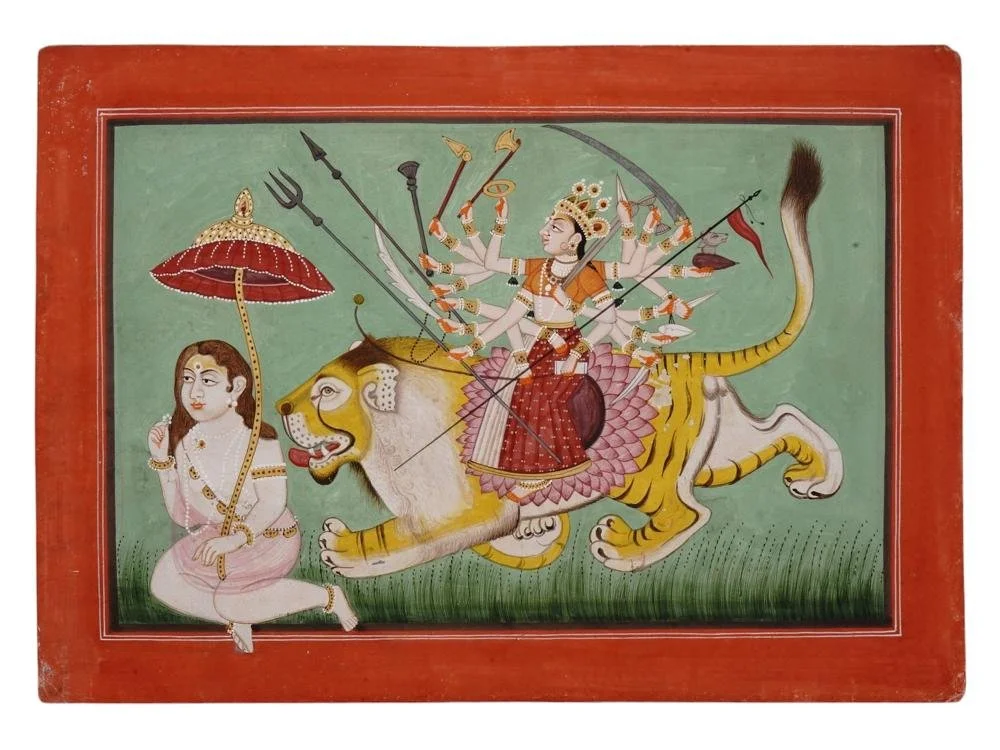
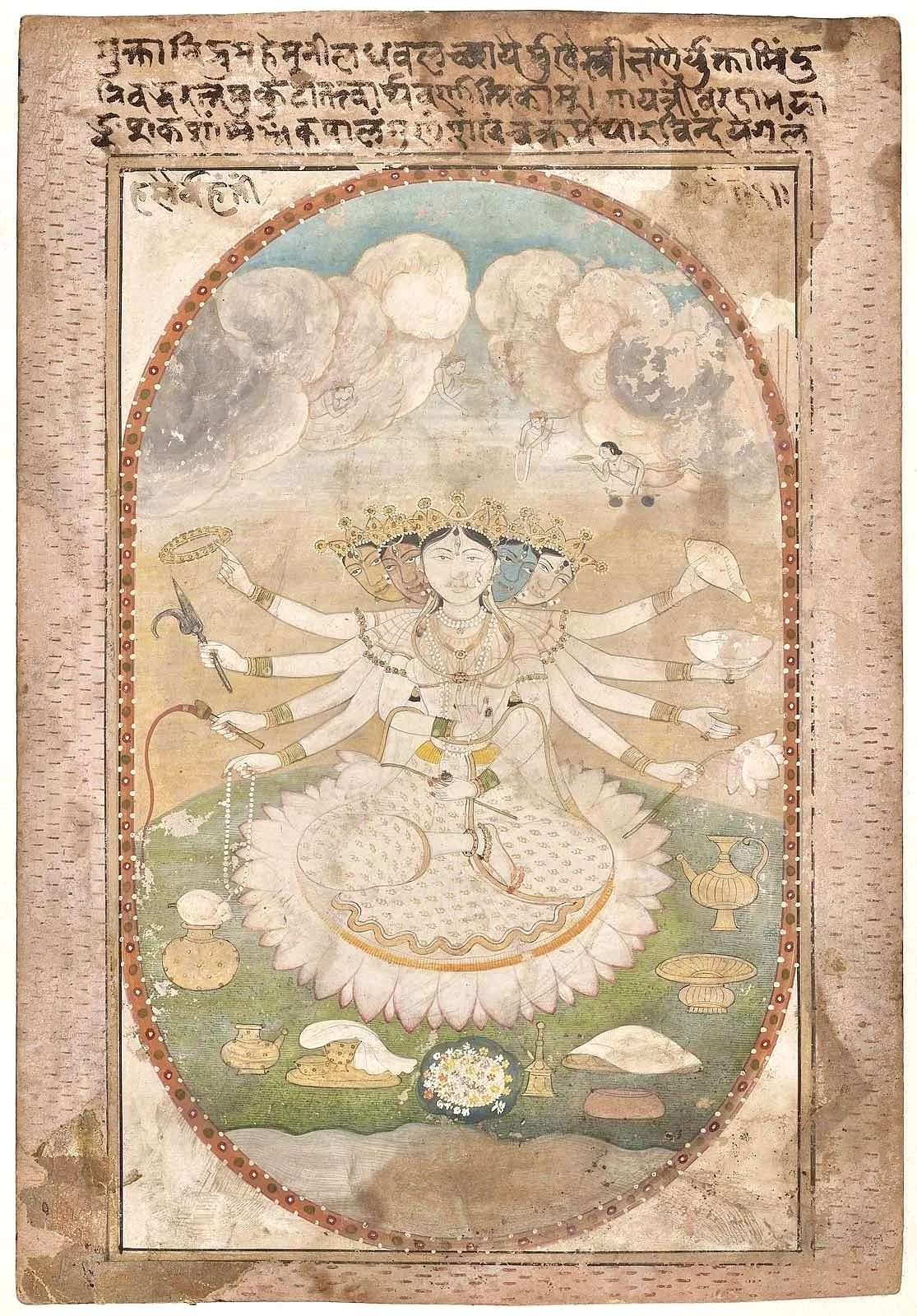
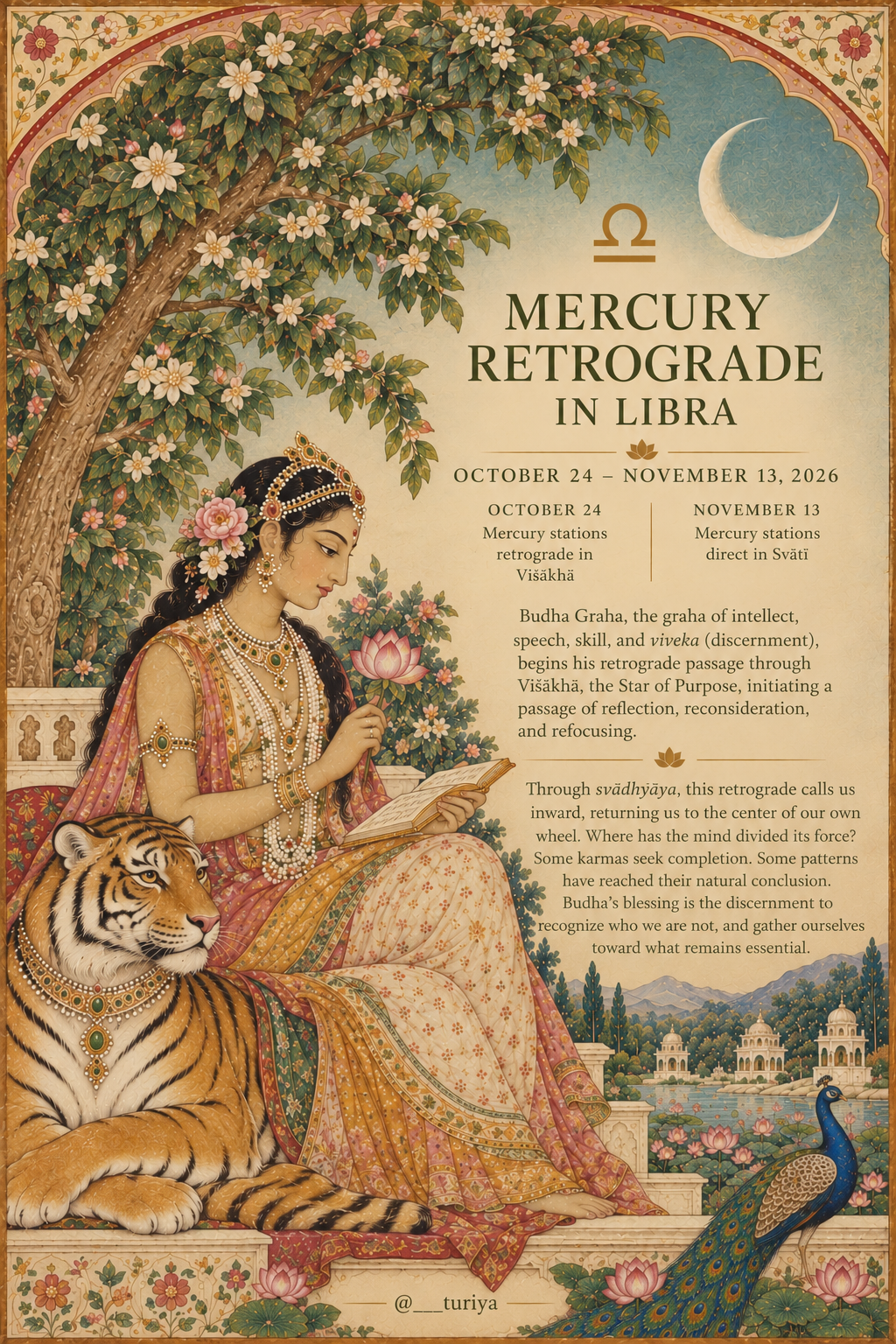
Durgā on Her Vāhana | Kota, Rajasthan, North-Western India, ca. 1860 

OCT 11-19

Śarad Navarātri शरद् नवरात्रि commences on the tithi after the new moon, from Pratipadā tithi (1st lunar day) to the Navamī tithi (9th) of the Śukla Pakṣa (waxing moon) in the month of Aśvina (Sept/Oct). This nine day festival marks the end of monsoon season, the transition into autumn, and is the most celebrated of the four yearly Navarātris.

The word Navarātri means "nine nights" in Sanskrit, nava meaning "nine" and rātri meaning "nights." During these nine nights and ten days of devotion, nine different forms of goddess Durgā (navadurgā), also known as Śakti are worshiped. The tenth day is commonly referred to as Vijayā-Daśamī or Dussehra, celebrating the victory of good over evil.

Navarātri invokes an internal quest to locate and establish our seat within the center of the heart of the Goddess. In a world that grasps our attention and seizes our mind to look outside of ourselves to seek truth, validation and even to gain a so called glimpse of the goddess, this festival calls us to go deeper within to attune with her rivers that flow within us and to cultivate a direct experience, and personal relationship with Her.

Devī is that awakening force, that primordial energy that lives within us and awaits our attention. Yoga teaches us that whatever we put our attention on grows stronger in our lives. Move beyond your ideas of who she is and how she can be reached.

This window is ripe for putting into physical practice the teachings found in the yoga śāstra. In the quieting of our mind (yogaś-citta-vr̥tti-nirodhaḥ) and the investigation of all that lies below the surface—in the observation and embrace of both our shadows and our light, which are ultimately one and the same—we’re being called now to enter into that space, and to transcend.

As we tend to śakti, and begin to establish a firm foundation in Her, we begin to awaken our power to focus, to cultivate our dhāraṇā and draw all our energies inside. This continued focus is the active meditation requesting our attention, calling us to become completely absorbed in Her.

She is the embodiment of all that is and ever will be, She is our very breath and that which gives life to all, yet she cannot be reached by contemplation or intellectual understanding and philosophizing, or even described through words, she can only be touched through direct experience, that which requires digestion and stabilization to be truly lived. Can you answer that call?

The nine names of manifestation have been spoken in the Devīmāhātmyam Devī Kavacaṃ, by the Lord Brahmā (the creator) Himself:

"First is Goddess Śailaputrī, the Daughter of the Himālayas, and second is Brahmachāriṇī, She who observes the vow of celibacy, the Goddess of sacred study and penance; third is Chandraghaṇṭā, the Goddess of the Delight of Practice, who bears the moon in her necklace, Kūṣmāṇḍa, the Goddess of Purifying Austerity is fourth.”

“Fifth is the Goddess Skanda-Mātā, the mother of Skanda, born out of her powers, sixth is Kātyāyanī, the One Who is Ever Pure; seventh is Kālarātrī, the Goddess of the Dark Night of Overcoming Egotism; Mahāgaurī, the wife of Lord Śiva, is eighth.”

“Ninth is the Goddess Siddhidātrī, the provider of Siddhis, and bestower of mystic powers; the nine Durgas, relievers of difficulties, have been enumerated, and these names have been revealed by the great soul of the Supreme Brahmā himself."

ॐ दुं दुर्गायै नमः | ॐ श्री मात्रे नमः

Venus Retrograde in Svātī: The Star of Self-Actualization

VENUS RETROGRADE

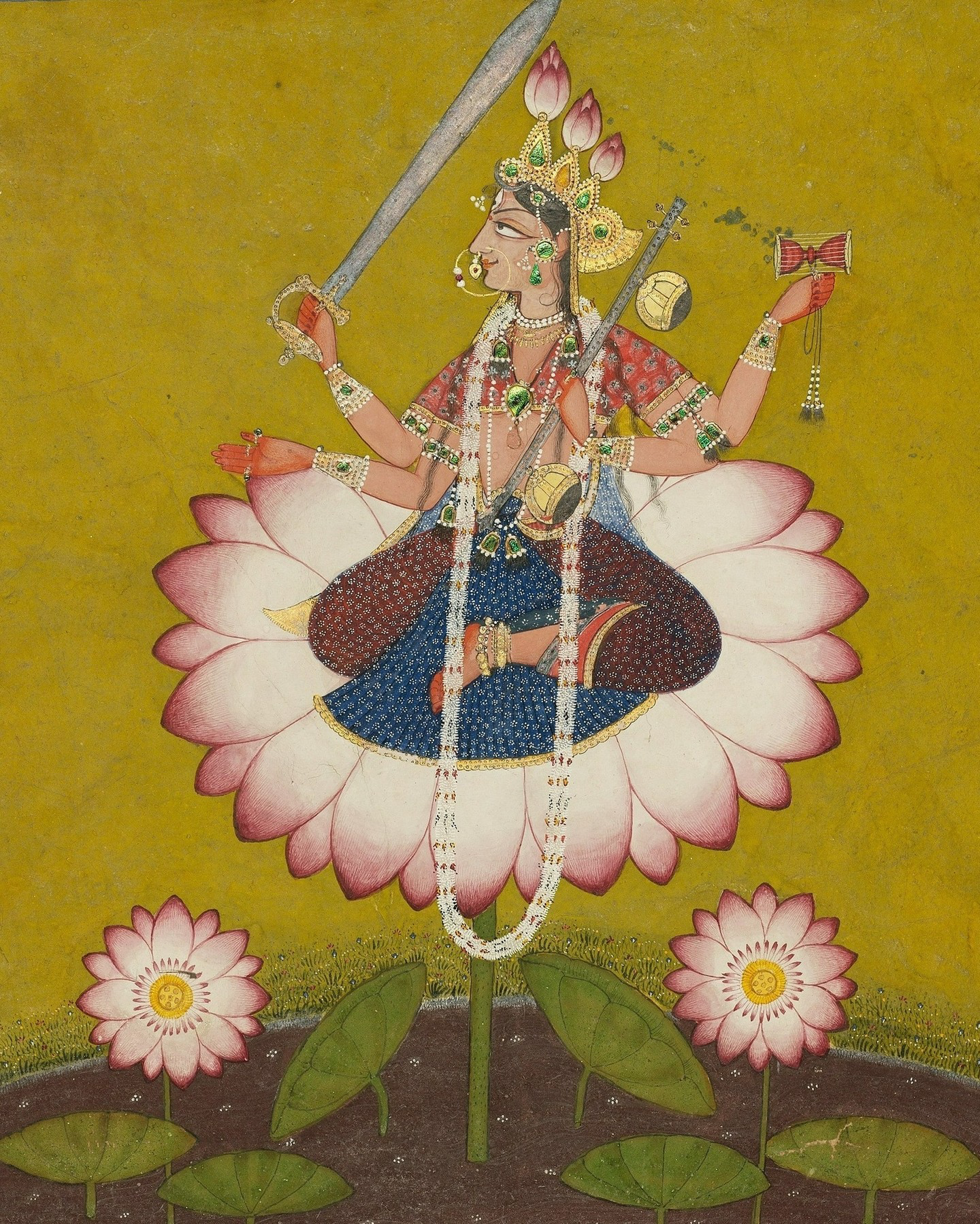
Devi on a Lotus Throne,” c. 1660 (with later additions), Northern India, Pahari region (Basohli and Kangra)

10.03 to 11.13/14

Stations Retrograde in Svātī

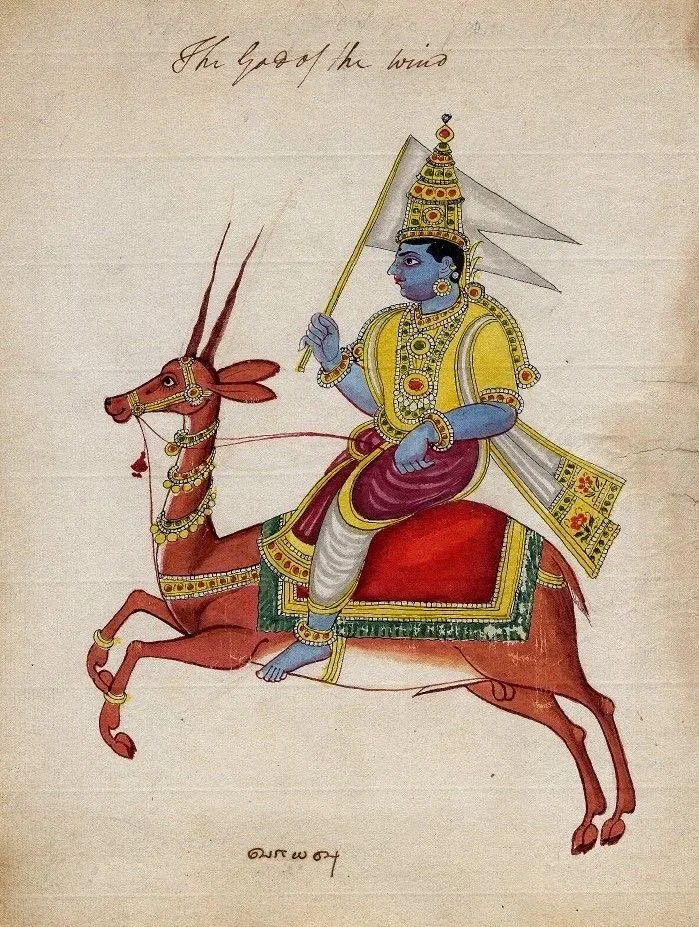
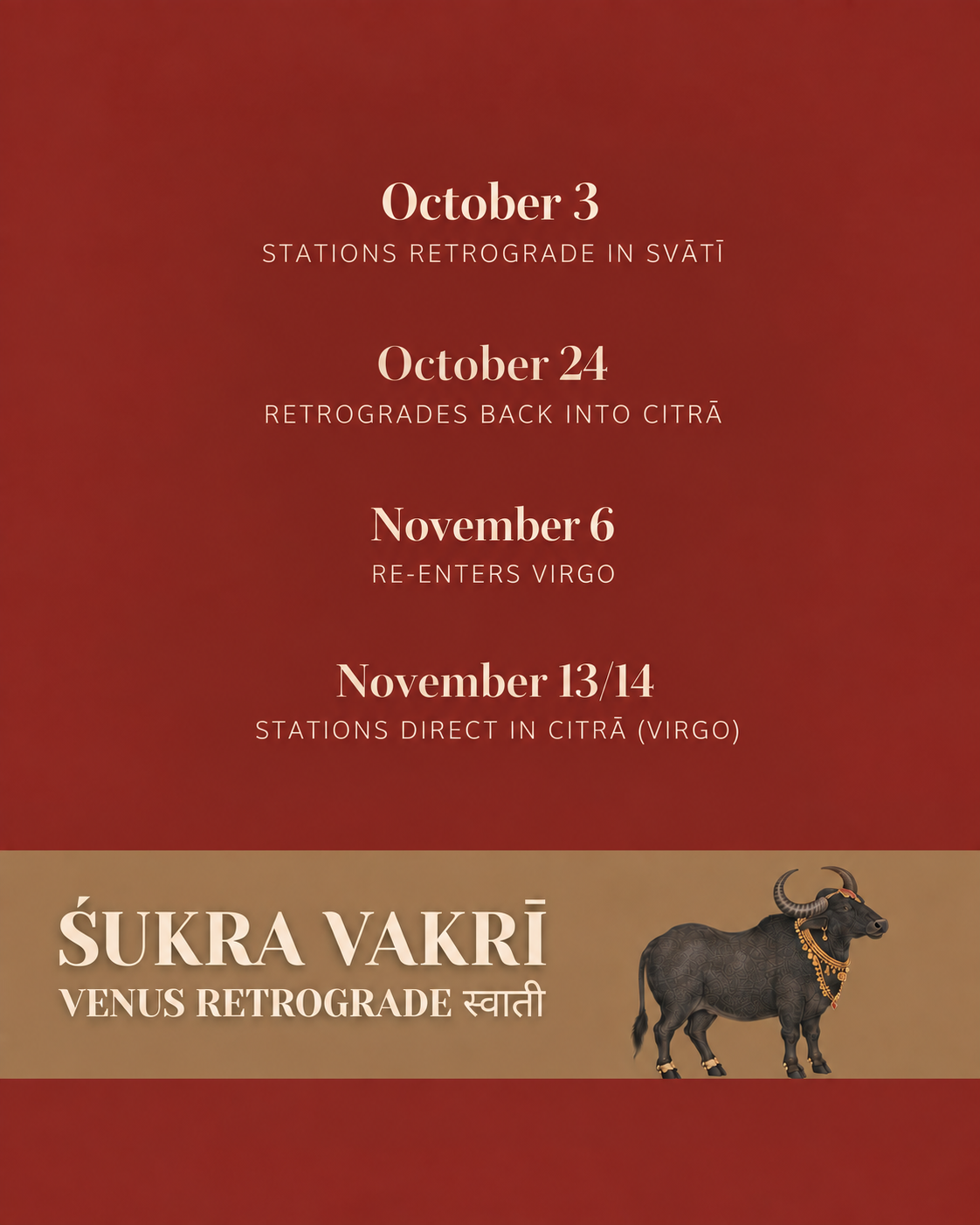
On October 3, Venus stations retrograde in the Vedic Lunar Mansion of Svātī, the Star of Self-Actualization and the seat of Vāyu. This begins a 42-day period of reconsideration around relationship, desire, value, creativity, pleasure, and exchange.

Śukra is the revered graha of devotion, justice, relationships, divine love, restoration, virility, and the enjoyment of embodied life. One of the Jñāna Kārakas, Venus is also a kāraka of union, yoga. As Śukrācārya, teacher of the Asuras, he holds Sañjīvinī Vidyā, the knowledge through which what has died may be restored to life.

The retrograde cycle of Venus carries this principle of death, regeneration, and rebirth. As Venus disappears from the evening sky and eventually reemerges as the morning star, matters governed by Śukra are drawn inward for examination. Relationships, desires, creative impulses, resources, agreements, and our understanding of what is truly valuable may return to be reconsidered.

Venus moves in an eight-year rhythm, returning to nearly the same place in the sky. Śukra last retrograded through Svātī and Citrā in October and November of 2018. Reflect on what was moving in your relationships, creative life, and sense of worth at that time, and notice what has truly evolved since.

This cycle begins in Svātī, governed by Vāyu, devata of the wind and the vital movement of prāṇa. Independent and self-moving, Svātī carries the capacity to adapt, disperse, and find its own course. Its association with commerce and exchange also draws attention to what passes between us: what we give, what we receive, and the value assigned to each.

Its śakti, pradhvaṁsa śakti, holds the energy to scatter — to disperse like the wind, dissolving form, diffusing energy, and transforming through movement. And yet, within this same current lies the deeper invitation — to gather, to recollect, and to direct that which has been scattered.

Its symbol, the tender shoot swaying in the wind, speaks to all that is newly reborn — full of life, yet easily disturbed. Svātī is also the seat of Śani's exaltation. The great regulator offers the counterweight to dispersion through patience, restraint, and the discipline to gather prāṇa and give it direction.

Here, Venus, the kāraka of union, meets a nakṣatra that requires freedom. Yet Svātī sits at the heart of Tulā, his mūlatrikoṇa and the natural 7th, the kāma house of partnership. As the marketplace, Tulā is the rāśi most in need of balance, weighing what is given against what is received. Union and independence share this ground, and the retrograde asks whether they can be held together.

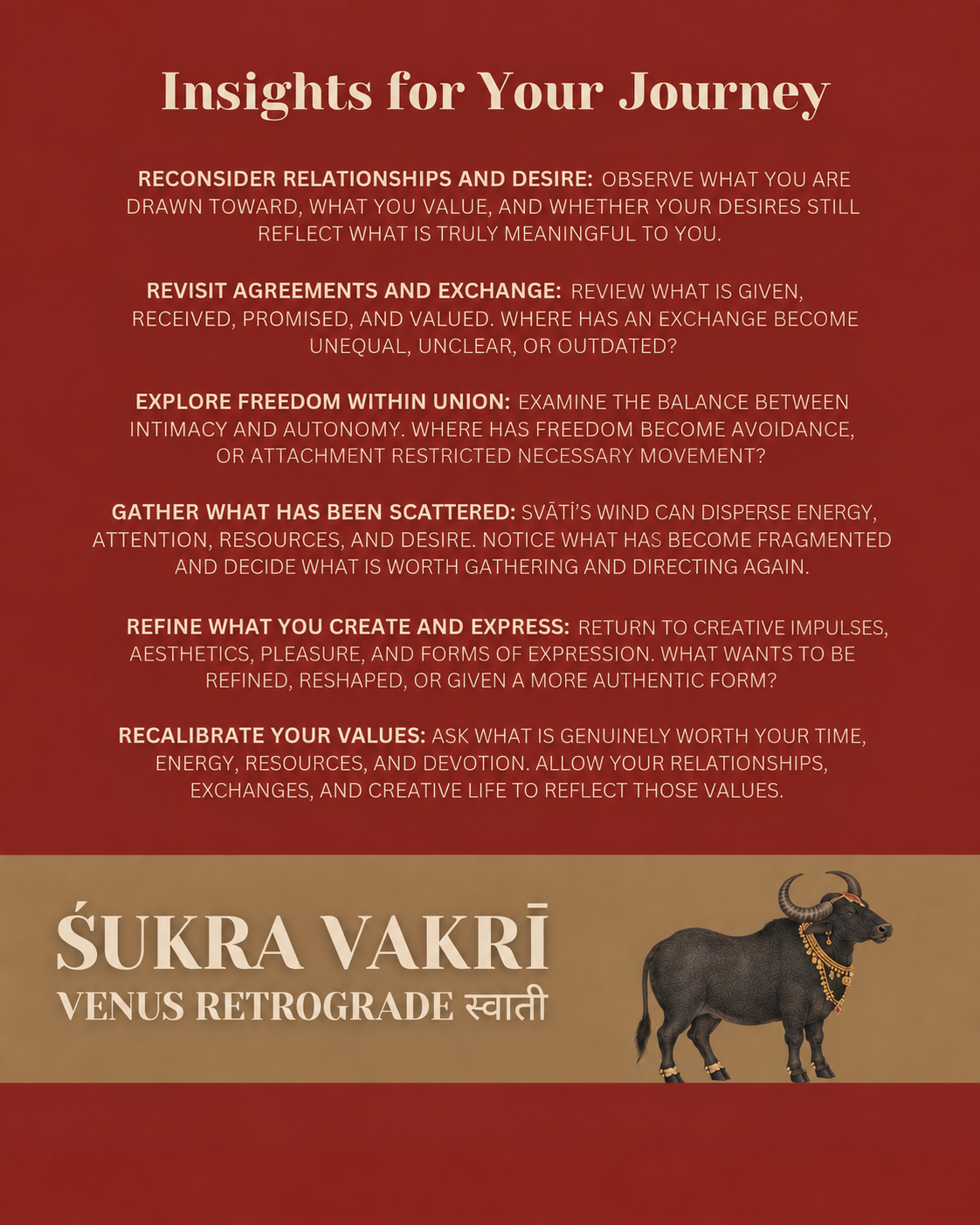
The retrograde may illuminate the relationship between intimacy and autonomy. Where has freedom become avoidance? Where has attachment restricted necessary movement? What have we exchanged in order to preserve relationship, pleasure, security, or desire? Can union exist without the loss of sovereignty?

This is a time of recalibration. Evaluate past behavior and revisit agreements, the handshake of Tulā: what was promised, what was exchanged, and whether it still holds true.

Śukra is the enjoyer, gaining knowledge through experience, the senses, and complete absorption in the object of desire. At his highest expression, this capacity for absorption becomes the means through which separation dissolves. Śukra becomes a maker of Samādhi.

Retrograde motion turns that faculty of discernment back upon desire itself. Old relationships, attractions, creative impulses, agreements, or patterns of relating may reappear, not necessarily to be restored, but to reveal what has and has not transformed.

On October 24, Venus retrogrades back into Citrā, where the process moves from Svātī's questions of freedom and exchange toward reconsidering what we are fashioning into form, refining, and breathing life into. Venus stations direct in Citrā on November 13/14 before eventually returning to Svātī.

The Descent and Return

Venus is last visible as the evening star on October 12. On October 24, Śukra reaches inferior conjunction, passing between the Earth and the Sun. This is the threshold of the cycle, the symbolic death, where what has been held in the light is surrendered to darkness.

Here Śukra meets Sūrya in Tulā, where the Sun is nīca. Untempered, the radiance of the Self can consume, overextend, and disperse vitality. The Mahāvidyā of this placement is Mātaṅgī, who embodies knowledge and creativity, the divine powers of speech, music, and creative expression. She invites us to refine our words, listen beneath habitual noise, and recognize the Divine intelligence moving through every form of expression. As Ucchiṣṭa Mātaṅgī, she receives offerings others consider impure, a reminder that sacredness is not confined to what is ritually clean.

On October 29, Venus rises again before dawn as the morning star. What returns from darkness returns clarified.

Pay close attention if you have planets, the Moon, or your Lagna in Tulā, particularly in Svātī or Citrā, or if you are running a period of Śukra, Rāhu, or Maṅgala.

Svātī reminds us that movement does not always signify departure. Sometimes space allows something to breathe, change form, and reveal whether it can remain connected without being bound.

Not everything that returns is meant to remain. Not everything that changes direction has lost its way.

All My Relations | ॐ शुं शुक्राय नमः


Visibility dates for New Delhi, India.

  • Last visible as an evening star: October 12, 2026

  • Inferior conjunction: October 24, 2026

  • First visible as a morning star: October 29, 2026