Mercury Retrogrades in Punarvasu: The Star of Renewal

MERCURY RETROGRADE

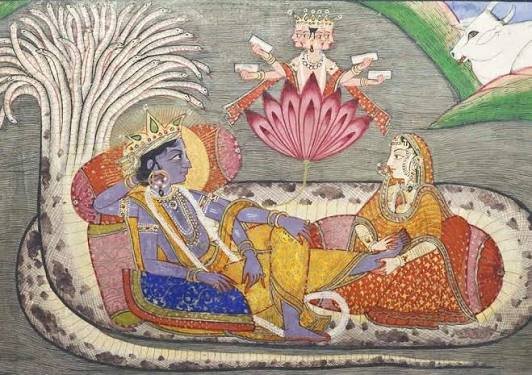
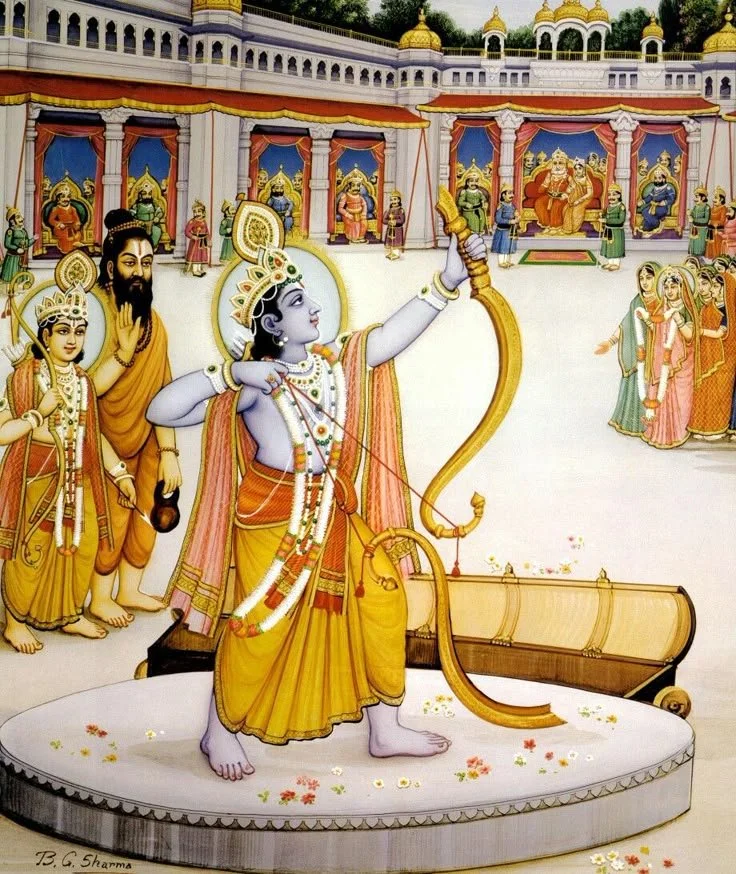
Artwork: B.G. Sharma

06.29–07.23

Budha Graha (Mercury) stations retrograde (Vakri) in the Vedic lunar mansion of Punarvasu पुनर्वसु (sidereal Cancer), the Star of Renewal, initiating a passage of reflection, reimagination, and restoration. 

In Jyotiṣa, when a graha stations retrograde, its apparent backward motion signals a turning inward, an intensification of its essential nature.

Fourth among the Navagrahas, Budha is the graha of intellect, viveka (discernment), speech, skill, storytelling, research, negotiation, and balance. Born of Chandra, he asks a single question: Who am I? Through questioning, discernment, and interpretation, Budha seeks to distinguish what is essential from what is incidental, neutralizing what no longer serves and restoring equilibrium.

Symbolized by a quiver of arrows, Punarvasu carries the śakti of Vasutva Prāpaṇa, the power to regain, restore, and recover what has been lost. Governed by Jupiter and presided over by Aditi, the boundless mother of the Ādityas, it represents the replenishment of life force after expenditure, the rebuilding that follows disruption, and the return of light after a storm.

Punarvasu is often associated with abundance, though not merely in a material sense. It is a reservoir of energy, vitality, wisdom, merit, and support. In this sense, Punarvasu functions much like a spiritual storehouse. When our reserves are strong, we possess the resources required to weather adversity, sustain effort, and respond wisely to life's challenges. When depleted, even small obstacles can feel overwhelming.
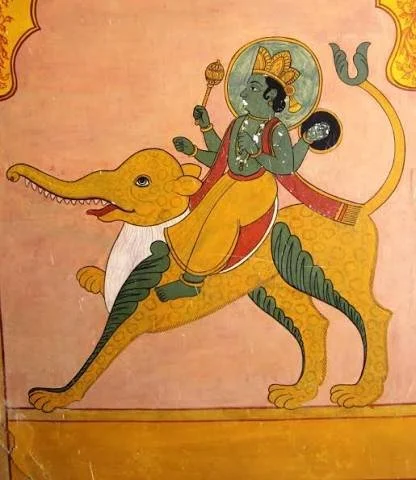
The exile and eventual return of Lord Rāma, who was born under Punarvasu Nakṣatra, beautifully reflects this principle. Though separated from his kingdom, Rāma never lost his dharma by staying upright in character. Through perseverance, virtue, and right action, what had been lost was ultimately restored. Punarvasu reminds us that setbacks are not always endings. Often they are preparations for renewal.

As the significator of the mind's interpretive faculty, Mercury retrograde invites us to pause, reconsider, revise, and realign. What has been overlooked? What requires correction? What deserves a second look?

Mercury's retrograde through this nakṣatra invites a reconsideration of how we expend and replenish our energy. Where is your attention being invested? What strengthens your reserves of vitality, clarity, faith, and purpose? What continually drains them?

Just as Viṣṇu descends age after age to restore balance, this retrograde calls us inward through svādhyāya, returning to the center of our own wheel. Some karmas are seeking completion. Some stories are ready to be rewritten. Some patterns have reached their natural conclusion.

Move slowly. Reconsider before reacting. Restore before expanding. The light is returning, and Punarvasu reminds us that renewal is not found by pushing forward. It is found by returning to what is essential.

ॐ ब्रां ब्रीं ब्रौं सः बुधाय नमः

June 29th: Mercury Retrogrades in Punarvasu (Cancer)

July 7th: Mercury retro re-enters Gemini

July 23/24: Mercury Stations direct in Punarvasu (Gemini)

August 5th: Mercury re-enters Cancer
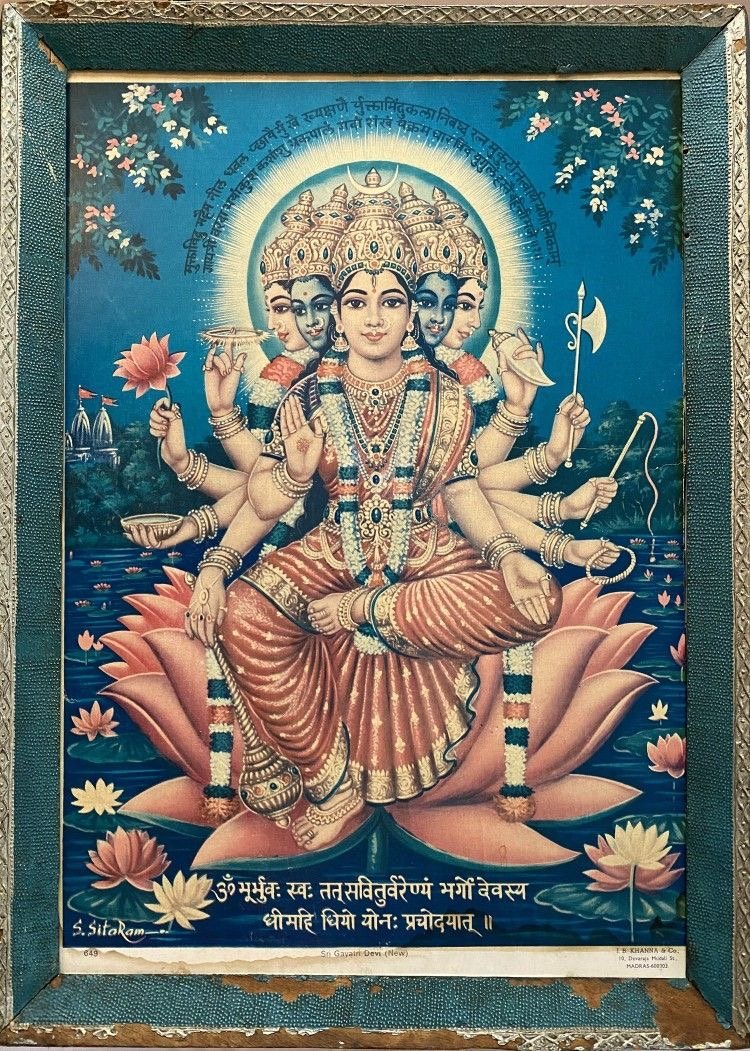
Gāyatrī Jayantī

GĀYATRĪ JAYANTĪ

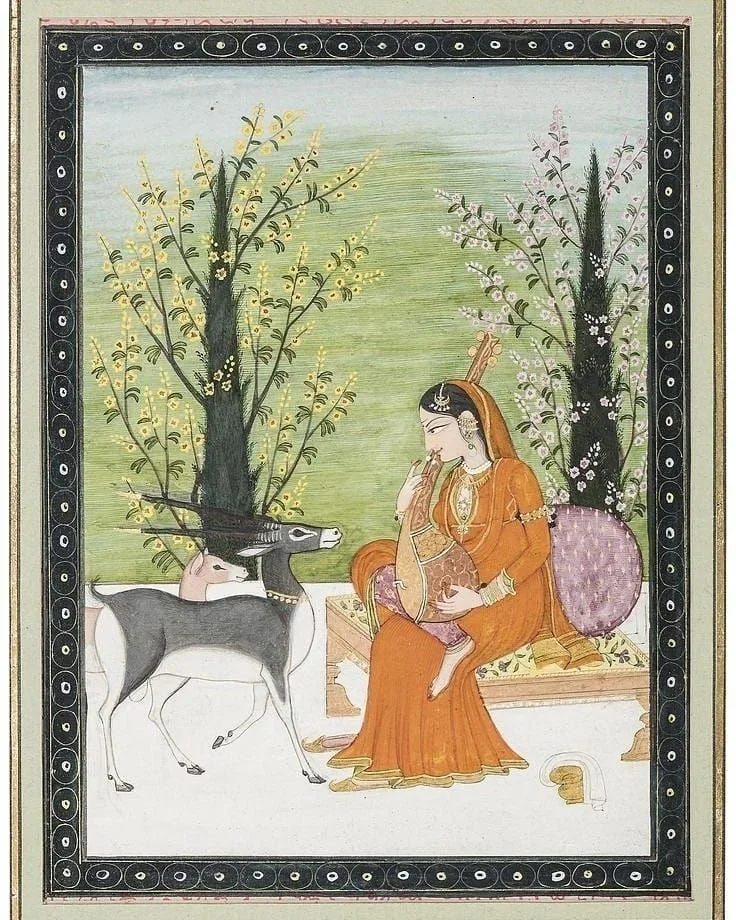
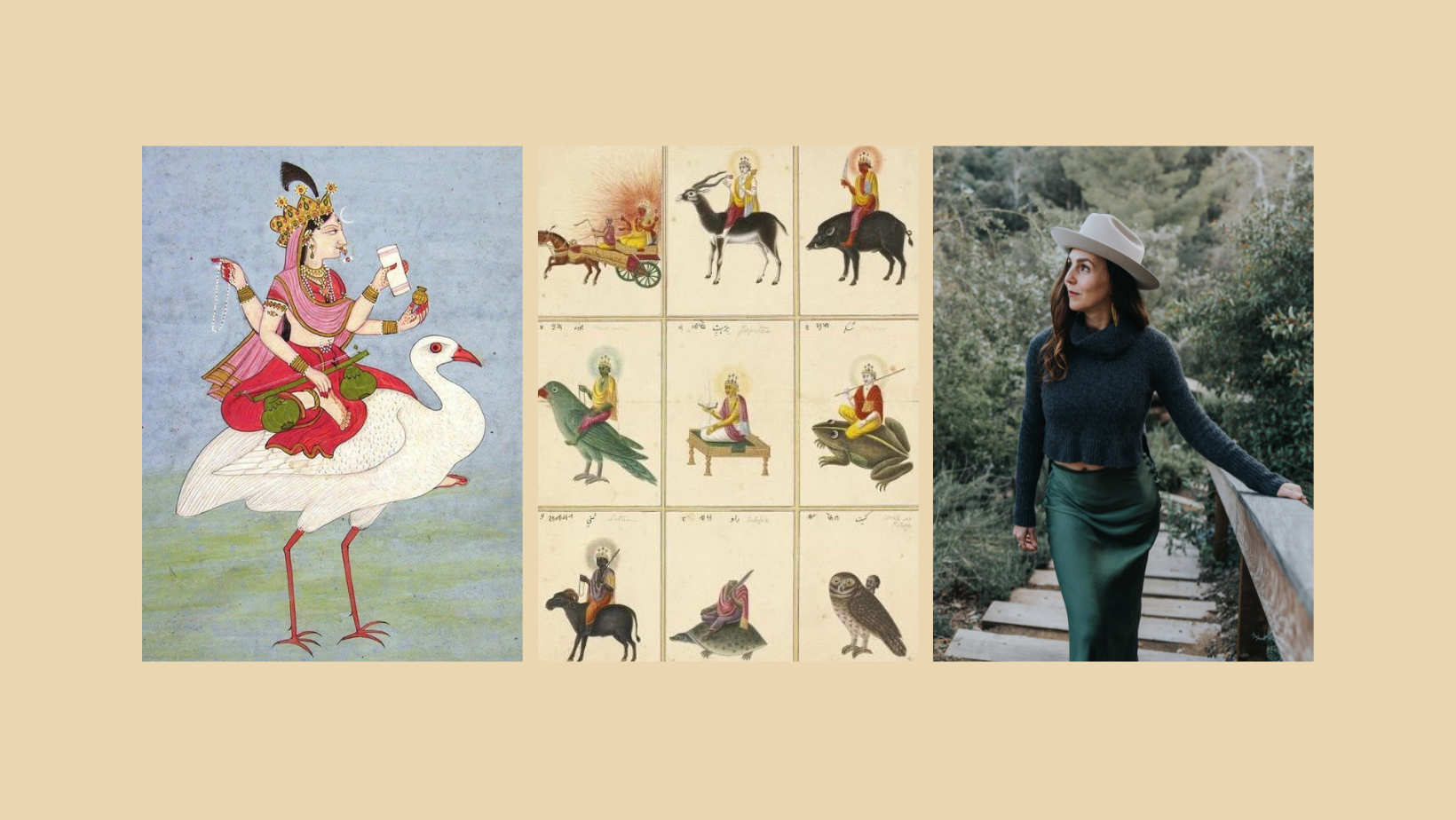
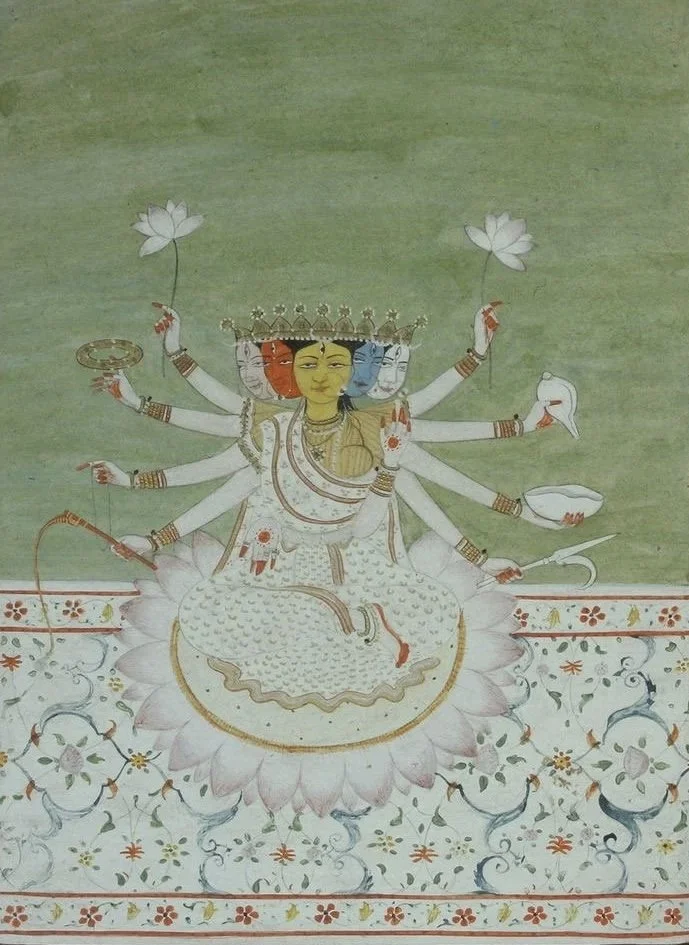
Artwork: Devī Gāyatrī, Kangra School, c. 1880.

June 24/25

Gāyatrī Jayantī is the auspicious observance honoring Gāyatrī Devī, the Mother of the Vedas. Falling on Śukla Ekādaśī, the eleventh lunar day of the waxing Moon, during the month of Jyestha, it commemorates the divine source of the Gāyatrī Mantra, the most revered mantra of the Vedic tradition.

The name Gāyatrī belongs first to a Vedic chandas, a sacred meter of twenty-four syllables arranged across three padas of eight. Among all meters through which the Rishis received and transmitted sacred knowledge, Gāyatrī chandas is held supreme. So revered that Krishna himself declares in the Bhagavad Gītā, among all meters, I am the Gāyatrī. It was within this meter that the celebrated Sāvitrī mantra was revealed to Rishi Viśvāmitra in the Rig Veda, not as study, but as grace earned through tapas so fierce it transformed a king into a brahmarṣi. The mantra was the mark of his crossing.

In the Purāṇic accounts, Gāyatrī emerges as a direct manifestation of Śakti, identified across traditions with Sarasvatī, Vāk, and Savitrī, the power of speech, the river of knowledge, the force of the solar radiance itself. One account tells that when Brahmā could not commence the great sacrifice without his consort Savitrī, Gāyatrī arose through divine will to fulfill that sacred role. The rite could not begin without her,  because creation cannot proceed without the intelligence that makes it coherent.

As Brahmā's consort, she is the śakti by which knowledge becomes manifest. As Vedamātā, she precedes what she mothers. As the twenty-four-syllabled mantra, her body is the map of the twenty-four tattvas, the principles through which the unmanifest takes form. The three vyāhṛtis that open her invocation, Bhūḥ, Bhuvaḥ, and Svaḥ, name the three worlds through which her light is revealed.

For millennia, practitioners have turned to the Gāyatrī Mantra as a means of purification, illumination of the buddhi (intellect), and alignment with ṛta, or Natural Law.

Nirjalā Ekādaśī

This year, Gāyatrī Jayantī coincides with Nirjalā Ekādaśī, one of the most revered Ekādaśīs in the Vedic calendar. Known as the "waterless" fast, it is observed through complete abstention from both food and water, and is said to confer the accumulated merit of all twenty-four Ekādaśīs of the year within a single day of sincere practice.

The origin of this observance is found in the Mahābhārata. Bhīma, Vāyu-putra, renowned among the Pāṇḍavas for both his immense physical power and his appetite, found himself unable to sustain the monthly Ekādaśī fasts kept by his brothers. He approached the sage Vyāsa, who offered him a single instruction: observe Jyeṣṭha Śukla Ekādaśī without food or water, completely. Through that one fierce act of restraint, Bhīma received the fruit of all Ekādaśīs.

In the Vedic understanding, āpaḥ, the waters, are among the most primordial forces, associated with purification, prāṇic nourishment, and the subtle flow of consciousness. To abstain even from water is to withdraw from sustenance at its most elemental level, a form of pratyāhāra that extends beyond the senses into the prāṇic body itself. Nirjalā is not merely physical austerity, it is a radical turning of awareness away from all that maintains and distracts, toward what requires nothing to exist.

We meditate upon the divine radiance of Savitr. May that light illumine our own creative intelligence and cognition.

ॐ भूर्भुवः स्वः ।

तत्सवितुर्वरेण्यं ।

भर्गो देवस्य धीमहि ।

धियो यो नः प्रचोदयात् ॥

Dhūmāvatī Jayantī

DHŪMĀVATĪ JAYANTĪ

June 21st

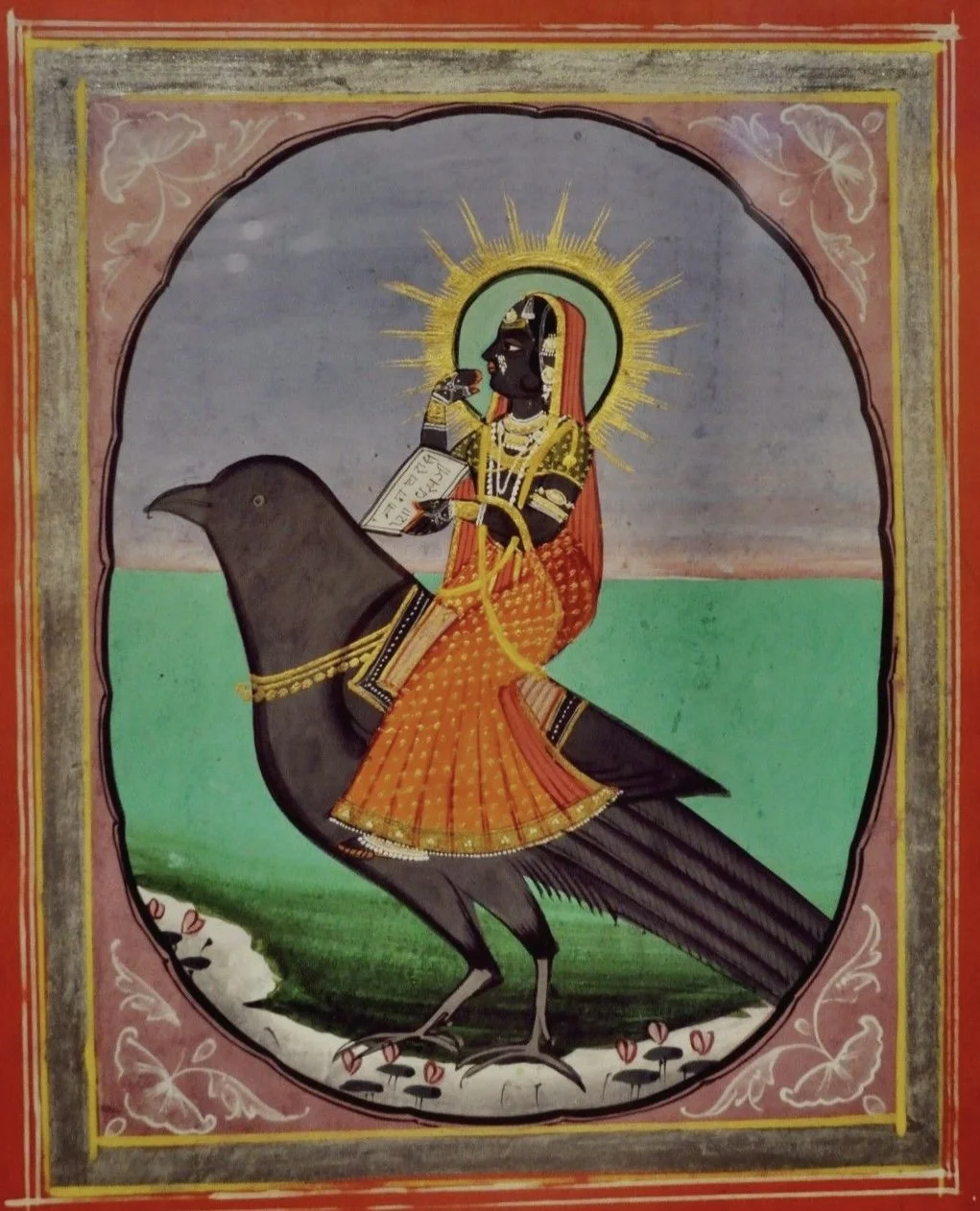
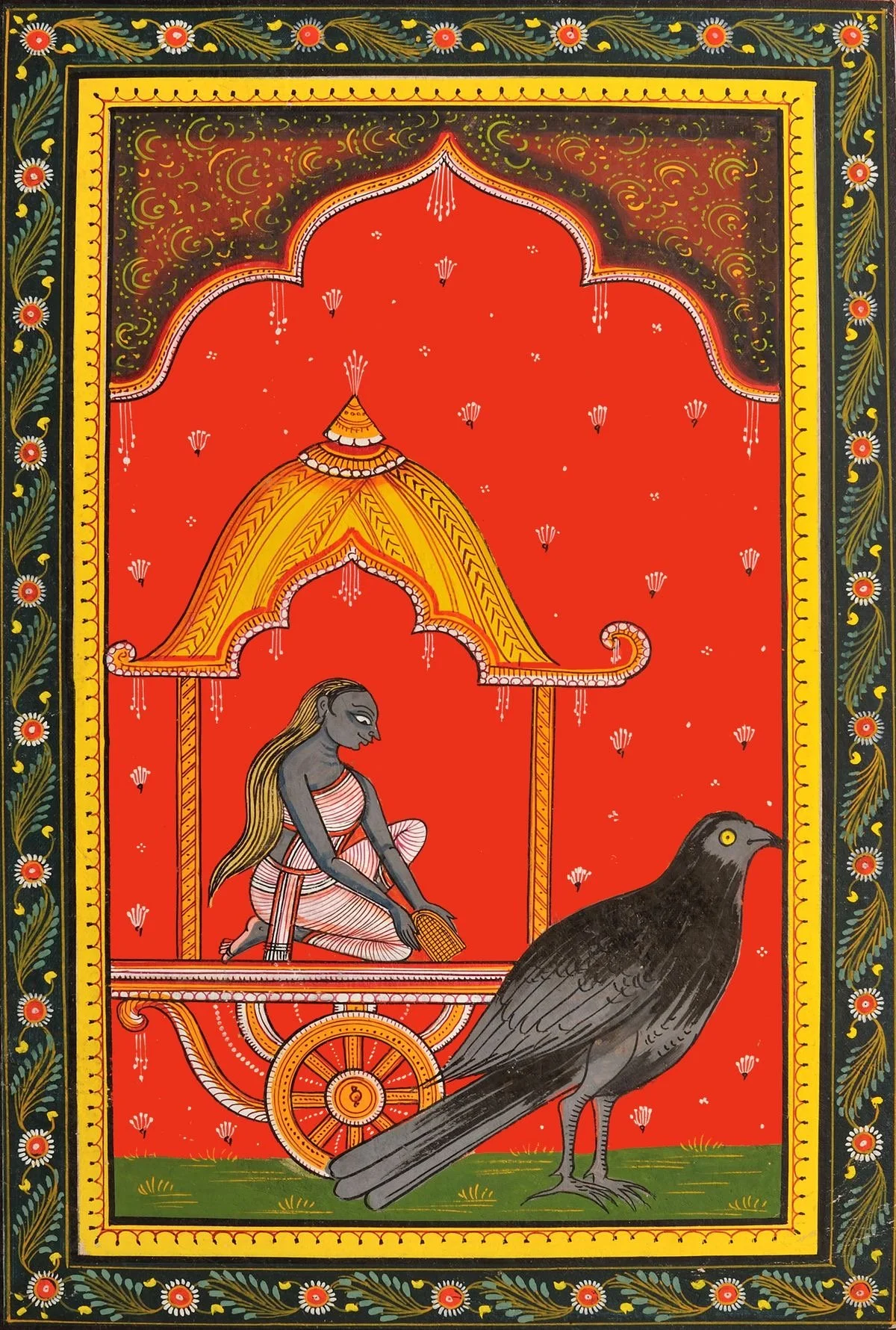
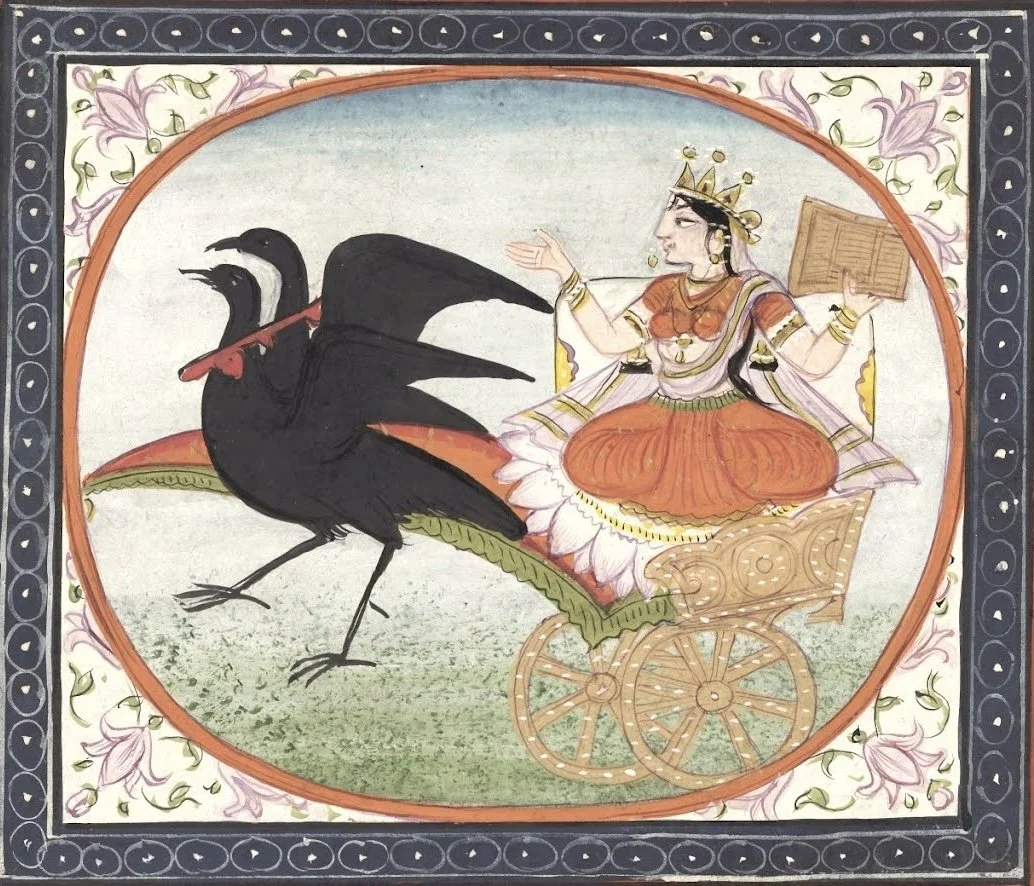
Dhūmāvatī Jayantī falls on Jyeṣṭha Śukla Aṣṭamī (the eighth day of the waxing Moon), honoring the smoky and enigmatic seventh of the Daśa Mahāvidyās, often depicted with a crow and crow-bannered chariot, who embodies the wisdom of dissolution, renunciation, and uncompromising truth.

Her name means “The Smoky One”—that which remains after the fire has consumed its fuel.

Unlike the radiant and ornamented forms of Śakti, Dhūmāvatī appears as the elder crone: unadorned, austere, beyond worldly seduction, revealing the hidden teachings within emptiness, disappointment, endings, and the stark grace of what has been stripped away.

She is traditionally associated with Ketu, the mokṣa-karaka who severs attachment, dissolves false identity, and compels spiritual maturation through detachment and discernment.

Like Ketu, she reveals the hidden imprint beneath identity and appearance, uncovering what remains when all that is transient has fallen away.

Dhūmāvatī governs the liminal spaces where worldly certainty falls silent—grief, isolation, karmic exhaustion, and the mysterious intervals in which life no longer reflects familiar forms.

Yet she is not merely a goddess of loss. Beyond dissolution, she points toward a deeper freedom. Within the apparent void, or Śūnya, lies a profound freedom, one not dependent upon circumstance, identity, or possession.

In the language of Tantra, Dhūmāvatī is not only the smoke of dissolution but the wisdom revealed through it. She invites us to relinquish what has completed its purpose, to endure the uncertainty of transition, and to discover the quiet presence that remains when identity, ambition, and attachment no longer define us.

Dhūmāvatī teaches that what appears barren may be profoundly fertile; that within the smoke of dissolution, truth remains; and that liberation often begins where illusion ends.

धूं धूमावत्यै नमः

Dhūṁ Dhūmāvatyai Namaḥ

New Moon in Mṛgaśīrā: The Searching Star

NEW MOON IN MRGAŚĪRĀ 

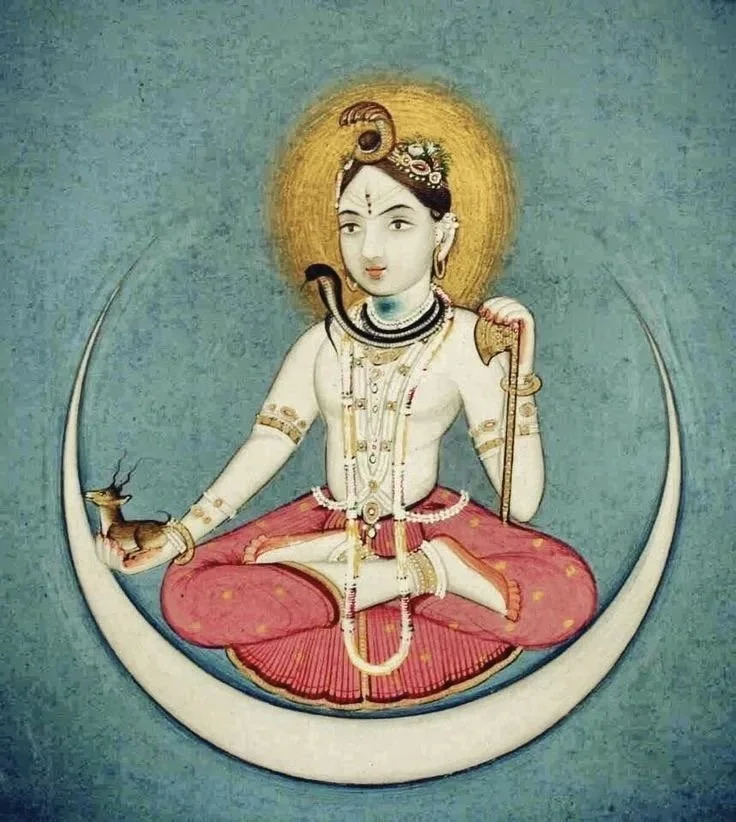
Shiva seated on the crescent Moon holding attributes of axe and antelope", Jaipur, India, c.1880, Opaque watercolor with gold on card.

JUNE 14/15

The June New Moon aligns both the Sun and Moon in the Vedic lunar mansion of Mṛgaśīrā मृगशिरा, The Searching Star.

Mṛgaśīrā initiates the Martian current of the nakṣatras (the first of three constellations governed by Maṅgala) and is represented in the celestial firmament by the brilliant star Bellatrix alongside three fainter stars in the constellation of Orion. The ancient Ṛṣis envisioned these stars as the head of a deer, giving rise to the name Mṛgaśīrā, “deer’s head.”

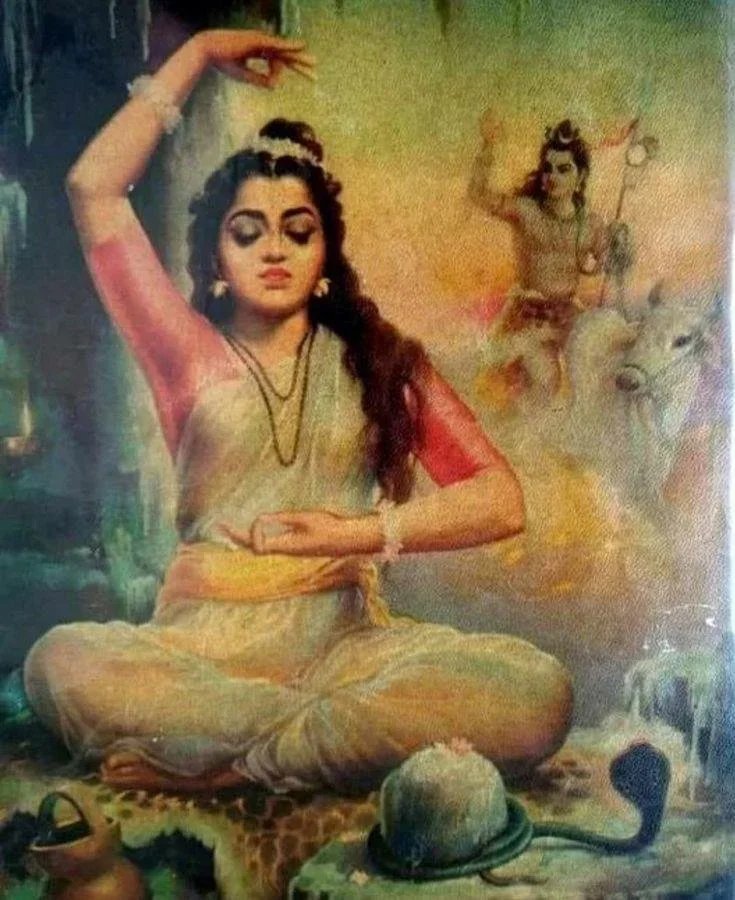
Mṛgaśīrā is said to be the birth star of Pārvatī, whose unwavering tapas culminated in union with Lord Śiva. Seated before him, she receives the most secret teachings of Yoga and the hidden wisdom (guhya vidyā), from which countless sacred dialogues and lineages take their source.

Ruled by the devatā Soma, the divine nectar of the Vedas, this nakṣatra is inherently magnetic and receptive, drawing life toward itself and awakening a thirst for deeper understanding. Soma is both the sacred elixir and the intelligence of nourishment itself: the subtle essence that replenishes vitality, refines perception, and sustains spiritual awakening. It is the rasa of existence, the sweetness that restores and enlivens consciousness. In its highest expression, Soma is pūrṇa—complete in itself, needing nothing, and therefore capable of nourishing everything around it.

Mṛgaśīrā is considered the seat of Chandra, the Moon, governing the mind (manas), emotion, receptivity, memory, and our capacity to reflect life. As The Searching Star, it invites us to explore the landscape of the mind itself, revealing that what we seek outwardly is often a reflection of what longs to be nourished within.

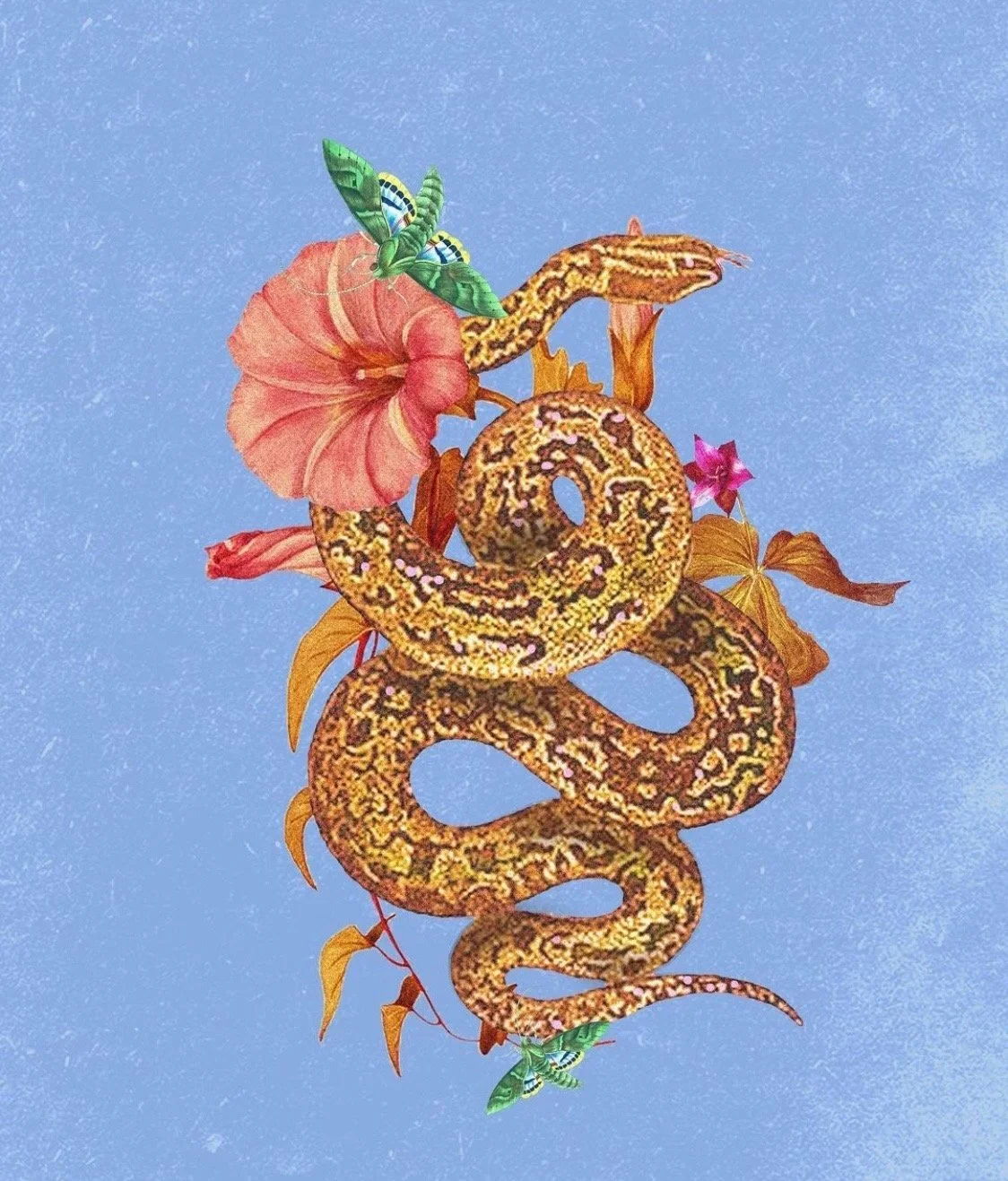
Mṛgaśīrā is also symbolized by the female serpent (sarpiṇī), representing instinctive wisdom, renewal through shedding, and the coiled potential of life awaiting its proper moment to emerge. It reminds us that creation is not born from urgency but from conservation, gestation, and the quiet gathering of energy before expression.

Known as The Searching Star, Mṛgaśīrā enlivens themes of desire, nourishment, and exploration. Like a deer following the faint scent of water, it compels us to seek what will truly satisfy. Yet its search is not born merely of lack, but of an innate recognition that there is something deeper to be found. The highest expression of Mṛgaśīrā is not endless seeking but discovering the nourishment that brings the search itself to rest.

Its Prīṇana Śakti, the power “to give fulfillment and joy,” reminds us that authentic fulfillment arises through right nourishment: what we consume physically, mentally, emotionally, and spiritually. The quality of what we take in becomes the quality of our consciousness and ultimately shapes the direction of our search. When the mind is properly nourished, seeking transforms into contentment, desire into devotion, and longing into quiet abiding.

The wisdom of Mṛgaśīrā is that desire may either bind or liberate. When scattered, it leads outward into endless seeking; when refined into single-pointed devotion, it finds fulfillment.

New Moon also marks the close of Adhika Puruṣottama Māsa. The month of inward turning completes, and we step forward renewed into the material current of life.

For a deep dive on the New Moon, the closing of Adhika Māsa, and Jupiter’s transit into Cancer, join us this Saturday, June 13th for our monthly New Moon Vidyā & Chai Gathering.

RSVP via email or Join the Vidyā & Chai WhatsApp Community