
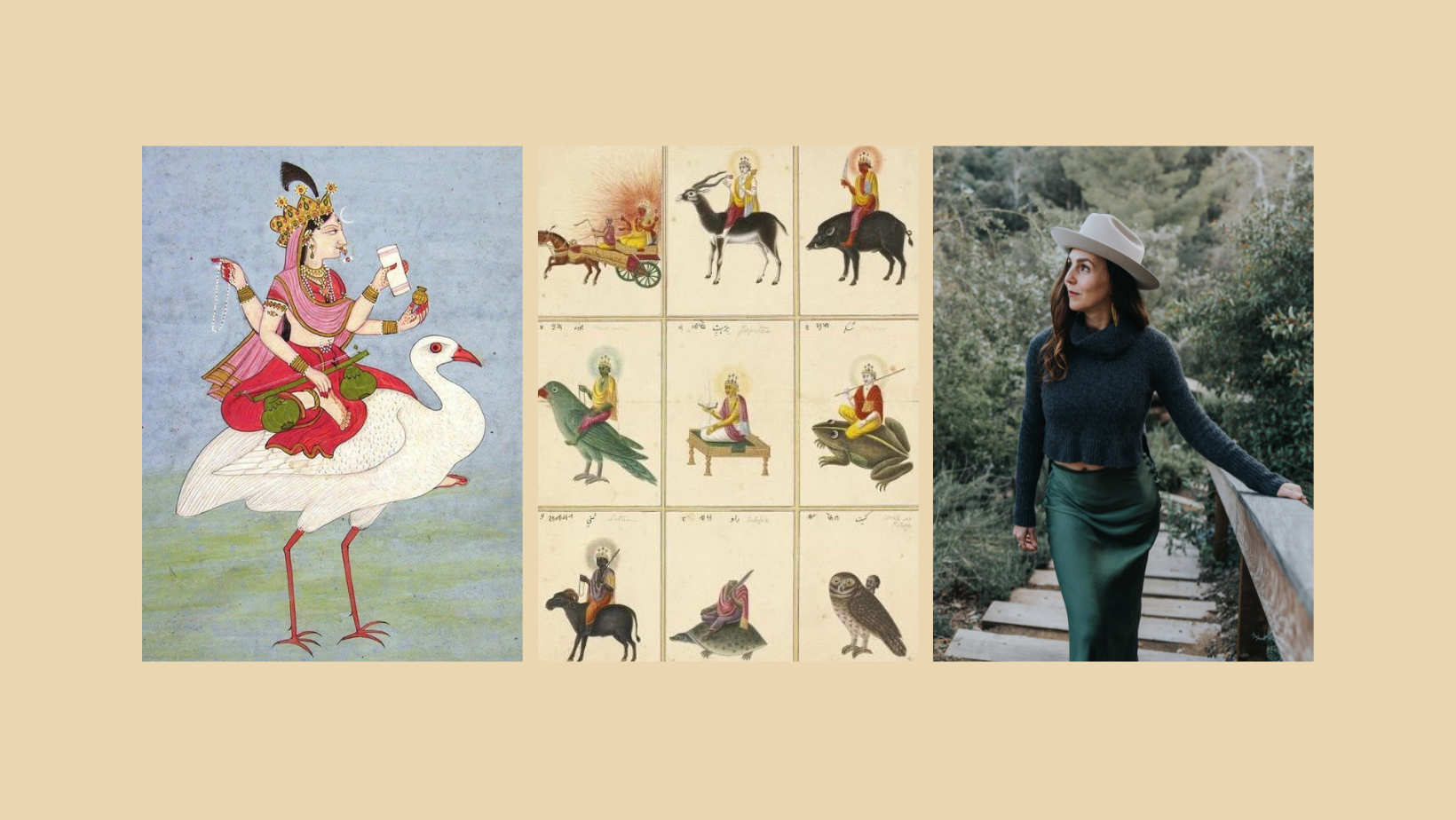
GĀYATRĪ JAYANTĪ
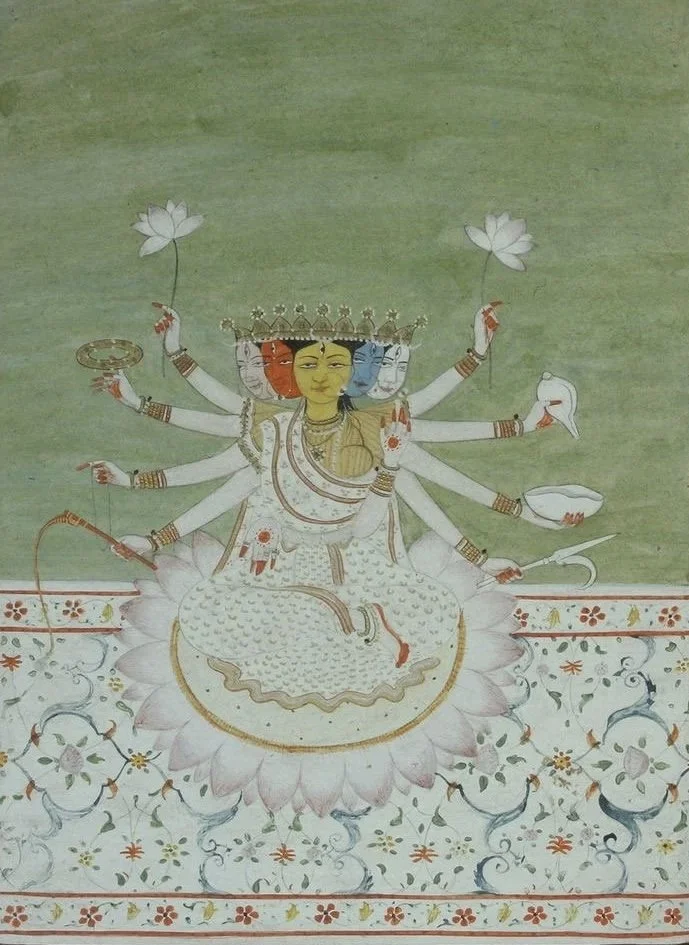
Artwork: Devī Gāyatrī, Kangra School, c. 1880.
June 24/25
Gāyatrī Jayantī is the auspicious observance honoring Gāyatrī Devī, the Mother of the Vedas. Falling on Śukla Ekādaśī, the eleventh lunar day of the waxing Moon, during the month of Jyestha, it commemorates the divine source of the Gāyatrī Mantra, the most revered mantra of the Vedic tradition.
The name Gāyatrī belongs first to a Vedic chandas, a sacred meter of twenty-four syllables arranged across three padas of eight. Among all meters through which the Rishis received and transmitted sacred knowledge, Gāyatrī chandas is held supreme. So revered that Krishna himself declares in the Bhagavad Gītā, among all meters, I am the Gāyatrī. It was within this meter that the celebrated Sāvitrī mantra was revealed to Rishi Viśvāmitra in the Rig Veda, not as study, but as grace earned through tapas so fierce it transformed a king into a brahmarṣi. The mantra was the mark of his crossing.
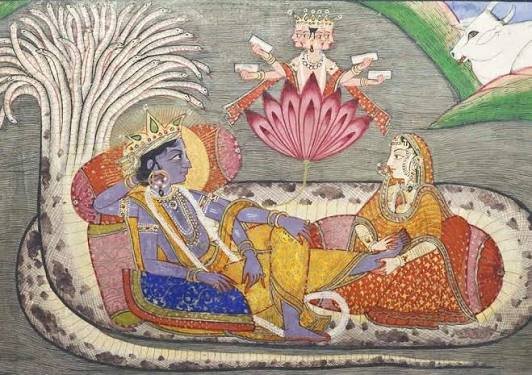
In the Purāṇic accounts, Gāyatrī emerges as a direct manifestation of Śakti, identified across traditions with Sarasvatī, Vāk, and Savitrī, the power of speech, the river of knowledge, the force of the solar radiance itself. One account tells that when Brahmā could not commence the great sacrifice without his consort Savitrī, Gāyatrī arose through divine will to fulfill that sacred role. The rite could not begin without her, because creation cannot proceed without the intelligence that makes it coherent.
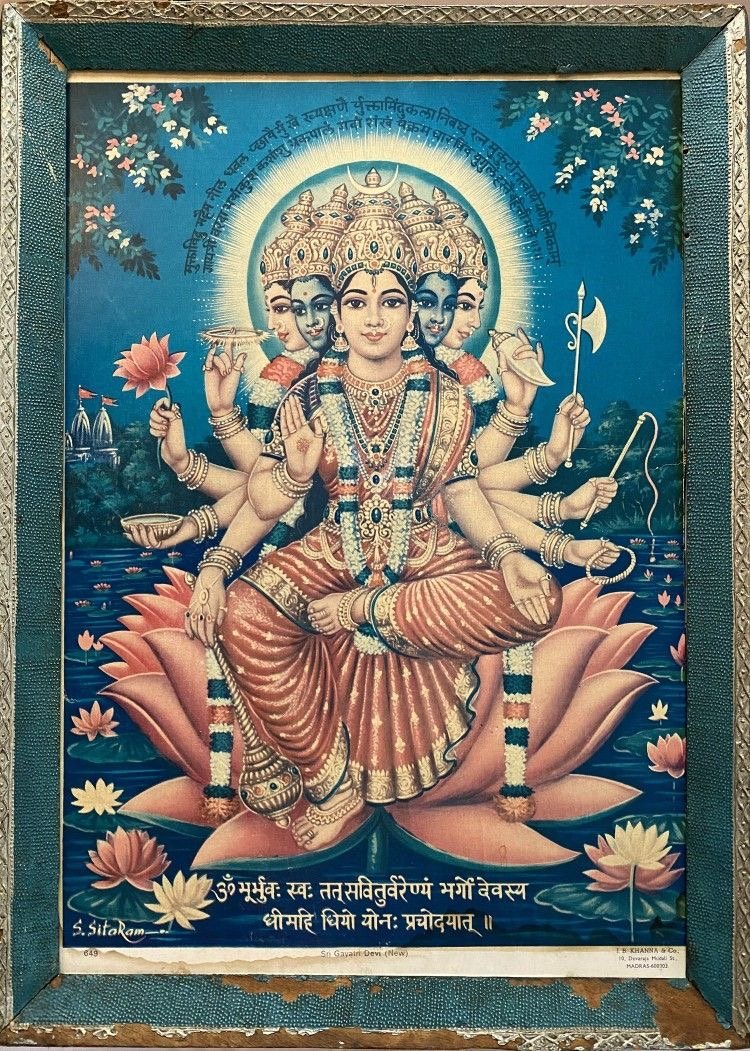
As Brahmā's consort, she is the śakti by which knowledge becomes manifest. As Vedamātā, she precedes what she mothers. As the twenty-four-syllabled mantra, her body is the map of the twenty-four tattvas, the principles through which the unmanifest takes form. The three vyāhṛtis that open her invocation, Bhūḥ, Bhuvaḥ, and Svaḥ, name the three worlds through which her light is revealed.
For millennia, practitioners have turned to the Gāyatrī Mantra as a means of purification, illumination of the buddhi (intellect), and alignment with ṛta, or Natural Law.
Nirjalā Ekādaśī
This year, Gāyatrī Jayantī coincides with Nirjalā Ekādaśī, one of the most revered Ekādaśīs in the Vedic calendar. Known as the "waterless" fast, it is observed through complete abstention from both food and water, and is said to confer the accumulated merit of all twenty-four Ekādaśīs of the year within a single day of sincere practice.
The origin of this observance is found in the Mahābhārata. Bhīma, Vāyu-putra, renowned among the Pāṇḍavas for both his immense physical power and his appetite, found himself unable to sustain the monthly Ekādaśī fasts kept by his brothers. He approached the sage Vyāsa, who offered him a single instruction: observe Jyeṣṭha Śukla Ekādaśī without food or water, completely. Through that one fierce act of restraint, Bhīma received the fruit of all Ekādaśīs.
In the Vedic understanding, āpaḥ, the waters, are among the most primordial forces, associated with purification, prāṇic nourishment, and the subtle flow of consciousness. To abstain even from water is to withdraw from sustenance at its most elemental level, a form of pratyāhāra that extends beyond the senses into the prāṇic body itself. Nirjalā is not merely physical austerity, it is a radical turning of awareness away from all that maintains and distracts, toward what requires nothing to exist.
We meditate upon the divine radiance of Savitr. May that light illumine our own creative intelligence and cognition.
ॐ भूर्भुवः स्वः ।
तत्सवितुर्वरेण्यं ।
भर्गो देवस्य धीमहि ।
धियो यो नः प्रचोदयात् ॥