Mahāśivarātri: The Great Night of Lord Śiva

MAHĀŚIVARĀTRI

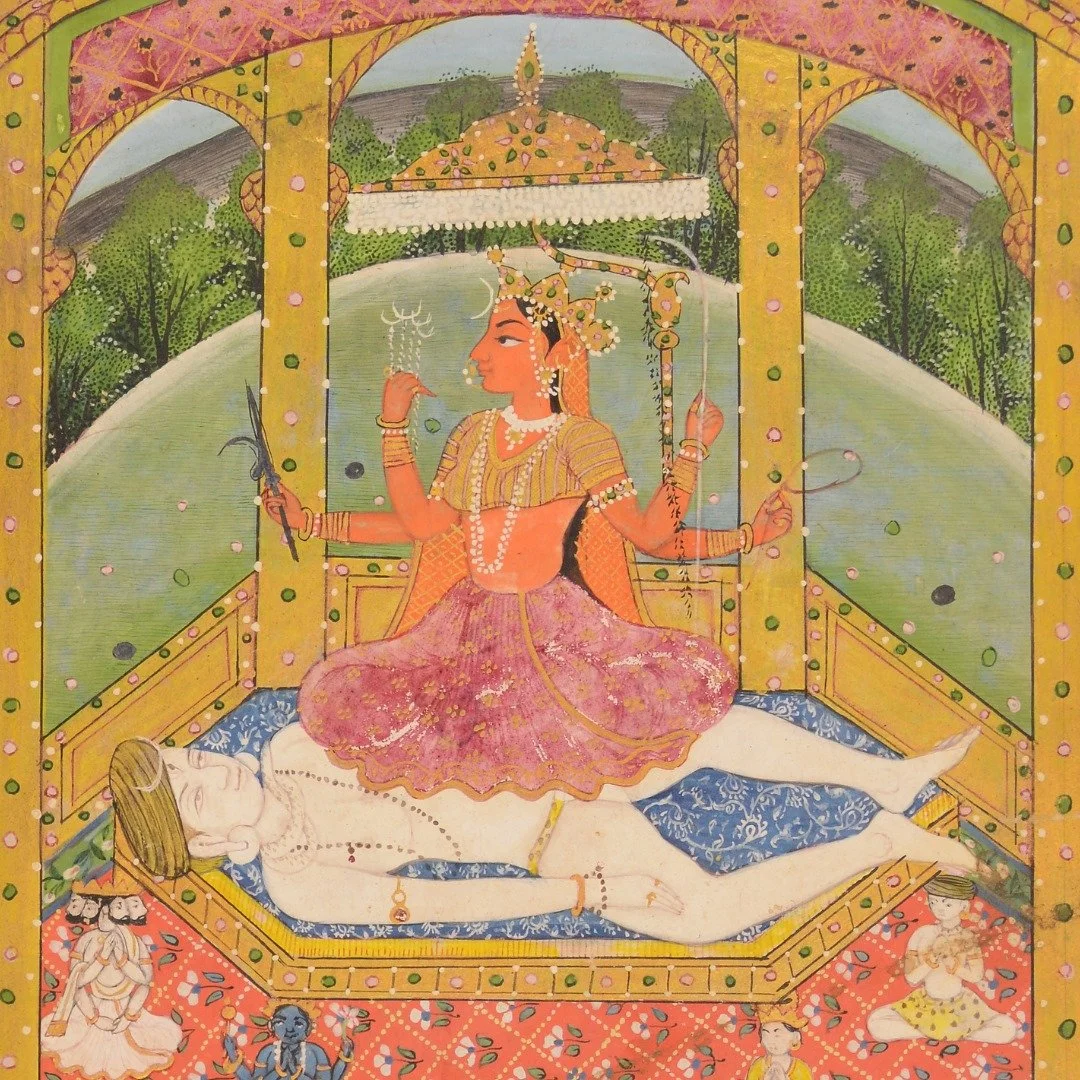
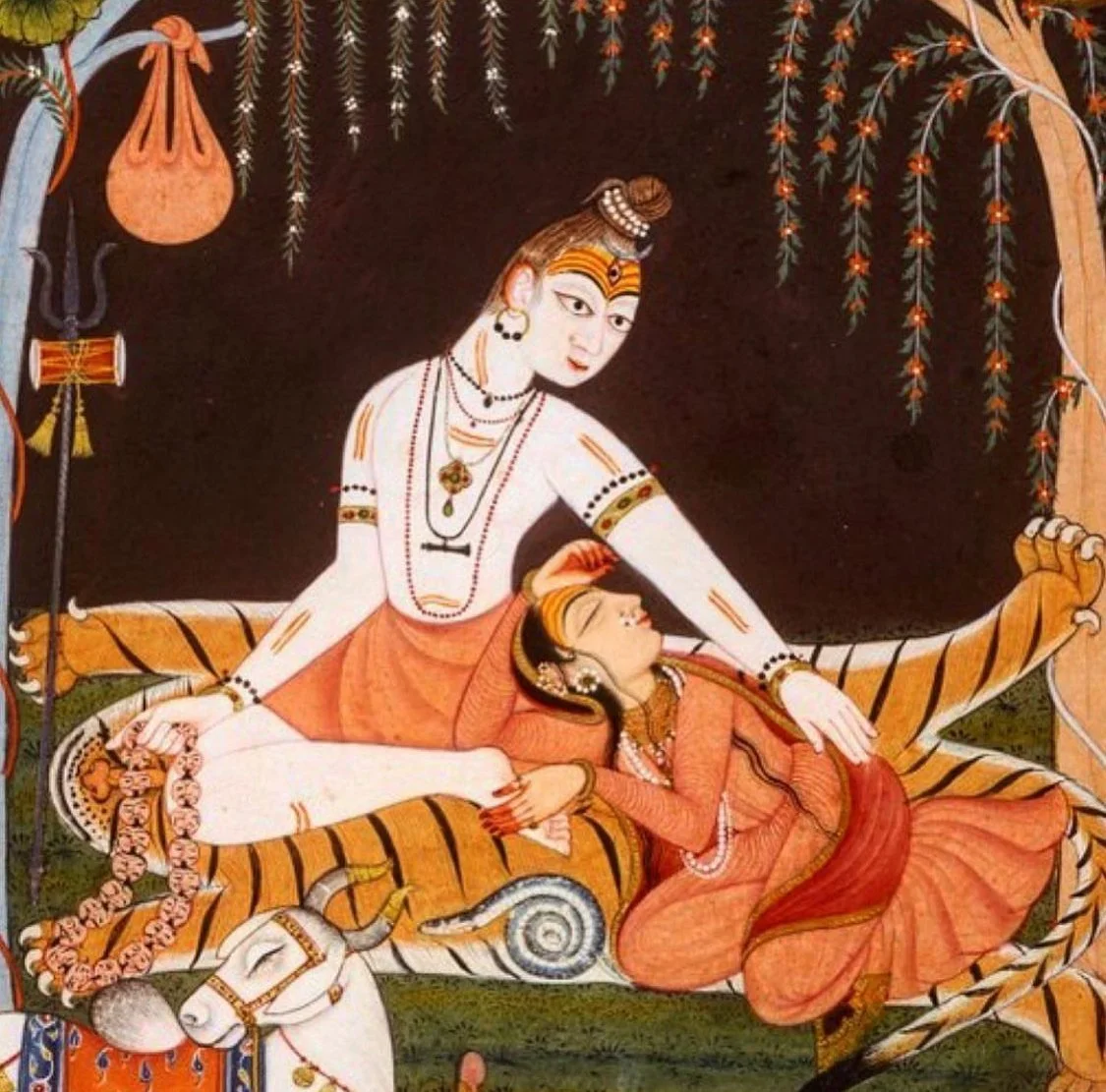
Painting from Mankot, Himachal Pradesh, c. 1700–1725. Held at the Philadelphia Museum of Art.

February 15th

Mahāśivarātri, observed on the Caturdaśī tithi (14th lunar day) of the Kṛṣṇa Pakṣa (dark half) in the Māgha or Phālguna month, is one of the most spiritually activated days in the Vedic calendar. This night is celebrated as the great night of Lord Śiva, where he performs his heavenly dance and relieves us from our karmic burdens.

It is said that any spiritual practices performed on this day, including mantra recitation (especially Śiva mantras), fasting, and deep meditation, are enhanced a thousandfold during this auspicious time. The late hours of the night, in particular, are said to be charged with intense spiritual potency. Whoever fasts on this day, Lord Śiva will relieve you of the poisons and karmic debts accumulated in this life and all previous incarnations.

Mahāśivarātri is a profound and sacred observance dedicated to Lord Śiva, the eternal consciousness that dissolves illusion and grants liberation. Śiva is revered as Ādi Yogi—the first yogin, the primordial teacher of yoga—who embodies both the origin of the path and its culmination in absolute freedom.

He is also honored as Ādi Vaidya—the first physician—source of Āyurveda and the healing sciences, revealed in sacred dialogue to Pārvatī, through whom this wisdom descended into the world. The timing of Mahāśivarātri is deeply significant, as the waning moon symbolizes the dissolution of the ego, inviting seekers to surrender to the infinite stillness of Śiva.

The timing of Mahāśivarātri is deeply significant, as the waning moon symbolizes the dissolution of the ego, inviting seekers to surrender to the infinite stillness of Śiva. 

One perspective views this night as the moment when Śiva entered deep meditation, embodying the stillness that dissolves all illusions. It is believed that on this night, the cosmic energies align in a way that makes it highly conducive for inner awakening and meditation.

Mahāśivarātri is also believed to be the sacred night when Lord Śiva and Goddess Pārvatī were united in divine marriage. This marks the cosmic union of Śiva—the embodiment of pure consciousness—and Śakti—the dynamic force of creation. Their union is symbolized in the divine dance of Śiva, an eternal cycle of creation, preservation, and destruction, where stillness and movement coexist in harmony. This dance represents the interplay of the infinite and the finite, the unchanging and the ever-changing, reflecting the unity of opposites in the universe.

Devotees observe Mahāśivarātri with jāgaraṇa (night-long vigil), abhiṣeka (ritual bathing of the Śiva Liṅgam), and chanting of the Pañcākṣarī mantra—"Oṁ Namaḥ Śivāya." Fasting, silence, and deep contemplation allow one to align with Śiva's transcendental essence, shedding layers of karma and moving closer to mokṣa (liberation).

This night is a gateway to the formless, where the dissolution of duality reveals the pure consciousness that pervades all. It is a night of transformation, where the aspirant, like the moon waning into darkness, merges into the luminous presence of Śiva—the Supreme Reality.
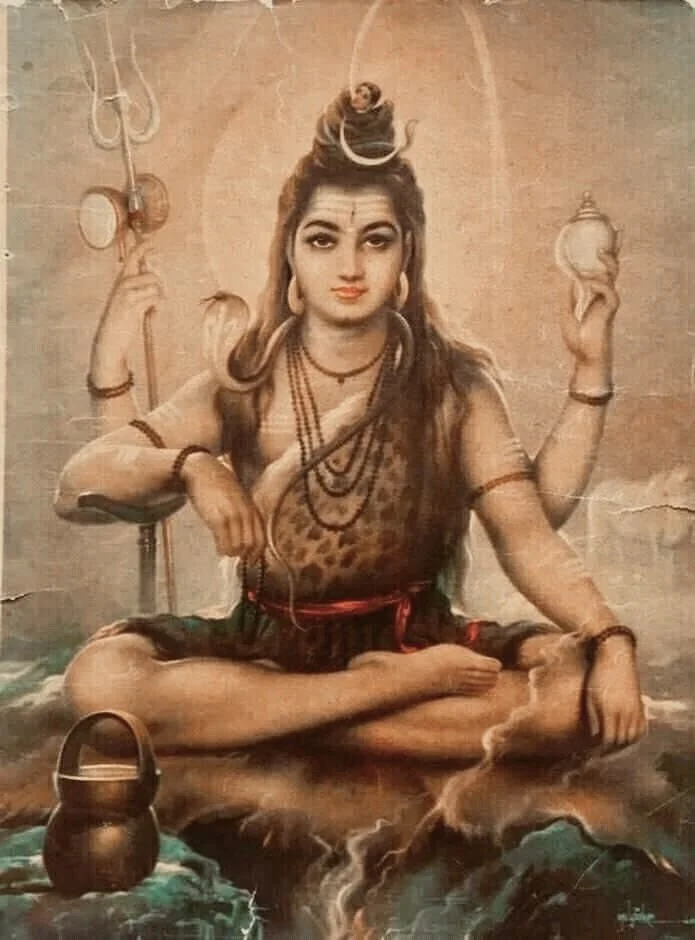
Artowrk: Pinterest

ॐ नमः शिवाय | Oṁ Namaḥ Śivāya 🔱

The Chaturdashi Tithi (the 14th lunar day required for Mahāśivarātri) begins on the afternoon of the 15th and lasts until the afternoon of the 16th:  Chaturdashi Tithi Begins: 17:05 PM IST on Feb 15, 2026. Chaturdashi Tithi Ends: 17:34 PM IST on Feb 16, 2026.

Main Midnight Puja (Nishita Kaal): 12:09 AM to 1:01 AM on Feb 16. * Fast-Breaking (Parana): 6:59 AM to 3:24 PM on Feb 16. 

Pulse of the Stars: Vidyā & Chai

Join us for our monthly New Moon gathering for a deep dive into Mahāśivarātri, the New Moon in Dhaniṣṭā (Aquarius) and preparation for upcoming eclipse season, mercury retrograde

RSVP: tulsibagnoli@gmail.com
Join the Vidyā & Chai WhatsApp Community

Full Moon in Āśleṣā: The Embracing Star

Full Moon in Āśleṣā

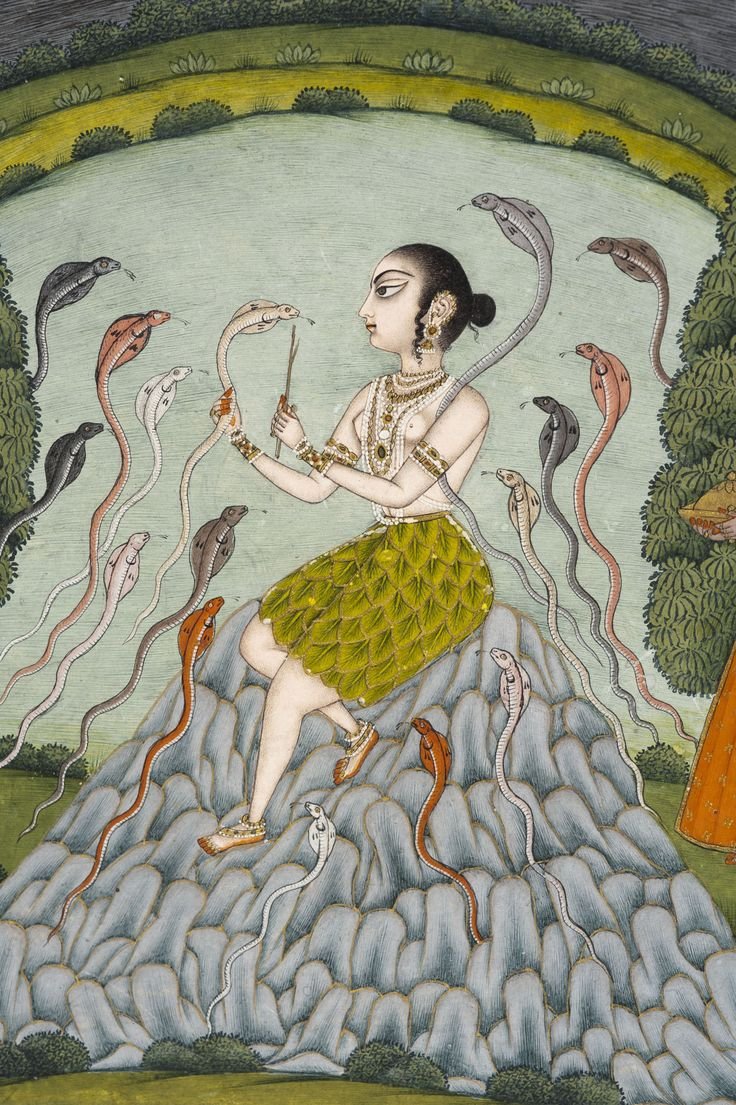
Artowrk: Rita Dixit Indian Miniatures Asavari Ragini: A Painted Melody Murshidabad, Bengal, India c. 1780

The Full Moon (Pūrṇimā) of Māgha (Jan/Feb) rises in the Vedic lunar mansion of Āśleṣā (आश्लेषा). Situated from 16°40′–30° of Kāraka Rāśi (Cancer), the embracing and entwining star appears as a coiling ring of stars in the constellation Hydra. It marks an alchemical threshold where viṣa (poison) becomes amṛta (nectar), drawing awareness toward the subtle work of inner transformation.

Āśleṣā, one of Ketu’s birth stars and the nīca point of Maṅgala (Mars), initiates the gaṇḍānta juncture — the karmic knot between water and fire, Mokṣa and Dharma. Its Devatās are the Nāgās (Sarpas), guardian serpent beings of primordial wisdom. Its animal yoni is the male cat — a nocturnal guardian of thresholds, moving in silence between worlds, master of stillness, instinct, and unseen passage.

Artowrk: Pinterest

Āśleṣā holds the energy of Viṣāśleṣaṇa Śakti — the power to inflict poison, to penetrate and bind at a subtle level — revealing how venom, when rightly handled, becomes medicine, mirroring the inner path where shadow is transmuted into healing. Just as the coiled energy at the base of the spine yearns to merge with its beloved in the crown, Āśleṣā stirs the curiosity to delve deeper and unite with one's desired outcome, weaving disparate elements into coherence and granting true inner authority through the patient art of alchemy.

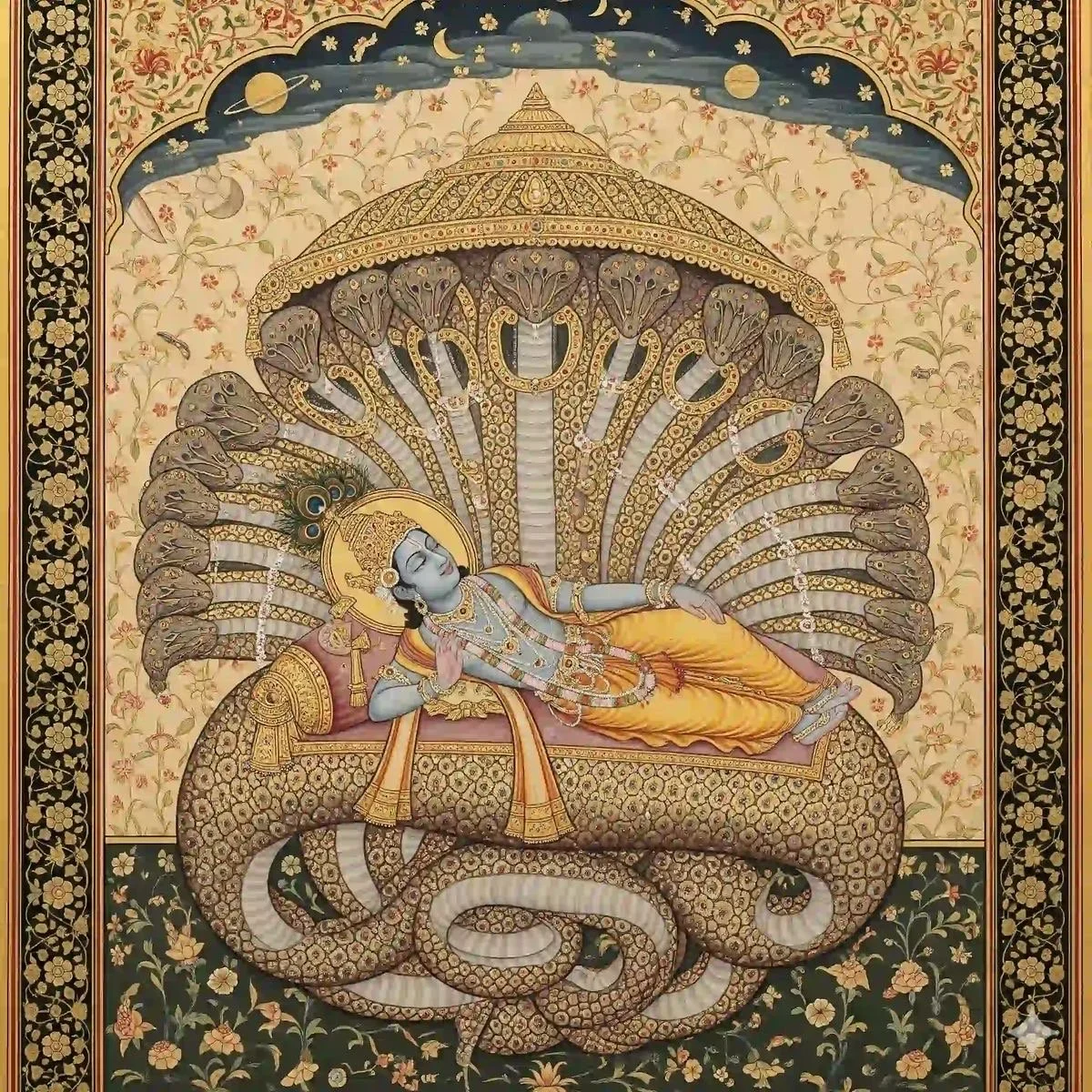
Āśleṣā is linked with Ādi Śeṣa and Sage Patañjali, pointing to the serpent power of consciousness that binds and releases. Its medicine lies in yoga, mantra, and disciplined inner awareness — the same forces that can entangle the mind become, when refined, the means of profound purification and healing of citta, speech, and body.

What old skin is ready to be shed?

Lalitā Jayantī

Artwork: Mahāvidyā Tripura Sundarī National Museum, New Delhi 

Lalitā Jayantī commemorates the appearance of the Goddess in her supreme form as Mahāvidyā Tripura Sundarī, the third of the Daśa Mahāvidyās — “Beauty of the Three Cities,” harmonizing the three worlds and the three states of consciousness — who embodies supreme beauty, clarity, and the power of refined discernment. 

This observance honors her as Lalitā (the playful one), Śoḍaśī (ever-perfect youth), Kāmakṣī (she whose gaze bestows grace), and Rājarājeśvarī (the Supreme Empress, sovereign of sovereigns), the radiant fullness of consciousness abiding in effortless grace and wisdom.

All my Relations, Tulsi

Full Moon Timing: 02.01.26 14:09 PST | 02.02.26 3:39 AM IST 

The degree to which a person can grow is directly proportional to the amount of truth he can accept about himself without running away.” 

― Leland Val Van De Wall


Varāha Dvādaśī: Appearance Day of Varāha Dev

VARĀHA DVĀDAŚĪ

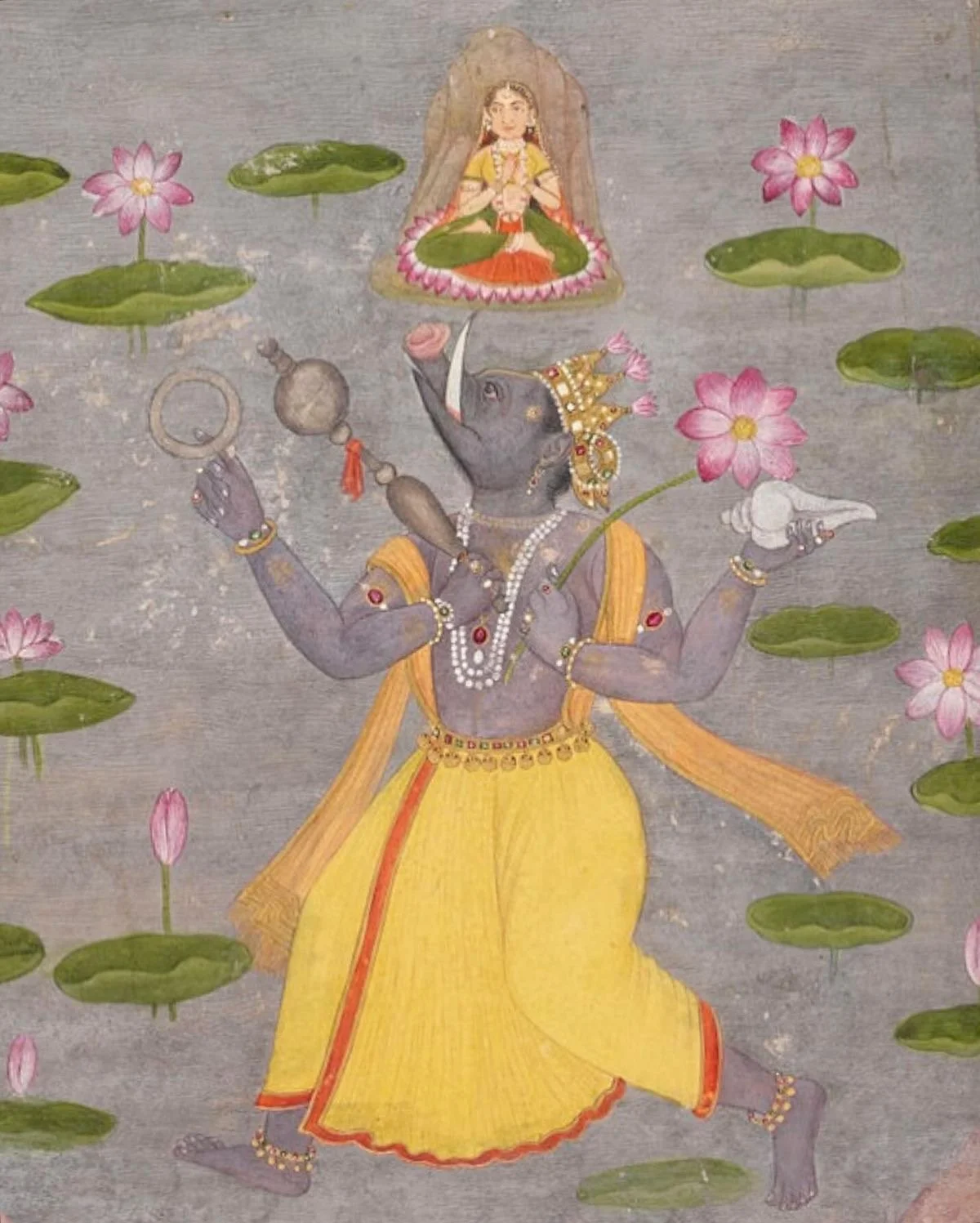
Artwork: Pinterest

Varāha Dvādaśī वराह द्वादशी

On the twelfth day of the bright half of Māgha marks the festival honoring Varāha Avatār, the third incarnation of the daśāvatāra of Lord Viṣṇu, the wild boar. Varāha Dev is one of the four full Paramātmās whose story narrates how Lord Viṣṇu came to rescue Bhūdevī (Pṛthvī), Earth.

Varāha’s story begins with the doorkeepers of Lord Viṣṇu’s realm, Jaya and Vijaya, who were cursed by Lord Brahmā’s four sons to take human birth and incarnate on Earth. The curse would be lifted only if the two human forms were killed by the hands of Lord Viṣṇu himself, to which they agreed.

One of the brothers, Hiraṇyākṣa, dragged Mother Bhūmi to the bottom of the cosmic ocean to attact Lord Viṣṇu’s attention. The Lord took the form of a boar in order to slay the demon king, rescue the Earth, and restore her to her rightful place in the universe.

Lord Viṣṇu, the maintainer of this world, takes birth age after age only when the balance on Earth has been disturbed. This incarnation of Varāha Dev is associated with the graha Rāhu (north node) in Vedic astrology, who is the karaka for justice, courage, truth, self-sacrifice, risking one’s life for a cause, going against the established order, the foreigner, and the protector of the Earth.

With his tusks, Varāha is said to have the ability to dig up any impurities in the heart. We ask Rāhu to protect our tounge.

ॐ वराहाय नमः।