
MAHĀŚIVARĀTRI
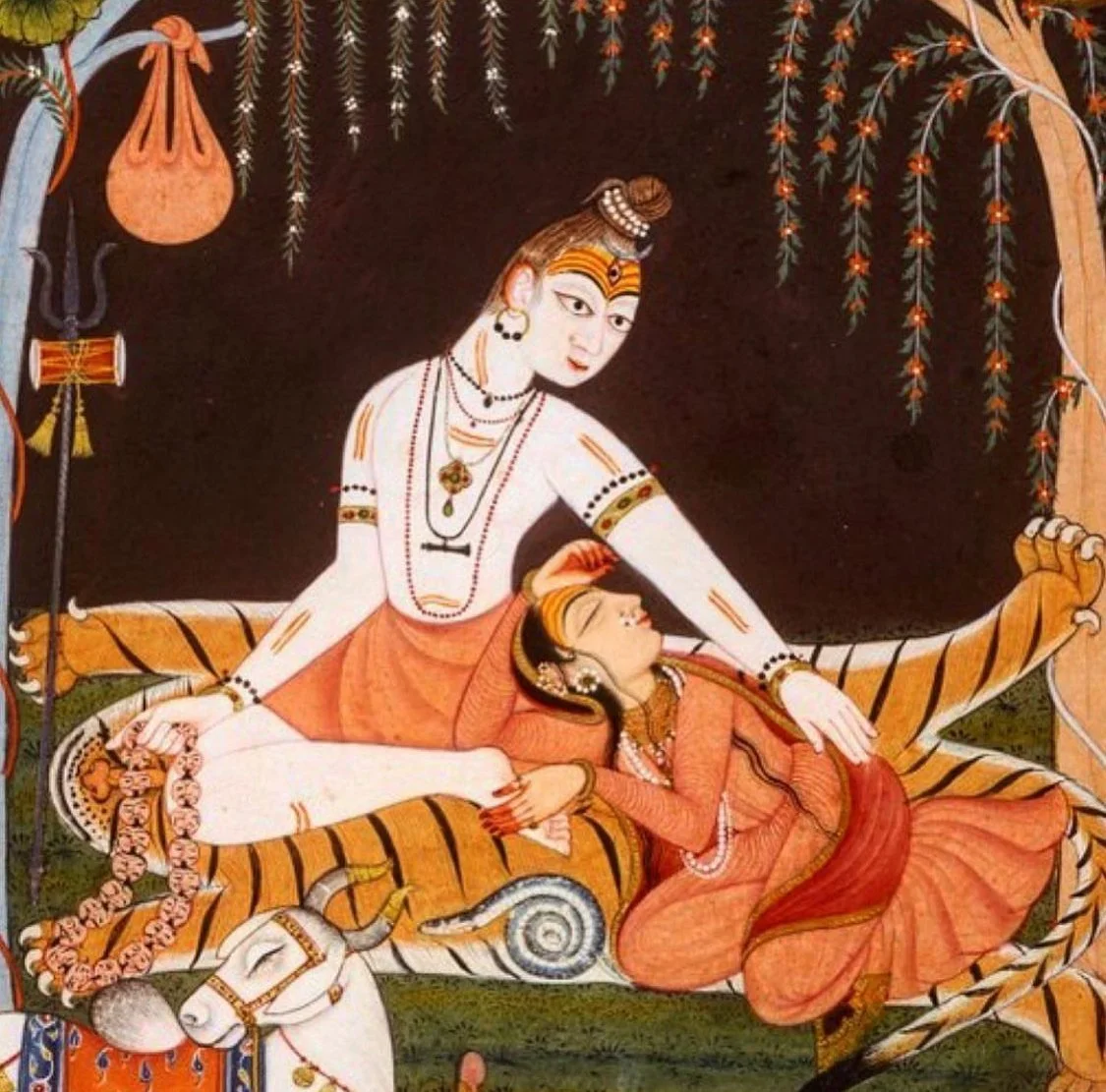
Painting from Mankot, Himachal Pradesh, c. 1700–1725. Held at the Philadelphia Museum of Art.
February 15th
Mahāśivarātri, observed on the Caturdaśī tithi (14th lunar day) of the Kṛṣṇa Pakṣa (dark half) in the Māgha or Phālguna month, is one of the most spiritually activated days in the Vedic calendar. This night is celebrated as the great night of Lord Śiva, where he performs his heavenly dance and relieves us from our karmic burdens.
It is said that any spiritual practices performed on this day, including mantra recitation (especially Śiva mantras), fasting, and deep meditation, are enhanced a thousandfold during this auspicious time. The late hours of the night, in particular, are said to be charged with intense spiritual potency. Whoever fasts on this day, Lord Śiva will relieve you of the poisons and karmic debts accumulated in this life and all previous incarnations.
Mahāśivarātri is a profound and sacred observance dedicated to Lord Śiva, the eternal consciousness that dissolves illusion and grants liberation. Śiva is revered as Ādi Yogi—the first yogin, the primordial teacher of yoga—who embodies both the origin of the path and its culmination in absolute freedom.
He is also honored as Ādi Vaidya—the first physician—source of Āyurveda and the healing sciences, revealed in sacred dialogue to Pārvatī, through whom this wisdom descended into the world. The timing of Mahāśivarātri is deeply significant, as the waning moon symbolizes the dissolution of the ego, inviting seekers to surrender to the infinite stillness of Śiva.
The timing of Mahāśivarātri is deeply significant, as the waning moon symbolizes the dissolution of the ego, inviting seekers to surrender to the infinite stillness of Śiva.
One perspective views this night as the moment when Śiva entered deep meditation, embodying the stillness that dissolves all illusions. It is believed that on this night, the cosmic energies align in a way that makes it highly conducive for inner awakening and meditation.
Mahāśivarātri is also believed to be the sacred night when Lord Śiva and Goddess Pārvatī were united in divine marriage. This marks the cosmic union of Śiva—the embodiment of pure consciousness—and Śakti—the dynamic force of creation. Their union is symbolized in the divine dance of Śiva, an eternal cycle of creation, preservation, and destruction, where stillness and movement coexist in harmony. This dance represents the interplay of the infinite and the finite, the unchanging and the ever-changing, reflecting the unity of opposites in the universe.
Devotees observe Mahāśivarātri with jāgaraṇa (night-long vigil), abhiṣeka (ritual bathing of the Śiva Liṅgam), and chanting of the Pañcākṣarī mantra—"Oṁ Namaḥ Śivāya." Fasting, silence, and deep contemplation allow one to align with Śiva's transcendental essence, shedding layers of karma and moving closer to mokṣa (liberation).
This night is a gateway to the formless, where the dissolution of duality reveals the pure consciousness that pervades all. It is a night of transformation, where the aspirant, like the moon waning into darkness, merges into the luminous presence of Śiva—the Supreme Reality.
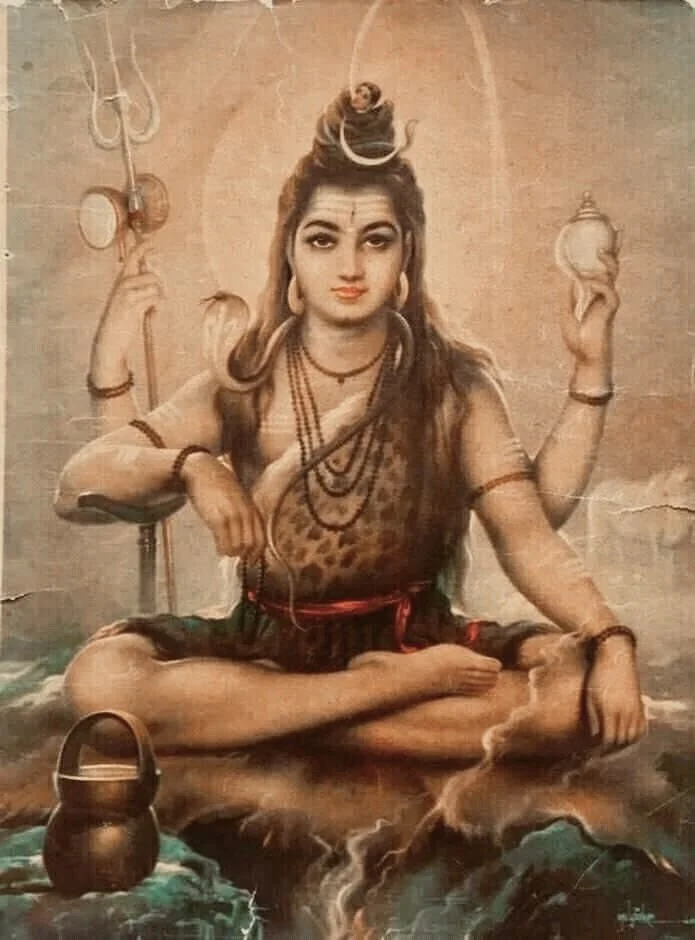
Artowrk: Pinterest
ॐ नमः शिवाय | Oṁ Namaḥ Śivāya 🔱
The Chaturdashi Tithi (the 14th lunar day required for Mahāśivarātri) begins on the afternoon of the 15th and lasts until the afternoon of the 16th: Chaturdashi Tithi Begins: 17:05 PM IST on Feb 15, 2026. Chaturdashi Tithi Ends: 17:34 PM IST on Feb 16, 2026.
Main Midnight Puja (Nishita Kaal): 12:09 AM to 1:01 AM on Feb 16. * Fast-Breaking (Parana): 6:59 AM to 3:24 PM on Feb 16.
Pulse of the Stars: Vidyā & Chai
Join us for our monthly New Moon gathering for a deep dive into Mahāśivarātri, the New Moon in Dhaniṣṭā (Aquarius) and preparation for upcoming eclipse season, mercury retrograde
RSVP: tulsibagnoli@gmail.com