Gaṇeśa Caturthī

GAṆEŚA CATURTHĪ

September 14

Commencing on the fourth day (caturthī) of the bright fortnight (śukla pakṣa) in the month of Bhādrapadā (Aug–Sept), Gaṇeśa Caturthī is observed for ten days, culminating on Ananta Caturdaśī (14th day).

Salutations to Śrī Gaṇeśa who has a curved trunk, who has a large body and whose splendor is similar to that of a million suns; who is the son of Śiva and Pārvatī, the remover of obstacles and the writer of the story.
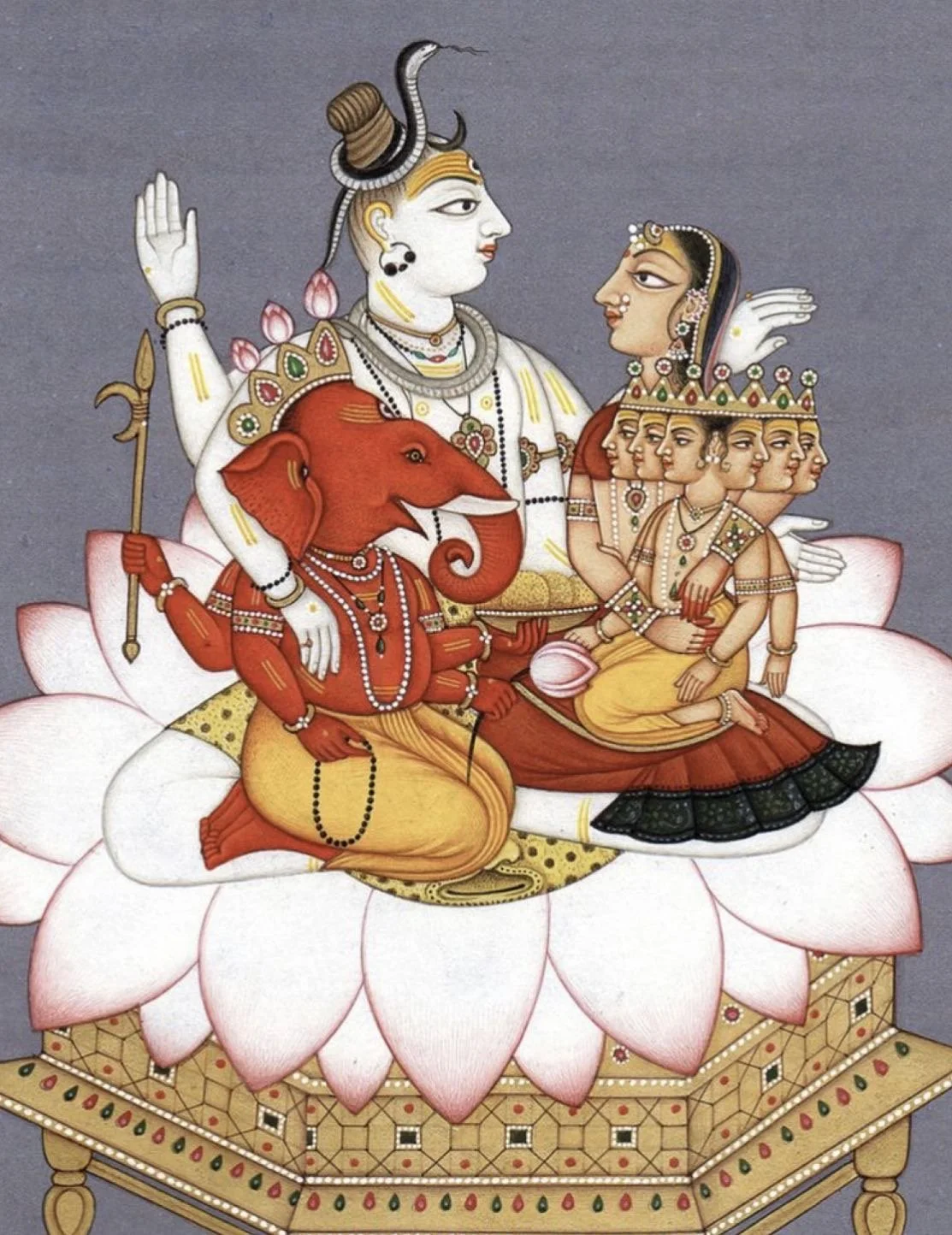
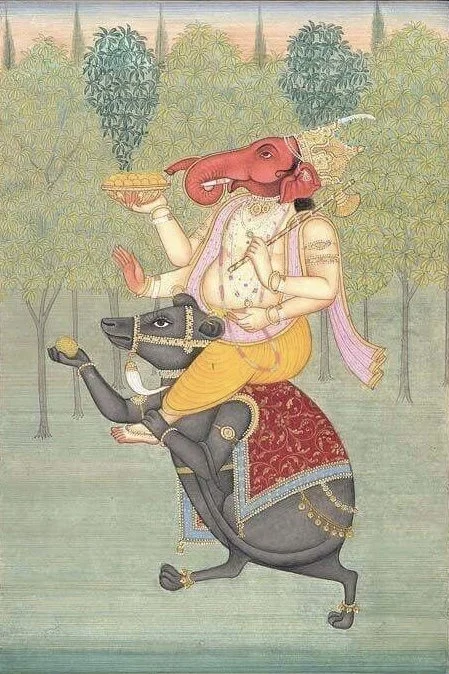
Gaṇeśa, revered as the deity who governs the threshold of new beginnings, wisdom, and intelligence, represented by the brain stem in our physiology, the lord of Jyotiṣa Vidyā (Vedic astrology) and the one who is associated with Ketu and Mercury.

Among the implements he bears are the pāśa (noose) and paraśu (axe), symbolizing the binding forces of attachment and the power to sever them. He rules over the planetary vibrations that guide us through transitions—encouraging us to see obstacles not as hindrances, but as divine redirections towards our true nature. 

Vyāsa invoked Gaṇeśa to serve as the divine scribe of the Mahābhārata—some traditions even say he fashioned him into being through tapas for this immortal task. Gaṇeśa agreed on the condition that Vyāsa dictate without pause, and Vyāsa, with equal cleverness, required that Gaṇeśa only write once he fully understood each verse.
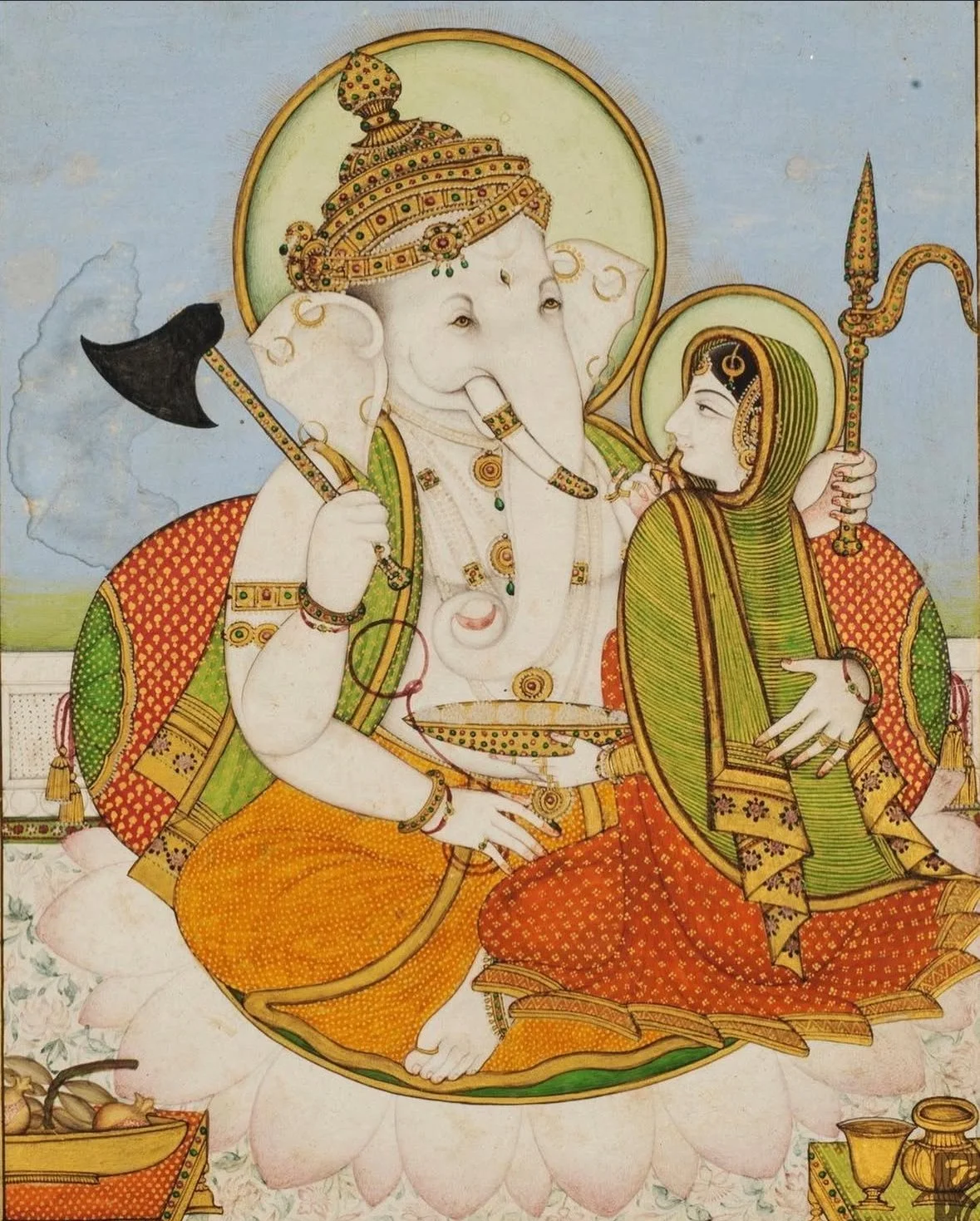
On Gaṇeśa Caturthī, it is said one should avoid looking at the moon (Candra Darśana) as it can bring false accusations or misunderstandings—stemming from the Purāṇic tale where Candra mocked Gaṇeśa, leading to a curse that whoever sees him on this night may suffer slander. Instead, devotion is directed wholly to Gaṇeśa, the remover of obstacles.

On this sacred day, devotees immerse themselves in fasting, chanting Vedic hymns and Hindu texts, offering sweets such as modaka —believed to be the favorite of Lord Gaṇeśa—as prasāda. The festival culminates on the tenth day with visarjana, when the Mūrti (depiction of a deity) is carried in a grand procession, accompanied by music and chanting, and immersed in a nearby body of water, symbolizing the cycle of creation and dissolution.
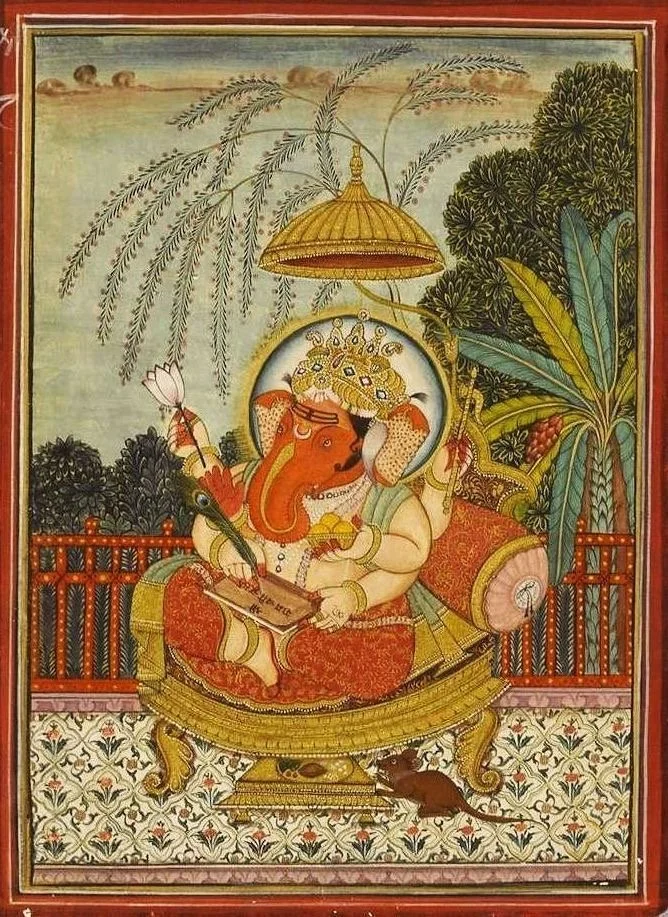
O Deva, lord of new beginnings, please make my undertakings free of obstacles, by extending your blessings in all my works, always and may I remember to trust that when you place obstacles in my way, that you’re gently guiding me back to my most aligned path.

ॐ श्री गणेशाय नमः
Varāha Jayantī

VARĀHA JAYANTĪ

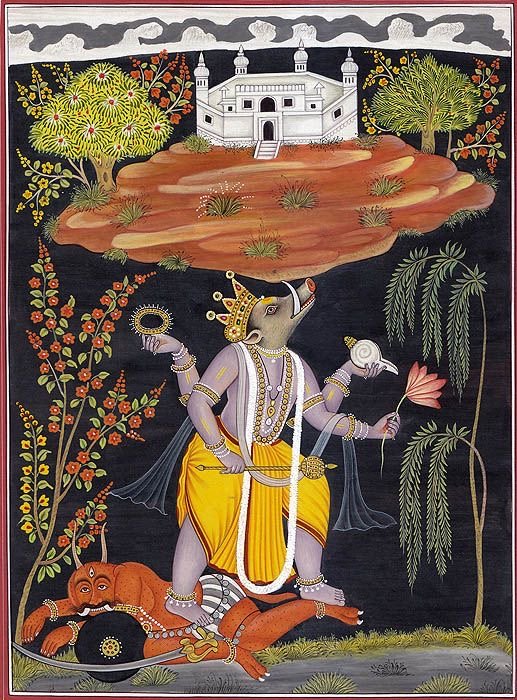
Artowrk by: @designerayushkejriwal  

September 13th

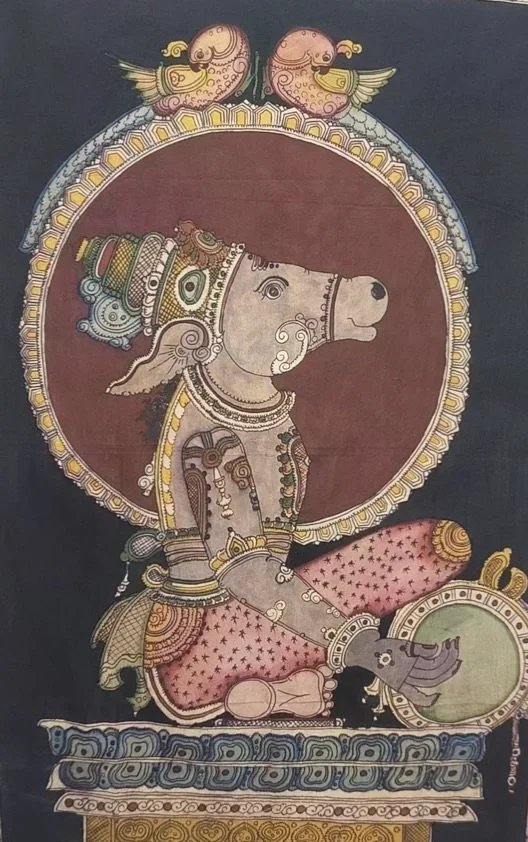
The auspicious occasion of Lord Varāha Avatāra’s appearance (वराह जयंती), the third incarnation of the Daśāvatāra of Lord Viṣṇu, the Divine Boar, is observed on the third tithi (Tṛtīyā) of the bright half (Śukla Pakṣa) of Bhādrapada (August/September).

Varāha Dev is one of the four full Paramātmās, whose līlā narrates how Lord Viṣṇu rescued Bhūdevī (Pṛthvī, Earth) — the one Avatāra who lifts and supports her, allowing her to rest.

Varāha’s story begins with the doorkeepers of Lord Viṣṇu’s realm, Jaya and Vijaya, who were cursed by Lord Brahmā’s four sons to take human birth and incarnate on Earth. The curse would be lifted only if the two, in human form, were slain by Lord Viṣṇu himself — a fate they accepted.

One brother, Hiraṇyākṣa, dragged Mother Bhūmi to the bottom of the cosmic ocean to provoke the Lord’s attention. In response, Lord Viṣṇu emerged from the nostril of Brahmā as a boar no larger than a thumb, and within moments expanded to an immense, cosmic form to slay the demon, rescue the Earth, and restore her to her rightful place in the universe.

Lord Viṣṇu, the sustainer of worlds, incarnates age after age whenever dharma is disrupted. This incarnation, Varāha Dev, is associated in Jyotiṣa with Rāhu, kāraka for fearlessness, courage, truth, justice, self-sacrifice, risking one's life for a cause, challenging the established order, the foreigner, and the protector of Earth.
With his tusks, Varāha is said to uproot impurities lodged in the heart. In the Navagraha Kavacam, we ask for Rāhu to protect our tongue.

ॐ वराहाय नमः।

New Moon in Pūrva Phālgunī: The Fruit of the Tree

NEW MOON IN PŪRVA PHĀLGUNĪ 

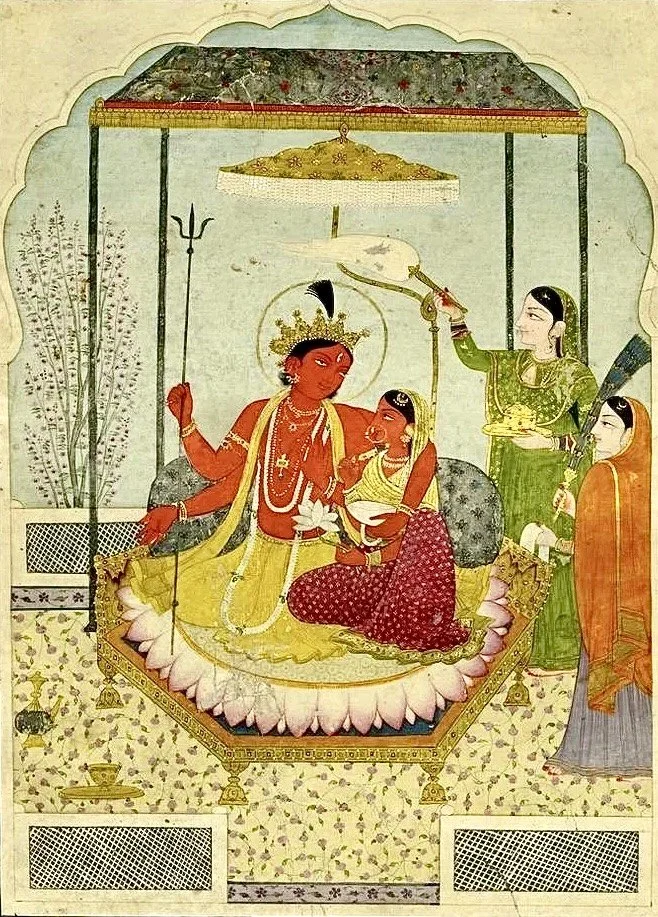
Śiva and Pārvatī. Pahari School, Kangra Style. 19thC(early)

September 10/11

The Sun and Moon align for the New Moon in the Vedic Lunar Mansion of Pūrva Phālgunī पूर्वफल्गुनी (Sidereal Leo), the Fruit of the Tree.

Pūrva Phālgunī, “the Former Reddish One,” evokes the first flush of spring, passion, fertility, and creative fruitfulness. Seated within Leo, vidyā sthāna, and counted among the birth stars of Guru, it carries psychological intelligence. 

It is symbolized by the front legs of a bed, or a hammock, holding the promise of rest, pleasure, and the enjoyment of merit earned through past action. 

This asterism is ruled by Bhaga, one of the twelve Ādityas, the bestower of delight, distributive fortune, and the capacity to savor what has been given.

The ancient Ṛṣis perceived this constellation in the two stars known today as Zosma and Chertan, their placement forming the legs of a resting couch in the night sky.

Pūrva Phālgunī carries Prajānanda Śakti, the power of procreation, the union of polar opposites embodied in the Śiva Liṅgam, where Śiva is inseparable from Śakti, and from which flows the fertilizing current that enlivens creativity.

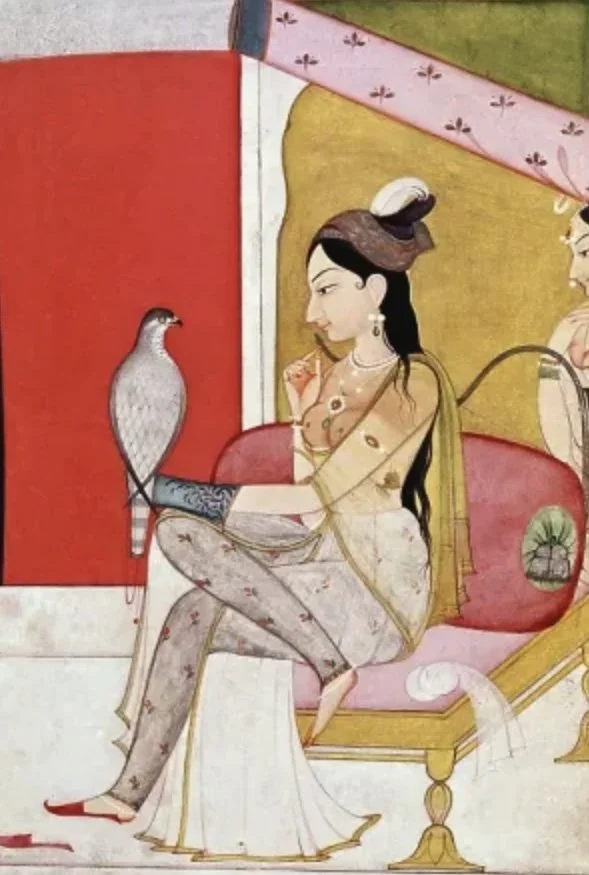
Women Pahari Style, Punjab Hills, c.1750

Within this field of union, the nature of our bonds becomes more visible. Personal prabhā intensifies, revealing where connection deepens into intimacy and where it becomes entanglement.

This star of fertility is also courageous and visionary, qualities reflected in the eagle, the bird who finds its seat here.

It is under this star that Devī Pārvatī began her tapasya to win Śiva as her husband. Pūrva Phālgunī is tīkṣṇa, a fierce nakshatra; her austerity here was no soft surrender, but a relentless, one-pointed longing, disciplined into devotion. Śiva remained absorbed in meditation, and even as her resolve was tested, Pārvatī did not waver. Her tapas bore its fruit.

Pūrva Phālgunī is Śukra’s seat in the heart of the dharma trine. Here, the challenge of Śukra is not desire itself, but abhimāna, the pride that demands justice. Dharma asks for the right use of our vīrya, gathered rather than spent, passion held with clarity of heart and vision, and the renunciation of vengeance. Through its trials and churning, what is birthed is Sūrya: action without claim upon its fruit, without entitlement to the result.

As we move toward what we truly desire, forces may arise that interrupt our course and test the steadiness of our aim. As a birth star of Maṅgala, Pūrva Phālgunī asks whether desire can hold its direction when met by resistance.

In the two weeks since the eclipse Full Moon, we have been assimilating all that was revealed, allowing its deeper implications to take form.

Pūrva Phālgunī reminds us that creation does not arise through effort alone. Just as nature moves between activity and repose, there are times when restoration itself becomes the creative act.

Under this New Moon, we are invited to examine what we are ready to plant. Where has desire been scattered, spent without direction? Where are we being asked to gather it, discipline it, and set it toward what truly matters?

All My Relations, Tulsi

New Moon in Pūrvaphālgunī: 20:16 PST | 11th 8:56 AM IST

If you're interested in going deeper in your Jyotiṣa studies, we are now halfway through Navagraha Kathā, which is fully recorded. On October 15th, we will also be starting Tattva: The Architecture of Consciousness — both serving as prerequisites for our upcoming Nakṣatra Jyotiṣa techniques and studies to come.

The Yogasūtra’s (2.47) states that it is in the relaxation of our effort and our capacity to become absorbed in the infinite, gives to effortless action — action which is established in being or yoga (union). 

Śrī Kṛṣṇa Janmāṣṭamī and Kālī Jayantī

KṚṢṆA KĀLĪ 

On the aṣṭamī tithi (8th lunar day) of the dark fortnight (kṛṣṇa pakṣa) — reckoned as Śrāvaṇa in the South and Bhādrapada in the North — two auspicious observances converge: Śrī Kṛṣṇa Janmāṣṭamī and Kālī Jayantī.

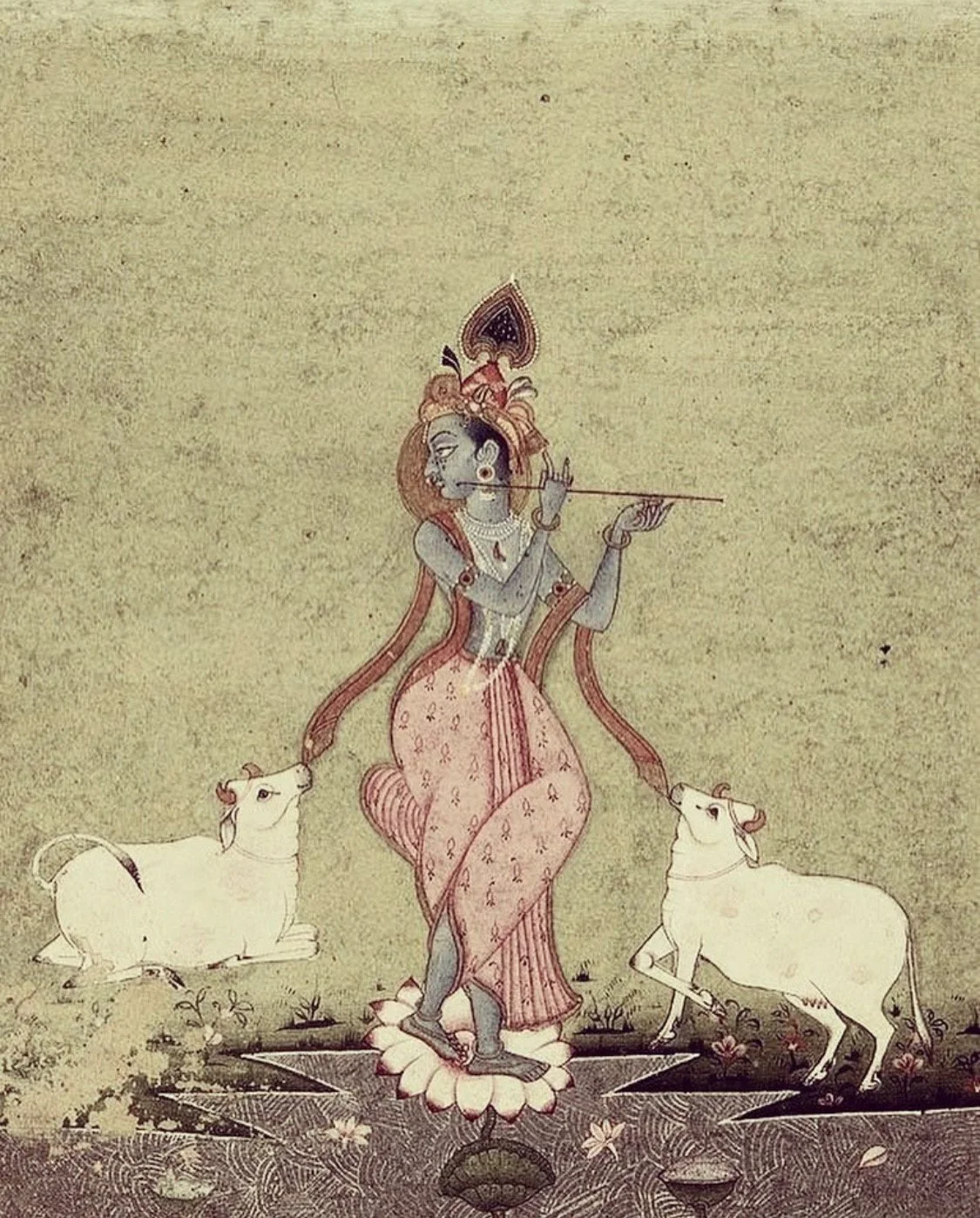
Janmāṣṭamī marks the divine appearance of Śrī Kṛṣṇa, the avatāra of Viṣṇu who embodies love, play, and dharma’s restoration. On this same lunar day, the dark and liberating Mother, Mahākālī, conected to Śani Dev (Saturn) is also especially honored. Her Jayantī reminds us of the force that severs illusion, awakens truth, and grants fearlessness.

The alignment of these two — Kṛṣṇa’s enchanting sweetness and Kālī’s uncompromising power — offers a rare doorway into wholeness: the union of tenderness and strength, play and destruction, love and liberation.

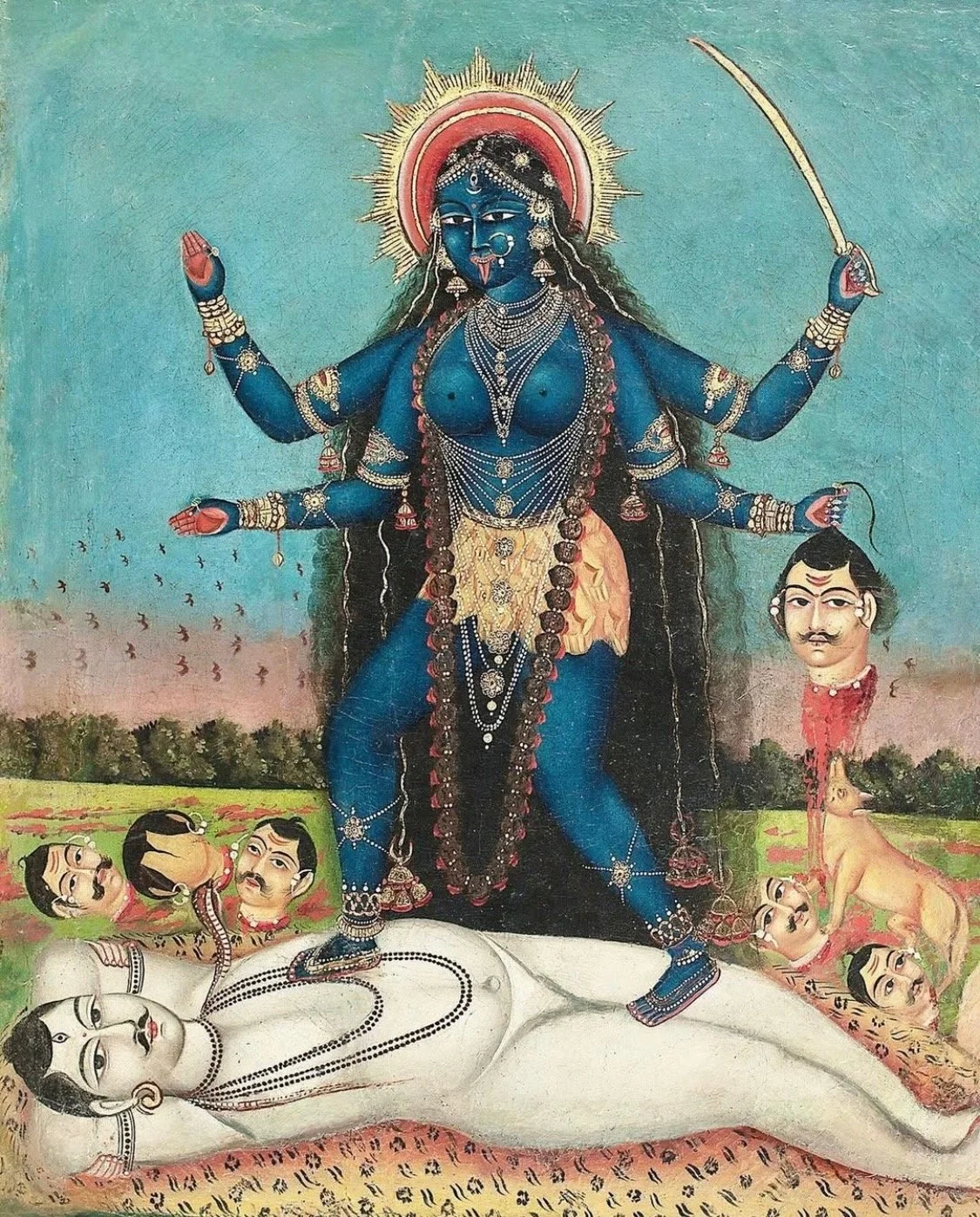
Kālī, adorned with the munda-mālān (garland of severed heads), is the slayer of ego and illusion. Each severed head is a Sanskrit letter, showing that She devours the very roots of false identity—sound, speech, and thought—transforming them into ornaments of wisdom.

Her teaching is fierce: She strips away every veil until only the Self remains. To the ego, She is terror; to the soul, She is freedom. Naked, unbound by space or time, She reveals that clinging to what perishes is bondage, and resting in awareness is liberation.

Her stance upon Śiva is the union of opposites: movement anchored in stillness, time held by eternity. Śakti grounds in Śiva, showing that power without consciousness is chaos, and consciousness without power is inert. Together they awaken balance—the rhythm of creation, dissolution, and liberation.

Her connection to Kṛṣṇa is profound. Both embody the mystery of Time (kāla-svarūpa). Kālī, the dark Mother, consumes all forms back into Herself. Kṛṣṇa, the dark Beloved, enchants all beings toward Him. In the Gītā, He declares: kālo’smi loka-kṣhaya-kṛt pravṛddho—“I am Time, destroyer of worlds.” Both wear the hue of infinity (śyāma varṇa), not as absence, but as the womb of creation.

Like Kṛṣṇa, She is Time itself—dark, infinite, and irresistible. He enchants the soul through love, encouraging in the direction of right action (yoga-sthaḥ kuru karmāṇi); She liberates the soul through fearlessness, slaying the false self so the infinite may shine.

Kālī is truth without compromise; Kṛṣṇa is truth through love. One cuts, the other draws near—but both dissolve the ego and awaken the eternal Self.

कालीं कृष्णं नमाम्यहम् ।

Kālīṁ Kṛṣṇaṁ namāmyaham.

“I bow to Kālī, I bow to Kṛṣṇa—Dark Mother, Dark Beloved—forms of the one eternal.”

योगस्थः कुरु कर्माणि सङ्गं त्यक्त्वा धनञ्जय।
सिद्ध्यसिद्ध्योः समो भूत्वा समत्वं योग उच्यते॥ २.४८॥

yoga-sthaḥ kuru karmāṇi saṅgaṁ tyaktvā dhanañjaya |
siddhy-asiddhyoḥ samo bhūtvā samatvaṁ yoga ucyate || 2.48 ||

“Established in yoga, perform your action, O Dhanañjaya (Arjuna),
abandoning attachment, remaining equal in success and failure.
Such equanimity is called yoga.”

 Bhagavad Gītā (2.48)