Śrī Kṛṣṇa Janmāṣṭamī and Kālī Jayantī

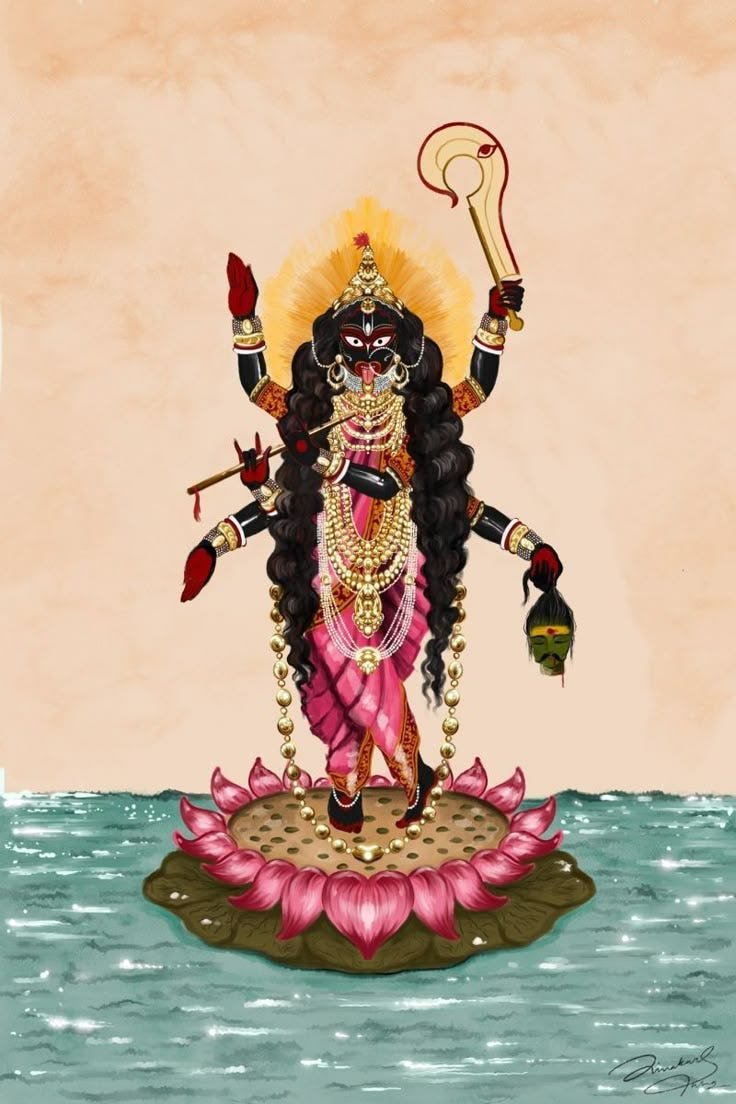
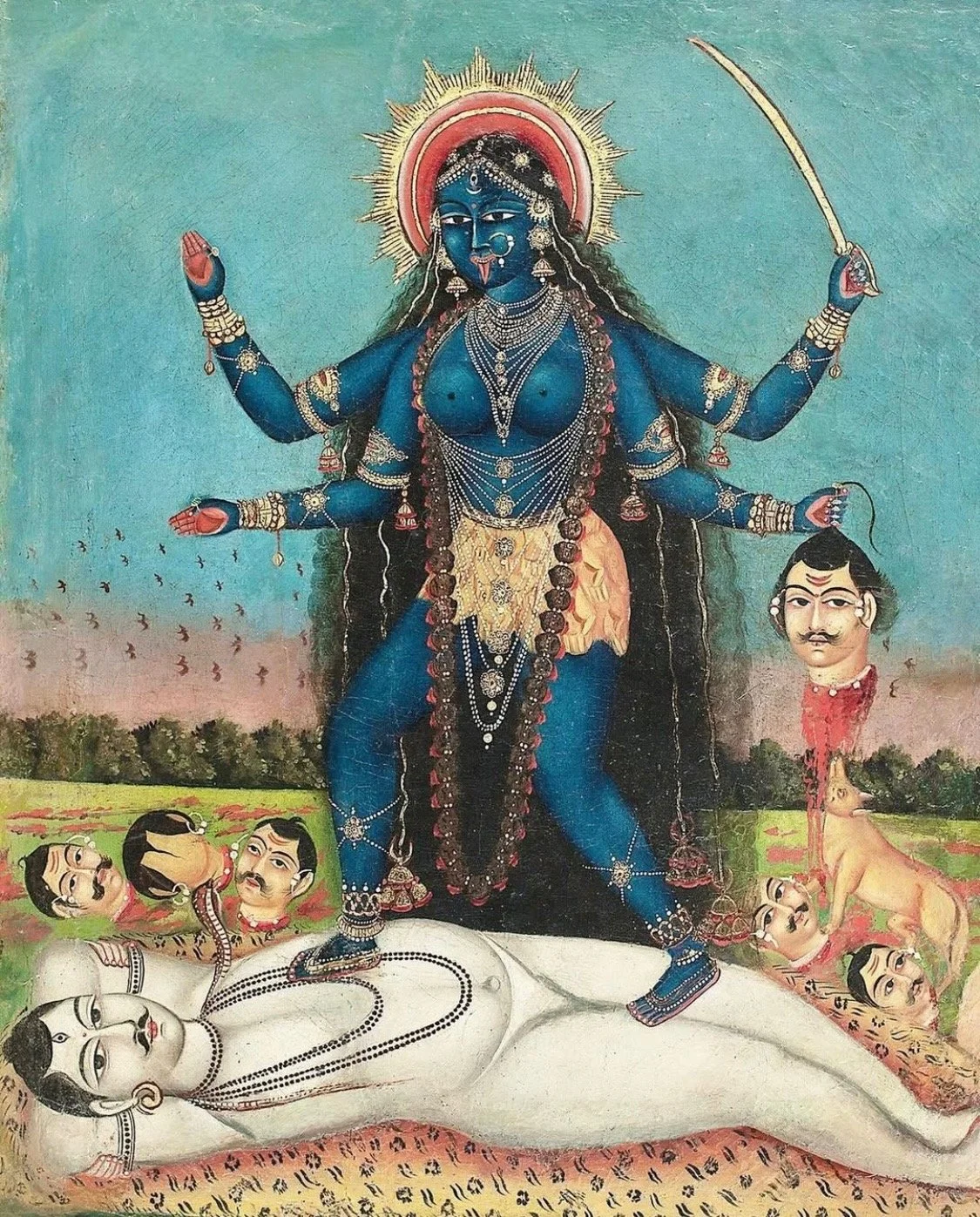
KṚṢṆA KĀLĪ 

On the aṣṭamī tithi (8th lunar day) of the dark fortnight (kṛṣṇa pakṣa) — reckoned as Śrāvaṇa in the South and Bhādrapada in the North — two auspicious observances converge: Śrī Kṛṣṇa Janmāṣṭamī and Kālī Jayantī.

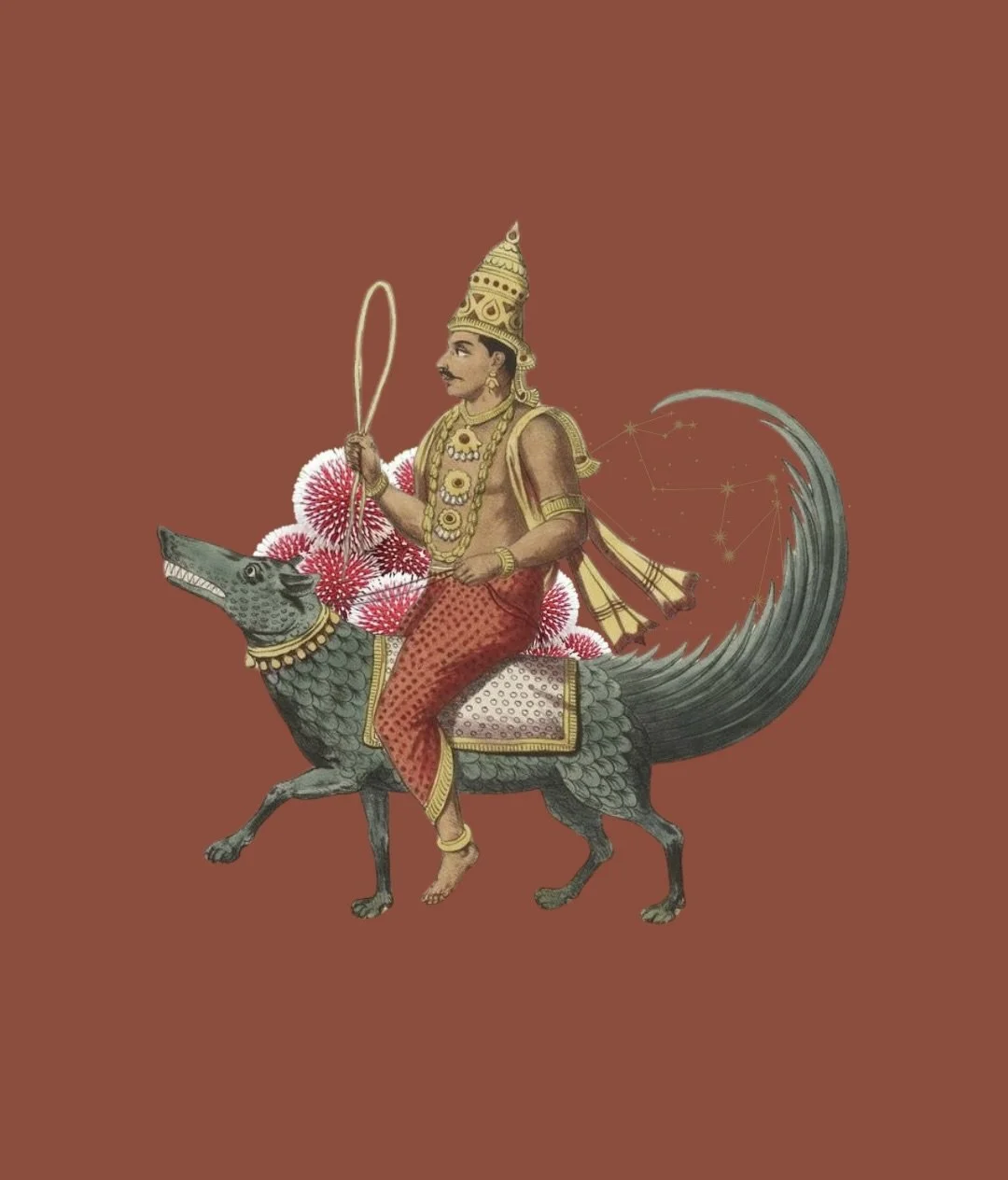
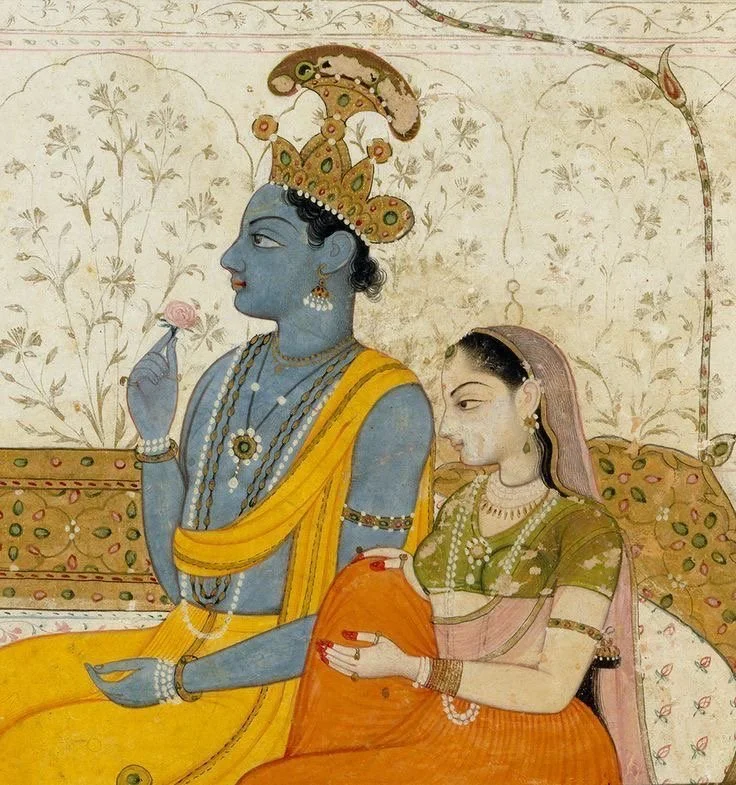
Janmāṣṭamī marks the divine appearance of Śrī Kṛṣṇa, the avatāra of Viṣṇu who embodies love, play, and dharma’s restoration. On this same lunar day, the dark and liberating Mother, Mahākālī, conected to Śani Dev (Saturn) is also especially honored. Her Jayantī reminds us of the force that severs illusion, awakens truth, and grants fearlessness.

The alignment of these two — Kṛṣṇa’s enchanting sweetness and Kālī’s uncompromising power — offers a rare doorway into wholeness: the union of tenderness and strength, play and destruction, love and liberation.

Kālī, adorned with the munda-mālān (garland of severed heads), is the slayer of ego and illusion. Each severed head is a Sanskrit letter, showing that She devours the very roots of false identity—sound, speech, and thought—transforming them into ornaments of wisdom.

Her teaching is fierce: She strips away every veil until only the Self remains. To the ego, She is terror; to the soul, She is freedom. Naked, unbound by space or time, She reveals that clinging to what perishes is bondage, and resting in awareness is liberation.

Her stance upon Śiva is the union of opposites: movement anchored in stillness, time held by eternity. Śakti grounds in Śiva, showing that power without consciousness is chaos, and consciousness without power is inert. Together they awaken balance—the rhythm of creation, dissolution, and liberation.
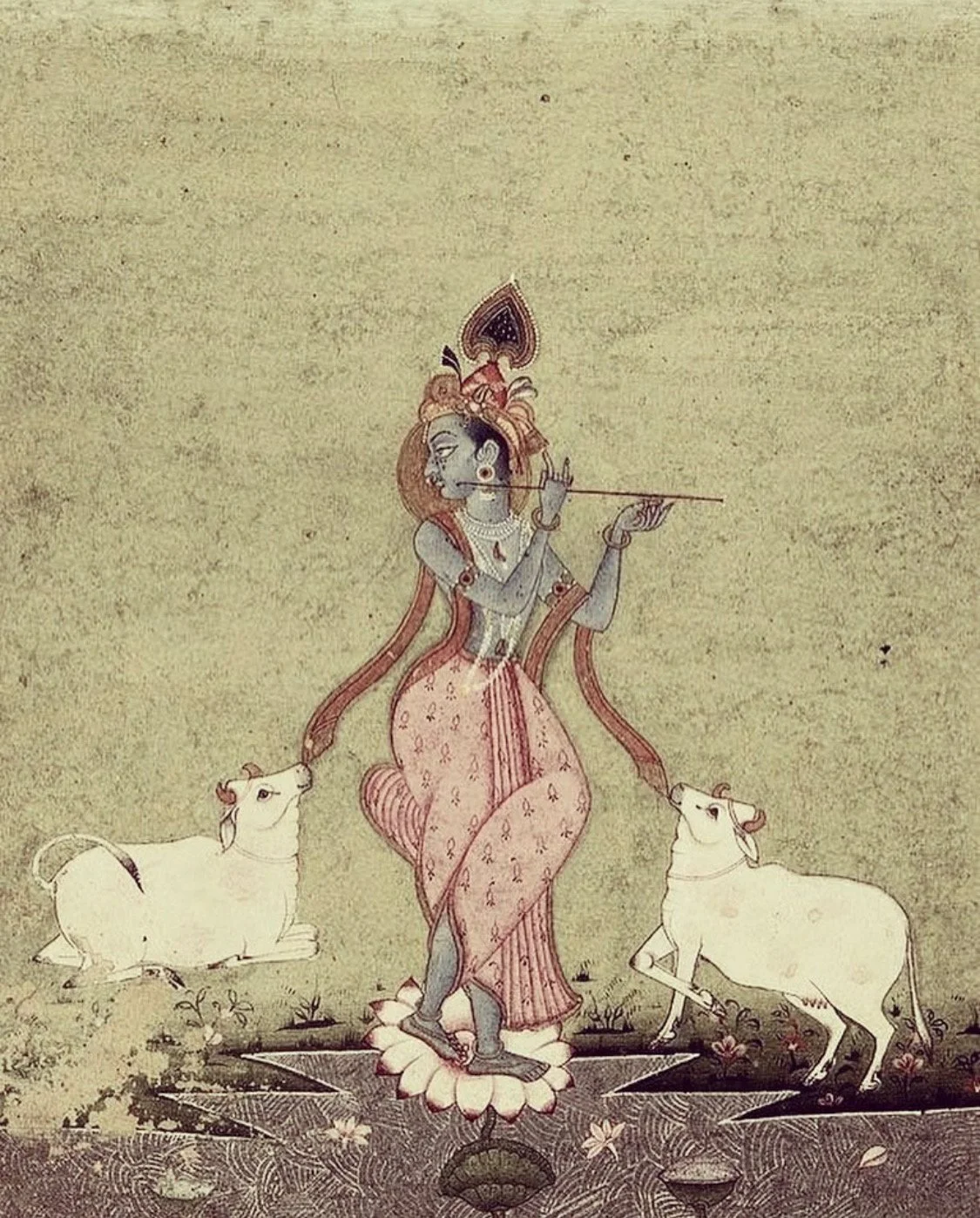
Her connection to Kṛṣṇa is profound. Both embody the mystery of Time (kāla-svarūpa). Kālī, the dark Mother, consumes all forms back into Herself. Kṛṣṇa, the dark Beloved, enchants all beings toward Him. In the Gītā, He declares: kālo’smi loka-kṣhaya-kṛt pravṛddho—“I am Time, destroyer of worlds.” Both wear the hue of infinity (śyāma varṇa), not as absence, but as the womb of creation.

Like Kṛṣṇa, She is Time itself—dark, infinite, and irresistible. He enchants the soul through love, encouraging in the direction of right action (yoga-sthaḥ kuru karmāṇi); She liberates the soul through fearlessness, slaying the false self so the infinite may shine.

Kālī is truth without compromise; Kṛṣṇa is truth through love. One cuts, the other draws near—but both dissolve the ego and awaken the eternal Self.

कालीं कृष्णं नमाम्यहम् ।

Kālīṁ Kṛṣṇaṁ namāmyaham.

“I bow to Kālī, I bow to Kṛṣṇa—Dark Mother, Dark Beloved—forms of the one eternal.”

योगस्थः कुरु कर्माणि सङ्गं त्यक्त्वा धनञ्जय।
सिद्ध्यसिद्ध्योः समो भूत्वा समत्वं योग उच्यते॥ २.४८॥

yoga-sthaḥ kuru karmāṇi saṅgaṁ tyaktvā dhanañjaya |
siddhy-asiddhyoḥ samo bhūtvā samatvaṁ yoga ucyate || 2.48 ||

“Established in yoga, perform your action, O Dhanañjaya (Arjuna),
abandoning attachment, remaining equal in success and failure.
Such equanimity is called yoga.”

 Bhagavad Gītā (2.48)
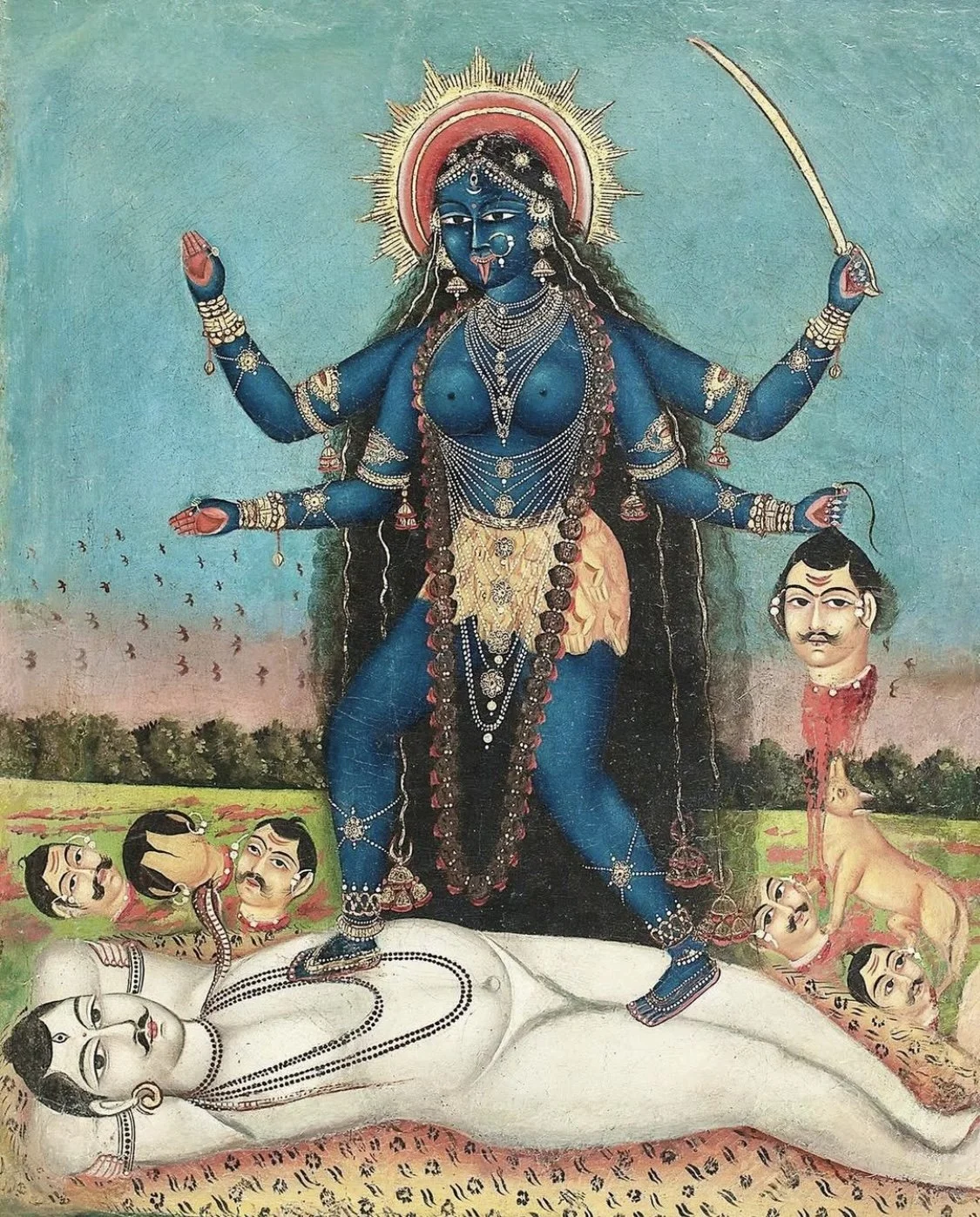
Kṛṣṇa Janmāṣṭamī & Kālī Jayantī

Kṛṣṇa Janmāṣṭamī & Kālī Jayantī

Artwork from Pinterest

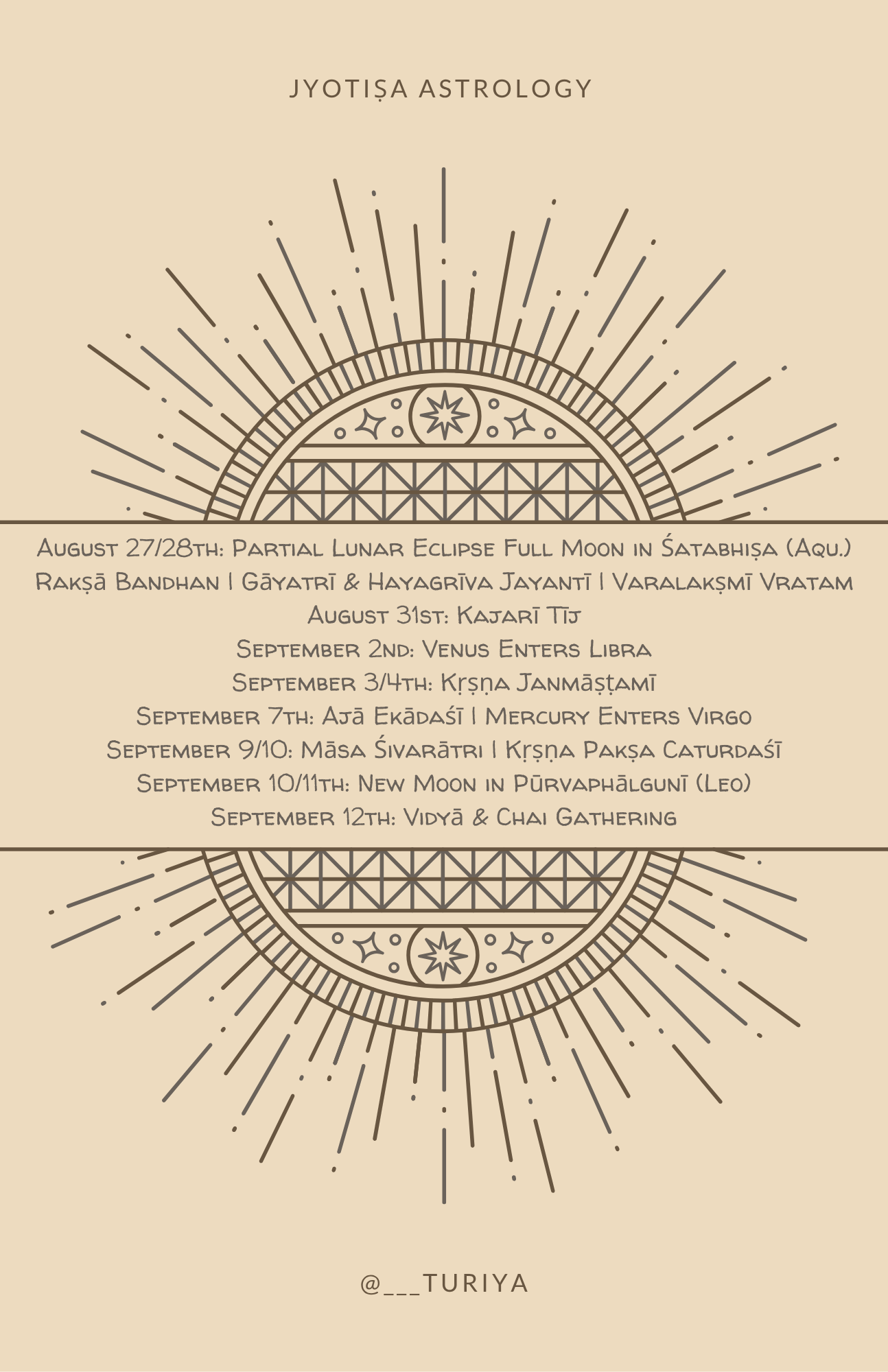
September 3/4

On the aṣṭamī tithi of the dark fortnight, kṛṣṇa pakṣa, reckoned as Śrāvaṇa in the South and Bhādrapada in the North, two auspicious observances converge: Śrī Kṛṣṇa Janmāṣṭamī and Kālī Jayantī.

Janmāṣṭamī marks the divine appearance of Śrī Kṛṣṇa, the eighth incarnation in the daśāvatāra of Viṣṇu, the avatāra who embodies love, play, and dharma's restoration. Devotees immerse themselves in Harikathā, narrating his holy names, forms, qualities, and divine pastimes, while bhajans lift the heart through devotional song and dance. Many observe a day long fast, breaking it at midnight with ritual offerings and prasādam.

Lord Parāśara points to the life of Kṛṣṇa as the teaching through which the Moon is best understood, and Kṛṣṇa's own birth star is Rohiṇī, the most beloved to Chandra. Nearly every classical kāraka of the Moon appears in his story: manas, the mind, in how he moves every heart around him; the indriyas, the senses, as Arjuna's own charioteer; the mystery of birth and the continuation of lineage, in the tangled circumstances of his own birth; bhakti, in the Gopīs and the Rāsa Līlā.

As Arjuna's charioteer in the Bhagavad Gītā, Kṛṣṇa imparts the wisdom of karma yoga, the yoga of selfless action, guiding us toward freedom from attachment to the fruits of our actions. True strength, in his telling, lies not in conquering the world but in mastering the mind and senses. He taught Arjuna to go beyond the three guṇas, establish himself in that field of pure consciousness, and act from there.

On this same lunar day, the dark and liberating Mother, Mahākālī, connected to Śani Dev, is also especially honored. Her Jayantī reminds us of the force that severs illusion, awakens truth, and grants fearlessness.

Kālī, adorned with the muṇḍa mālā, the garland of severed heads, is the slayer of ego and illusion. Each severed head is a Sanskrit letter, showing that she devours the very roots of false identity, sound, speech, and thought, and transforms them into ornaments of wisdom.

Her teaching is fierce. She strips away every veil until only the Self remains. To the ego she is terror; to the soul she is freedom. Naked, unbound by space or time, she reveals that clinging to what perishes is bondage, and resting in awareness is liberation.

Her stance upon Śiva is the union of opposites, movement anchored in stillness, time held by eternity. Śakti grounds in Śiva, showing that power without consciousness is chaos, and consciousness without power is inert. Together they awaken balance, the rhythm of creation, dissolution, and liberation.

Her connection to Kṛṣṇa is profound. Both embody the mystery of Time, kāla svarūpa. Kālī, the dark Mother, consumes all forms back into herself. Kṛṣṇa, the dark Beloved, enchants all beings toward him. In the Gītā he declares, kālo'smi loka kṣaya kṛt pravṛddhaḥ, I am Time, destroyer of worlds. Both wear the hue of infinity, śyāma varṇa, not as absence but as the womb of creation.

Like Kṛṣṇa, she is Time itself, dark, infinite, and irresistible. He enchants the soul through love, encouraging right action, yoga sthaḥ kuru karmāṇi. She liberates the soul through fearlessness, slaying the false self so the infinite may shine. Kālī is truth without compromise. Kṛṣṇa is truth through love. One cuts, the other draws near. But both dissolve the ego and awaken the eternal Self.

All My Relations
कालीं कृष्णं नमाम्यहम् ।

Kālīṁ Kṛṣṇaṁ namāmyaham.

“I bow to Kālī, I bow to Kṛṣṇa—Dark Mother, Dark Beloved—forms of the one eternal.”

योगस्थः कुरु कर्माणि सङ्गं त्यक्त्वा धनञ्जय।
सिद्ध्यसिद्ध्योः समो भूत्वा समत्वं योग उच्यते॥ २.४८॥

yoga-sthaḥ kuru karmāṇi saṅgaṁ tyaktvā dhanañjaya |
siddhy-asiddhyoḥ samo bhūtvā samatvaṁ yoga ucyate || 2.48 ||

“Established in yoga, perform your action, O Dhanañjaya (Arjuna),
abandoning attachment, remaining equal in success and failure.
Such equanimity is called yoga.”

 Bhagavad Gītā (2.48)
Hayagrīva, Gāyatrī Jayantī + Varalakṣmī Vratam

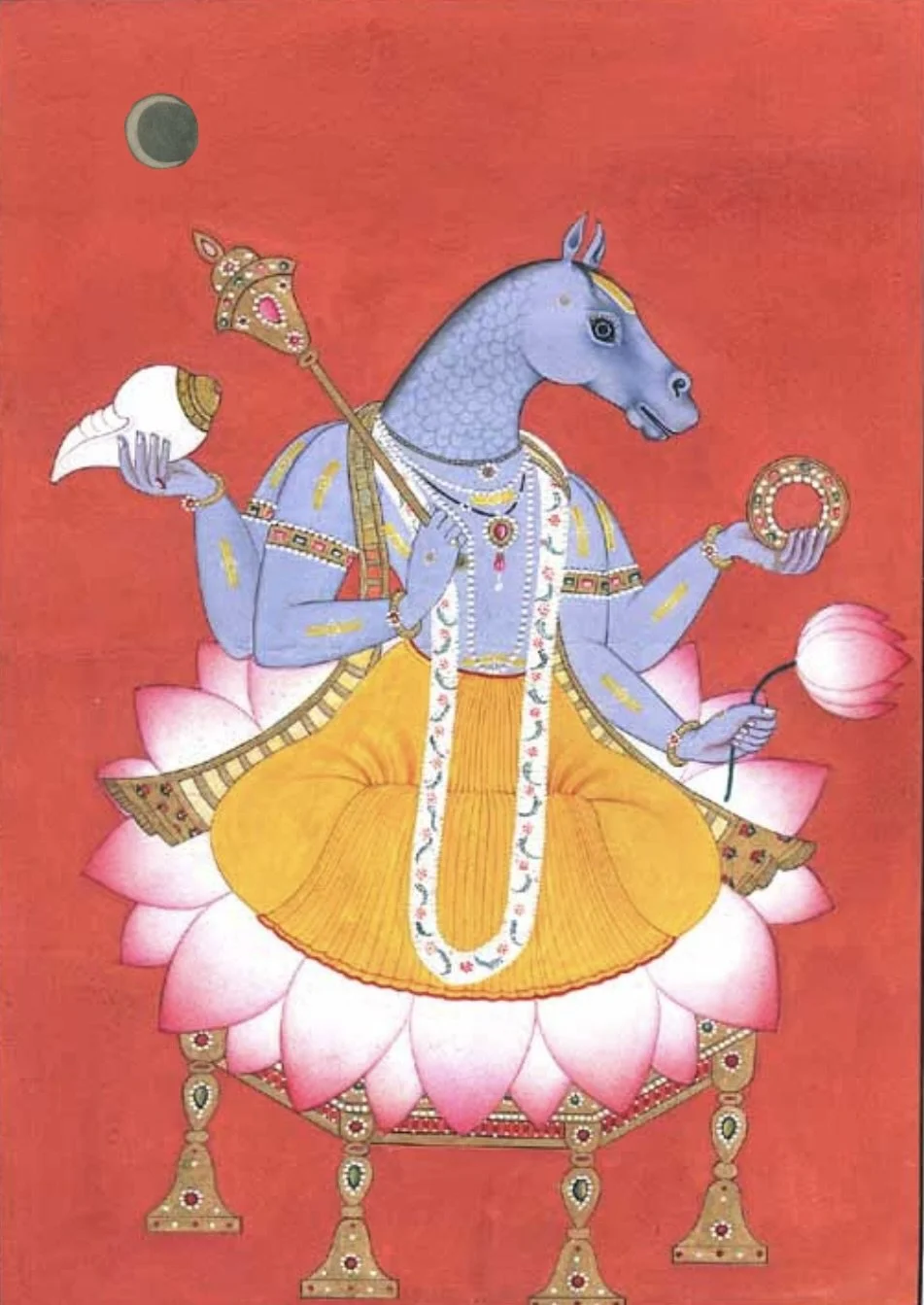
HAYAGRĪVA JAYANTĪ हयग्रीव जयन्ती

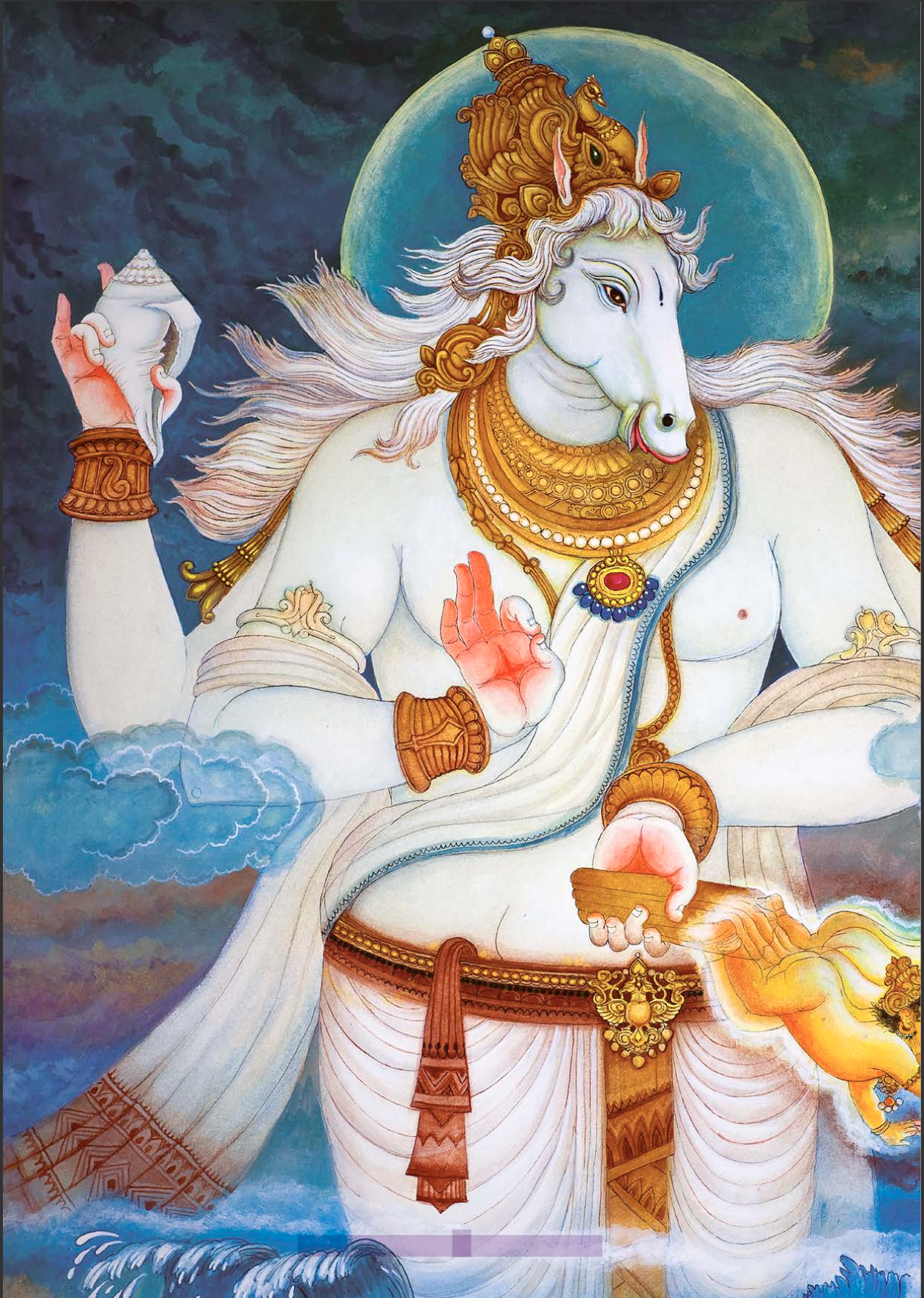
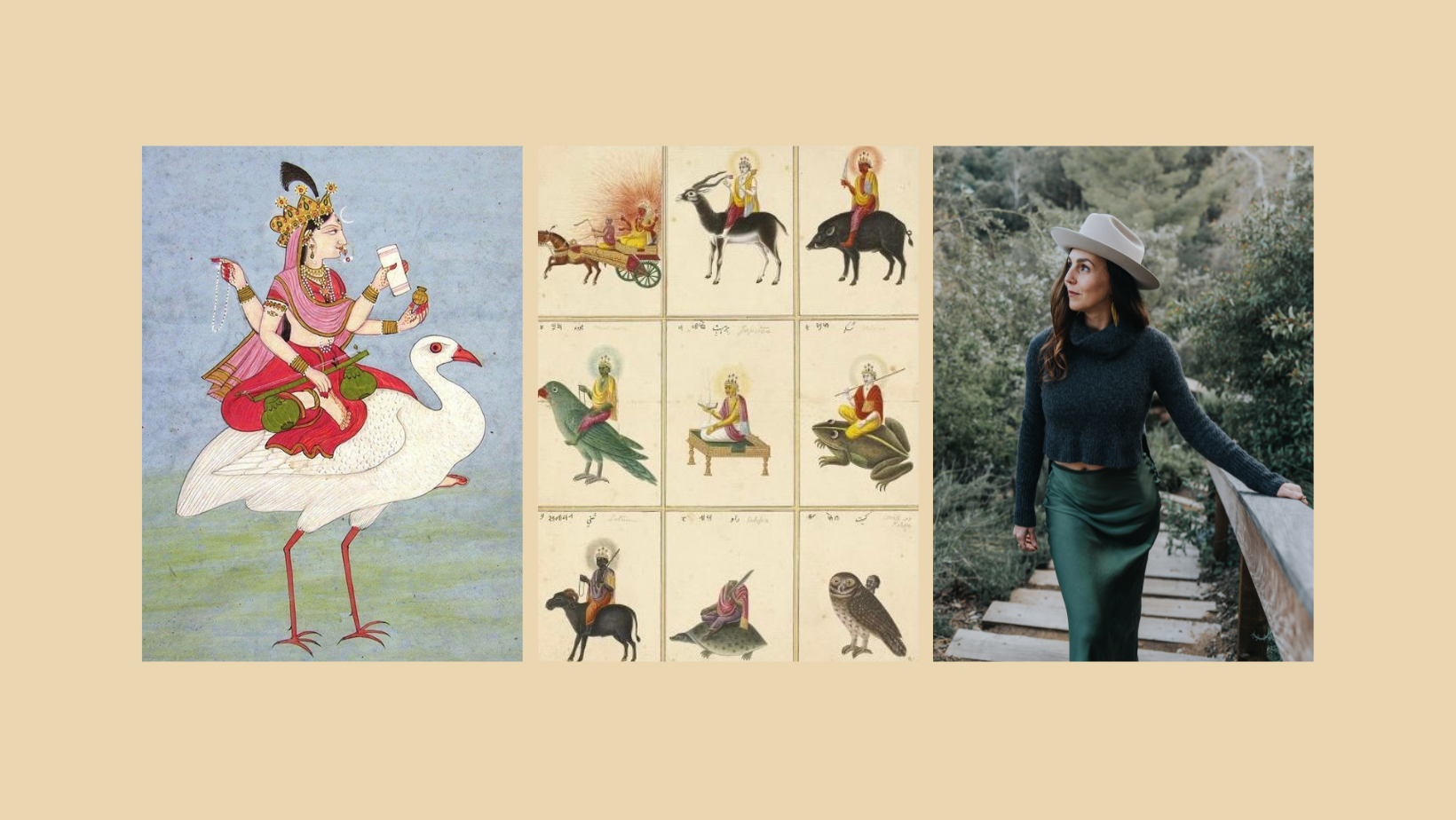
Artwork: HAYAGRĪVA unknown artist | Edit by @___turiya

August 27/28

The story begins with pralaya, the great dissolution, when the world is submerged beneath the waters and one creation gives way to the next.

With Matsya Avatāra, Viṣṇu carries the seeds of life and sacred knowledge safely through the waters of pralaya, preserving what must endure so that creation may begin again. As the waters recede and a new cycle of creation unfolds, another ancient narrative brings us to Hayagrīva, Viṣṇu as the radiant embodiment of divine knowledge and wisdom.

At the beginning of creation, Viṣṇu revealed the Vedas to Brahmā, through whose knowledge the ordered universe could unfold. In one telling, the asuras Madhu and Kaiṭabha, recognizing the immense power contained within the Vedas, stole them from Brahmā and concealed them in the depths of the primordial waters. Without the Vedas, Brahmā was deprived of the sacred knowledge necessary for creation and turned to Viṣṇu for their restoration.

Viṣṇu assumed the form of Hayagrīva, brilliant white, with the body of a man and the head of a horse. Descending into the waters, he overcame Madhu and Kaiṭabha, recovered the Vedas, and restored them to Brahmā so that creation could proceed.

In the Lalitopākhyāna, Hayagrīva also appears as the teacher of the sage Agastya, transmitting to him the sacred mysteries of Śrī Lalitā Tripurasundarī and the Śrīvidyā tradition, including the Lalitā Sahasranāma.

Hayagrīva is worshiped as the divine embodiment of vidyā, sacred knowledge, wisdom, and learning. He is traditionally envisioned luminous white, clothed in white garments and seated upon a white lotus.

This eclipse also arrives alongside Hayagrīva Jayantī and Gāyatrī Jayantī “Hayagrīva” below and I’ll send you the full kathā.


GĀYATRĪ JAYANTĪ गायत्री जयंती

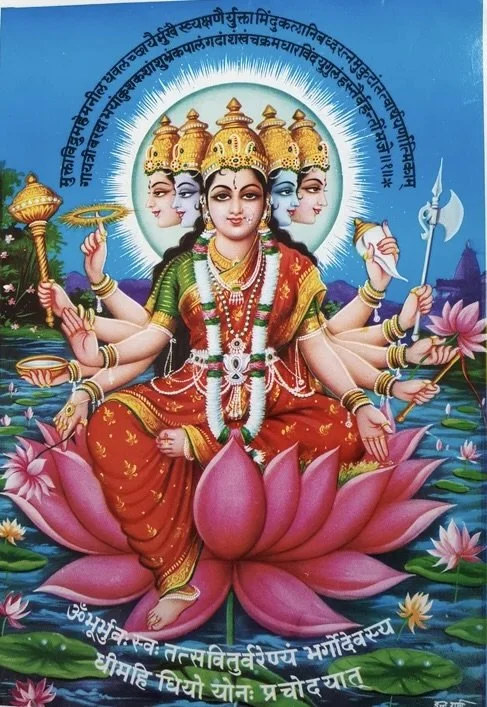
Gāyatrī Jayantī is the auspicious observance honoring Gāyatrī Devī, Vedamātā, the Mother of the Vedas, and the divine source of the Gāyatrī Mantra, the most revered mantra of the Vedic tradition. On Śrāvaṇa Pūrṇimā, her celebration is intimately connected with Upākarman, the annual renewal of Vedic study and recitation.

On this day, practitioners traditionally recommence svādhyāya, renewing their relationship to the Veda, sacred knowledge, teacher, and lineage. It is traditionally said that the sound of Gāyatrī should be kept alive within the home through daily recitation, with at least one member of the household maintaining the practice.

Gāyatrī is the living architecture of light and sound through which Vedic wisdom is revealed. Her name belongs first to the Gāyatrī chandas, a sacred meter of twenty-four syllables arranged across three pādas of eight. Among all meters through which the Ṛṣis received and transmitted sacred knowledge, Gāyatrī chandas is held supreme. It was within this meter that the celebrated Sāvitrī mantra was revealed to Ṛṣi Viśvāmitra in the Ṛg Veda.

The mantra is addressed to Savitṛ, the solar deity and devatā of Hasta Nakṣatra, invoking the divine radiance that illumines dhī, our faculty of intelligence and discernment.

As Vedamātā, she precedes what she mothers. As the twenty-four-syllabled mantra, her body is the map of the twenty-four tattvas, the principles through which the unmanifest takes form. The three vyāhṛtis that open her invocation, Bhūḥ, Bhuvaḥ, and Svaḥ, name the three worlds through which her light is revealed.

For millennia, practitioners have turned to the Gāyatrī Mantra as a means of purification, illumination of the buddhi, and alignment with ṛta, or Natural Law.

We meditate upon the divine radiance of Savitṛ. May that light illumine our own creative intelligence and cognition.

ॐ भूर्भुवः स्वः ।
तत्सवितुर्वरेण्यं ।
भर्गो देवस्य धीमहि ।
धियो यो नः प्रचोदयात् ॥


Varalakṣmī Vratam

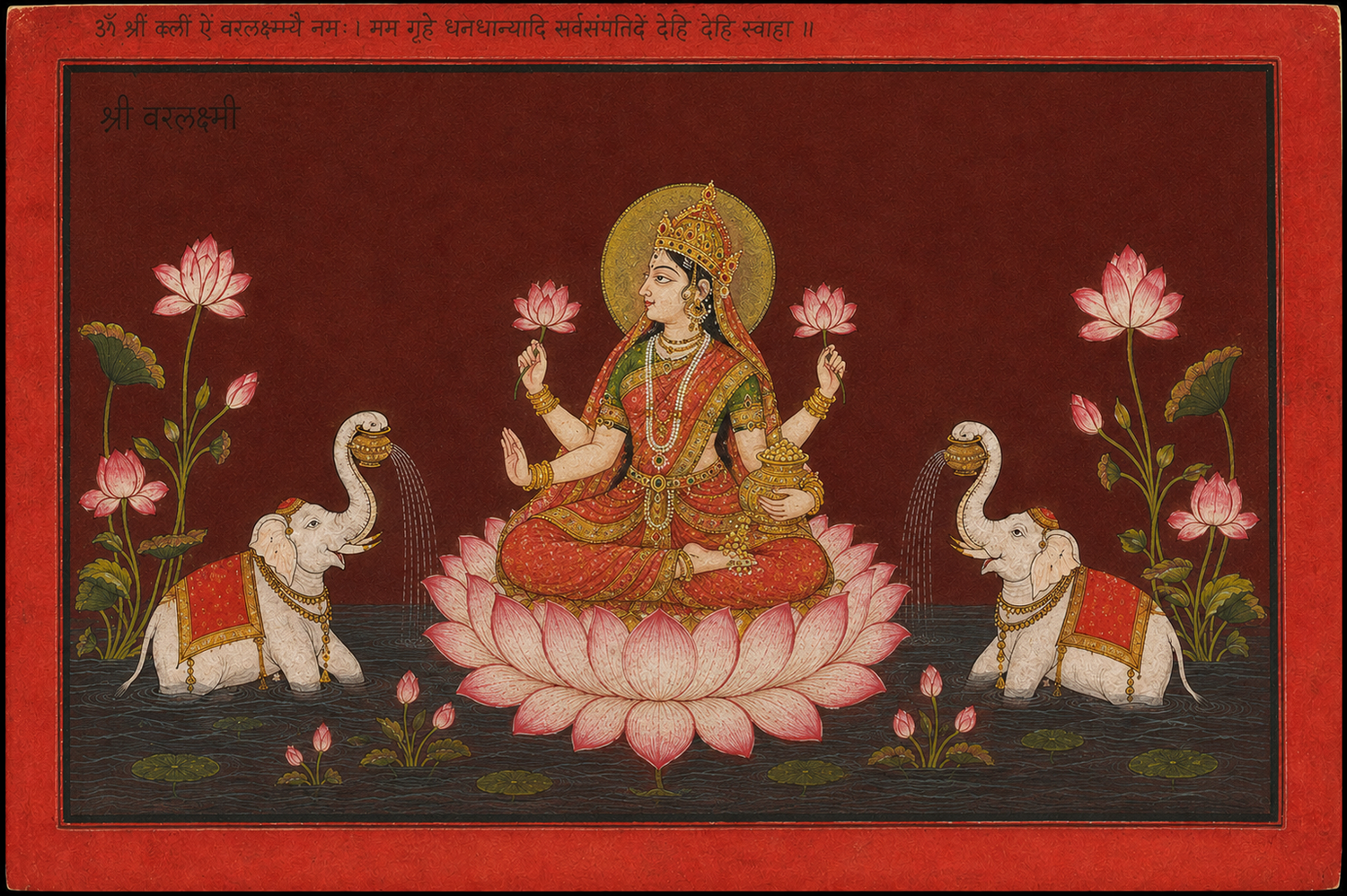
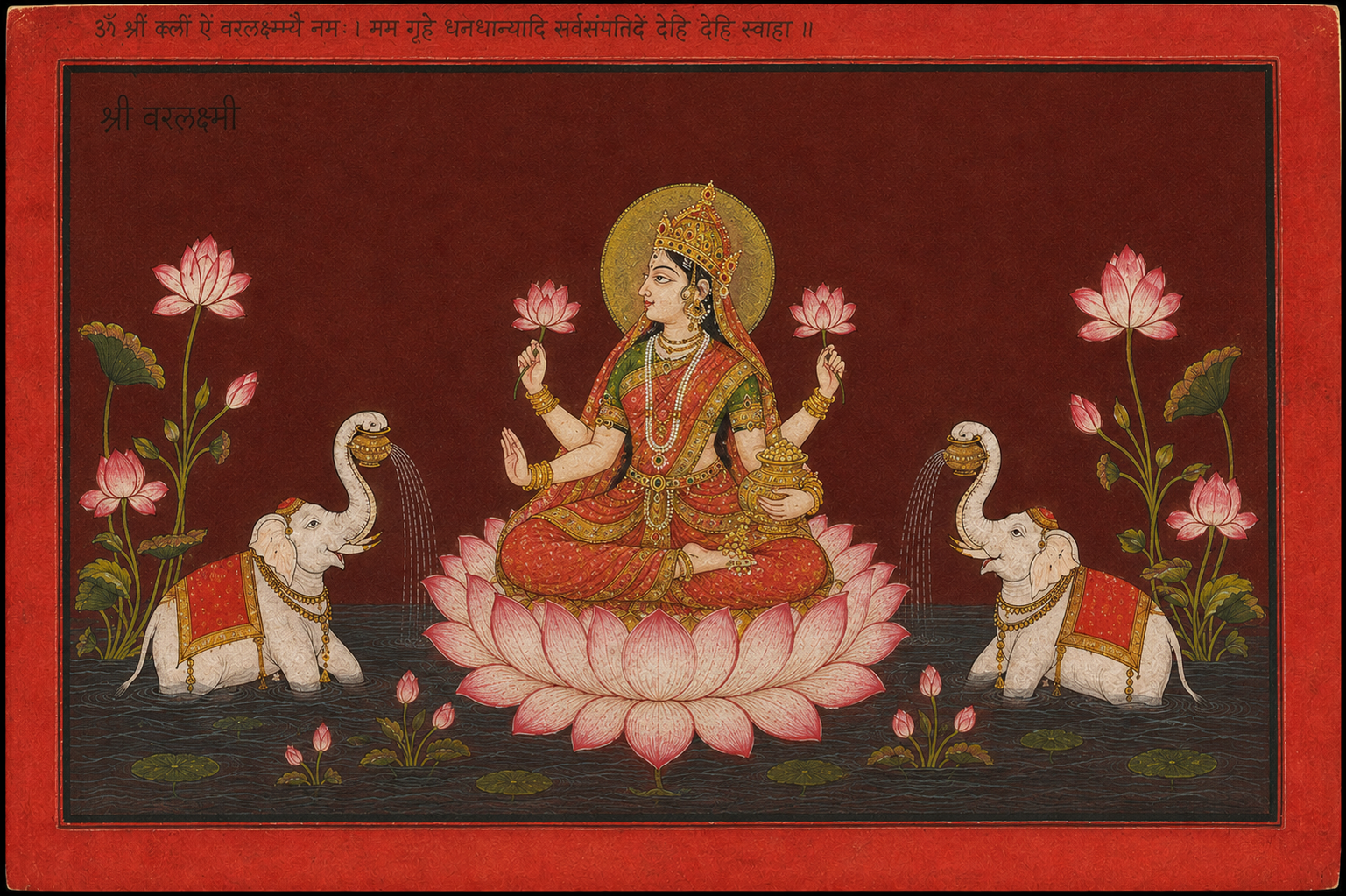
Artwork: Created by @___turiya

The lunar eclipse also coincides with Varalakṣmī Vratam. Varalakṣmī Vratam is traditionally observed by women as a sacred fast and vrata in honor of Varalakṣmī, the boon-giving form of Śrī Lakṣmī. Through fasting, prayer, and pūjā, she is invoked for the well-being, prosperity, longevity, and auspiciousness of the household and family.

oṁ śrī varalakṣmyai namaḥ
ॐ श्री वरलक्ष्म्यै नमः

Lunar Eclipse in Śatabhiṣā: The Veiling Star

FULL MOON LUNAR ECLIPSE

Varuna edit by @___turiya

August 27/28

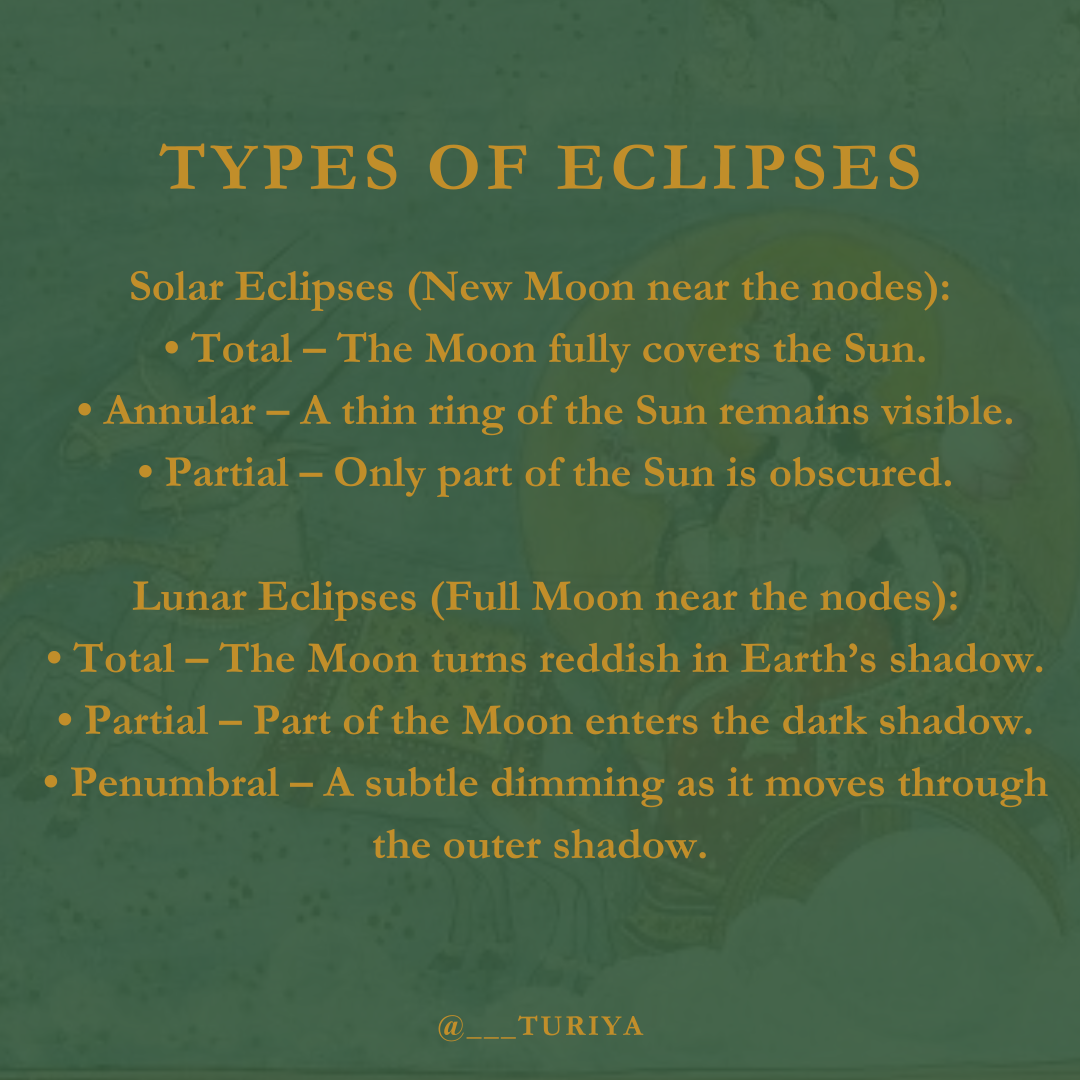
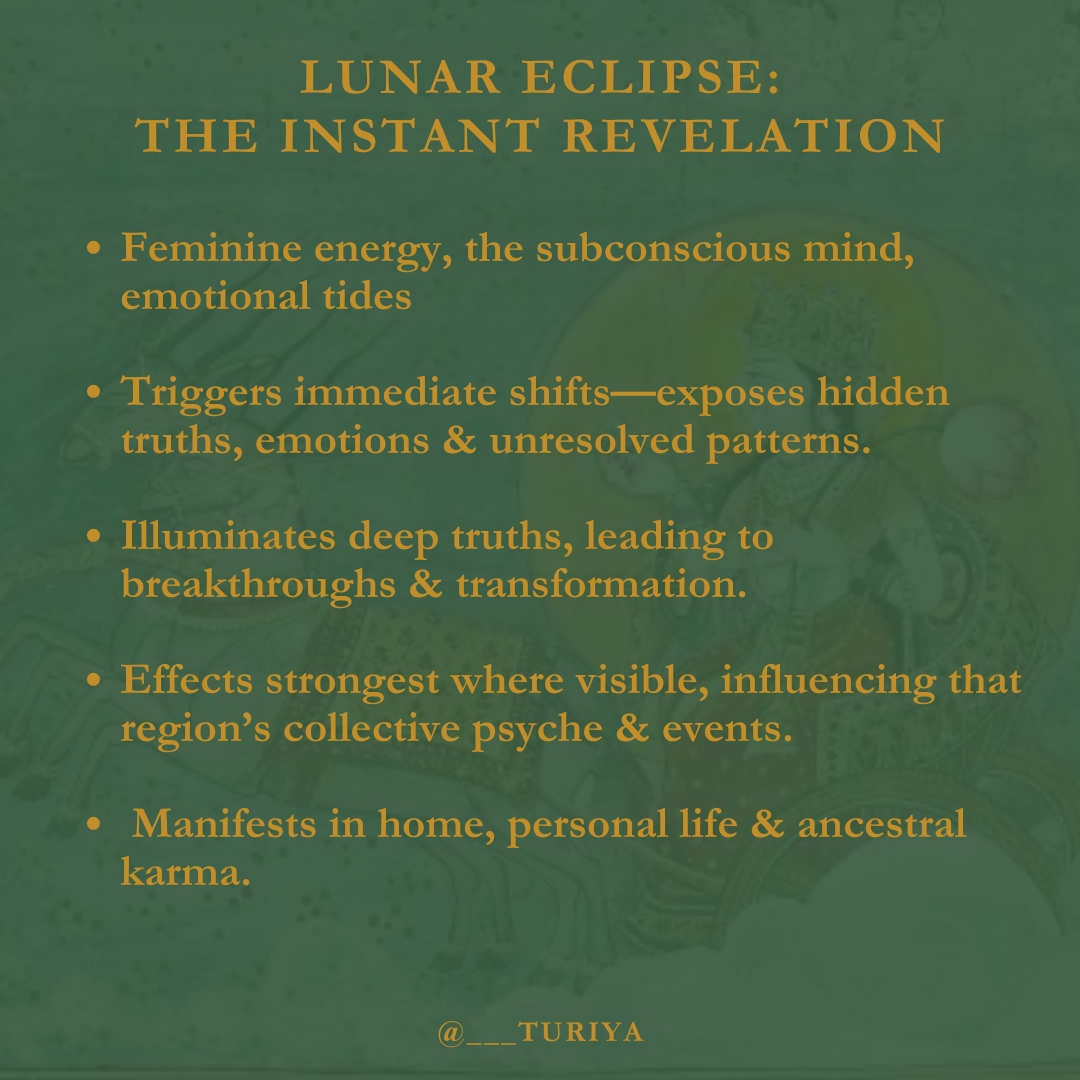
Eclipse season culminates with the Shravana full moon and partial lunar eclipse (candra grahaṇam चन्द्र ग्रहणम्) gracing the Vedic Lunar Mansion of Śatabhiṣā (शतभिषा), The Veiling Star.

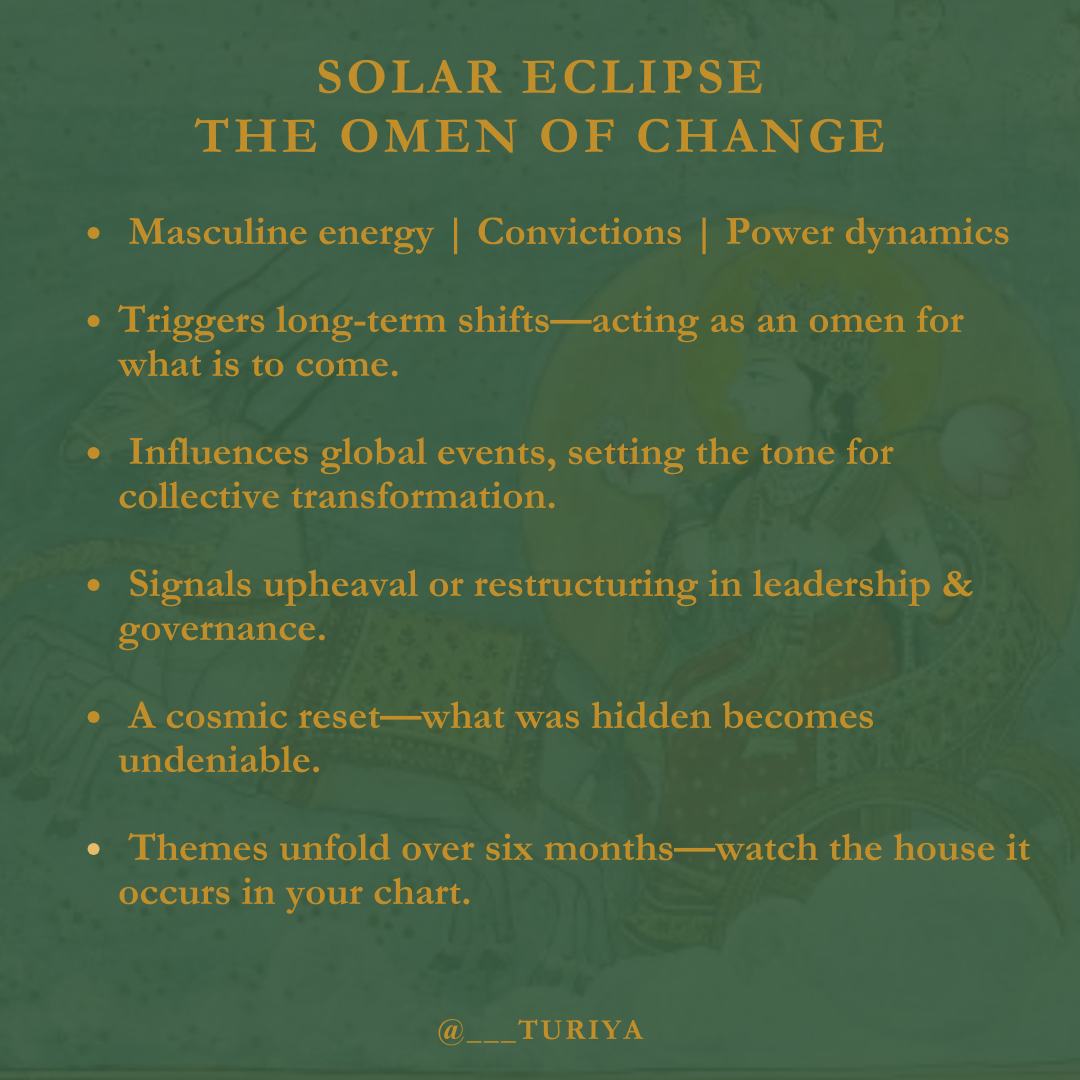
We've been living in a time outside of time, a season opened by the solar eclipse in Āśleṣā, whose tone carries forward for the six months ahead. Āśleṣā asked us to face what we'd rather not look at: the serpent's coiled medicine beneath the surface. Now, as we close this chapter, it asks us to heal what it exposes.

Lunar eclipses are thresholds. The veil between seen and unseen grows thin; what is ready to be healed rises to the surface. This cycle urges us to refine our inner compass, untangle an old karmic pattern, and release what no longer belongs in our becoming.

Emotions may heighten. Truths long concealed come to light. With the Moon eclipsed, we may find ourselves at a crossroads — uncertain, weary, or on the verge of change. Yet within this threshold is a promise: a shift in trajectory. A recalibration of desire.

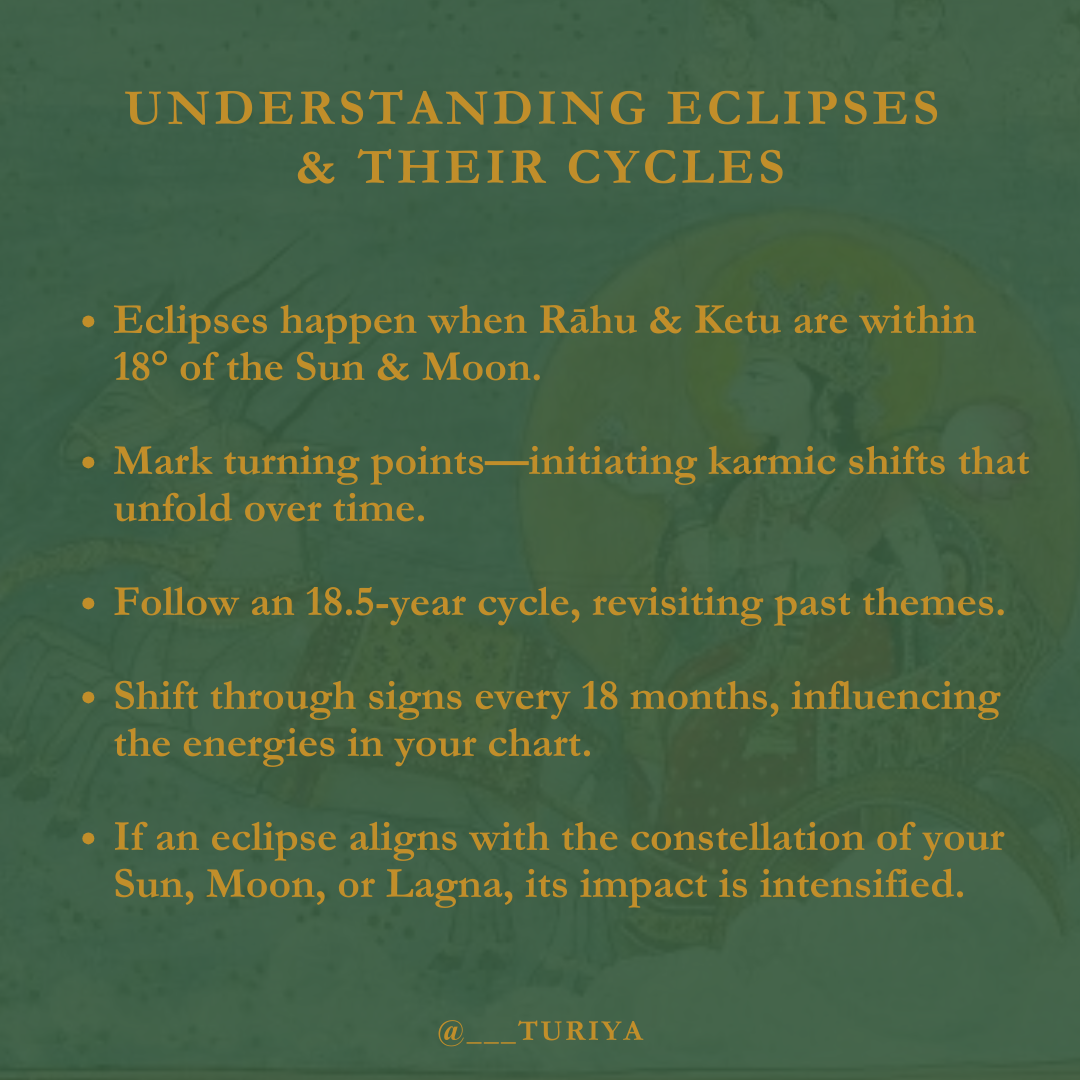
Śatabhiṣā represents the zenith of Rāhu's energy, seated in the heart of Kumbha, the last kāma house. The ancient ṛṣis saw Śatabhiṣā as a gathering of one hundred faint stars, reflected in its association with the hundred physicians or healers.

Known as the constellation of the vow, Śatabhiṣā is ruled by Varuṇa, lord of the night sky and the celestial and terrestrial waters (the masses). As the keeper of ṛta, divine order, Varuṇa, the Sky Watcher, stirs within us the yearning to pierce the veil of darkness and enter the void.

Much like its yoni animal the female horse — civilization's first sacred medicine — this nakṣatra embodies both mystical and physical powers, allowing it to bear heavy burdens over great distances. 

Just like the boss mare, who senses danger and shifting conditions before the rest of the herd and leads them accordingly, Śatabhiṣā's role rests on an extraordinary sensitivity to the environment: watchfulness, discernment, the capacity to perceive what is not yet visible.

Śatabhiṣā holds Bheshaja śakti, the awakening energy to heal, support, and redeem, as the trials and tribulations experienced under the star of the divine healer arise to rectify our path. What once felt confusing can become a vehicle for profound self-realization and even redemption.

Artwork by: G.L.N. Simha

The lunar eclipse holds a promise of an instant reveal — the veil begins to lift. What was once veiled starts to reveal its deeper pattern. Yet great discrimination is required, for Varuṇa, lord of fate, reminds us that not everything is revealed at once. 

Motivations may remain hidden, consequences concealed, and the deeper laws at work beyond our immediate perception. Under Varuṇa's watchful gaze, the truths that surface cannot be unseen; they ask to be integrated so that our actions once again align with ṛta—the cosmic order.

From this place, healing becomes possible. What once felt like confusion or disorientation may reveal itself as the medicine that redirected your course. Continue to distill the wisdom and lessons that have been presenting themselves since pre-eclipse season and Mercury direct. With greater clarity emerging in the weeks ahead, a more stable foundation begins to form — one from which thoughtful movement forward can begin.

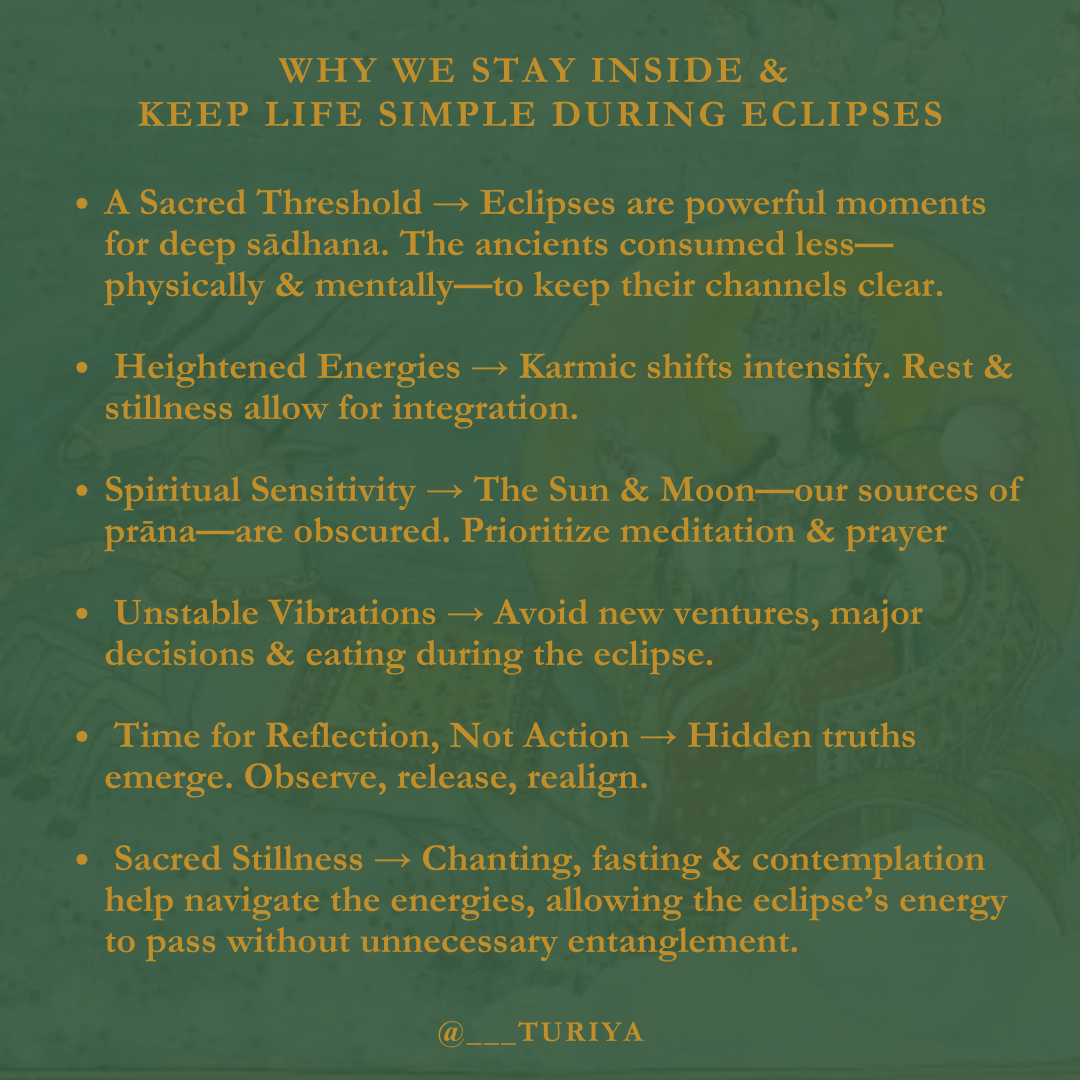
The ancients taught that any practice undertaken during an eclipse bears fruit a thousandfold. In this sacred window, they consumed less, physically and mentally, to keep their channels clear. With the Sun and Moon, our sources of prāṇa, obscured, this becomes a potent time for:

  • Mantra chanting

  • Meditation & breathwork

  • Prayer & fasting

  • Turning inward, rather than outward

It is also recommended to bathe before and after the eclipse to cleanse both body and mind, allowing for a smoother energetic transition.

When eclipses are visible from your location (North, Central, and South America), they are amplified, holding extra power for mantra siddhi. During eclipse windows, it is traditionally advised to postpone major auspicious undertakings such as marriage or business ventures. It is, however, an ideal time for sādhanā.

Eclipses stir duality to initiate purification — a necessary process through which self-knowledge is deepened and stabilized. Any turbulence you feel is part of this alchemy.

During this eclipse window, keep life simple. Stay grounded. Rest.

Pay close attention if you have major planets — your Sun, Moon, or Lagna in Śatabhiṣā (शतभिषा) (Sidereal Aquarius). This cycle may bring sudden change, an unanticipated turning point, or the revelation of something deeper within. Also take note if you are currently running a dāśā or antar dāśā of Rahu or Sun, Moon.

Trust that this cycle serves as an initiation, sowing the seeds of transformation that will blossom in divine timing, guiding you into the next phase of your journey.

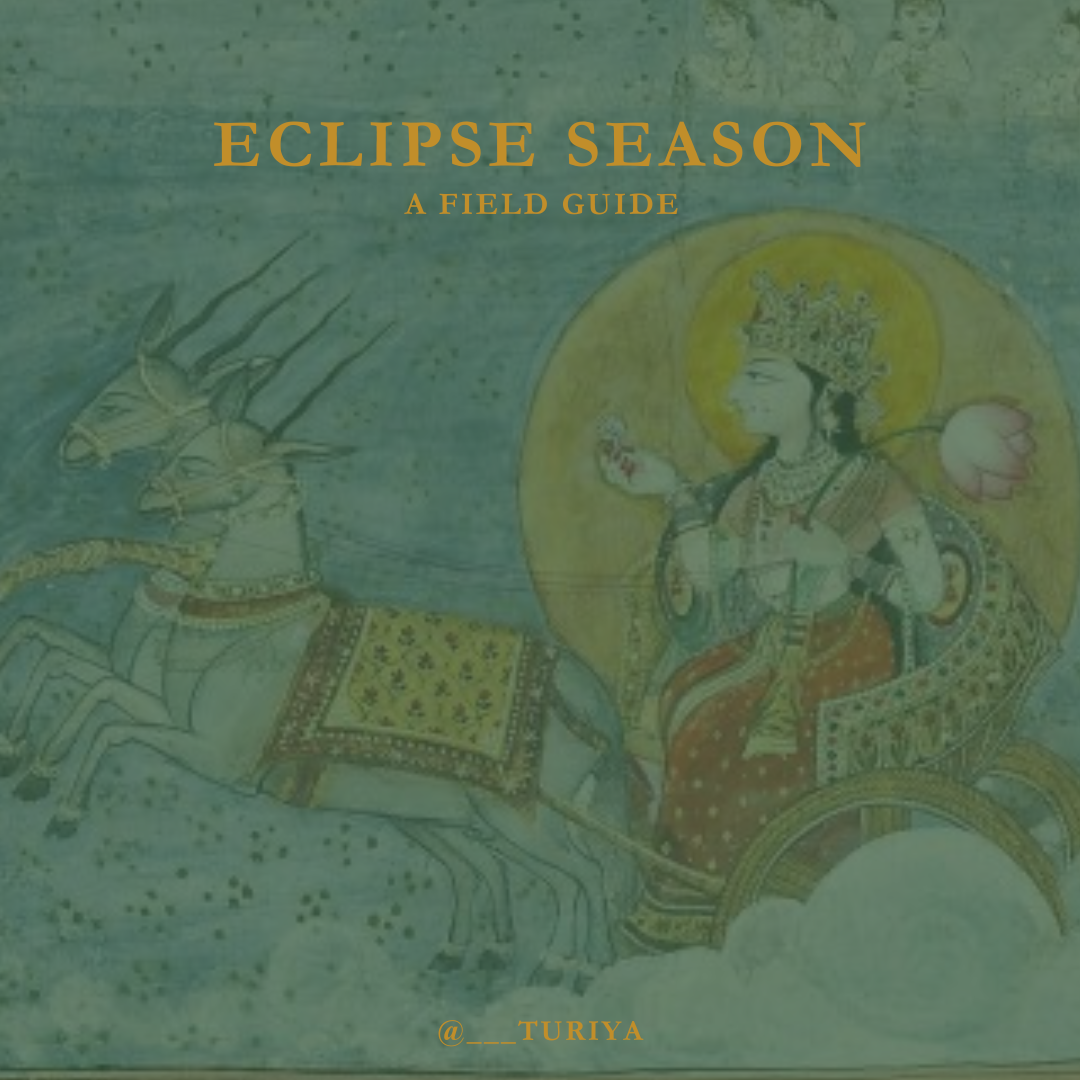
Artwork: Created by @___turiya

This eclipse arrives alongside three sacred observances: Hayagrīva Jayantī, Gāyatrī Jayantī, and Varalakṣmī Vratam. Hayagrīva and Gāyatrī honor the preservation, revelation, and transmission of Vedic knowledge, while Varalakṣmī is worshiped as the boon-giving form of Śrī Lakṣmī, invoked for abundance, well-being, and auspiciousness. Together, they bring vidyā and śrī, sacred knowledge and divine abundance, into the threshold of the eclipse.

ॐ भेषजाय विद्महे

 वरुण देहाय धीमहि 

तन्नो शतभिषः प्रचोदयात

Oṁ Bheṣajāya Vidmahe

Varuṇa Dehāya Dhīmahi

Tanno Śatabhiṣaḥ Prachodayāt

Partial Lunar Eclipse: August 27/28th

Full Moon in Śatabhiṣa (Aquarius)

27th - 21:18 PST | 28th - 9:48am IST

Eclipse hours: 27th - 8:23 PM - 00:01 AM PST | 28th - 6:53AM - 12:31pm IST

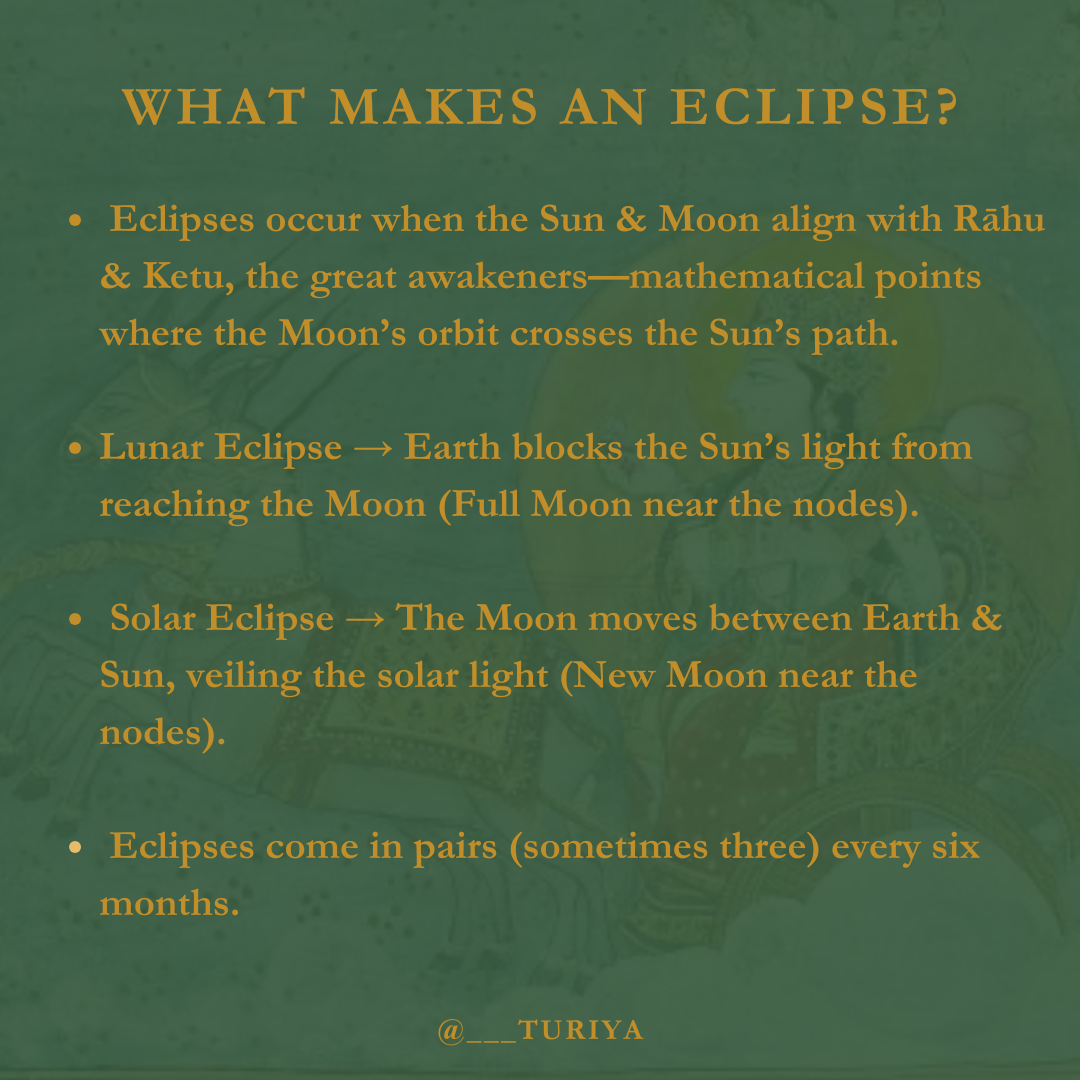
The eclipse will be fully visible from most of North, Central, and South America, including the United States, Canada, Mexico, the Caribbean, and much of Central and South America.