
Kṛṣṇa Janmāṣṭamī & Kālī Jayantī
Artwork from Pinterest
September 3/4
On the aṣṭamī tithi of the dark fortnight, kṛṣṇa pakṣa, reckoned as Śrāvaṇa in the South and Bhādrapada in the North, two auspicious observances converge: Śrī Kṛṣṇa Janmāṣṭamī and Kālī Jayantī.
Janmāṣṭamī marks the divine appearance of Śrī Kṛṣṇa, the eighth incarnation in the daśāvatāra of Viṣṇu, the avatāra who embodies love, play, and dharma's restoration. Devotees immerse themselves in Harikathā, narrating his holy names, forms, qualities, and divine pastimes, while bhajans lift the heart through devotional song and dance. Many observe a day long fast, breaking it at midnight with ritual offerings and prasādam.
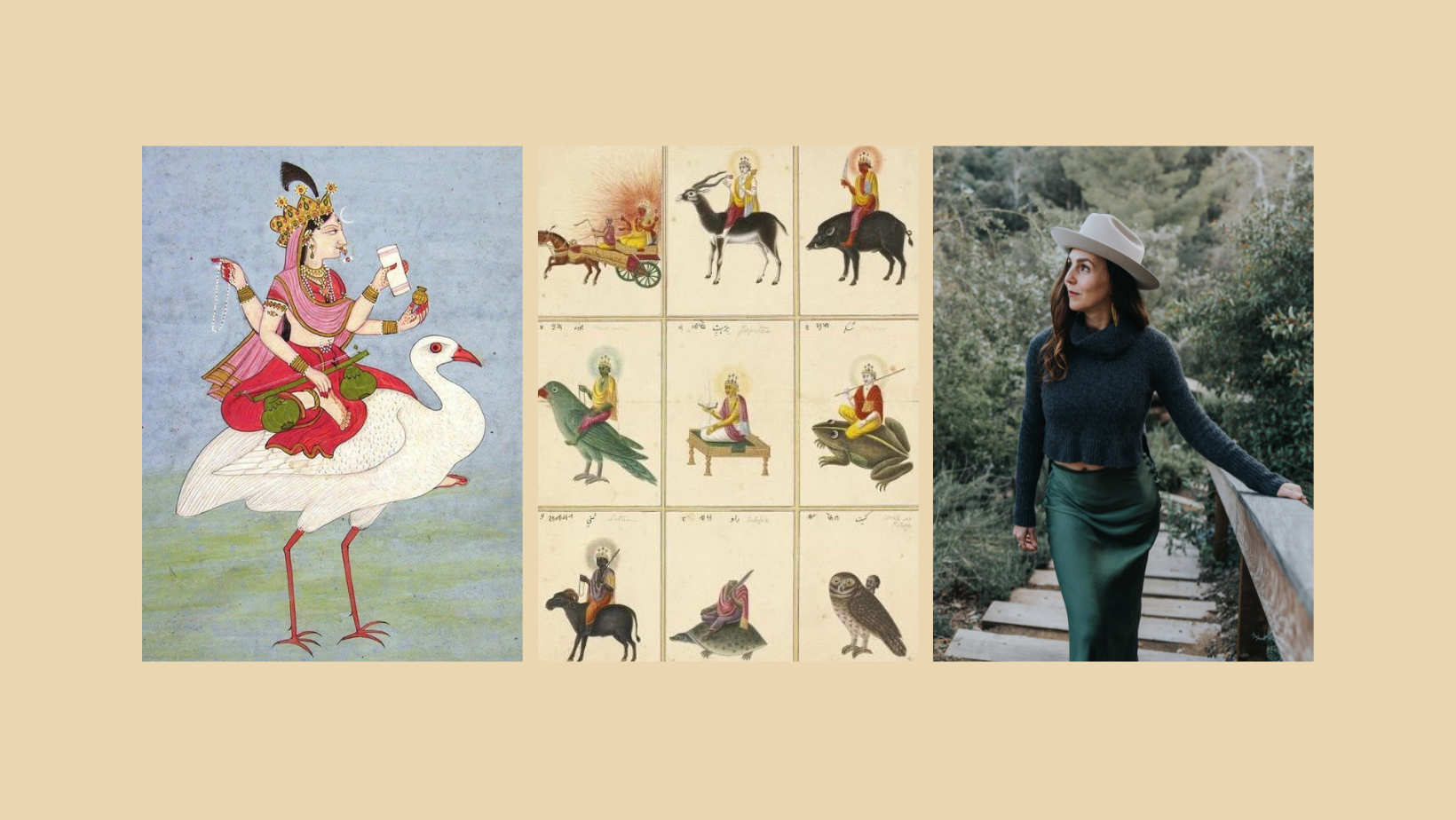
Lord Parāśara points to the life of Kṛṣṇa as the teaching through which the Moon is best understood, and Kṛṣṇa's own birth star is Rohiṇī, the most beloved to Chandra. Nearly every classical kāraka of the Moon appears in his story: manas, the mind, in how he moves every heart around him; the indriyas, the senses, as Arjuna's own charioteer; the mystery of birth and the continuation of lineage, in the tangled circumstances of his own birth; bhakti, in the Gopīs and the Rāsa Līlā.
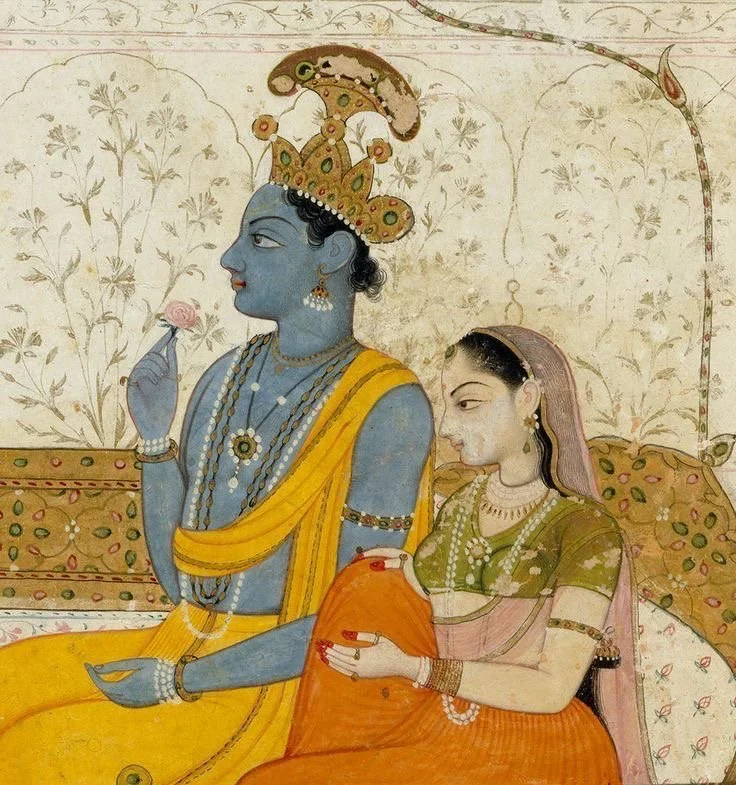
As Arjuna's charioteer in the Bhagavad Gītā, Kṛṣṇa imparts the wisdom of karma yoga, the yoga of selfless action, guiding us toward freedom from attachment to the fruits of our actions. True strength, in his telling, lies not in conquering the world but in mastering the mind and senses. He taught Arjuna to go beyond the three guṇas, establish himself in that field of pure consciousness, and act from there.
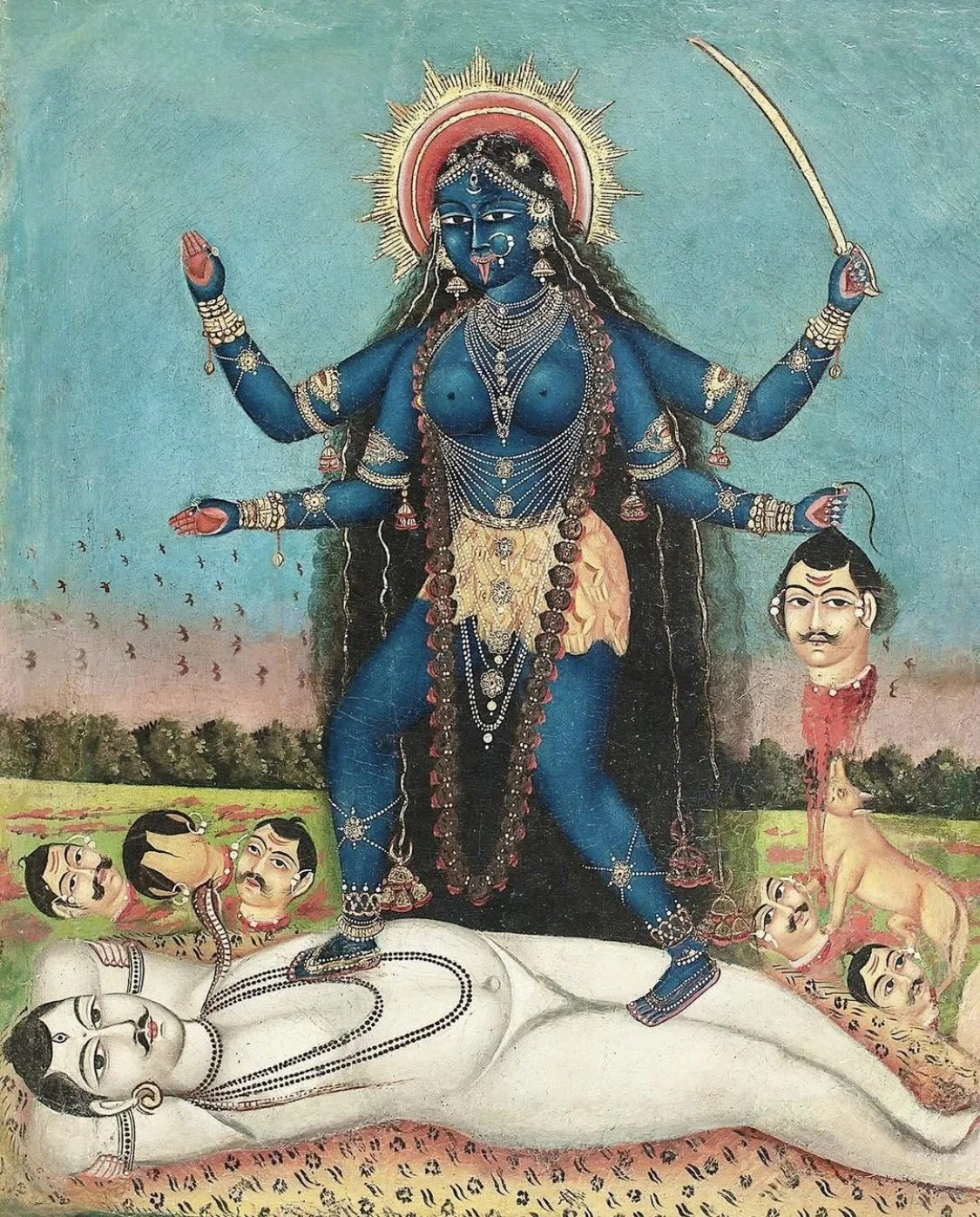
On this same lunar day, the dark and liberating Mother, Mahākālī, connected to Śani Dev, is also especially honored. Her Jayantī reminds us of the force that severs illusion, awakens truth, and grants fearlessness.
Kālī, adorned with the muṇḍa mālā, the garland of severed heads, is the slayer of ego and illusion. Each severed head is a Sanskrit letter, showing that she devours the very roots of false identity, sound, speech, and thought, and transforms them into ornaments of wisdom.
Her teaching is fierce. She strips away every veil until only the Self remains. To the ego she is terror; to the soul she is freedom. Naked, unbound by space or time, she reveals that clinging to what perishes is bondage, and resting in awareness is liberation.
Her stance upon Śiva is the union of opposites, movement anchored in stillness, time held by eternity. Śakti grounds in Śiva, showing that power without consciousness is chaos, and consciousness without power is inert. Together they awaken balance, the rhythm of creation, dissolution, and liberation.
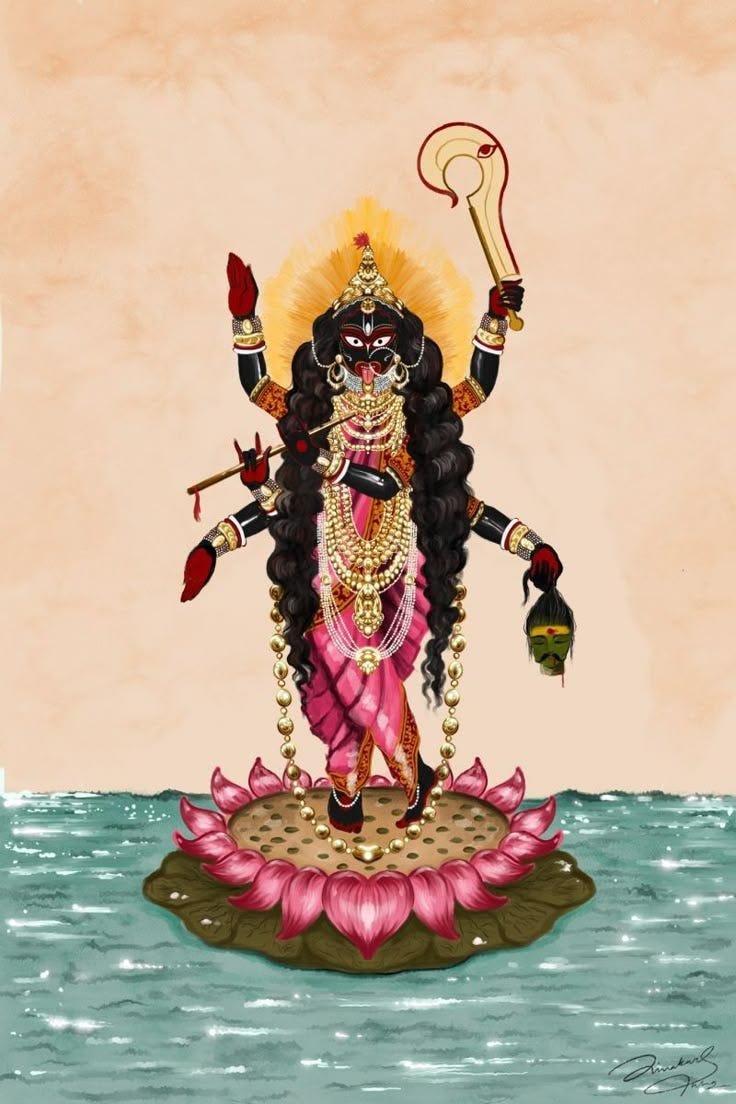
Her connection to Kṛṣṇa is profound. Both embody the mystery of Time, kāla svarūpa. Kālī, the dark Mother, consumes all forms back into herself. Kṛṣṇa, the dark Beloved, enchants all beings toward him. In the Gītā he declares, kālo'smi loka kṣaya kṛt pravṛddhaḥ, I am Time, destroyer of worlds. Both wear the hue of infinity, śyāma varṇa, not as absence but as the womb of creation.
Like Kṛṣṇa, she is Time itself, dark, infinite, and irresistible. He enchants the soul through love, encouraging right action, yoga sthaḥ kuru karmāṇi. She liberates the soul through fearlessness, slaying the false self so the infinite may shine. Kālī is truth without compromise. Kṛṣṇa is truth through love. One cuts, the other draws near. But both dissolve the ego and awaken the eternal Self.
All My Relations
कालीं कृष्णं नमाम्यहम् ।
Kālīṁ Kṛṣṇaṁ namāmyaham.
“I bow to Kālī, I bow to Kṛṣṇa—Dark Mother, Dark Beloved—forms of the one eternal.”
योगस्थः कुरु कर्माणि सङ्गं त्यक्त्वा धनञ्जय।
सिद्ध्यसिद्ध्योः समो भूत्वा समत्वं योग उच्यते॥ २.४८॥
yoga-sthaḥ kuru karmāṇi saṅgaṁ tyaktvā dhanañjaya |
siddhy-asiddhyoḥ samo bhūtvā samatvaṁ yoga ucyate || 2.48 ||
“Established in yoga, perform your action, O Dhanañjaya (Arjuna),
abandoning attachment, remaining equal in success and failure.
Such equanimity is called yoga.”
Bhagavad Gītā (2.48)