New Moon in Punarvasu: The Star of Renewal

NEW MOON IN PUNARVASU

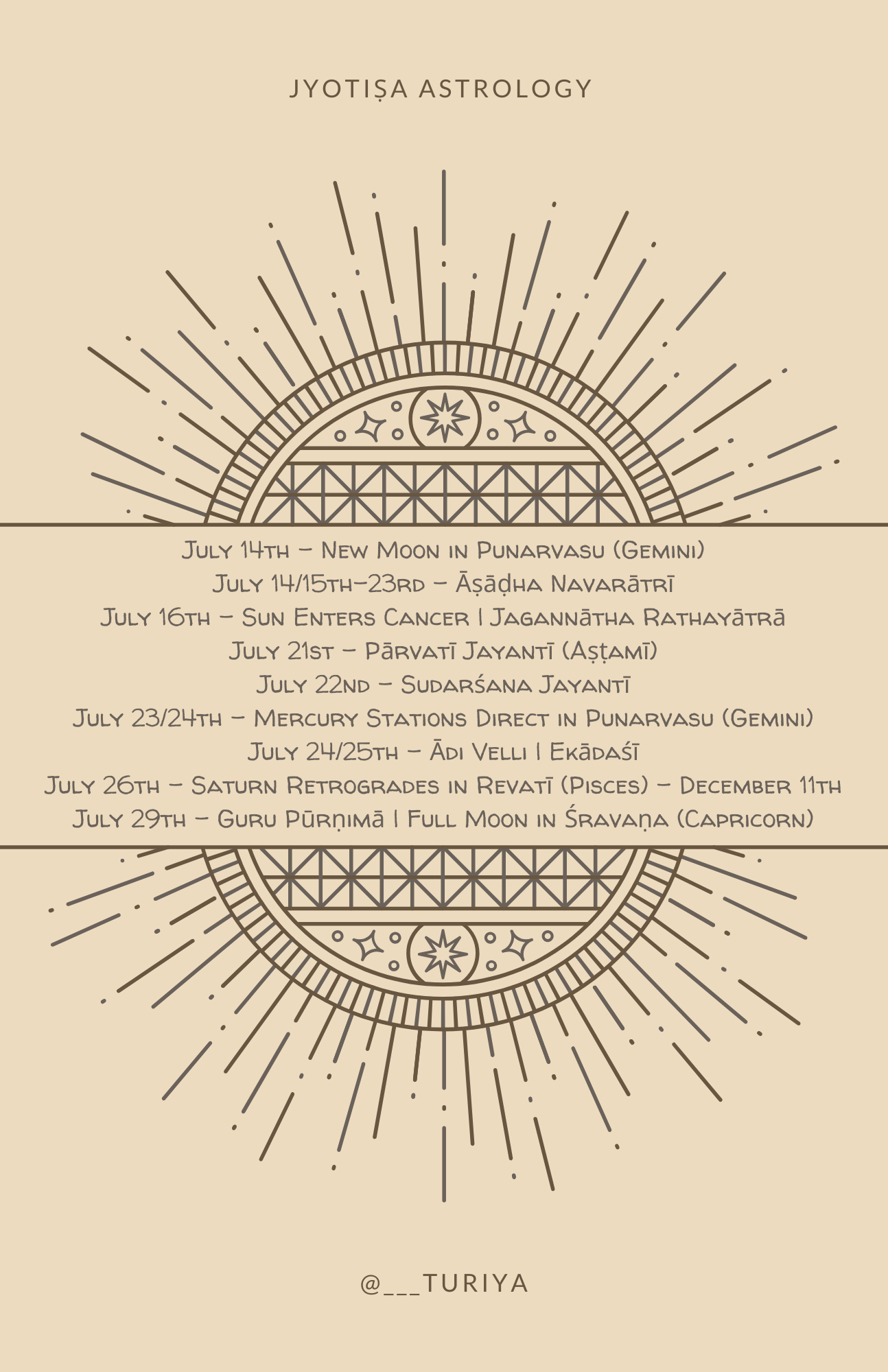
July 14th

The New Moon of July aligns both the sun and moon in the Vedic lunar mansion of Punarvasu पुनर्वसु (Gemini), the Star of Renewal.

There is a particular density to this lunation, a sense of something returning rather than advancing. Mercury has been moving through this same terrain for weeks now, and the New Moon arrives with the same inward motivation. This is not movement for its own sake, but a careful reorientation, a course correction that seeks to settle what has been unsettled and begins a restoration from within.

What surfaces here is deeper than a simple reset. It is a quiet renegotiation of what is foundational, as though something essential is being restored to its rightful place. Nothing here is merely refreshed; it is rebuilt, and asks to be met with attentiveness and discernment.
In the night sky, Punarvasu is anchored by Castor and Pollux, poised in the constellation of Mithuna just above Orion. The ancient Ṛṣis witnessed this asterism as a quiver of arrows, drawn taut and held in readiness. It is an image not of repose, but of gathered potential — energy contained before its release — and it sets the tone for all that Punarvasu embodies.

Symbolized by a quiver of arrows, Punarvasu carries the śakti of Vasutva Prāpaṇa, the power to regain, restore, and recover what has been lost. Governed by Jupiter and presided over by Aditi, the boundless mother of the Ādityas, it represents the replenishment of life force after expenditure, the rebuilding that follows disruption, and the return of light after a storm.

Mercury, interwoven with this lunation cycle, asks the question: Who am I? Through inquiry, discernment, and interpretation, Budha separates the essential from the incidental, neutralizing what no longer serves and restoring equilibrium. 
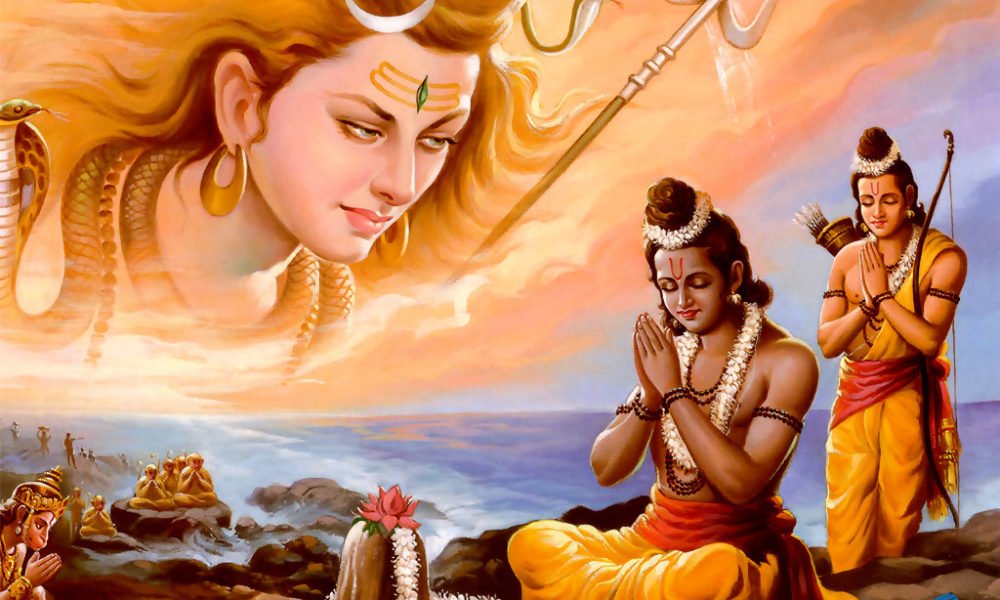
We are being drawn inward through svādhyāya (true self reflection), back to the center of our wheel. Certain karmas are coming to completion. Certain stories are ready to be rewritten. Certain patterns have reached their natural end. Mercury’s retrograde passage asks for patience before any final conclusion is drawn.

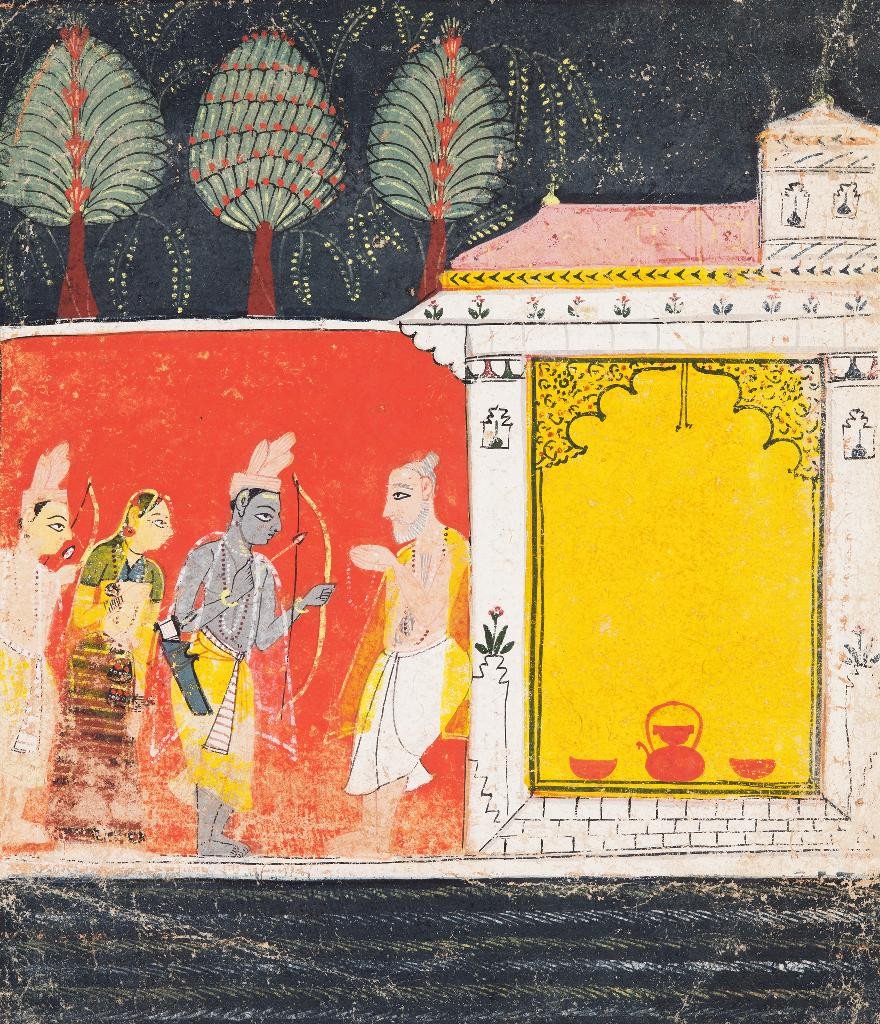
In the dialogue between Lord Rama and Vasishta, after returning from pilgrimage, Rama finds himself inwardly unsettled, as though the journey has brought him not completion, but a deeper question. Out of that inner unrest, Vasishta unfolds his teaching: that freedom lies not in fleeing the world, but in discernment — in seeing clearly the transient nature of all that passes, and in loosening the mind’s false identification with it. In this way, action is not abandoned, but purified: no longer driven by longing or fear, but guided by self-knowledge.

There are further questions to be asked and further information to be gathered. Move slowly. Reconsider before reacting. Restore before expanding. Build quietly before announcing. The light is returning, and Punarvasu reminds us that renewal is not found by pushing forward, but by returning to what is essential. 

New Moon Timin: 2:43AM PST | 15:13pm IST
Jupiter in Gemini

JUPITER INTO GEMINI

5/14 – 11/11 ’25

(Returns: December 20, 2025 – May 24, 2026)

Jupiter (Bṛhaspati), the benevolent guru to the devas—planet of wisdom, expansion, and discernment—enters sidereal Gemini (Mithuna) on May 14, continuing his transit through Mṛgaśīrṣa, the Searching Star. A time to place our discernment—and our investments—in their proper place.

As Jupiter moves through Mṛgaśīrṣā in Gemini, we enter a cycle of refined curiosity and deeper understanding. This is an invitation to pursue knowledge with both analysis and devotion.

Ruled by Soma, the lunar deity of nourishment and subtle vitality, Mṛgaśīrṣā supports a gentler, contemplative expansion. Jupiter here doesn’t rush—it wanders with purpose, gathering insight, refining speech, and reweaving thought into wisdom.

This period invites a reassessment of our chosen path, urging us to realign our pursuits with our highest truth and ensure our investments—of time, energy, and intention—are placed wisely. Mṛgaśīrṣā’s restless search has us questioning what is truly worth pursuing, stripping away illusion to reveal a more authentic sense of purpose.

From June 13 to August 13, Jupiter transits Ārdrā (आर्द्रा), the Star of the Storm. Symbolized by a teardrop, Ārdrā initiates destruction not as punishment, but as purification. This is not a time to scatter energy, but to channel it with discernment and precision. Amidst the collective unraveling, clarity arises only by anchoring into what is internally true—rather than reacting to outer turbulence.

From August 13 to October 3, Jupiter moves into Punarvasu (पुनर्वसु), the Star of Renewal. Ruled by Aditi, the mother of the gods, this constellation brings restoration after the storm. Symbolized by a quiver of arrows, Punarvasu holds the power to rebuild what was scattered—to re-inhabit what is life-giving, expansive, and aligned. A return to inner abundance, this is Jupiter remembering how to direct energy wisely, to fill the reservoir rather than drain it.

From October 3 to November 11, Jupiter moves through Puṣya (पुष्य), the nourisher. The teachings begin to stabilize, and what has been learned may take form. Puṣya brings maturity as well as an intesity to Jupiter’s journey.

On November 11, Jupiter retrogrades into Cancer, inviting a return inward. What has been intellectually understood must now be emotionally integrated. He re-enters Gemini on December 20, continuing retrograde until March 11, 2026, and then returns once more to Cancer on June 1st, 2026—completing a cycle of mental expansion and inner restoration.

Bṛhaspati is Jīva Kāraka—the indicator of the individual soul—breathing life into being. He is the carrier of ākāśa (ether) tattva, the significator of śabda (sound), the lord of speech (vāk), viveka (discernment), and restoration. He is said to have a voice like a lion, and his vāhana is the elephant. Predominantly Kapha in constitution, he is also kāraka of storehouses and treasures.

Associated with meda dhātu (fat tissue), he is adaptive and expansive. As Śrī Vāmana, the fifth avatāra of Viṣṇu, he utilized deception to restore the worlds back to their rightful place. We invoke him to protect our intelligence (buddhi).

Tārā, the Mahāvidyā aligned with Jupiter, is the fierce liberator who guides through the power of śabda brahman—primordial sound. Like Bṛhaspati, she is teacher and protector, revealing truth and ferrying the soul across the ocean of saṁsāra.

Those in a Jupiter or Mars daśā or antara, or with key natal placements in Mṛgaśīrṣa, Ārdrā, or Punarvasu, will feel the movement of this transit more directly.

ॐ ह्रीं श्री गुरुभ्यो नमः।

enters Gemini on May 14th

enters Ārdrā on June 13th

enters Punarvasu on August 13th

enters Cancer on October 3rd

goes retrograde in Cancer on November 11th

reenters Gemini on December 20th

goes direct in Gemini on March 11th, ‘26 

reenters Cancer June 1st