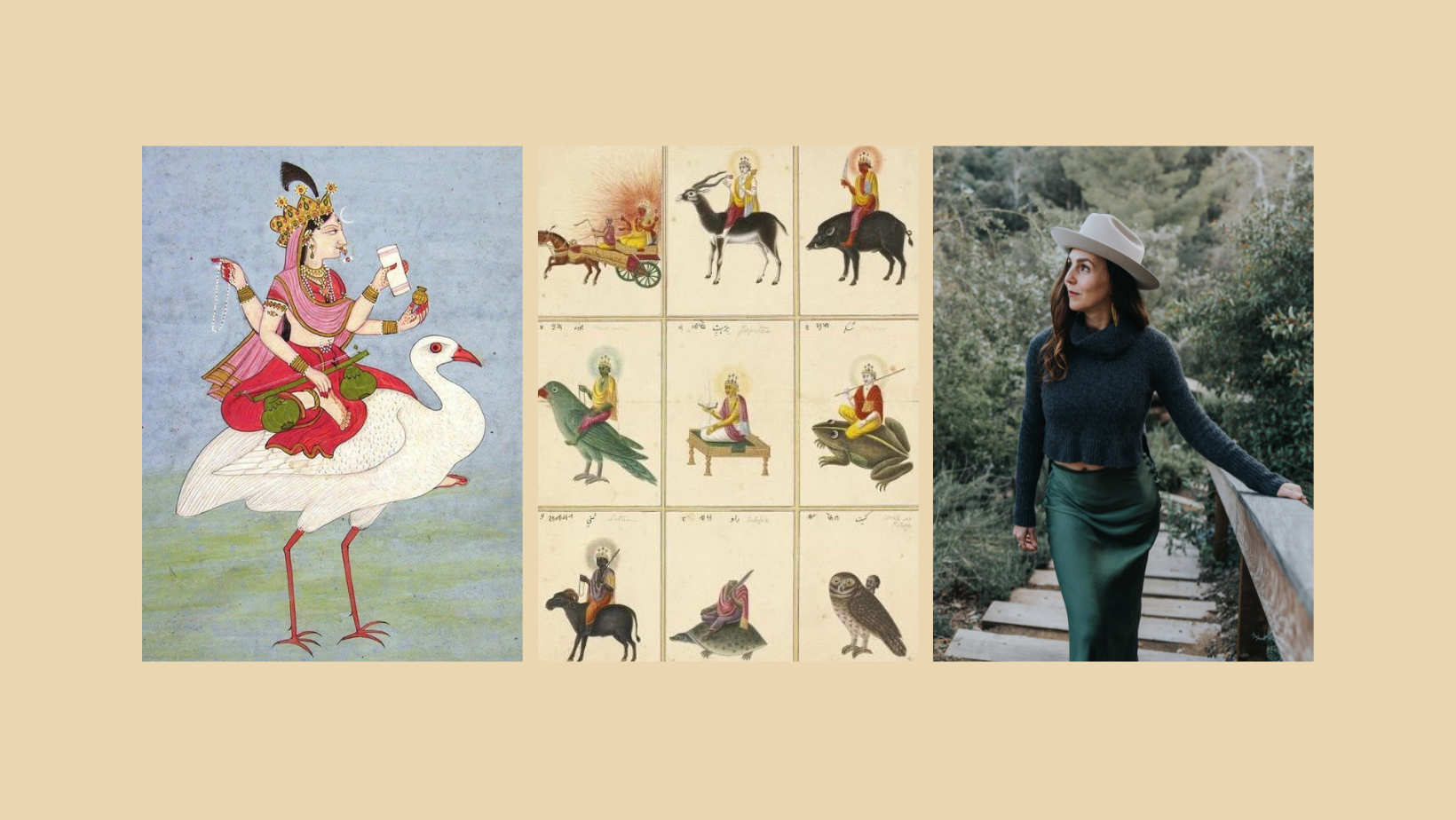
Full Moon in Anurādhā: The Star of Success

FULL MOON IN ANURĀDHĀ
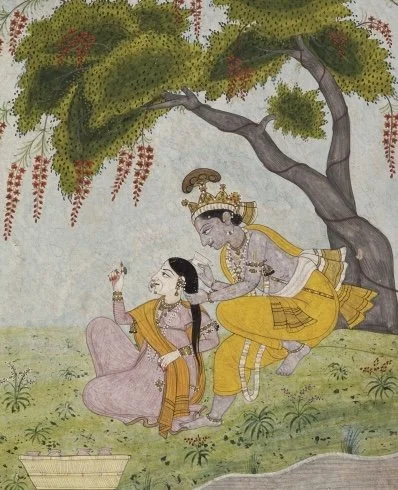
Artwork: Krishna Combs Radha's Hair. Punjab Hills, c. 1820.

05.31.26

The Full Moon पूर्णिमा arises beneath the Vedic lunar mansion of Anurādhā अनुराधा (Scorpio), the Star of Success. This constellation reminds us that what is cultivated with devotion, patience, and sincerity eventually bears fruit.

Governed by Mitra, Devatā of friendship, harmony, and sacred alliance, this Nakṣatra illuminates the bonds, commitments, and shared purposes that unite individuals in meaningful relationship.

Recognized by the ancient Ṛṣis through the stars Acrab, Isidis, and Pi Scorpionis, whose staff-like formation rests within the heart of Scorpio, Anurādhā carries the power to unite individuals through friendship, devotion, and shared purpose.

Symbolized by the triumphal archway and the female deer, Anurādhā reveals both attainment and receptivity. The archway signifies success achieved through sustained effort, while the deer embodies the sensitivity, awareness, and gentle vigilance required to navigate the deeper terrain of the heart.
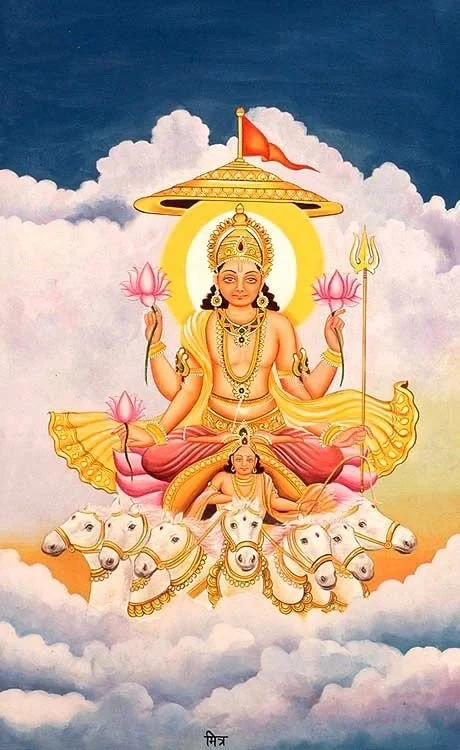
Artwork:Pinterest — Mitra

The refinements initiated beneath the New Moon in Kṛttikā now begin to reveal their fruits. What was offered into the sacred fire for purification, release, and transformation may now be seen with greater clarity as the light of the Full Moon illuminates what has taken root.

Known in certain traditions as the Rohiṇī of the underworld, Anurādhā marks a movement toward the Nivṛtti Mārga—the inward path. Here, the journey turns from outer attainment toward inner realization, inviting awareness beneath the surface of appearances and into the deeper chambers of the heart. Often symbolized as a cave, this Nakṣatra reminds us that the most enduring discoveries are not found through outward acquisition, but through sincere self-inquiry, devotion, and the courage to encounter what has remained hidden.

Anurādhā holds rādhāna śakti, the energy to turn the unconscious conscious, empowered through worship. Like the lotus that rises from the mud toward the light of the Sun, this Nakṣatra reminds us that transformation unfolds gradually through steady cultivation. It teaches that even the smallest spark of sincere devotion can illuminate the path ahead and awaken a thirst for deeper understanding. Be courageous enough to descend into what has remained unseen and bring it into the light of awareness.

With Jupiter, Mercury, and Venus conjoined in Gemini during Adhika Māsa, a deeper dialogue between the individual and the Divine becomes possible. This rare convergence favors self-inquiry, contemplation, and the refinement of understanding, creating fertile ground for insight to arise through study, reflection, and sincere devotion. 

All my Relations, Tulsi

Full Moon May 31st: 1:45am PST | 14:15 IST

Rādhāṣṭamī

Rādhāṣṭamī

राधाष्टमी

“Krishna Adoring Radha’s Hair”, ca. 1815-20. VMFA. Kangra

Today marks the sacred celebration of Rādhāṣṭamī, observed on the eighth day (āṣṭamī) of the bright fortnight (śukla pakṣa) in the auspicious month of Bhādrapada (Aug-Sept).

Śrīmatī Rādhārāṇī, the eternal consort and beloved of Lord Kṛṣṇa, is the embodiment of unwavering devotion and selfless love (bhakti). She personifies patience, humility, and pure devotion, offering a divine example of love in its highest form. Though she endured the fires of separation from her beloved, Rādhā expected nothing in return for her suffering, never once allowing complaint to cloud her radiant spirit. 

Her love transcends all worldly limitations—an eternal, luminous bond that reflects the soul’s deepest yearning for union with the Divine. To contemplate Rādhā is to unveil the profound mystery of unconditional love that flows without expectation, where the highest act of devotion becomes the offering itself, and union with Kṛṣṇa is the soul’s ultimate fulfillment.

It is said that her birth star was Anurādhā (Sidereal Scorpio), directly opposite Rohiṇī (Taurus), the birth constellation of Kṛṣṇa. Anurādhā, is connected to Saturn (Śani), and holds within it Rādhāna Śakti—the divine power of worship and devotion. This nakṣatra illuminates the sacred connection between Rādhā and Kṛṣṇa, as its inherent energy channels perseverance, discipline, and devotion, which are also characteristics of Śani’s influence.

Saturn, as the planet of karma and time, often reflects Rādhā's steadfastness in love and devotion. The trials Rādhā endured through separation from Kṛṣṇa resonate deeply with the lessons of Saturn—endurance through hardship, the purification of desires, and the ultimate transcendence of material attachments. Just as Saturn’s slow and deliberate movement teaches patience and resilience, Rādhā’s love is a testament to the soul’s capacity to remain unwavering in devotion, even when faced with immense challenges. Her connection to Saturn symbolizes the transformative power of love that transcends suffering and unites the individual soul with the Divine.

The rituals of Rādhāṣṭamī begin with the ceremonial bathing of Śrī Rādhā’s idol (mūrti) in pañcāmṛta—a sacred blend of milk, ghee, honey, sugar, and yogurt. Following this, she is adorned in new attire and honored through a grand procession alongside Lord Kṛṣṇa. In Braj, her birthplace, Rādhā and Kṛṣṇa are traditionally dressed in garments made entirely of flowers, and, in a rare and auspicious display, Śrī Rādhā’s feet are uncovered for darśana, allowing devotees to behold them.

Many devotees fast on this day, immersing themselves in recounting the holy names, divine qualities, and pastimes of Śrīmatī Rādhārāṇī. The festival concludes with a sacred feast (prasādam), honoring the divine presence of Rādhā and celebrating her transcendental love.

जय जय श्री राधे