Rādhāṣṭamī: Rādhā’s Appearance Day

RĀDHĀṢṬAMĪ राधाष्टमी
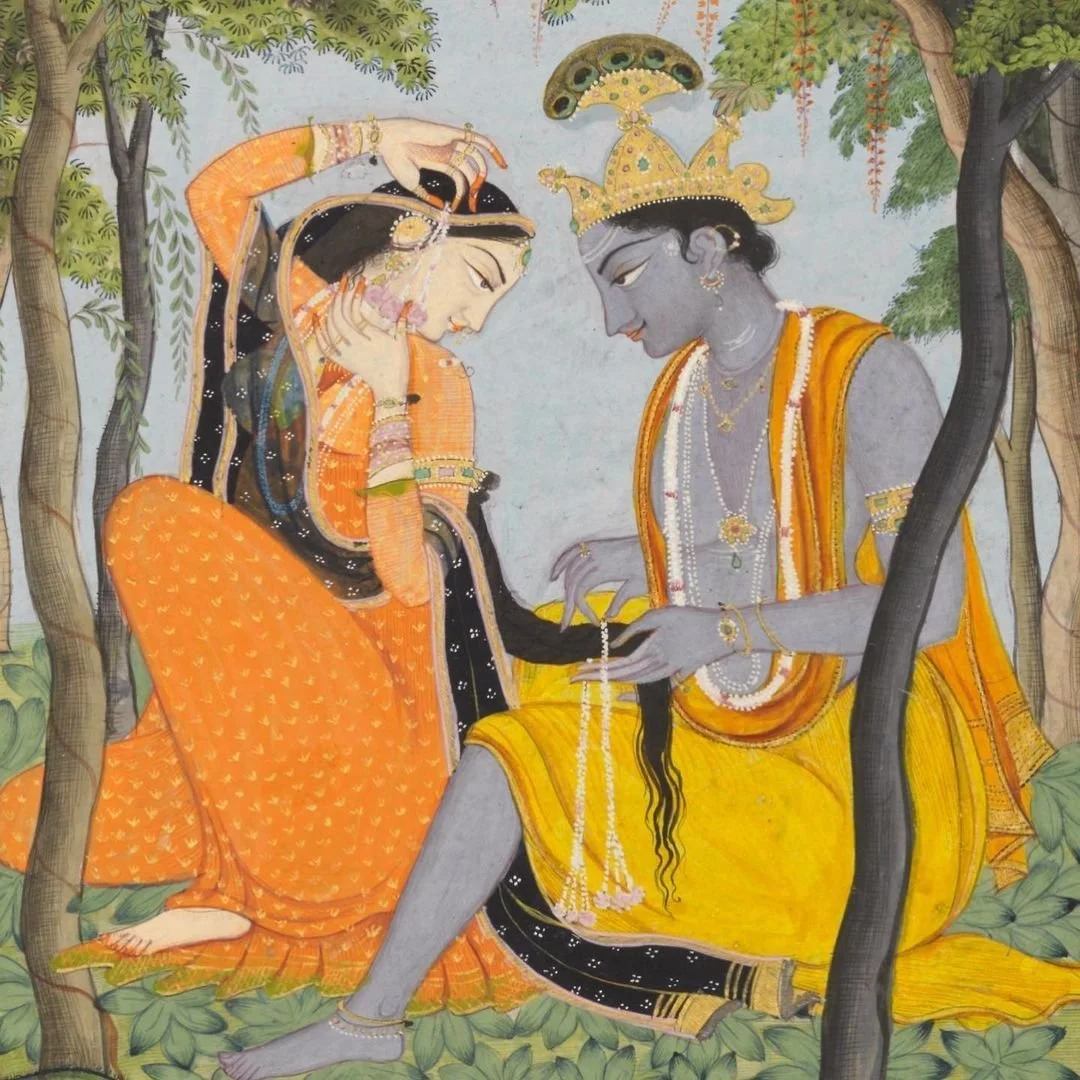
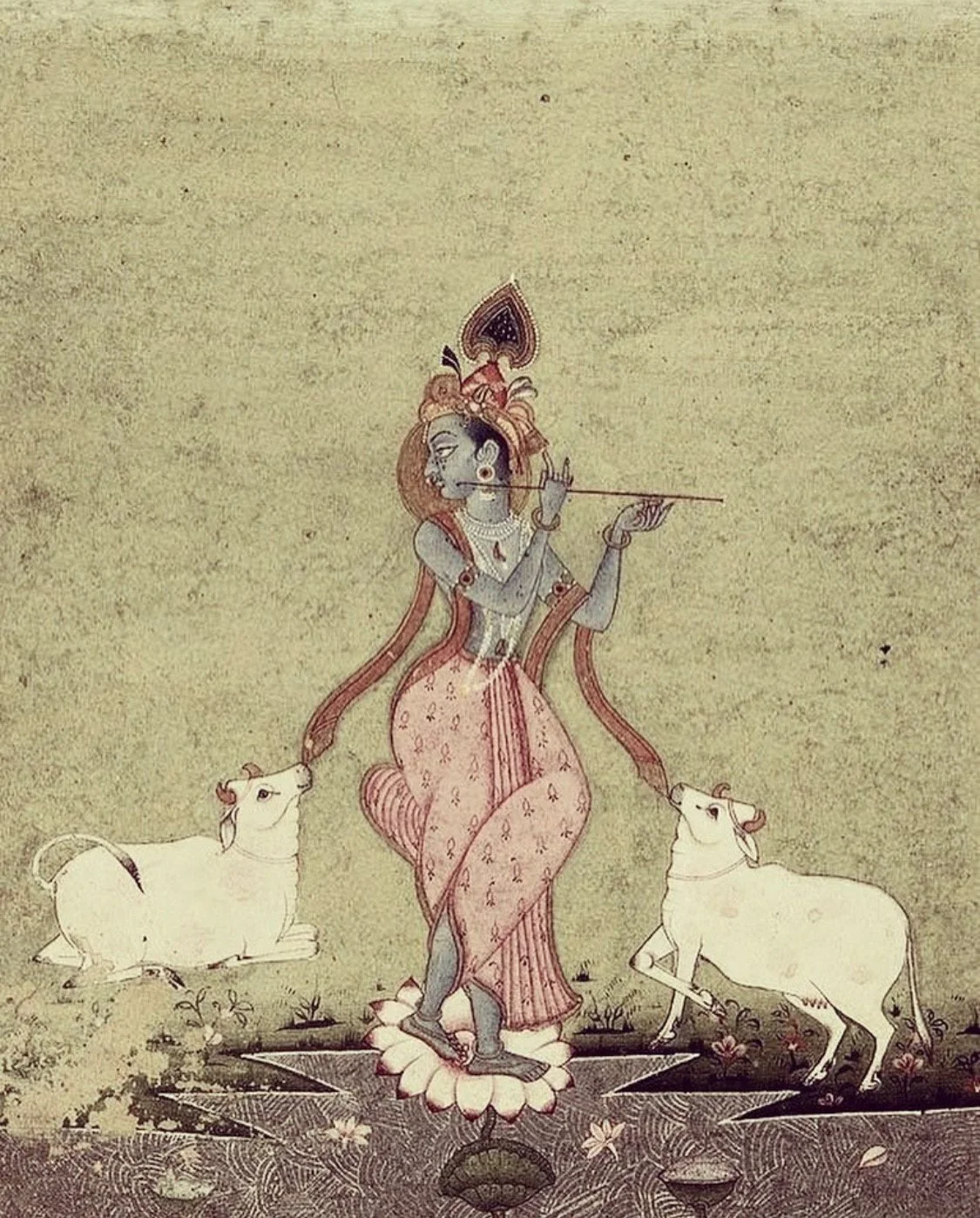
Artwork: “Krishna Adoring Radha’s Hair”, ca. 1815-20. VMFA. Kangra

Today (August 30/31st) marks the auspicious occasion of Rādhāṣṭamī (Rādhā’s appearance day), observed on the eighth day (āṣṭamī) of the bright fortnight (śukla pakṣa) in the sacred month of Bhādrapada (Aug–Sept).

Śrīmatī Rādhārāṇī, the eternal consort and beloved of Lord Kṛṣṇa, is the embodiment of unwavering devotion and selfless love. She personifies patience, humility, and pure devotion, offering a divine example of love in its highest form. Though she endured suffering in the fires of separation from her beloved, Rādhā expected nothing in return, never once allowing complaint to cloud her radiant heart.

To contemplate Rādhā is to unveil the profound mystery of unconditional, transcendental love—where the offering itself becomes devotion, and union with Kṛṣṇa is the soul’s ultimate fulfillment.

It is said that her birth star was Viśākhā विशाखा (sidereal Scorpio), whose Vyāpana Śakti is ‘the energy to achieve many goals,’ awakening ambition, devotion, and courageous pursuit—a constellation often connected to Devī and reflective of Rādhā’s own spiritual leadership.

The trials Rādhā endured through separation from Kṛṣṇa resonate with Śani Dev—the graha of restraint, patience, and longevity (Āyuḥ-kāraka). Saturn, who became the foundation for the churning of the cosmic ocean (Samudra Manthana), teaches endurance through hardship and the purification of desire, where love is tested and refined. 

Rādhā, the hightest expression of Śani, reveals how devotion endures even under these conditions, ultimately leading to the transcendence of worldly attachments.

The rituals of Rādhāṣṭamī begin with the ceremonial bathing of Śrī Rādhā’s mūrti in pañcāmṛta—a sacred blend of milk, ghee, honey, sugar, and yogurt. She is then adorned in new attire and honored in procession alongside Lord Kṛṣṇa.

In Braj, her birthplace, Rādhā and Kṛṣṇa are dressed in garments of flowers, and in a rare and auspicious darśana, Śrī Rādhā’s feet are unveiled for devotees to behold.

Many fast on this day, immersing themselves in Harikathā—recounting the holy names, divine qualities, and pastimes of Śrīmatī Rādhārāṇī. The festival concludes with prasādam, celebrating her transcendental love and presence.

जय जय श्री राधे
Ground yourself, strip yourself down, To blind loving silence. Stay there, until you see You are gazing at the Light with its own ageless eyes”

~ Jalaluddin Rumi
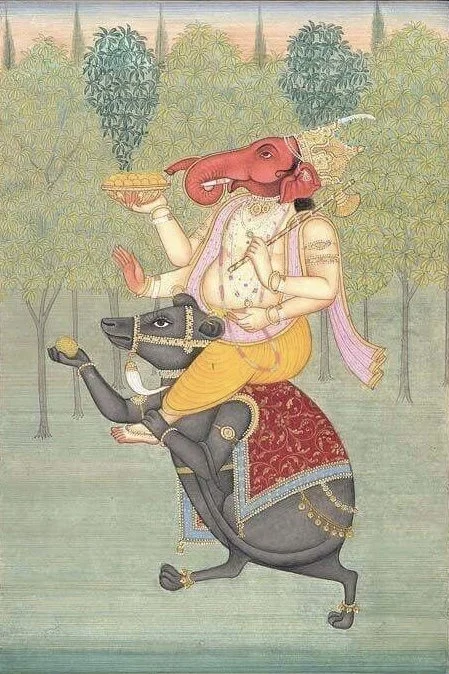
Gaṇeśa Caturthī

GAṆEŚA CATURTHĪ

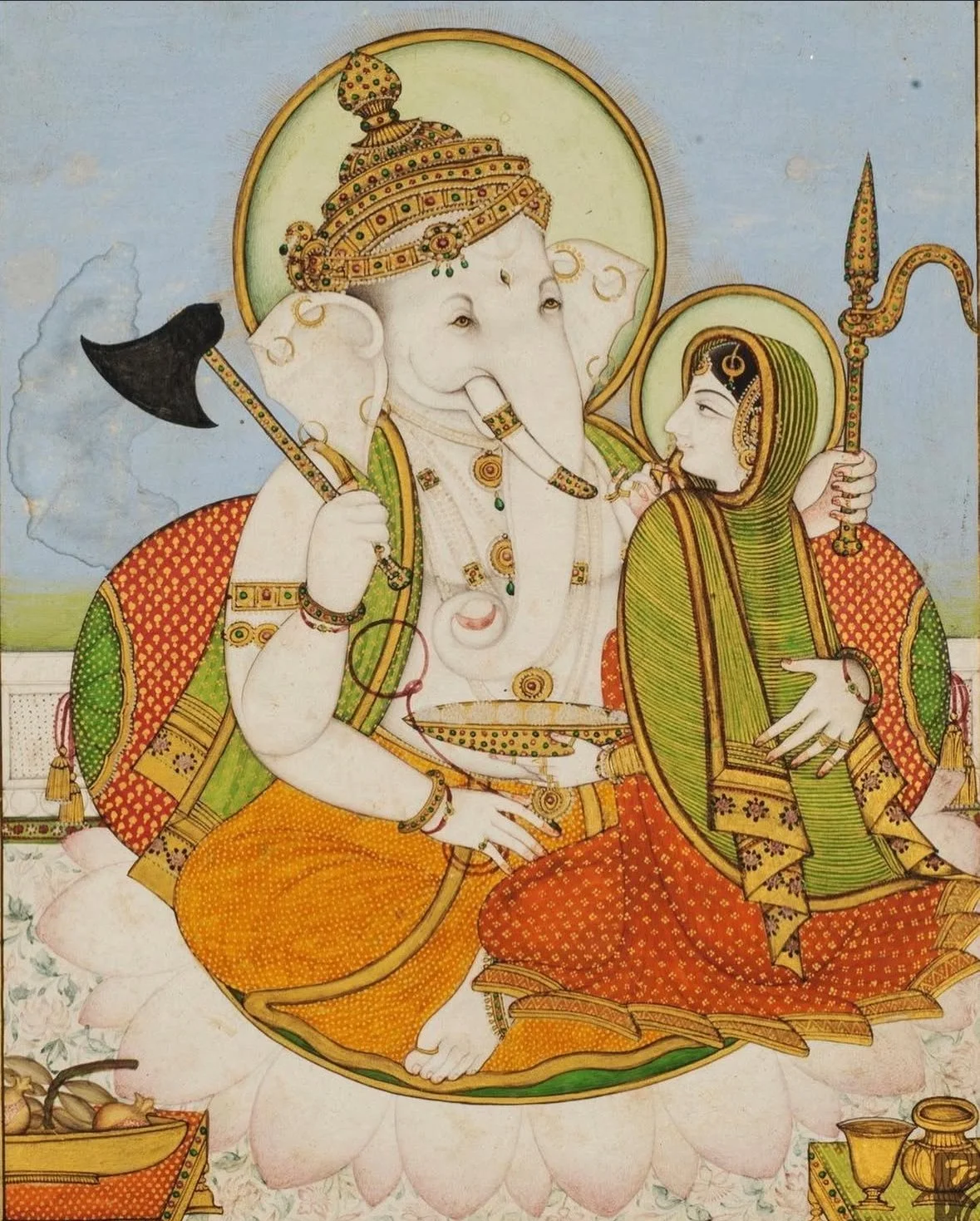
Commencing on the fourth day (caturthī) of the bright fortnight (śukla pakṣa) in the month of Bhādrapadā (Aug–Sept), Gaṇeśa Caturthī is observed for ten days, culminating on Ananta Caturdaśī (14th day).

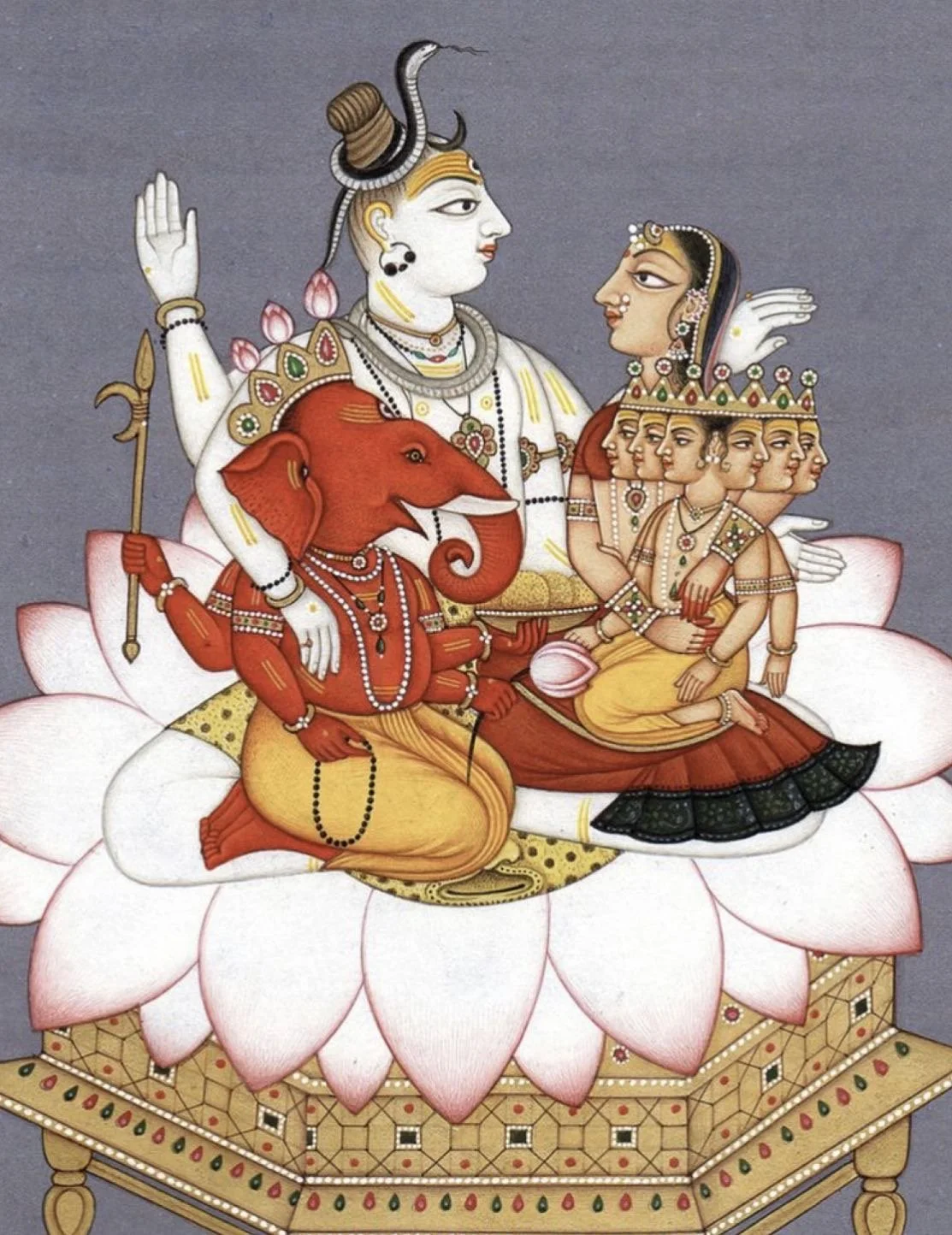
Salutations to Śrī Gaṇeśa who has a curved trunk, who has a large body and whose splendor is similar to that of a million suns; who is the son of Śiva and Pārvatī, the remover of obstacles and the writer of the story.

Gaṇeśa, revered as the deity who governs the threshold of new beginnings, wisdom, and intelligence, represented by the brain stem in our physiology, the lord of Jyotiṣa Vidyā (Vedic astrology) and the one who is associated with Ketu and Mercury. He rules over the planetary vibrations that guide us through transitions—encouraging us to see obstacles not as hindrances, but as divine redirections towards our true nature. 

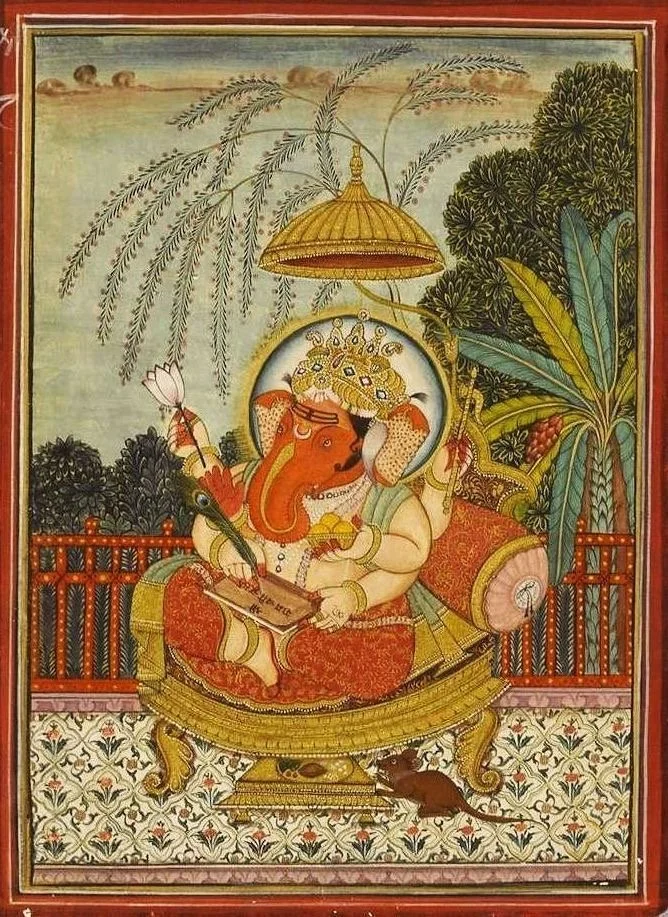
Vyāsa invoked Gaṇeśa to serve as the divine scribe of the Mahābhārata—some traditions even say he fashioned him into being through tapas for this immortal task. Gaṇeśa agreed on the condition that Vyāsa dictate without pause, and Vyāsa, with equal cleverness, required that Gaṇeśa only write once he fully understood each verse.

On Gaṇeśa Caturthī, it is said one should avoid looking at the moon (Candra Darśana) as it can bring false accusations or misunderstandings—stemming from the Purāṇic tale where Candra mocked Gaṇeśa, leading to a curse that whoever sees him on this night may suffer slander. Instead, devotion is directed wholly to Gaṇeśa, the remover of obstacles.

On this sacred day, devotees immerse themselves in fasting, chanting Vedic hymns and Hindu texts, offering sweets such as modaka —believed to be the favorite of Lord Gaṇeśa—as prasāda. The festival culminates on the tenth day with visarjana, when the Mūrti (depiction of a deity) is carried in a grand procession, accompanied by music and chanting, and immersed in a nearby body of water, symbolizing the cycle of creation and dissolution.

O Deva, lord of new beginnings, please make my undertakings free of obstacles, by extending your blessings in all my works, always and may I remember to trust that when you place obstacles in my way, that you’re gently guiding me back to my most aligned path.

ॐ श्री गणेशाय नमः

Śrī Kṛṣṇa Janmāṣṭamī and Kālī Jayantī

KṚṢṆA KĀLĪ 

On the aṣṭamī tithi (8th lunar day) of the dark fortnight (kṛṣṇa pakṣa) — reckoned as Śrāvaṇa in the South and Bhādrapada in the North — two auspicious observances converge: Śrī Kṛṣṇa Janmāṣṭamī and Kālī Jayantī.

Janmāṣṭamī marks the divine appearance of Śrī Kṛṣṇa, the avatāra of Viṣṇu who embodies love, play, and dharma’s restoration. On this same lunar day, the dark and liberating Mother, Mahākālī, conected to Śani Dev (Saturn) is also especially honored. Her Jayantī reminds us of the force that severs illusion, awakens truth, and grants fearlessness.

The alignment of these two — Kṛṣṇa’s enchanting sweetness and Kālī’s uncompromising power — offers a rare doorway into wholeness: the union of tenderness and strength, play and destruction, love and liberation.

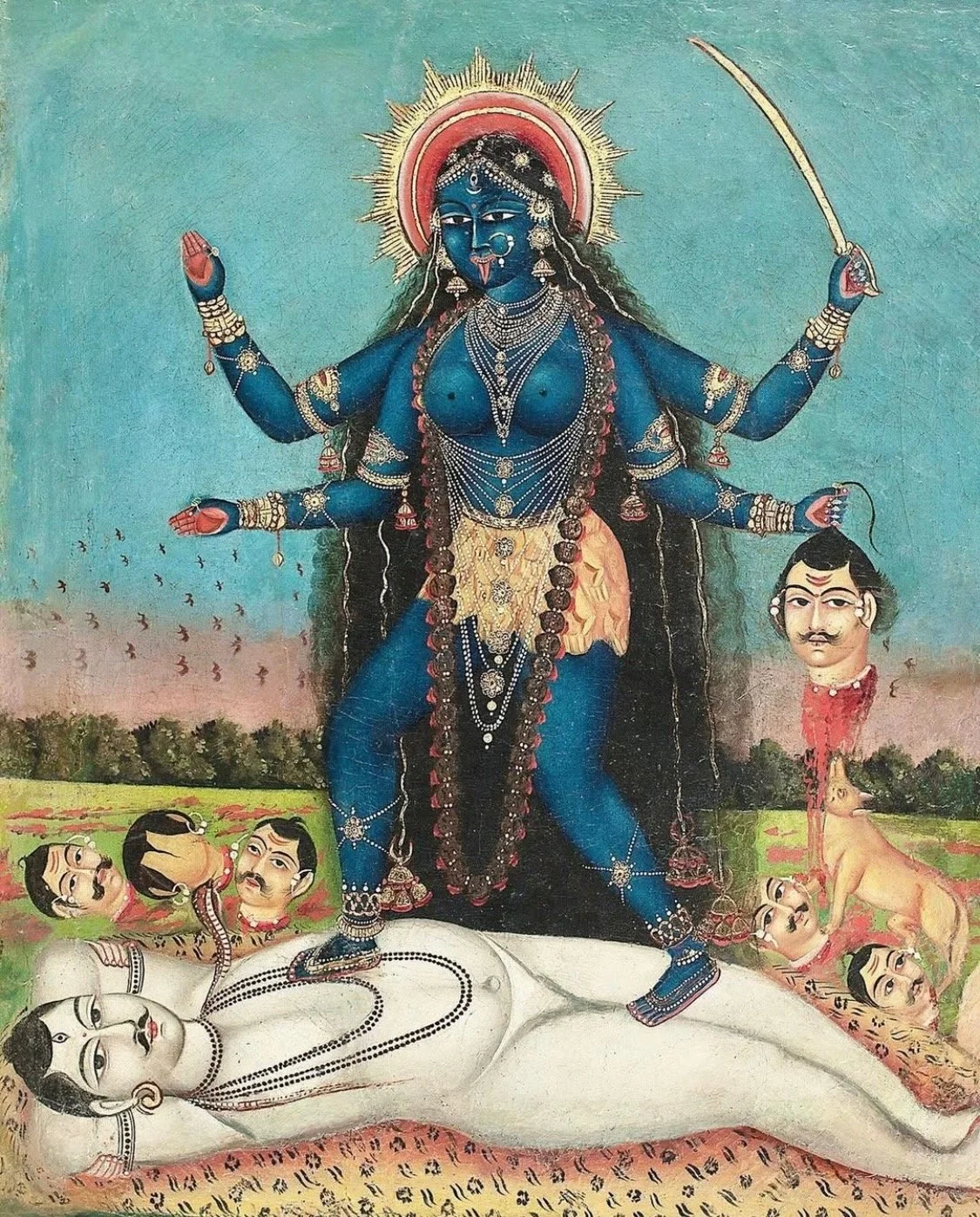
Kālī, adorned with the munda-mālān (garland of severed heads), is the slayer of ego and illusion. Each severed head is a Sanskrit letter, showing that She devours the very roots of false identity—sound, speech, and thought—transforming them into ornaments of wisdom.

Her teaching is fierce: She strips away every veil until only the Self remains. To the ego, She is terror; to the soul, She is freedom. Naked, unbound by space or time, She reveals that clinging to what perishes is bondage, and resting in awareness is liberation.

Her stance upon Śiva is the union of opposites: movement anchored in stillness, time held by eternity. Śakti grounds in Śiva, showing that power without consciousness is chaos, and consciousness without power is inert. Together they awaken balance—the rhythm of creation, dissolution, and liberation.

Her connection to Kṛṣṇa is profound. Both embody the mystery of Time (kāla-svarūpa). Kālī, the dark Mother, consumes all forms back into Herself. Kṛṣṇa, the dark Beloved, enchants all beings toward Him. In the Gītā, He declares: kālo’smi loka-kṣhaya-kṛt pravṛddho—“I am Time, destroyer of worlds.” Both wear the hue of infinity (śyāma varṇa), not as absence, but as the womb of creation.

Like Kṛṣṇa, She is Time itself—dark, infinite, and irresistible. He enchants the soul through love, encouraging in the direction of right action (yoga-sthaḥ kuru karmāṇi); She liberates the soul through fearlessness, slaying the false self so the infinite may shine.

Kālī is truth without compromise; Kṛṣṇa is truth through love. One cuts, the other draws near—but both dissolve the ego and awaken the eternal Self.

कालीं कृष्णं नमाम्यहम् ।

Kālīṁ Kṛṣṇaṁ namāmyaham.

“I bow to Kālī, I bow to Kṛṣṇa—Dark Mother, Dark Beloved—forms of the one eternal.”

योगस्थः कुरु कर्माणि सङ्गं त्यक्त्वा धनञ्जय।
सिद्ध्यसिद्ध्योः समो भूत्वा समत्वं योग उच्यते॥ २.४८॥

yoga-sthaḥ kuru karmāṇi saṅgaṁ tyaktvā dhanañjaya |
siddhy-asiddhyoḥ samo bhūtvā samatvaṁ yoga ucyate || 2.48 ||

“Established in yoga, perform your action, O Dhanañjaya (Arjuna),
abandoning attachment, remaining equal in success and failure.
Such equanimity is called yoga.”

 Bhagavad Gītā (2.48)