Venus Retrograde in Uttara Bhādrapadā: The Warrior Star

Venus Retrograde in Uttara Bhādrapadā

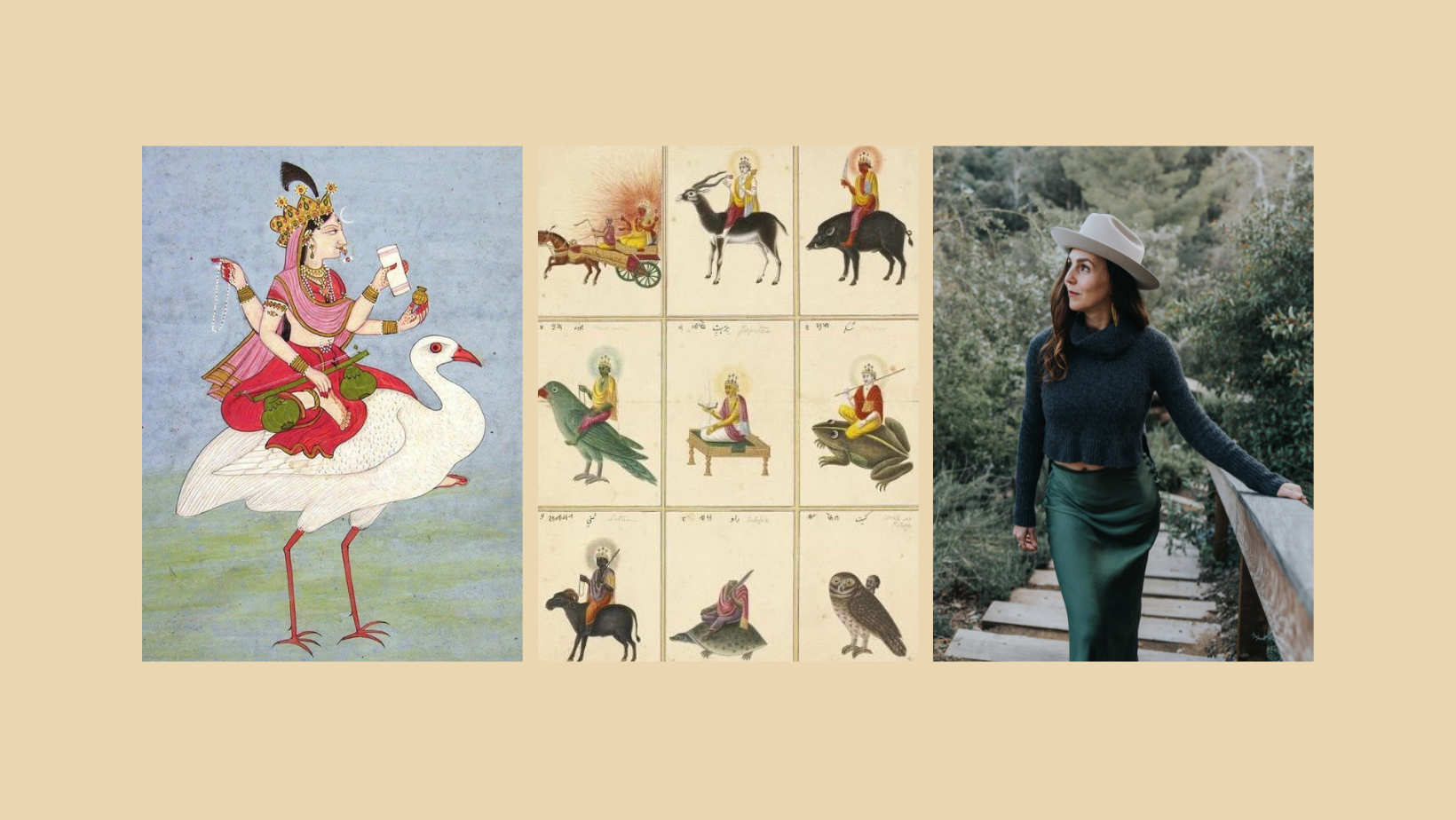
Artwork: Pinterest | Edit by @turiyacollection

March 1st - April 11th

Today, Venus retrogrades (vakrī वक्री) in the Vedic lunar mansion of Uttara Bhādrapadā (sidereal Pisces) उत्तरभद्रपदा, the Warrior Star. This mystical asterism is connected to the fertility of both earth and sky, the realm of dreamtime, and the excavation of the unconscious. It harmonizes universal mind, beckoning us to uncover hidden wisdom through humility, experience, and self-sacrifice—an energy that is transformative and karmic.

Śukra Graha, the revered planet of devotion, divine love, justice, restoration, relationships, and virility, is one of the three Jñāna Kārakas (significators of knowledge) and the Kāraka of union (yoga) and transportation.

In this retrograde through Uttara Bhādrapadā, Venus invites us to reflect on our emotional patterns and relationships, urging us to examine whether they align with our highest self. It is a time to reassess, reimagine, and review our connection to love, provisions, creativity, and self-worth.

The retrograde cycle offers us a sacred pause, encouraging us to consider how we might balance our lives by harmonizing the internal and external worlds. As Śukra transits this deeply transformative space, it becomes a moment to ask: Are the connections we are nurturing authentic, or are we simply repeating old patterns from the past?

Guru Śukrācārya, the holder of Sanjīvinī Vidyā, possessed the sacred wisdom to revive the dead. This knowledge aligns with the synodic cycle of Venus, which spans 584 days. Venus follows a rhythm of life, death, and rebirth: it is visible on the eastern horizon at sunrise for 263 days (symbolizing birth), disappears for 50 days (symbolizing death), and reappears as the evening star on the western horizon for another 263 days (resurrection/regeneration), only to disappear again for 8 days before the cycle repeats.

As Venus prepares to relinquish its reign as the evening star, we enter a rite of passage, confronting and healing old shadows and wounds. This transition, known as the inferior conjunction, occurs when Venus passes between the Earth and the Sun, disappearing from view for approximately 8 days. It then reemerges as the morning star, marking a symbolic rebirth.

Venus will be last visible as the evening star on March 19th. After this, it will disappear until March 23rd, when it enters its inferior conjunction and remains invisible for 8 days. The planet will then reappear as the morning star on March 26th. This pivotal transition mirrors the process of death and rebirth, offering us an invitation to reflect on our own cycles of transformation.

Venus follows a distinct rhythm, retrograding every eighteen months as part of an eight-year cycle. Reflecting on the lessons of the last Venus retrograde in 2017, we are invited to revisit themes from that time, particularly concerning relationships, creative projects, and emotional healing. Much like its celestial dance in 2017, this retrograde prompts us to assess whether our relational dynamics and emotional patterns have truly evolved since then.

On February 27th, Mercury entered Pisces, where it is debilitated—a position that can present as confusion, miscommunication, and difficulty maintaining clarity of thought. Adding complexity, Mercury will conjunct Venus retrograde on March 2nd, amplifying the need for introspection in matters of love, communication, and creativity. This alignment calls us to look inward, particularly regarding past relationships and unspoken thoughts that need to be aired or healed.

On March 15th, Mercury will also turn retrograde, amplifying the energies of reflection, review, and rethinking—especially around how we express ourselves emotionally and intellectually. This upcoming Mercury retrograde cycle, lasting until April 4th, will further invite us to slow down, reevaluate communication, and revisit unresolved issues from the past. A more detailed blog post on this will follow soon.

Artwork; Pinterest

Śukrācārya, as the Guru of the Āsuras, was known for his protection of his people. He is also associated with Paraśurāma, the sixth incarnation of Lord Viṣṇu. Paraśurāma's story is among the most violent of the incarnations, as he wielded an axe against the Kṣatriyas (warrior/political class) to rebuild a better society.

Pay close attention to where you draw lines between "your people" and others—and what you are willing to do to obtain and maintain your position or seat. Notice the actions that arise from a sense of injustice, particularly if fueled by vengeance or a desire for retribution.

Śukra's narrative is often linked to blindness or arrogance, reflecting a misalignment between one’s self-perception and the views of others. This can manifest as seeing oneself as either superior or inferior, diverging from reality.

Śukra Graha is the enjoyer—the one who delights in all sensory experiences: music, good company, fine food, mantra, and meditation. Venus imparts wisdom through experience, calling for complete absorption. He is the Samādhi maker, invoking unity with the divine at his highest octave.

This is beautifully exemplified in the story of MahāLakṣmī, who resides in Viṣṇu’s heart, as well as in the lives of saints born with Śukra in Pisces in their charts—embodiments of supreme devotion and the boundless grace of divine love.

As we navigate the deep waters of this transit, the energies associated with Śukra’s karakas will be amplified, requiring thoughtful self-reflection and a container for introspection. Pay close attention if you have major planets, your moon, or your Lagna (rising sign) in Pisces, or if you are currently running a cycle of Venus or Saturn.

This Venus retrograde in Uttara Bhādrapadā invites us to explore the depths of our relationships and creative pursuits, unraveling karmic patterns and allowing us to emerge transformed. Use this time wisely, for it is through wisdom, experience, and self-reflection that we can find clarity and renewal.


All My Relations | ॐ शुं शुक्राय नमः

Brene brown // “Vulnerability is not winning or losing; it's having the courage to show up and be seen when we have no control over the outcome. Vulnerability is not weakness; it's our greatest measure of courage. A lot of cheap seats in the arena are filled with people who never venture onto the floor.”

Venus Retrograde Key Dates and Transitions

  • January 28th: Venus enters Pisces

  • February 1st: Venus enters Uttarabhadrapada (Pisces)

  • March 1/2: Venus Retrogrades in Uttarabhadrapada (Pisces)

  • April 12/13: Venus Stations Direct in Purvabharapada (Pisces)

  • May 31st: Venus enters Aries


These dates mark the transition of Venus from an evening star to a morning star.

  • Last visible as an evening star: March 19, 2025

  • Inferior conjunction (invisible): March 23, 2025

  • First visible as a morning star: March 26, 2025

New Moon in Śatabhiṣā: The Veiling Star

NEW MOON IN ŚATABHIṢĀ

Artwork: Edit by @turiyacollection

27th 16:45 PM PST | 28th 6:15 AM IST


The Sun and Moon converge at the heart of Sidereal Aquarius for February’s New Moon (amāvásyā), gracing the Vedic Lunar mansion of Śatabhiṣā (शतभिषा), The Veiling Star.

Śatabhiṣā, the constellation of the vow, is comprised of a hundred stars or physicians, ruled by Varuṇa, the god of the night sky and the cosmic and terrestrial waters. As the keeper of cosmic order, Varuṇa, the Sky Watcher, stirs within us the yearning to pierce the veil of darkness and enter the void.

Much like the horse—civilizations first sacred medicine—Śatabhiṣā embodies both mystical and tangible powers, capable of bearing heavy burdens over great distances. This nakṣatra is infused with the śakti, or potent energy to heal, support, and redeem. The trials and tribulations experienced under the star of the divine healer arise to rectify our path. What once felt disorienting may now serve as a vessel for profound self-realization and, ultimately, redemption.

In this moment, we are being churned, invited to dive deeper and pierce the veil. What is being revealed to you? Some knots may be untangling, while other moments call us to rise up and take responsibility.

Many have been brought to their knees in recent weeks, reaching to define a sense of meaning in their lives. Questions that may have been preoccupying your mind—Who am I? What is my purpose? Where am I going?—know that you are not alone. Many are grappling with the same inquiries.

As circumstances shift in our lives, so too must our narratives. Have you been drawing your sense of meaning from a title, a relationship, or an external belief system? This cycle invites a reawakening of our inner vitality, guiding us away from identifying with external labels and into a more profound understanding of ourselves.

All the difficulties, triggers, and apparent losses we experience are, in fact, the very medicine we need to dissolve the ego and return to the essence of our being. Much like the horse’s medicine, this energy equips us with the power and focus to step into the Unknown, to remember who we are, and to cultivate the capacity to derive meaning from a place of deep self-trust and understanding.

Beware the temptation to seek shortcuts to the answers you seek. “Diseases” born under Śatabhiṣā are difficult to heal and require grounding in consistent and disciplined routines. Wisdom gained during this phase offers profound healing, not only for oneself but also as a beacon of light to illuminate the path for others.

Know that this full power medicine and profound work available on this earth walk will meet with success when balanced by doses of play and joy. Venus and Mercury will soon station retrograde, and next month we step into eclipse season. Spend more time in self-reflection, in stillness with yourself. Recommit to spiritual practices and routines that nourish your soul. While this energy may present a sobering effect, it is rich with potential for transformation.

What may first appear as a challenge is an invitation to evolve—hold it with awareness, embrace change and stay patient, compassionate, and brave enough to walk through the dissolution process.

All My Relations

For more personalized guidance on how this transit influences your chart, I offer one-on-one consultations which you can book here:

Terence McKenna // “Nature loves courage. You make the commitment and nature will respond to that commitment by removing impossible obstacles. Dream the impossible dream and the world will not grind you under, it will lift you up. This is the trick. This is what all these teachers and philosophers who really counted, who really touched the alchemical gold, this is what they understood. This is the shamanic dance in the waterfall. This is how magic is done. By hurling yourself into the abyss and discovering it's a feather bed.”


Mahāśivarātri: Great Night of Śiva

MAHĀŚIVARĀTRI

February 26th

Mahāśivarātri, observed on the Caturdaśī tithi (14th lunar day) of the Kṛṣṇa Pakṣa (dark half) in the Māgha or Phālguna month, is one of the most spiritually activated days in the Vedic calendar. This night is celebrated as the great night of Lord Śiva, where he performs his heavenly dance and relieves us from our karmic burdens.

It is said that any spiritual practices performed on this day, including mantra recitation (especially Śiva mantras), fasting, and deep meditation, are enhanced a thousandfold during this auspicious time. The late hours of the night, in particular, are said to be charged with intense spiritual potency. Whomever fasts on this day, Lord Śiva will relieve you of the poisons and karmic debts accumulated in this life and all previous incarnations.

Mahāśivarātri is a profound and sacred observance dedicated to Lord Śiva, the eternal consciousness that dissolves illusion and grants liberation. The timing of Mahāśivarātri is deeply significant, as the waning moon symbolizes the dissolution of the ego, inviting seekers to surrender to the infinite stillness of Śiva. 

One perspective views this night as the moment when Śiva entered deep meditation, embodying the stillness that dissolves all illusions. It is believed that on this night, the cosmic energies align in a way that makes it highly conducive for inner awakening and meditation.

Mahāśivarātri is also believed to be the sacred night when Lord Śiva and Goddess Pārvatī were united in divine marriage. This marks the cosmic union of Śiva—the embodiment of pure consciousness—and Śakti—the dynamic force of creation. Their union is symbolized in the divine dance of Śiva, an eternal cycle of creation, preservation, and destruction, where stillness and movement coexist in harmony. This dance represents the interplay of the infinite and the finite, the unchanging and the ever-changing, reflecting the unity of opposites in the universe.

Devotees observe Mahāśivarātri with jāgaraṇa (night-long vigil), abhiṣeka (ritual bathing of the Śiva Liṅga), and chanting of the Pañcākṣarī mantra—"Oṁ Namaḥ Śivāya." Fasting, silence, and deep contemplation allow one to align with Śiva's transcendental essence, shedding layers of karma and moving closer to mokṣa (liberation).

This night is a gateway to the formless, where the dissolution of duality reveals the pure consciousness that pervades all. It is a night of transformation, where the aspirant, like the moon waning into darkness, merges into the luminous presence of Śiva—the Supreme Reality.

ॐ नमः शिवाय | Oṁ Namaḥ Śivāya 🔱

शिवम् शान्तं अद्वैतं चतुर्थं मन्यन्ते स आत्मा स विज्ञेयः।

Māṇḍūkya Upaniṣad // "Śivam śāntam advaitam caturtham manyante sa ātmā sa vijñeyaḥ."

"The peaceful, the blissful, the undivided is thought to be the fourth; that is the Self. This should be known, and this should be obtained."