
PĀRAMA EKĀDAŚĪ
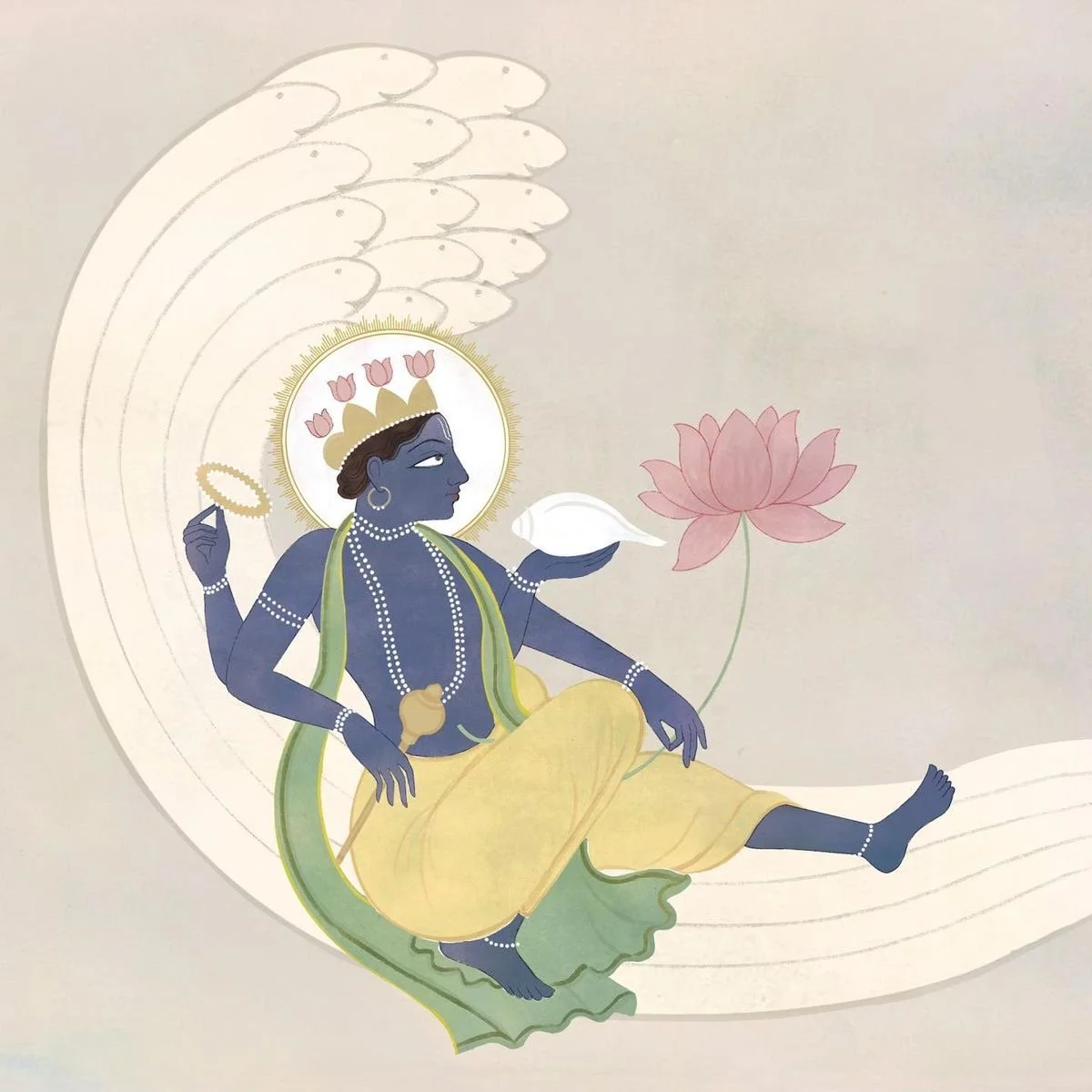
Artwork by Samadhi Collective | Jahnavi Lucas
6.11.2026
Once every two and a half to three years, when the calendar opens that rare thirteenth chamber called Adhika Māsa, two extra Ekādaśīs appear that the world will not see again for another thousand days. The Śukla Pakṣa one is called Padminī. The Kṛṣṇa Pakṣa one is called Pārama. They are, in the Vaiṣṇava tradition, the rarest and most fruit-bearing Ekādaśīs of the entire calendar.
We are currently in Adhika Jyeṣṭha, the intercalary month also known as Puruṣottama Māsa or Malamāsa. Once regarded as inauspicious, it was given the name Puruṣottama by Lord Viṣṇu and is revered as one of the most sacred months of the year.
Vrata Māhātmya: From the Skanda Purāṇa
The glories of Pārama Ekādaśī are described in the Skanda Purāṇa, where Lord Kṛṣṇa narrated this history to Mahārāja Yudhiṣṭhira. Long ago, in the ancient city of Kampilya, there lived a pious Brāhmaṇa named Sumedha and his devoted wife Pavitra. Although deeply religious and dedicated to serving Lord Hari, they suffered from extreme poverty — many days passed without sufficient food, proper clothing, or even the basic necessities of life.
One day, the sage Kauṇḍinya visited their home. Despite their poverty, the Brāhmaṇa couple served the sage with devotion. Seeing their condition, the sage instructed them to observe the fast of Pārama Ekādaśī, which falls in the month of Puruṣottama.
The sage explained that this Ekādaśī destroys accumulated sins, removes poverty, grants prosperity, and bestows the special mercy of Lord Hari. With complete faith, Sumedha and Pavitra observed Pārama Ekādaśī with full devotion — they fasted, chanted the holy names of the Lord, worshipped Lord Viṣṇu, and spent the day absorbed in devotional service. Soon after, by the mercy of Lord Puruṣottama, their lives changed dramatically: a royal prince arrived and gifted them a beautiful residence, abundant wealth, and even an entire village for their maintenance.
The vrata-māhātmya offers further testimony to the power of this observance. It recounts that Kubera, through the merit of observing Pārama Ekādaśī and the grace of Lord Śiva, attained his exalted position as treasurer of the devas. Likewise, the righteous King Hariścandra, after enduring immense hardship while never abandoning truth, regained his kingdom, family, and fortune through the observance of this sacred vow.
Pārama Ekādaśī addresses not only outer circumstance, but the poverty of the inner life. The places within us that have gone hungry for too long. The karmas that have accumulated across lifetimes of forgetting. This is a vrata of profound śaraṇāgati: placing everything at the lotus feet of the One who holds all.
The Practice
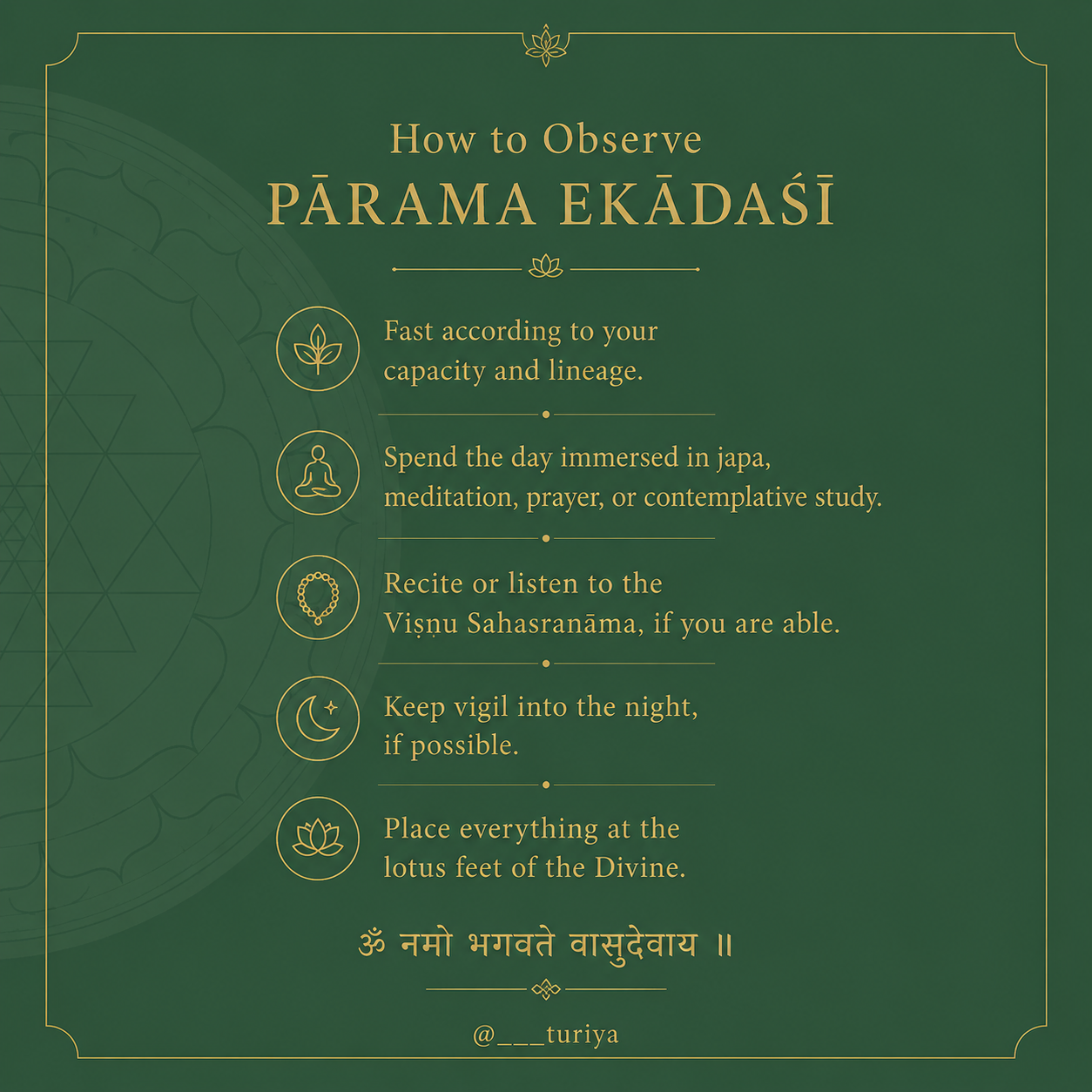
The practice is simple in form. Its depth is in the sincerity brought to it. Fast from grains and beans. Those who cannot fast fully may observe a fruit and water fast, or reduce food to one simple meal taken with intention.
Chant the names of Hari throughout the day — Viṣṇu Sahasranāma, nāma japa, or simply the continuous inner repetition of Om Namo Bhagavate Vāsudevāya.
Remain awake through the night of Ekādaśī in remembrance. Sleep on this night is traditionally said to break the vrata.
Break the fast the following morning, on Dvādaśī, after sunrise.
ॐ नमो भगवते वासुदेवाय ॥
Tithi:
6/10 — 10:28 am PST through 6/11 — 8:06 am PST
06/11 00:58 am— IST through 6/11 — 22:36 pm IST
Vrata is traditionally observed on the day when the Ekādaśī tithi (June 11th for both locations) is present at sunrise in your location.