New Moon in Śravaṇa: The Listening Star

NEW MOON

January 29th 4:35 AM PST | 18:05 IST

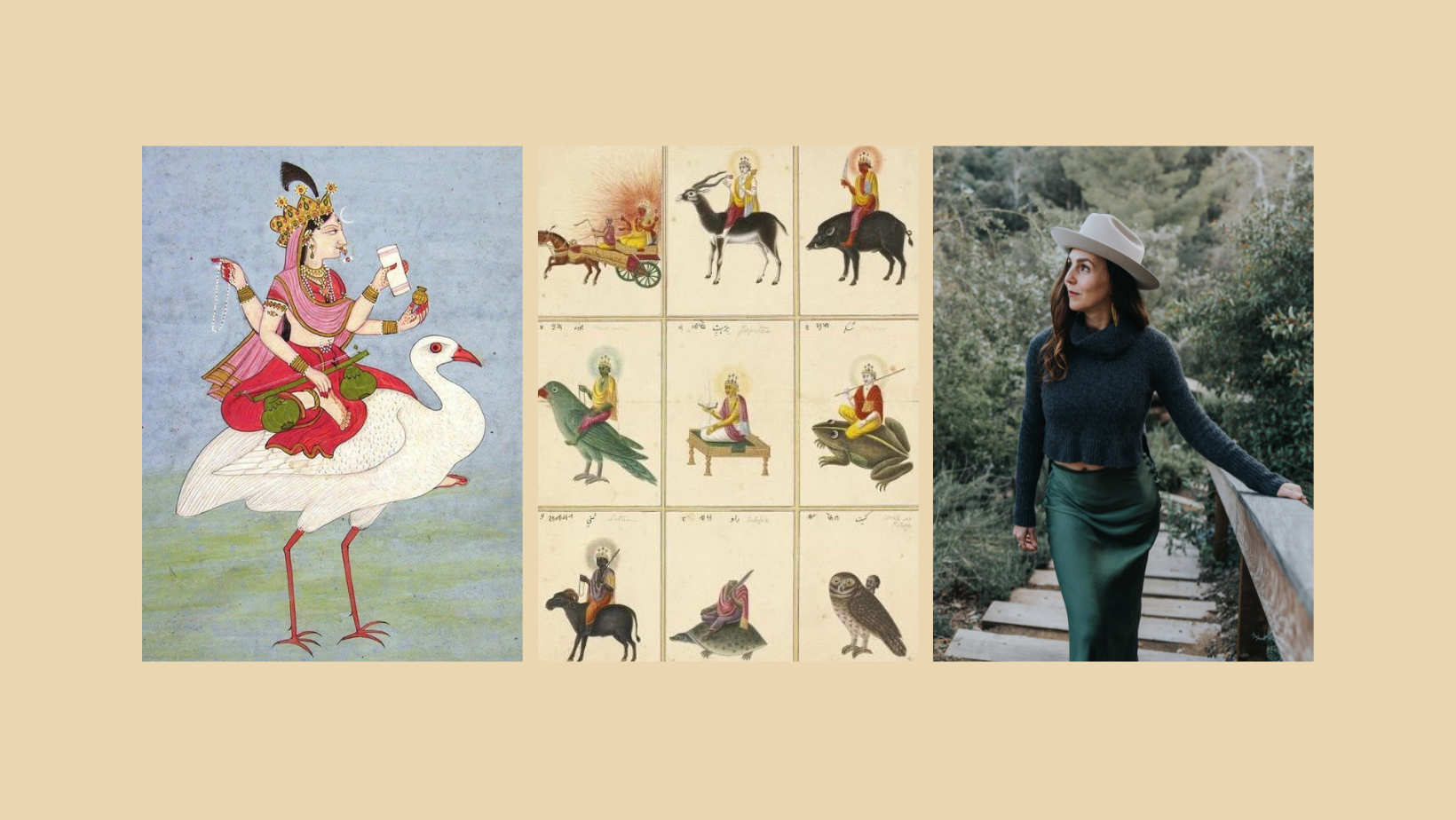
Our first New Moon of the year aligns the Sun and Moon on January 29th in the Vedic lunar mansion of Śravaṇa स्रवण (Capricorn), the Listening Star. This cycle calls us to release distractions, realign with our priorities, and attune our listening to the inner voice, intuition, and the unspoken word.

Śravaṇa is symbolized by an ear and a row of three uneven footprints. It is associated with communication of all kinds, the power of connectivity, learning, language, ancient knowledge, oral traditions, and music. This asterism is ruled by Lord Viṣṇu, who maintains Brahmā’s dream and comes to restore balance whenever dharma (righteousness) declines and adharma (unrighteousness) rises.

This New Moon also marks the Chinese New Year, ushering in the Year of the Wood Snake, and is celebrated as Mauni Amāvásyā—a day of profound introspection. Rooted in sacred tradition, it invites devotees to embrace silence, attuning their inner being to the rhythm and pulse of the celestial architecture of nature. Such stillness is said to deepen spiritual awareness and illuminate clarity.

Through divine guidance and inner listening, you are being invited to take a deeper look at what is most important in your life. The mythology surrounding this nakshatra symbolizes the journey of expelling demons—desires, distractions, and habits that no longer serve—from heaven, the place of priority, to restore order in the universe. This restoration occurs through the victory of placing the gods—our highest values—back in their rightful position.

This theme echoes the story of Lord Viṣṇu’s Vāmana avatāra, when he approached King Bali in the form of a humble dwarf-brāhmaṇa, seeking three steps of land. Despite warnings from his guru, Śukrācārya, Bali granted the request, only to witness Viṣṇu expand to his cosmic form—covering the heavens in one step, the earth in the second, and with the third, placing Bali in the underworld. His surrender to dharma reminds us that true sovereignty comes not from possession but from alignment with higher wisdom.

Clarify what you value most in your life and give it top priority. Work with what you have, where you are, in the present moment. Continue leaning into the vulnerability of wholeheartedly confronting deep-rooted fears and shadow behaviors that have been stirring beneath the surface. Define your boundaries and practice restraint as you find balance between giving and receiving love.

You may continue to feel a sense of restriction and emotional uncertainty. Practice surrendering to the unknown while listening to your inner guidance and the unspoken words of the Universe. Even amidst adversity, and the awareness that we may not all share the same path, perspective, or beliefs, this is a time for walking together.

There is a deep yearning to move as a conduit for Source—to become like a hollow bone, allowing the rhythm of the universe to flow through you so that you move effortlessly to the beat of your own drum. This is a time for piercing the veil, cultivating unity, patience, and healing, realigning with priorities, and upleveling your health routine.

In this process of deep reflection, we can draw inspiration from Vālmīki, who transformed from a bandit into a revered sage under the guidance of Nārada Muni. His journey of redemption reminds us that even the most troubled pasts can lead to profound transformation when met with sincerity and openness.

We are being churned right now—deepening into the process. What is being revealed to you? Can you listen a little more intently? Perhaps not in search of an answer, but for an invitation of where a little more light, love, acceptance, or even forgiveness is requested of you.

Some things are being untangled, while other moments call us to step up and take responsibility. The power of connection is awakening, along with our emotional duty to others—without expectation. Continue to stay open, rooted in your heart’s most authentic offerings and unconditional love.

For more personalized guidance on how this transit influences your chart, I offer one-on-one consultations, book here.

For our monthly Vidya and Chai Group Meditation and Sacred Story telling please join our what’s app group or email be to RSVP for our next session on February 11th.

All My Relations

"Vulnerability is not winning or losing; it's having the courage to show up and be seen when we have no control over the outcome. Vulnerability is not weakness; it's our greatest measure of courage. A lot of cheap seats in the arena are filled with people who never venture onto the floor." —Brené Brown

Venus in Pisces

VENUS ENTERS PISCES: January 27th - May 30th

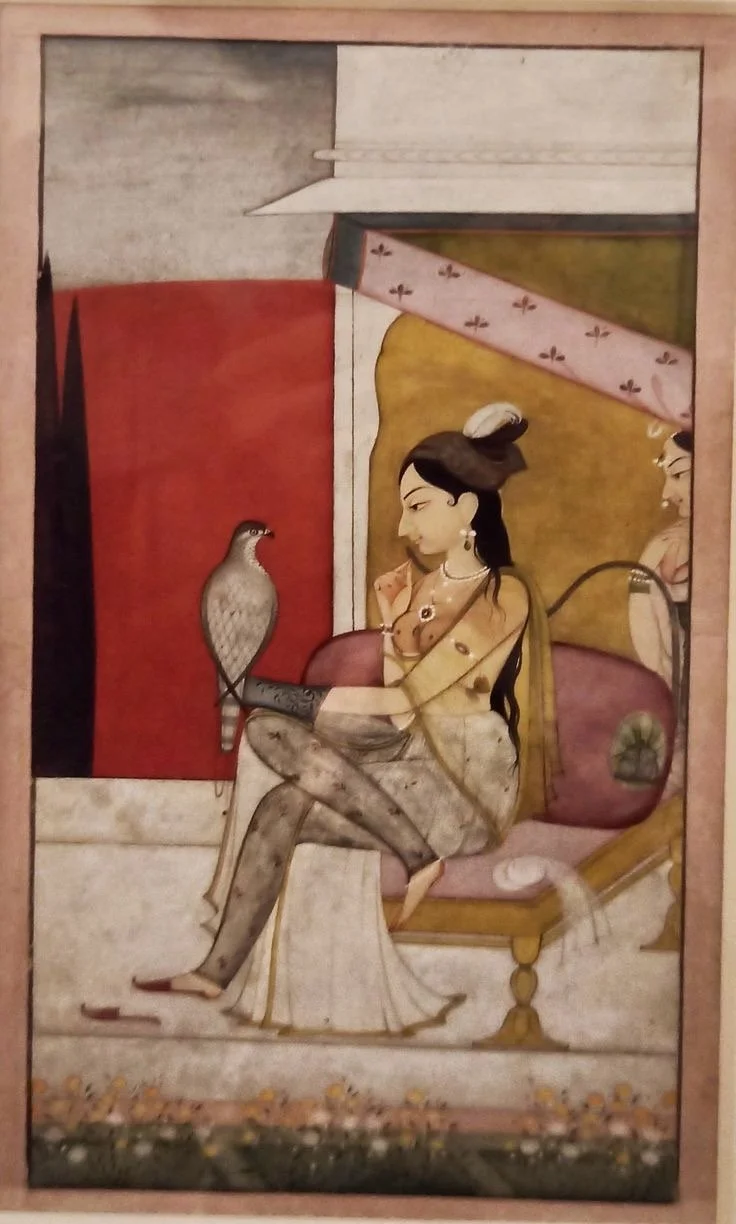
Artowrk: Uknown | lady with hawk, opaque watercolor on paper | Guler school of Art, V&A Museum, ca. 1750

Today, Śukra (Venus) transits into sidereal Pisces, his sign of exaltation, where he will remain through May 30th. This extended stay is due to his retrograde motion from March 1st to April 12th. This cycle holds the promise of profound awakening and deep transformation in your relationships, creative process, and artistic pursuits — all of which will be heightened during the retrograde period.

Śukra Graha, the venerable planet of devotion, divine love, justice, restoration, relationships, conveniences, and virility, is one of the three Jñāna Kārakas (significators of knowledge). He is the Kāraka of union (yoga) and transportation. 

Venus is revered as the Guru to the Asuras, beings whose nature is bound to power, ambition, and a fierce opposition to the Devas. He is the keeper of Mṛtusañjīvanī Vidyā, the sacred knowledge that holds the power to awaken the dead, and  also reigns as the lord of semen and seed. Venus governs Friday, the southeast direction, and the signs of Taurus and Libra, while also activating the constellations Bharaṇī, Pūrva Phalgunī, and Pūrvāṣāḍhā. 

As the embodiment of Jala Tattva (the water element), his metal is silver, diamond is his gem, and his color resembles the  delicate white hue of a jasmine flower. His constitution is Kapha-Vata — a blend that nurtures both stability and fluidity.

On February 1st, Venus will enter the Vedic lunar mansion of Uttara Bhādrapadā (उत्तरभद्रपदा), also known as the Warrior Star. This nakṣatra, said to be the seat of MahāLakṣmī, is symbolized by the back of a funeral cot and the serpent of the deep sea. It is connected to fertility—both of the earth and sky—excavating the unconscious, harmonizing universal mind, and gaining wisdom through experience, humility, and self-sacrifice.

During this transit, we are called to investigate deeper into our relationships with justice, forgiveness, compassion, self-expression, harmony, and the commitments we make—whether in personal bonds, marketplace dealings, or business contracts. This is a potent time to explore the sambandha (connections) we share with others.

Śukra, as the Guru of the Asuras, was known for protecting his people and tribe. He is also associated with Paraśurāma, the sixth incarnation of Lord Viṣṇu. Paraśurāma’s story is among the most violent incarnations, as he had to wield an axe against the Kṣatriyas (warrior/political class) to rebuild a better society.

Pinterest

Pay close attention to where you are drawing lines between the idea of your people and others, and what you are willing to do to obtain and maintain your desired position or seat. Notice the actions that may arise from a sense of injustice or unfairness—especially if fueled by vengeance or revenge. 

Śukra’s narrative is often linked to blindness or a kind of arrogance, which reflects a misalignment between one’s self-perception and the views of others. This can manifest as seeing oneself as either superior or inferior in ways that diverge from reality.

Śukra Graha is the enjoyer—the one who delights in all sensory experiences: music, good company, fine food, mantra, and meditation. Venus imparts wisdom through experience and calls for complete absorption. He is the Samādhi maker, invoking unity with the divine at his highest octave.

This is beautifully exemplified through the story of MahāLakṣmī, who takes up residence in Viṣṇu’s heart, and the many saints with Śukra in Pisces in their birth charts who were true embodiments of supreme devotion and the boundless grace of divine love.

This is an important time for self-reflection as we tread the deep waters of this transit. Pay close attention if you have major planets, your moon, or your Lagna (rising sign) in Pisces, or if you are currently running a cycle of Venus, Saturn, or Jupiter.

For more personalized guidance on how this transit influences your chart, I offer one-on-one consultations, which you can book here.

All My Relations | ॐ शुं शुक्राय नमः

  • January 28th: Venus enters Pisces | Venus Rahu Conjunction through May 28th

  • February 1st: Venus enters Uttarabhadrapada (Pisces)

  • March 1/2: Venus Retragrades in Uttarabhadrapada (Pisces)

  • March 31st: Venus Saturn Conjunction in Purvabharapada

  • April 12/13: Venus Stations Direct in Purvabharapada (Pisces)

Makara Saṅkrānti: Kite Festival & Uttarāyaṇa

MAKARA SAṄKRĀNTI  मकर संक्रान्ति //

Artwork: Pinterest

The Sun, known as Sūrya in the Vedic tradition, makes its annual transition from (sidereal) Sagittarius (Dhanu) to Capricorn (Makar) on January 14, depending on your location. 

This festival marks a new beginning and initiates the auspicious time of Uttarāyaṇa. Uttarāyaṇa is a combination of two Sanskrit words, “uttara” (North) and “ayana” (movement).

Uttarāyaṇa spans six months, commencing as the Sun embarks on its northern journey and culminating with the Sun in Gemini (Sidereal) around June 21st, marking the initiation of dakṣiṇāyana, the Sun’s southward movement.

As the Sun transitions into Capricorn, it heralds the commencement of its six-month journey northward; however, this ascent has already begun since the winter solstice on December 21.

Notably, the Sun's southernmost position is observed in Sagittarius (sidereal), coinciding with this solstice, when it reaches its lowest point in the sky—its nadir—from an earthly perspective. This phenomenon underscores a unique instance where the Western Tropical zodiac, grounded in seasonal changes, aligns with astronomical accuracy.

Termed the ‘Day of the Gods,’ this period (December/January - June/July) is regarded as highly auspicious, as the devatas (deities) are believed to be awake.This period is marked by prosperity, expansion, and heightened spiritual development. 

With the Gods awake and active, they are deemed more benevolent in this cycle, showering blessings upon the fruits of your actions, rituals, ceremonies, and commitments made during this auspicious time.

The hours preceding and following saṅkrānti (the monthly transition of the Sun) are deemed unsettling for the Sun. This shift can be likened to the process of relocating homes, involving packing, moving, and settling into a new phase.

Artwork: Pinterest

This portal holds profound significance for nurturing spiritual growth, as it invites inward reflection on the previous month and strategic envisioning/planning for the upcoming month.

Today is a momentous occasion at the Mahā Kumbha Mela, as countless devotees gather for the revered Amṛta Snāna, a sacred dip in the holy waters, symbolizing purification and spiritual renewal.

Additionally, this day holds significance as we honor the legacy of Bhīṣma Pitāmaha, a revered figure in the Mahābhārata, known for his unwavering commitment to dharma and his formidable vow of celibacy. As a paragon of virtue and integrity, he was blessed with the divine boon of icchāmrityu, granting him the power to choose the moment of his death.

In a profound act of surrender, he embraced his destiny, relinquishing his mortal form as he awaited the sun's ascent into Uttarāyaṇa, symbolizing renewal and liberation. His departure illuminated the path to salvation for countless souls, reminding us of the timeless values of honor, duty, and sacrifice that he embodied. 

ॐ सूर्याय नमः | Aum Sūryaya Namah

Full Moon in Punarvasu: The Star of Renewal

FULL MOON

Artwork: Unknown | Painting; gouache on watermarked paper, Ram holding a bow and a crescent tipped arrow, Trichinopoly, ca.1825.

January 13th 3:56 AM IST | 14:26 PST

The first Full Moon (Pūrṇimā) of the year rises in the Vedic lunar mansion of Punarvasu (Sidereal Gemini), the Star of Renewal. This is a time of profound reflection and rejuvenation—a moment when light returns after the storm, bringing hope and the promise of abundance.

Punarvasu, symbolized by a quiver of arrows, embodies the energy of rebuilding and rebirth. Arrows, when directed with focus and intention, always find their mark, returning full circle with purpose—just as the energy of Punarvasu teaches us to align our actions with our higher vision. 

Similarly, the goddess Aditi, ruler of Punarvasu, is pregnant with puṇya (spiritual merit), representing nourishment and fertility. This Full Moon activates our inner resources, and asks us to protect and replenish our spiritual bank account with renewed vitality. The seeds we’ve sown in the darkness begin to sprout, signaling that prosperity and renewal are at hand.

The Full Moon’s energy echoes the tale of Lord Ram, born under this nakshatra. His exile and subsequent return to Ayodhya symbolize the cyclical nature of life—how light and victory emerge from hardship. Just as Ram’s return marked his rightful restoration, this Full Moon calls us to embrace our own path of recovery and renewal. It offers a second chance to reclaim what was lost, rebuild what was broken, and find strength in resilience.

Now, more than ever, we’re urged to direct our energies with intention. This is a time to nurture what truly matters—whether that is our health, our relationships, or our long-term goals.

There is a call to protect our most sacred resources and restore order—placing everything in its rightful position. We must cultivate the right energy, protect our immune system, create space for abundance, and honor the wisdom keepers and wisdom that will guide us forward. This call can only be answered by a mind that has become still and established in it’s own seat.

Only a land or person who’s immune system is low can be “attacked” from the outside.

During this Full Moon, take stock of what needs to be renewed in your life. Reflect on the lessons of the past, but resist the temptation to rush forward. Pace yourself and trust in the divine timing of your journey. You may feel as if you’re taking two steps forward and four steps back. Like the arrows of Punarvasu, your efforts will circle back, bringing rewards in their own time.

Focus on grounding your emotions, clarifying your goals, and nurturing your personal growth. Stay aligned with your higher purpose, and resist distractions that might pull you away from your vision.

All my Relations

Join us for Vidyā & Chai—our monthly Full Moon gathering of meditation, storytelling, and reflection

Toko-pa-Turner // “To be baffled and obstructed is what engages creativity. This is the practice of poets, dreamers, and artists alike: to show up at the frontiers of uncertainty where we are met by ten thousand things. We practice there, on the verge, amateur and unprepared, at being friendly - or at least willing - towards the discomforts of our confusions. As Rumi says, ‘Sell your cleverness and buy bewilderment!’